Connect with us

Economy

NIMASA Demands Tax Incentives for Maritime Sector

Published

on

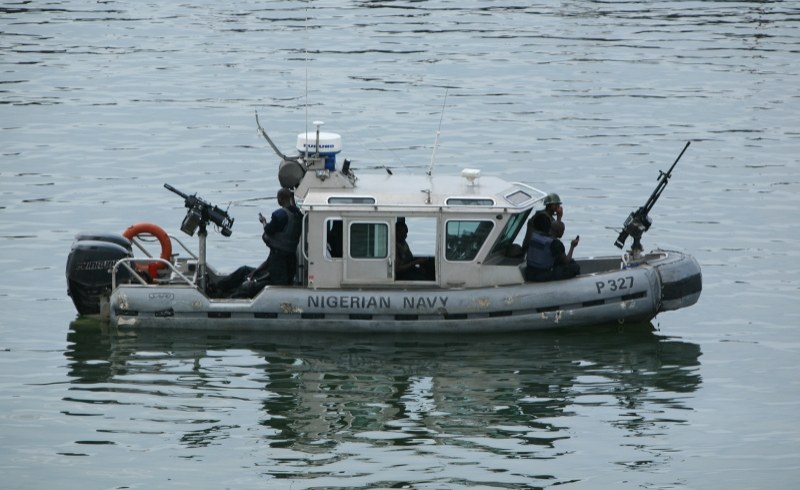
maritime security Project AGWE

By Adedapo Adesanya

The Nigerian Maritime Administration and Safety Agency (NIMASA) has pleaded with the federal government to provide tax incentives for the maritime sector to cushion the impact of the coronavirus pandemic on the industry and the economy.

This plea was made by the Director-General of the agency, Mr Bashir Jamoh, during a meeting with the Minister of Finance, Mrs Zainab Ahmed in Abuja.

He reiterated the commitment of the Minister of Transportation, Mr Rotimi Amaechi, towards ensuring the growth of maritime in Nigeria, adding that many governments around the globe had introduced massive tax reduction or elimination to spur activities in key sectors and rev up their economies during the coronavirus pandemic.

Mr Jamoh stated, “The maritime sector is critical in the growth and development of transportation and, by extension, international trade in the country. Thus, the need for federal government-oriented programmes and stimulus packages to deliver a response that catalyses sustainable economic development cannot be overemphasised.”

The NIMASA DG said the proposed incentives included zero import duty for brand new vessels imported by Nigerians or Nigerian shipping companies for use in foreign or domestic trade; 0.5 per cent only import duty for vessels aged between one and five years intended for use in foreign or domestic trade, and one per cent only import duty for vessels aged between five and eight years intended for use in foreign or domestic trade.

There was also a proposal for zero import duty for parts or components imported by Nigerian shipyards for local shipbuilding, which will be for an initial period of four years after which it can be reviewed by the government.

According to Mr Jamoh, all these are expected to give the sector the vibrancy it needs for growth.

The NIMASA DG said the incentives were being proposed because of the importance of the Nigerian maritime sector to the entire sub-Saharan African region.

He emphasised that Nigeria accounted for more than 65 per cent of the entire shipping trade of the sub-African continent as it is also the largest producer and exporter of oil and gas in the continent.

He added that the Nigerian economy has witnessed substantial growth in the last two decades owing to reforms that boosted private investment in the maritime industry.


Adedapo Adesanya is a journalist, polymath, and connoisseur of everything art. When he is not writing, he has his nose buried in one of the many books or articles he has bookmarked or simply listening to good music with a bottle of beer or wine. He supports the greatest club in the world, Manchester United F.C.

Advertisement
Click to comment

Leave a Reply

Your email address will not be published. Required fields are marked *

Economy

Stock Market Gives up N34bn Despite Strong Investor Sentiment

Published

on

Local Stock Market

By Dipo Olowookere

It was another bearish outcome for the Nigerian Exchange (NGX) on Wednesday due to persistent profit-taking.

The local bourse shed 0.05 per cent at midweek as investors tread cautiously, causing the All-Share Index (ASI) to contract by 78.28 points to 146,862.01 points from 146,940.29 points, with the market capitalisation giving up N34 billion to settle at N93.625 trillion compared with the previous day’s N93.659 trillion.

Chams ended the trading day as the worst-performing stock after it lost 10.00 per cent to trade at N3.06, Haldane McCall declined by 8.88 per cent to N4.00, UAC Nigeria slumped by 8.18 per cent to N80.80, and Sunu Assurance moderated by 6.98 per cent to N4.00.

The best-performing stock for the session was Japaul due to its 10.00 per cent rise, closing at N2.53. Prestige Assurance expanded by 9.40 per cent to N1.63, MeCure inflated by 7.72 per cent to N34.90, The Initiates rose by 7.30 per cent to N12.50, and Consolidated Hallmark gained 6.97 per cent to close at N4.30.

Business Post observed that despite the loss, the market breadth index was positive after Customs Street finished with 28 price gainers and 23 price losers, implying a strong investor sentiment.

The most traded equity was Cutix with 122.9 million units sold for N369.1 million, FCMB exchanged 80.7 million units worth N879.3 million, Consolidated Hallmark transacted 71.2 million units valued at N286.4 million, Fidelity Bank traded 63.8 million units worth N1.2 billion, and Tantalizers had a turnover of 57.8 million units valued at N136.5 million.

In all, investors bought and sold 747.1 million shares for N12.4 billion in 19,161 deals versus the 2.0 billion shares worth N30.2 billion executed in 23,038 deals on Tuesday, indicating a decline in the trading volume, value, and number of deals by 62.65 per cent, 58.94 per cent, and 16.83 per cent, respectively.

Continue Reading

Economy

Naira Weakens 0.24% to N1,455/$1 at NAFEX on Yuletide Demand Pressure

Published

on

sellers of Naira

By Adedapo Adesanya

The Naira depreciated against the United States Dollar by N3.52 or o.24 per cent in the Nigerian Autonomous Foreign Exchange Market (NAFEX) to N1,455.38/$1 on Wednesday, December 8, from the N1,451.86/$1 it was traded a day earlier.

It was a similar story for the local currency against the Pound Sterling in the same market window yesterday as its value shrank by N2.51 to close at N1,937.26/£1 versus the preceding session’s N1,934.75/£1 and lost N1.63 against the Euro to settle at N1,692.76/€1 compared with Tuesday’s closing value of N1,691.13/€1.

In the black market segment, the Naira weakened against the greenback yesterday by N5 to sell for N1,470/$1 compared with the previous day’s N1,465/$1 but traded flat at N1,460/$1 at GTBank.

The domestic currency faces pressures from increasing year-end Dollar demand as importers and retailers are actively sourcing FX for Christmas and New Year’s sales.

However, this is still stable, reflecting divergent currency dynamics between the regulated official segment and the informal markets as the Naira’s movement remains within the trading band.

This suggests that the FX market is adjusting gradually to seasonal pressures while awaiting further policy signals from the Central Bank of Nigeria (CBN).

Meanwhile, the cryptocurrency market tumbled despite the Federal Reserve’s decision to trim its fed funds rate range by 25 basis points. Traders were spooked by comments by Federal Reserve’s chairman Jerome Powell who sounded both dovish and hawkish.

While the rate cut is largely anticipated by market participants, looser financial conditions with a resilient US economy could help bolster risk appetite on markets. According to Mr Powell, the US labour market might be weaker than previously thought, while also sounding cautious about gains made in fighting inflation.

Cardano (ADA) depreciated by 7.0 per cent to $0.4311, Solana (SOL) fell by 5.9 per cent to $131.06, Dogecoin (DOGE) slid by 5.6 per cent to $0.1385, Litecoin (LTC) crashed by 3.9 per cent to $81.26, and Ripple (XRP) declined by 3.7 per cent to $2.01.

Further, Ethereum (ETH) moderated by 3.4 per cent to $3,209.84, Binance Coin (BNB) retreated by 2.6 per cent to $871.20, and Bitcoin (BTC) lost 2.5 per cent to sell at $90,316.82, while the US Dollar Tether (USDT) and the US Dollar Coin (USDC) remained unchanged at $1.00 each.

Continue Reading

Economy

Crude Oil Prices Rise as US Seizes Oil Tanker in Venezuelan Waters

Published

on

Crude Oil Prices

By Adedapo Adesanya

Crude oil prices settled higher on Wednesday as the US seized an oil tanker off the coast of Venezuela, adding to concerns about immediate supplies, with Brent futures up by 27 cents or 0.4 per cent to $62.21 a barrel, and the US West Texas Intermediate (WTI) futures up by 21 cents or 0.4 per cent to $58.46 per barrel.

The American government seized a large oil tanker off the coast of Venezuela, marking a major escalation in tensions between the two nations.

President Donald Trump confirmed the operation, saying, “We’ve just seized a tanker on the coast of Venezuela, large tanker, very large, largest one ever seized actually,” adding later that the US will keep the oil.

The US Coast Guard, Federal Bureau of Information (FBI), and Homeland Security, executed a seizure warrant, boarding the tanker by helicopter. The vessel, identified by maritime sources as the Panama-flagged Skipper (formerly named Adisa), had been under US sanctions for several years for its alleged role in transporting Venezuelan and Iranian crude via a shadow oil-shipping network tied to Hezbollah and the Islamic Revolutionary Guard Corps-Quds Force.

According to tracking data, the tanker had recently loaded heavy crude at Venezuela’s Puerto José.

In Caracas, the government of President Nicolás Maduro condemned the seizure, branding it “a blatant theft” and an act of “international piracy.”

The tanker seizure further inflames concerns about immediate supplies in a market that was already worried about movements of Venezuelan, Iranian and Russian barrels.

Meanwhile, the US Federal Reserve reduced its benchmark interest rate by a quarter of a percentage point, as expected, which could help lift oil demand by boosting economic growth.

The Chairman of the US Federal Reserve, Mr Jerome Powell declined to say whether there would be another rate cut in the near future, but said the central bank is well positioned to respond to what lies ahead for the economy.

Crude oil inventories in the US decreased by 1.8 million barrels during the week ending December 5, after adding a modest 600,000 barrels in the week prior, according to new data from the US Energy Information Administration (EIA) released on Wednesday.

The EIA’s data release follows figures from the American Petroleum Institute (API) that were released a day earlier, which suggested that crude oil inventories fell by 4.8 million barrels.

Continue Reading

Trending