Economy
NNPC Set to Deliver OB3 Gas Pipeline Project in August
By Adedapo Adesanya
The Nigerian National Petroleum Company (NNPC) Limited is set to deliver the Obiafu-Obrikom-Oben (OB3) Gas Pipeline project as part of efforts to boost nationwide gas supply to drive industrialisation and economic growth in August.
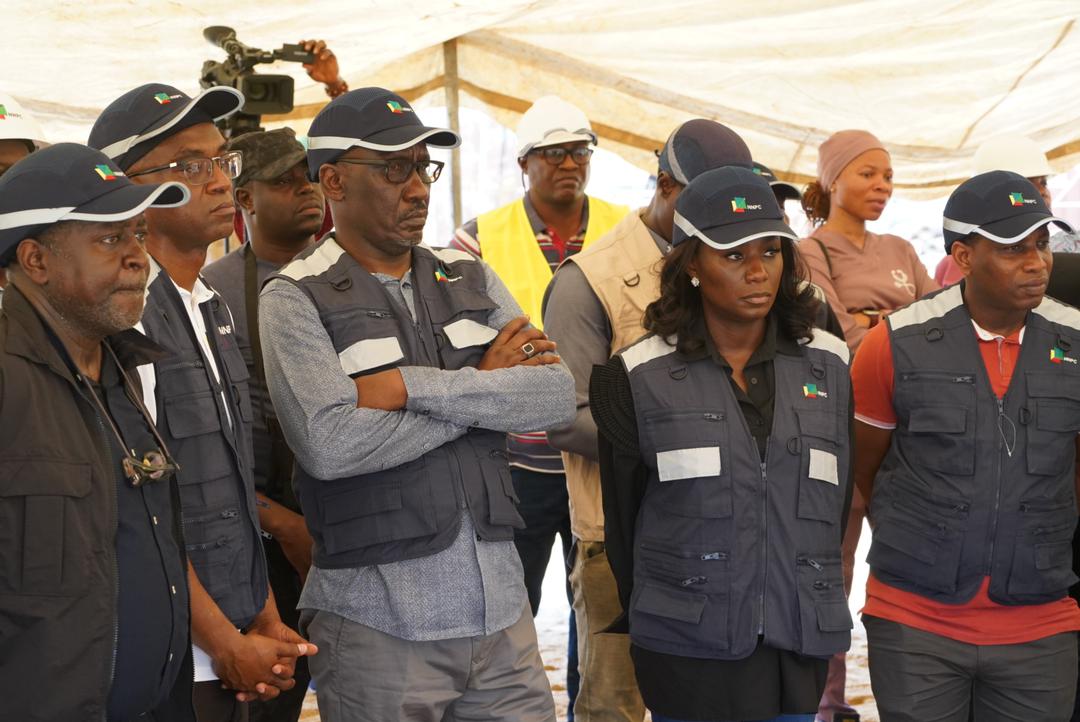
The Group Chief Executive Officer of NNPC Limited, Mr Mele Kyari, confirmed this during an inspection tour of the OB3 pipeline River Niger Crossing operation at Aboh, Delta State, on Saturday.
Recall that the OB3 Gas pipeline is the inter-connector which links the Eastern gas pipeline network to the Escravos-Lagos Pipeline System (ELPS) in the West and the Ajaokuta-Kaduna-Kano (AKK) Pipeline in the North.
The River Niger Crossing operation has been the major impediment to the completion of the strategic OB3 Gas Pipeline for over three years due to the failure of the various technologies deployed to achieve the construction of the 48-inch pipe under the river bed between Ndoni in Rivers State and Aboh in Delta State.
But with the adoption of the Micro-Tunnelling/Direct Pipe Installation technology, the new contractors, Messrs HDD Thailand/Enikkom and Tunnelling Services Group (TSG) are making headway with about 860meters out of the 1,800meters achieved so far.
Speaking after the inspection tour, Kyari expressed delight at the breakthrough, which signals the imminent completion of the project.
“This is a major project of monumental value to our country. What this means is that this is the only way we can deliver the gas revolution. I am very happy and convinced that, latest by the middle of August, we will complete this project. I have been assured of that by the project team,” Mr Kyari stated.
On the significance of the project, he said: “Once completed, we will see about 2.2 billion standard cubic feet of gas coming into our network. We believe that this will give our country a breathing space of demand, I am sure we can catch up with that kind of demand in the next one and a half years. We are happy that this will give us the platform to unleash the gas revolution in our country.”
On his part, the Minister of State for Petroleum Resources (Gas), Mr Ekperikpe Ekpo, expressed satisfaction with the pace of work at the OB3 River Niger Crossing operation, describing it as renewed hope at work.
“I was here last year and I saw the work that was going on. There was a promise that it would be completed by December last year. I took it with a doubt. But today, from what I can see, I am confident that by July or August, it will be completed and it will be commissioned by the President”, the Minister stated.
On her part, the Special Adviser to the President on Energy, Mrs Olu Verheijen, said she was looking forward to the completion of the project having been assured by the technical team that the right technology has been found to resolve the complex challenges of the River Niger Crossing.
“As the Minister and other speakers have said, we are looking forward to having this project deliver prosperity to Nigerians in the form of electricity and other areas”, Verheijen said.
The Managing Director of Tunnel Service Group (TSG), one of the contractors to the project, Mr Ingo Justen, who is personally on the ground to supervise the project at the request of the GCEO, expressed confidence that the current technology being applied in the execution of the project would lead to its speedy conclusion.
In a presentation earlier, the Managing Director of NNPC Gas Infrastructure Company (NGIC), Mr Seyi Omotowa, disclosed that at the rate of progress with the new technology deployed, the River Niger Crossing operation, which is the only aspect of the OB3 Gas Pipeline Project left, will be achieved on schedule.
Economy
How Investor Confidence Is Reshaping Africa’s Digital Business Landscape
Africa’s business environment is undergoing a quiet but significant transformation. Over the past few years, investor confidence in African-focused digital companies has grown steadily, driven by stronger business fundamentals, improved technology infrastructure, and a deeper understanding of local markets. What was once viewed as a high-risk frontier is increasingly seen as a long-term growth opportunity with scalable returns.
This shift is evident in the types of startups attracting capital today. Investors are backing platforms that combine technology, recurring revenue models, and cross-border appeal—signaling a new phase in how digital businesses are built and funded across the continent.
The Evolution of Venture Capital in Africa
Early venture capital activity in Africa was largely experimental. Funding rounds were modest, timelines were short, and expectations focused on proof of concept rather than long-term scale. Today, the narrative has changed. Investors are deploying larger checks and looking beyond survival metrics toward sustainable growth, operational efficiency, and regional expansion.
Digital-first companies are particularly attractive because they can scale without heavy physical infrastructure. With mobile penetration rising and digital payments becoming more common, African startups now have access to broader audiences than ever before. This scalability has become a key selling point for investors seeking exposure to emerging markets without excessive operational complexity.
Why Digital Platforms Are Drawing Increased Attention
One notable trend is growing investment interest in digital entertainment and online platforms. These businesses benefit from high engagement, repeat usage, and diverse monetization opportunities. Unlike traditional industries, digital platforms can adapt quickly to consumer behavior and expand into new markets with relatively low marginal cost.
Recent investment activity reflects this shift. A clear example is the funding momentum around winna casino, which highlights how investors are backing tech-enabled platforms positioned for global reach rather than local limitation.
The significance of such deals goes beyond the individual company. They point to a broader willingness by investors to support African-linked digital businesses operating at the intersection of technology, finance, and entertainment.
Technology as a Driver of Business Scalability
Technology is no longer just an enabler—it is the core value proposition. Businesses that leverage automation, cloud infrastructure, and data-driven decision-making are better positioned to scale efficiently. This is particularly relevant in Africa, where legacy systems can slow down traditional business models.
Digital platforms reduce friction by offering faster transactions, better user experiences, and real-time insights. From an investor’s perspective, these efficiencies translate into lower operating risk and higher growth potential. Companies that build with scalability in mind from day one are more likely to secure follow-on funding and strategic partnerships.
Africa’s Changing Perception Among Global Investors
Global investors are increasingly reassessing Africa’s role in their portfolios. Rather than viewing the continent solely through the lens of risk, many now see demographic advantage, underpenetrated markets, and long-term consumer growth.
A growing body of international business analysis supports this outlook. Forbes, for instance, has highlighted why global investors are paying closer attention to African tech and digital businesses as part of broader emerging market strategies:
This change in perception is critical. It influences not only the volume of capital flowing into Africa but also the quality—bringing in investors with longer horizons, stronger networks, and deeper operational expertise.
The Importance of Governance and Trust
Despite the optimism, capital is not deployed blindly. Investors remain highly selective, particularly when it comes to governance, compliance, and transparency. Digital businesses operating in regulated or semi-regulated spaces are expected to demonstrate strong internal controls and responsible growth strategies.
For African startups, this means that trust has become a competitive advantage. Companies that invest early in governance structures, risk management, and user protection are better positioned to attract serious institutional capital. In the long term, this focus strengthens the overall business ecosystem.
What This Means for African Entrepreneurs
For founders, the evolving investment climate presents both opportunity and responsibility. Access to capital can accelerate growth, but it also raises expectations around execution, reporting, and accountability. Investors now expect African startups to operate at global standards while maintaining local relevance.
This environment rewards entrepreneurs who think beyond short-term gains and focus on building resilient, scalable businesses. Those who can balance innovation with discipline are more likely to thrive in an increasingly competitive funding landscape.
Looking Ahead
Africa’s digital economy is entering a more mature phase. Venture capital is no longer just fueling ideas—it is shaping business models, governance practices, and long-term strategies. As investor confidence continues to grow, digital platforms that demonstrate scalability, trust, and clear value propositions will define the next chapter of Africa’s business story.
For business leaders, policymakers, and investors alike, one thing is clear: Africa’s digital transformation is not a future promise—it is already underway, and capital is following conviction.
Economy
Dangote Refinery Seeks Naira-For-Crude Policy Expansion
By Adedapo Adesanya
The Dangote Petroleum Refinery has called for the expansion of the federal government’s Naira-for-Crude policy, describing this initiative as a strong indication of support for domestic refining.
The newly appointed Managing Director of the oil facility, Mr David Bird, made this call during a press briefing at the refinery complex in Lagos, noting that the scheme has significantly contributed to stabilising the the local currency and should be expanded in Nigeria’s overall economic interest.
“I think it’s a great testimony to the level of government support that we get,” he said on Wednesday.
According to Mr Bird, between 30 and 40 per cent of the refinery’s current crude feedstock is sourced under the Naira-for-Crude arrangement, with ongoing monthly engagements between the refinery and the Nigerian National Petroleum Company (NNPC) Limited to determine suitable crude grades.
“Let’s say between 30 and 40 per cent of our current crude diet is on the crude-for-naira programme. We engage with NNPC monthly on the grades to buy because there is a lot of variability in the Nigerian crude grades.
“So, we have a preference, we have a wish list, and we continue to work with government support to ensure we get the right allocations,” he explained.
Mr Bird noted that while the refinery is optimised for Nigerian crude, supply volumes fluctuate.
He said approximately 30 per cent of crude supply is obtained through the Naira-for-Crude programme, another 30 per cent from Nigerian crudes purchased on the spot market, while the remaining 40 per cent comes from international grades, adding that even at that, the refinery would welcome an expansion of the policy.
“We would always like to enhance the crude-for-naira programme. Even at that level, five cargoes a month, for example, it has contributed to the stabilisation of the naira enormously,” Bird said, in response to a question.
Mr Bird added that the refinery has the capacity to absorb additional crude volumes if allocations are increased, noting that continued engagement with NNPC and the federal government is ongoing.
“We would have the potential to take further grades if and when, and we continue to engage with NNPC and the government on further increasing that,” he said, pointing to global geopolitical uncertainties as a reason Nigeria should prioritise domestic crude supply.
“It is in the country’s interest to supply domestically, because geopolitically it’s a very volatile situation. If Venezuelan crude comes back on the market, for example, it is in Nigeria’s interest to secure an offtaker through domestic refining,” he said.
The Naira-for-Crude policy, which began in October 2024, allows local refineries to purchase crude oil from NNPC in Naira instead of US Dollars. This approach reduces pressure on foreign exchange, lowers transaction costs, stabilises the local currency, and strengthens domestic refining capacity.
Economy
Edun Signals Interest Rate Cuts if Inflation Keeps Cooling
By Adedapo Adesanya
The Minister of Finance and Coordinating Minister of the Economy, Mr Wale Edun, has said there may be cuts in the interest rate if Nigeria’s inflation keeps cooling.
Mr Edun revealed this during an interview on the sidelines of the Abu Dhabi Sustainability Week, as reported by Bloomberg.
According to Mr Edun, a sustained decline in inflation would create room for additional rate cuts, helping to reduce borrowing costs and easing the government’s debt servicing burden.
Although the Minister has no control over interest rate decisions – a primary responsibility of the Central Bank of Nigeria (CBN), he said lower inflation and borrowing costs would free up revenue currently spent on servicing debt and improve the fiscal balance.
Mr Edun, according to Bloomberg, commended the apex bank for what he described as “excellent” progress in curbing inflation, attributing recent improvements to aggressive monetary tightening implemented over the past two years.
The CBN had more than doubled its policy rate from 2022 levels in a bid to rein in inflationary pressures, before implementing a 50 basis-point cut in September that brought the monetary policy rate to 27 per cent.
The move followed a sharp moderation in inflation from its late-2024 peak. As at November 2025, headline inflation rate eased to 14.45 per cent down from 16.05 per cent recorded in October. On a year-on-year basis, the headline inflation rate was 20.15 percentage points lower than the 34.60 per cent recorded in November 2024.
The Finance Minister also revealed that the government’s borrowing strategy would remain flexible and market-driven, with decisions on domestic and external issuances guided by pricing, timing, investor appetite, and adherence to debt limits outlined in the medium-term expenditure framework.
Mr Edun also said the Bola Tinubu-led administration is intensifying efforts to boost revenue mobilisation and reduce reliance on borrowing, particularly through structural reforms and improved efficiency in revenue collection.
He noted that the government is rolling out directives requiring ministries, departments, and agencies (MDAs) to halt cash collections and migrate fully to automated payment platforms to improve transparency and reduce leakages.
According to him, the federal government is also counting on privatisation proceeds, divestments by the Nigerian National Petroleum Company (NNPC), and increased crude oil production to support budget funding.
-
Feature/OPED6 years agoDavos was Different this year
-
Travel/Tourism9 years ago
Lagos Seals Western Lodge Hotel In Ikorodu
-
Showbiz3 years agoEstranged Lover Releases Videos of Empress Njamah Bathing
-
Banking8 years agoSort Codes of GTBank Branches in Nigeria
-
Economy3 years agoSubsidy Removal: CNG at N130 Per Litre Cheaper Than Petrol—IPMAN
-
Banking3 years agoFirst Bank Announces Planned Downtime
-
Banking3 years agoSort Codes of UBA Branches in Nigeria
-
Sports3 years agoHighest Paid Nigerian Footballer – How Much Do Nigerian Footballers Earn