Connect with us

Economy

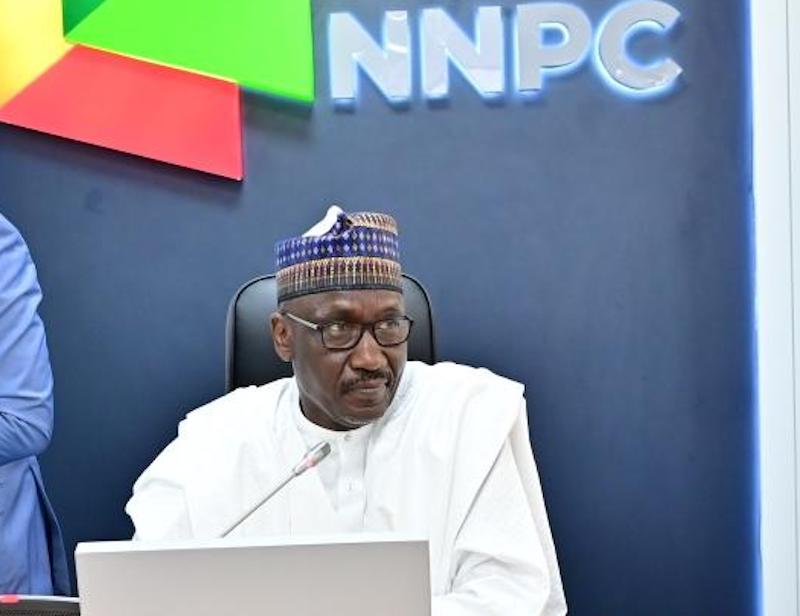
NNPC’s Mele Kyari Denies Ownership of Blending Plant in Malta

Published

on

Mele Kyari NNPC ceo

By Aduragbemi Omiyale

The chief executive of the Nigerian National Petroleum Company (NNPC) Limited, Mr Mele Kyari, has denied operating or owning a bending plant in Malta.

The president of Dangote Group Limited, Mr Aliko Dangote, had alleged that some officials of the state-owned oil company were preventing the country to refine its crude oil because of their plants outside the country.

Nigeria, which is one of the largest crude oil producers in the world, does not domestically refine this commodity. It imports premium motor spirit (PMS), also known as petrol and other products for local consumption.

Mr Dangote, who took a step to plug this hole, built a refinery in Lagos with the capacity to refine 650,000 barrels per day. However, he is yet to begin supplying petrol to the market because of the non-availability of crude oil to the facility.

He claimed that some powerful persons were frustrating the efforts of his firm to operate optimally because it would wreck the businesses of officials importing fuel into the country.

Reacting to the claims on Tuesday via his X (formerly Twitter) handle, Mr Kyari emphasised that he does not own any blending facility as alleged, urging Mr Dangote to report such persons to the relevant government agencies for prosecution.

“I am inundated by enquiries from family members, friends and associates on the public declaration by the President of Dangote Group that some NNPC workers have established a blending plant in Malta thereby impeding procurements from local production of petroleum products.

“To clarify the allegations regarding the blending plant, I do not own or operate any business directly or by proxy anywhere in the world with the exception of a local mini Agric venture. Neither am I aware of any employee of the NNPC who owns or operates a blending plant in Malta or anywhere else in the world.

“A blending plant in Malta or any part of the world has no influence over NNPC’s business operations and strategic actions,” the NNPC chief stated.

“For further assurance, our compliance sanction grid shall apply to any NNPC employee who is established to be involved in doing so if availed and I strongly recommend that such individuals be declared public and be made known to relevant government security agencies for necessary actions in view of the grave implications for national energy security,” Mr Kyari said.


Click to comment

Leave a Reply

Your email address will not be published. Required fields are marked *

Economy

CSCS Boss Shantali Says T+1 Settlement Targets Long-Term Capital Market Growth

Published

on

Shehu Yahaya Shantali

By Adedapo Adesanya

The chief executive of the Central Securities Clearing System (CSCS) Plc, Mr Shehu Yahaya Shantali, says Nigeria’s shift to a T+1 settlement cycle goes beyond faster transactions and is intended to deepen long-term growth in the capital market.

Speaking at a ceremony marking the commencement of T+1 settlement in Lagos, Mr Shantali described the development as a strategic milestone that goes beyond faster transaction timelines to reinforce the market’s structural strength and future readiness.

According to him, the shortened settlement cycle reflects years of investment in infrastructure, technology, and stakeholder collaboration aimed at transforming Nigeria into a globally competitive investment destination.

Nigeria recently became the first market in Africa to adopt the T+1 framework, reducing the settlement period for securities transactions from two days to one.

According to the boss of the securities depository firm, the shortened settlement cycle reflects years of investment in infrastructure, technology, and stakeholder collaboration aimed at transforming Nigeria into a globally competitive investment destination.

“These investments are not solely for T+1 settlement but to position Nigeria’s capital market for sustained growth and longterm competitiveness,” he said.

The migration from T+1 settlement is expected to enhance liquidity, improve capital efficiency, and reduce counterparty risk across the market.

Mr Shantali explained that the T+1 transition represents the culmination of a decades-long evolution from a manual, paper-based system to a fully automated, technology-driven post-trade environment.

He recalled that investors previously waited several months to complete transactions under the old system, but successive reforms, including transitions to T+5, T+3, and T+2, steadily improved efficiency and market integrity.

The latest upgrade, he said, builds on extensive preparations undertaken over the past three years, including system enhancements, process optimisation, and market-wide readiness assessments coordinated by the SEC and industry stakeholders.

On his part, the Director-General of the Securities and Exchange Commission (SEC), Mr Emomotimi Agama, said the reform signals Nigeria’s readiness to compete at the highest levels of global finance, noting that the country transitioned from T+2 to T+1 within six months.

“The era of T+1 has begun,” Mr Agama said, adding that shorter settlement cycles are critical to attracting global capital and strengthening investor confidence.

He noted that leading markets such as the United States, Canada, and India have already adopted T+1 settlement, while several European markets are preparing to migrate, making Nigeria’s transition a crucial step in maintaining international relevance.

Continue Reading

Economy

Businesses Not Feeling Full Benefits of Tinubu’s Reforms—NECA

Published

on

NECA Adewale Smatt-Oyerinde

By Adedapo Adesanya

Many private sector operators have yet to experience the anticipated gains of President Bola Tinubu’s reforms as they continue to grapple with inflation, energy costs and exchange rate volatility, the Director-General of the Nigeria Employers’ Consultative Association (NECA), Mr Adewale-Smatt Oyerinde, has said.

Mr Oyerinde acknowledged that the removal of fuel subsidy and liberalisation of the foreign exchange market reflected the government’s commitment to market-driven economic policies and improved transparency across sectors.

He said the reforms had enhanced fuel availability, reduced recurring supply disruptions and signalled policy consistency to both local and foreign investors, but noted that while there are indications of improved investor confidence, many domestic businesses, particularly Micro, Small and Medium Enterprises (MSMEs), continue to contend with operational challenges.

The NEC chief said the depreciation of the Naira had increased production costs, affected competitiveness and heightened operational risks for many businesses.

“Many private sector operators are yet to experience the anticipated gains of the reforms as they continue to grapple with inflation, energy costs and exchange rate volatility,” he said in a recent interview with the News Agency of Nigeria (NAN) while assessing the administration’s economic performance.

Mr Oyerinde said declining consumer purchasing power and increasing production expenses had placed pressure on businesses, with some firms adjusting investment plans and operations in response to prevailing economic conditions.

On infrastructure and refining, the NECA DG said developments in housing, industrial investments and local petroleum refining had created opportunities and contributed to improved fuel supply.

He, however, identified power supply as a major challenge facing businesses, citing persistent grid instability and reliance on alternative energy sources.

“In spite of the ongoing reforms in the power sector, insufficient electricity supply remains the number one constraint to business productivity and competitiveness across the country,” he said.

Mr Oyerinde said that although some macroeconomic indicators, including foreign reserves and government revenues, had shown improvement, the gains were yet to be broadly reflected in business operations and household welfare.

“Inflation, high energy costs, multiple taxation, logistics challenges and weak consumer spending continue to constrain productivity and limit business expansion,” he said.

He said employers remained cautious about large-scale recruitment amid high borrowing costs, foreign exchange volatility and rising operating expenses.

According to him, sustainable job creation will depend on deeper structural reforms that reduce the cost of doing business and improve access to affordable finance.

He urged the government to prioritise stable power supply, lower energy costs, tax harmonisation, policy consistency and foreign exchange stability to accelerate economic recovery and strengthen investor confidence.

Continue Reading

Economy

NASD Unlisted Security Index Records 1.89% Growth

Published

on

NASD Unlisted Security Index

By Adedapo Adesanya

The NASD Over-the-Counter (OTC) Securities Exchange recorded its best performance this year on Tuesday, June 2, closing higher by 1.89 per cent.

During the session, the NASD Unlisted Security Index (NSI) went up by 81.62 points to 4,406.30 points from the preceding day’s 4,324.68 points, and the market capitalisation added N48.48 billion to close at N2.636 trillion compared with Monday’s N2.587 trillion.

Business Post reports that the bourse recorded five price gainers and one price loser, Geo-Fluid Plc, which fell by 1 Kobo to N2.87 per unit from N2.88 per unit.

Conversely, Nipco Plc gained N31.57 to sell at N347.27 per share versus N315.70 per share, FrieslandCampina Wamco Nigeria Plc grew by N9.86 to N196.51 per unit from N186.68 per unit, Central Securities Clearing System (CSCS) Plc improved by N3.13 to N76.10 per share from N72.97 per share, Food Concepts Plc added 27 Kobo to sell at N2.95 per unit compared with the preceding day’s N2.68 per unit, and UBN Property Plc expanded by 17 Kobo to N2.20 per share from N2.03 per share.

Yesterday, the volume of securities transacted by investors depreciated by 91.4 per cent to 307,363 units from the previous session’s 3.6 million units, and the value of securities dropped 75.9 per cent to N42.8 million from the preceding session’s N177.4 million, while the number of deals went up by 13.5 per cent to 42 deals from Monday’s 37 deals.

At the close of trades, Great Nigeria Insurance (GNI) Plc was the most traded stock by value on a year-to-date basis with 3.4 billion units traded for N8.4 billion, followed by Infrastructure Credit Guarantee (Infracredit) Plc with 2.3 billion units sold for N6.5 billion, and CSCS Plc with 64.3 million units exchanged for N4.4 billion.

GNI Plc also finished as the most active stock by volume on a year-to-date basis with 3.4 billion units worth N8.4 billion, followed by Infracredit Plc with 2.3 billion units valued at N6.5 billion, and Resourcery Plc with 1.1 billion units sold for N415.7 million.

Continue Reading

Trending