Connect with us

Economy

NSE Revokes Licences of 39 Stockbroking Firms (SEE LIST)

Published

on

NSE All-Share Index

By Dipo Olowookere

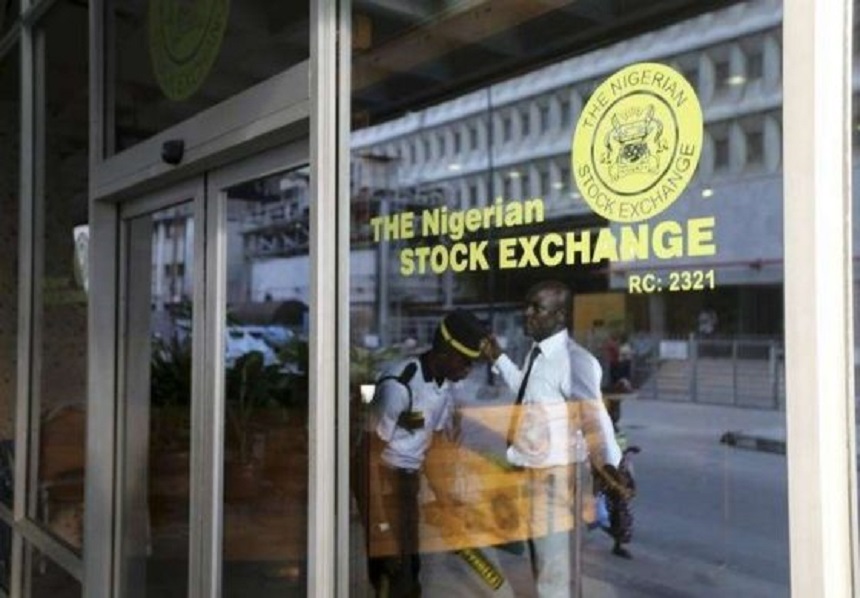
Not less than 39 stockbroking companies in the country have had their operating licences revoked by the Nigerian Stock Exchange (NSE).

Business Post reliably gathered that the affected firms had their expulsion confirmed by the Council of the NSE on December 13, 2018.

As a result, investors have been cautioned not to deal with stockbrokers, who have been kicked out of the system.

They have been advised to approach the expelled stockbroking firms and request for transfer of their stocks to any active licensed dealing companies.

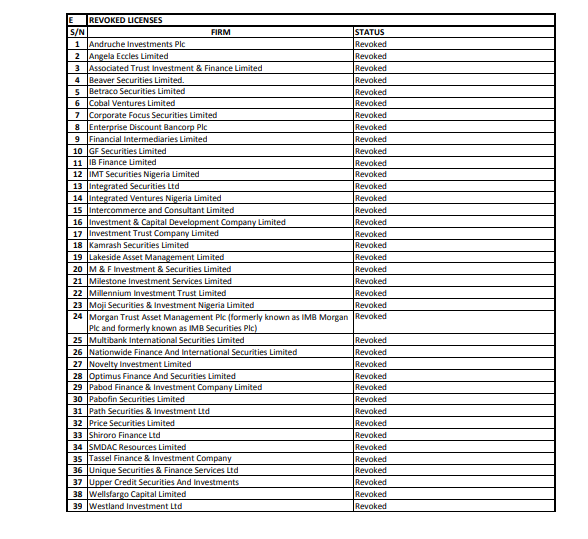
A document obtained by Business Post on Friday revealed that the affected companies include Andruche Investments Plc, Angela Eccles Limited, Associated Trust Investment & Finance Limited, Beaver Securities Limited, Betraco Securities Limited, Cobal Ventures Limited, Corporate Focus Securities Limited, Enterprise Discount Bancorp Plc, and Financial Intermediaries Limited.

Others are GF Securities Limited, IB Finance Limited, IMT Securities Nigeria Limited, Integrated Securities Ltd, Integrated Ventures Nigeria Limited, Intercommerce and Consultant Limited, Investment & Capital Development Company Limited, Investment Trust Company Limited, Kamrash Securities Limited, Lakeside Asset Management Limited, M & F Investment & Securities Limited, Milestone Investment Services Limited, Millennium Investment Trust Limited and Moji Securities & Investment Nigeria Limited.

Also on the list are Morgan Trust Asset Management Plc (formerly known as IMB Morgan Plc and formerly known as IMB Securities Plc), Multibank International Securities Limited, Nationwide Finance And International Securities Limited, Novelty Investment Limited, Optimus Finance and Securities Limited, Pabod Finance & Investment Company Limited and Pabofin Securities Limited.

The remaining are Path Securities & Investment Ltd, Price Securities Limited, Shiroro Finance Ltd, SMDAC Resources Limited, Tassel Finance & Investment Company, Unique Securities & Finance Services Ltd, Upper Credit Securities and Investments, Wellsfargo Capital Limited, and Westland Investment Ltd.

Business Post gathered that as Monday, December 24, 2018, the capital market has a total of 195 active dealing member firms, 51 inactive dealing member firms, 5 dealing member firms deregistered by the Securities and Exchange Commission (SEC), 5 resignation in progress, 39 revoked licenses and 121 expelled dealing member firms.
Dipo Olowookere is a journalist based in Nigeria that has passion for reporting business news stories. At his leisure time, he watches football and supports 3SC of Ibadan. Mr Olowookere can be reached via [email protected]

Click to comment

Leave a Reply

Your email address will not be published. Required fields are marked *

Economy

Cross River Targets International Coffee Market by 2032 With 30 million Seedlings Initiative

Published

on

coffee seedlings

By Adedapo Adesanya

The Cross River State Government has unveiled plans to establish the state as a major player in the international coffee market by 2032 through the distribution of 30 million coffee seedlings to smallholder farmers over seven years.

The state Commissioner for Agriculture, Mr Johnson Ebokpo, disclosed the plan during a press briefing in Calabar, saying Governor Bassey Otu approved the initiative as part of efforts to diversify the state’s economy.

According to Mr Ebokpo, about 13 million coffee seedlings have already been distributed to farmers following an enumeration exercise, with the programme expected to run from 2024 to 2032.

He said the government aims to produce “flavoured coffee” that will appeal to international buyers, adding that coffee production and exports are expected to generate billions of dollars in revenue and boost livelihoods across communities.

To ensure export-quality standards, the commissioner said the state would establish communal washing and drying stations while linking farmers directly with international buyers.

Mr Ebokpo also said the government plans to establish a commodity exchange to guarantee markets for farmers and provide training for all participants in the coffee value chain to equip them with the knowledge required for export.

He noted that coffee production would be implemented in phases, with the current focus on smallholder farmers, most of whom are women, while plans are being developed to accommodate commercial farmers.

The commissioner urged residents to participate in the coffee production programme, adding that a bill to regulate the production, export and consumption of coffee is currently before the Cross River State House of Assembly.

Nigeria’s coffee industry remains relatively small compared with leading African producers, but it has significant untapped potential because of favourable growing conditions in states such as Cross River, Taraba, Plateau and parts of Kaduna, as well as increasing domestic consumption and rising global demand for speciality coffee.

Nigeria currently produces about 1,800 metric tonnes of coffee annually, ranking 48th globally, while exporting just 53 tonnes valued at less than $80,000 in 2023.

Industry experts say the country’s favourable climate and vast arable land leave significant room for growth, especially as African producers such as Ethiopia and Uganda earn billions of Dollars annually from coffee exports.

Continue Reading

Economy

Caverton Blames Resignation of Chief Financial Officer, Others for Delay in Filing FY25 Results

Published

on

Caverton

By Aduragbemi Omiyale

Caverton Offshore Support Group Plc has apologised to its shareholders and investing public for being unable to file its Audited Financial Statements for the year ended December 31, 2025.

Companies trading their stocks on the Nigerian Exchange (NGX) Limited are required to submit their audited results for a financial year, at most three months after.

For its financial statements for the 2025 fiscal year, which ended December 31, 2025, the aviation firm was required to file on or before March 31, 2026.

However, six months later, it had yet to file the results, a development which may affect its securities at the market, as it might face suspension after prolonged default.

In a notice to the exchange, Caverton partly attributed the delay to the resignation of its chief financial officer.

The company noted that the exit of the CFO during the audit process “disrupted internal review and sign-off procedures.”

It also blamed administrative delays affecting the external auditors’ regulatory clearance from the Financial Reporting Council of Nigeria (FRCN), as well as unforeseen technical issues with the Company’s Enterprise Resource Planning (ERP) system, which temporarily affected data extraction and financial reconciliations for the default.

However, the organisation promised to release the financial statements on or before Friday, July 10, 2026, noting that the audit is “now at its concluding stage.”

Continue Reading

Economy

East African Dangote Refinery in Kenya to Cost $17bn

Published

on

Fifth Crude Cargo Dangote Refinery

By Adedapo Adesanya

The planned East African Dangote Refinery to be constructed in Kenya will cost as much as $17 billion.

In April, it was reported that Mr Aliko Dangote, alongside the Presidents of Kenya and Uganda, Mr William Ruto and Mr Yoweri Museveni, respectively, planned to build a new oil refinery in Tanzania. The project will include a pipeline that links the Kenyan port city of Mombasa to the northeastern Tanzanian harbour of Tanga, where the facility will be situated.

However, Tanzanian President Samia Suluhu Hassan did not align with the plan, which has since shifted to Kenya.

According to Bloomberg, the refinery, which would be a replica of his Lagos-based 700,000-barrel-a-day refinery, would take about five years to build in Lamu, a coastal town in southeastern Kenya, chosen for “commercial and technical” reasons.

In May, President Ruto announced that Mr Dangote would start construction of the facility in Kenya this year.

Mr Dangote has also said he would need a lot of government protection from President Ruto, noting that it would mean land, financing, and most importantly, protection from what he called the dumping of cheap fuel from the likes of Russia or India.

“There is no refinery in the world that can survive without that protection,” he said recently, adding that, “If we have an agreement, we can start this year.”

Dangote is already in the process of doubling the capacity of his $20 billion Nigerian plant to 1.4 million barrels a day by 2028, to make it about the largest globally.

The continent’s biggest refinery reached full capacity weeks before the conflict in Iran and has helped Nigeria become self-sufficient in fuel as well as export to several countries.

Despite this, the African Petroleum Producers’ Organisation (APPO) says that the continent exports three-quarters of its crude production and imports 70 per cent of its refined fuels.

Continue Reading

Trending