Connect with us

Economy

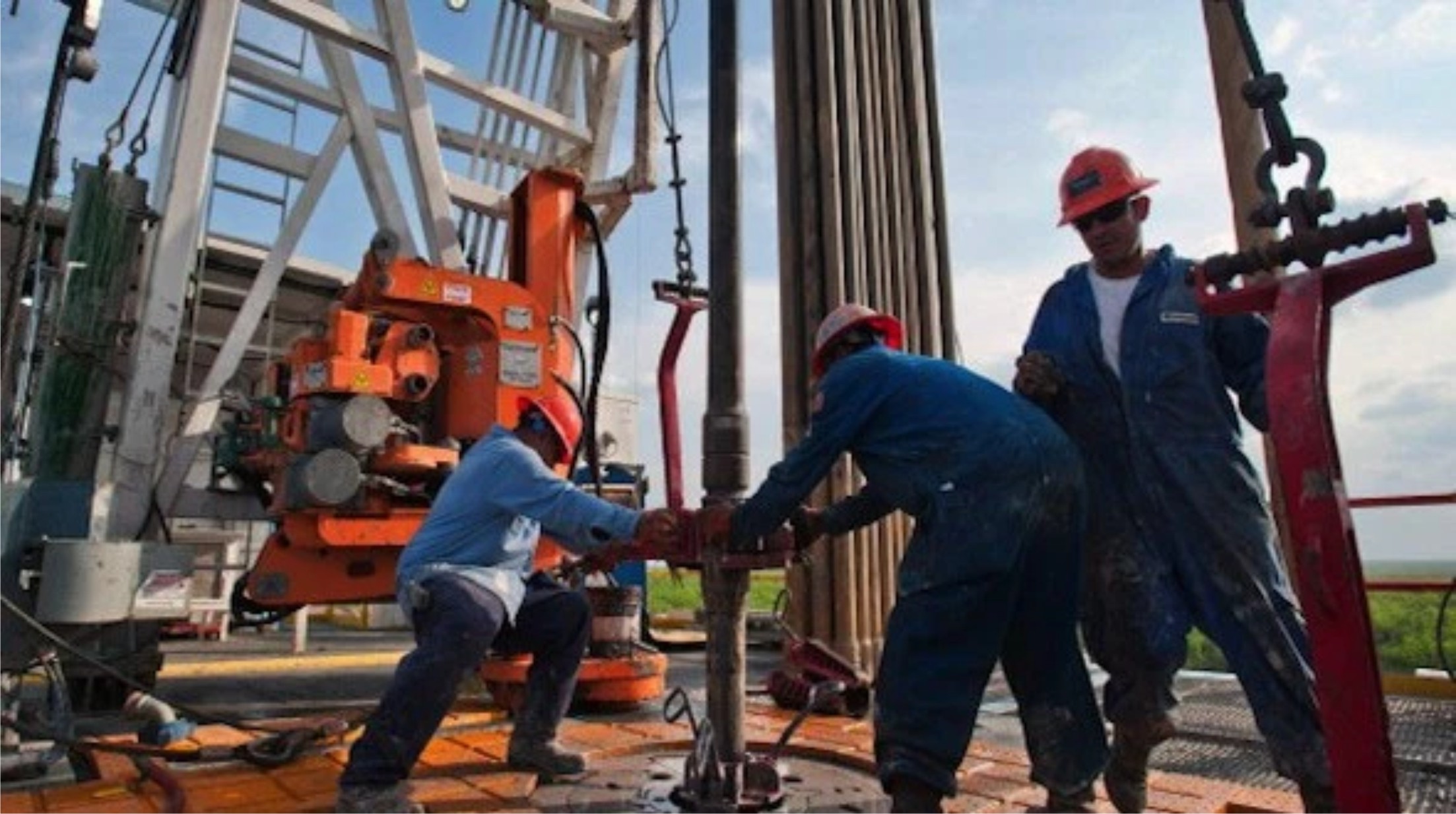
NUPRC Blames PENGASSAN for Oil Production Decline in September

Published

on

Nigeria's oil production

By Adedapo Adesanya

The decline in crude oil production recorded by Nigeria in September 2025 has been attributed to the short industrial action embarked upon by members of the Petroleum and Natural Gas Senior Staff Association of Nigeria (PENGASSAN).

Crude oil and condensates production for the month of September 2025 fell to an average of 1.581 million barrels per day.

In a statement on Saturday, the Nigerian Upstream Petroleum Regulatory Commission (NUPRC) blamed oil workers’ strike for the decline despite it being a 1.6 per cent year-on-year growth.

The 1.581 million barrels per day average production in September comprises 1.39 million barrels per day of crude oil and 191,373 barrels per day of condensate.

PENGASSAN carried out a three-day industrial action, shutting down some production and export facilities.

Recall that the chief executive of the Nigerian National Petroleum Company (NNPC), Mr Bashir Ojulari, claimed that the country lost around 200,000 barrels of crude production over the course of the industrial action.

On its part, the NUPRC also noted that two strategic facilities had a scheduled turnaround maintenance which led to a reduction in overall production.

In September, the industry recorded total crude oil and condensate production of 47.43 million barrels which reflects a modest 1.61 per cent year-on-year increase in average daily crude oil and condensate production year on year.

This is a slight improvement over the 1.55 million barrels per day recorded in the same month of 2024, an uptick that suggests incremental progress.

However, when measured on a month-on-month basis, crude oil and condensate production slightly dropped by 3.09 per cent in September 2025, compared to the 1.63 million barrels per day recorded in August 2025.

Despite the glitches experienced during the period, average crude oil production in September stood at 93 per cent of the OPEC quota of 1.5 million barrels per day.

During the review month, peak combined crude oil and condensate production hit 1.81 million barrels per day, while the lowest was 1.35 million barrels per day.

Analysis of production by the top eight streams shows Forcados Blend accounted for 15.86 per cent of total production, while Bonny Light accounted for 13.31 per cent of September production.

Qua Iboe was third accounting for 9.88 per cent; Escravos Light contributed 8.96 per cent, while Bonga Crude delivered 6.83 per cent of production in the review month.

Agbami Condensate accounted for 4.94 per cent; Erha Crude accounted for 4.55 per cent, while Amenam Blend accounted for 4 2 per cent of production.


Adedapo Adesanya is a journalist, polymath, and connoisseur of everything art. When he is not writing, he has his nose buried in one of the many books or articles he has bookmarked or simply listening to good music with a bottle of beer or wine. He supports the greatest club in the world, Manchester United F.C.

Economy

NB Plc’s Strong Recovery, Improved Profitability Excite Shareholders

Published

on

Nigerian Breweries NB Plc shareholders

By Aduragbemi Omiyale

The resilience shown by Nigerian Breweries Plc in the 2025 fiscal year, despite a volatile macroeconomic environment, which consumed several businesses, has not got without notice.

Shareholders of the brewery giant applauded the board and management for the strong recovery and improved profitability recorded in the year.

At the company’s 80th Annual General Meeting (AGM) on Wednesday, April 22, 2026, in Lagos, they attributed these achievements to disciplined cost management and a significant reduction in finance expenses.

“We are proud of how the company has withstood the ups and downs of a challenging environment. The return to profitability and the reversal of the negative cash position recorded in the previous two financial years are commendable,” a member of the Noble Shareholders Association, Mr Owolabi Opeyemi, said at the gathering.

Also, the immediate past Secretary of the Independent Shareholders Association of Nigeria (ISAN), Mr Eke Emmanuel, noted that the company’s resilience reflects strong leadership and a sound strategic direction.

“It is good news that we have been here for 80 years. There is no reason why we will not be here for the next 80 years with what we have achieved. To return to this level of profitability and cash position shows the Board has done an enormous amount of work,” he said.

Addressing investors at the AGM, the board chairman, Mrs Juliet Anammah, expressed confidence that the company is firmly on a recovery path following the net losses recorded in the past two years due to macroeconomic pressures and fiscal reforms.

She thanked shareholders for their continued support and reaffirmed that the company will build on its 2025 performance as it accelerates growth ambitions.

 “We have a solid foundation built over eight decades, anchored on a strong portfolio of brands, an extensive nationwide sales and supply chain network, ongoing digital transformation, and most importantly, our people. These strengths remain critical to sustaining our leadership position,” the former chief executive of Jumia Nigeria said.

Ms Anammah also addressed the company’s dividend position, noting that the decision not to declare a dividend reflects the need to rebuild retained earnings impacted by prior macroeconomic shocks, particularly foreign exchange-related losses.

“We recognise the importance of dividend payments to our shareholders and sincerely appreciate your continued understanding. While we are not declaring a dividend at this time due to negative retained earnings, we are working diligently to restore the company’s financial position and return to dividend payments as soon as it is sustainable to do so,” she added.

She further noted that the board remains vigilant to external risks, including the Middle East crisis and broader macroeconomic challenges, which may impact the pace of improvement in the 2026 financial year.

Continue Reading

Economy

Crude Oil Prices Jump Over $3 on Escalating Hormuz Tensions

Published

on

crude oil prices

By Adedapo Adesanya

Crude oil prices spiked by about $3 a barrel on Thursday as Iran tightened its grip on the Strait of Hormuz, with peace talks with the United States remaining distant.

Brent crude futures ‌settled at $105.07 a barrel after gaining $3.16 or 3.1 per cent, while the West Texas Intermediate futures finished at $95.85 a barrel, up $2.89 or 3.11 per cent.

Progress toward reopening the passage remains stalled as Iran’s parliament speaker said the US blockade was “bullying” and a “flagrant breach of the ceasefire,” adding that negotiations would not resume with it in place.

US President Donald Trump said the blockade would continue. An American can wage war without Congressional approval for 60 days, a deadline which expires May 1.

Ahead of that, Reuters reported that air defences were engaging targets ​over Tehran. That followed reports of drone attacks ​on Iranian Kurdish opponents of the Iranian government at a base in Iraq.

President Trump also said in a social media post that he had ordered the US Navy “to ​shoot and kill any boat” mining the strait.

While he extended a ceasefire between the countries after a request by Pakistani mediators, Iran and the US are still restricting transit of ‌ships ⁠through the strait, which carried about 20 per cent of daily global oil supplies until the start of the war on February 28.

This week, one ship passed through the waterway on Tuesday. However, by Wednesday, more ships tried, but Iran attacked two and reportedly seized two more.

The US also blockaded traffic to and from Iranian ports in the Persian Gulf, but it appears that the blockade has not stopped traffic completely. It was reported that as many as 34 sanctioned and Iranian-linked tankers moved in and out of the waterway between April 13 and 21.

The US military has intercepted at least three Iranian-flagged tankers in Asian waters and is redirecting them away from positions near India, Malaysia and Sri Lanka.

Meanwhile, the executive director of the International Energy Agency (IEA), Mr Fatih Birol, said the war in the Middle East and the closure of the Strait of Hormuz have created the largest energy security threat the world has ever faced.

“As of today, we’ve lost 13 million barrels per day of oil … and there are major disruptions in vital commodities,” Mr Birol said in an interview, adding that the IEA-coordinated record emergency release of 400 million barrels of oil stocks last month cannot offset the massive supply loss.

Continue Reading

Economy

Customs Street Gains 1.48% as Year-to-Date Return Hits 43.20%

Published

on

Customs Street Nigerian Stock Exchange

By Dipo Olowookere

The year-to-date return of the Nigerian Exchange (NGX) Limited stretched to 43.20 per cent after a 1.48 per cent rise on Thursday.

Demand pressure on the consumer goods, banking and industrial goods stocks contributed to the surge recorded during the session.

Data showed that the consumer goods counter expanded by 4.67 per cent, the banking index rose by 1.53 per cent, and the industrial goods segment improved by 1.03 per cent. They offset the 0.91 per cent loss suffered by the insurance space and the 0.06 per cent cut posted by the energy industry.

When the closing gong was struck, the All-Share Index (ASI) of Customs Street increased by 3,251.48 points to 222,837.68 points from 219,586.20 points, and the market capitalisation moved up by N2.093 trillion to N143.477 trillion from N141.384 trillion.

The duo of Unilever Nigeria and UAC Nigeria led the advancers’ log after growing by 10.00 per cent each to sell for N121.00 and N133.10, respectively. Trans-Nationwide Express jumped 9.97 per cent to N8.71, Tantalizers appreciated by 9.80 per cent to N3.81, and Dangote Sugar expanded by 9.78 per cent to N73.50.

On the flip side, McNichols lost 9.93 per cent to close at N6.44, Multiverse depreciated by 9.85 per cent to N23.35, Coronation Insurance retreated by 9.26 per cent to N2.45, Abbey Mortgage Bank moderated by 9.24 per cent to N5.40, and Japaul slipped by 5.94 per cent to N3.01.

Business Post reports that there were 35 price gainers and 37 price losers during the session, representing a negative market breadth index and weak investor sentiment.

Access Holdings was the busiest equity for the day with 39.5 million units worth N1.3 billion, UBA traded 37.5 million units valued at N2.0 billion, Zenith Bank exchanged 36.3 million units for N4.8 billion, Fidelity Bank sold 32.1 million units valued at N700.8 million, and GTCO transacted 27.6 million units worth N3.6 billion.

At the close of transactions, investors bought and sold 667.9 million units valued at N38.1 billion in 53,062 deals compared with the 683.7 million units worth N36.2 billion traded in 51,694 deals at midweek.

This showed that the trading volume shrank by 2.28 per cent, and the trading value and number of deals soared by 5.25 per cent and 2.65 per cent apiece.

Continue Reading

Trending