Connect with us

Economy

Oando Raises Turnover by 26%, PAT by 117% in 6 Months

Published

on

oando nigeria

By Modupe Gbadeyanka

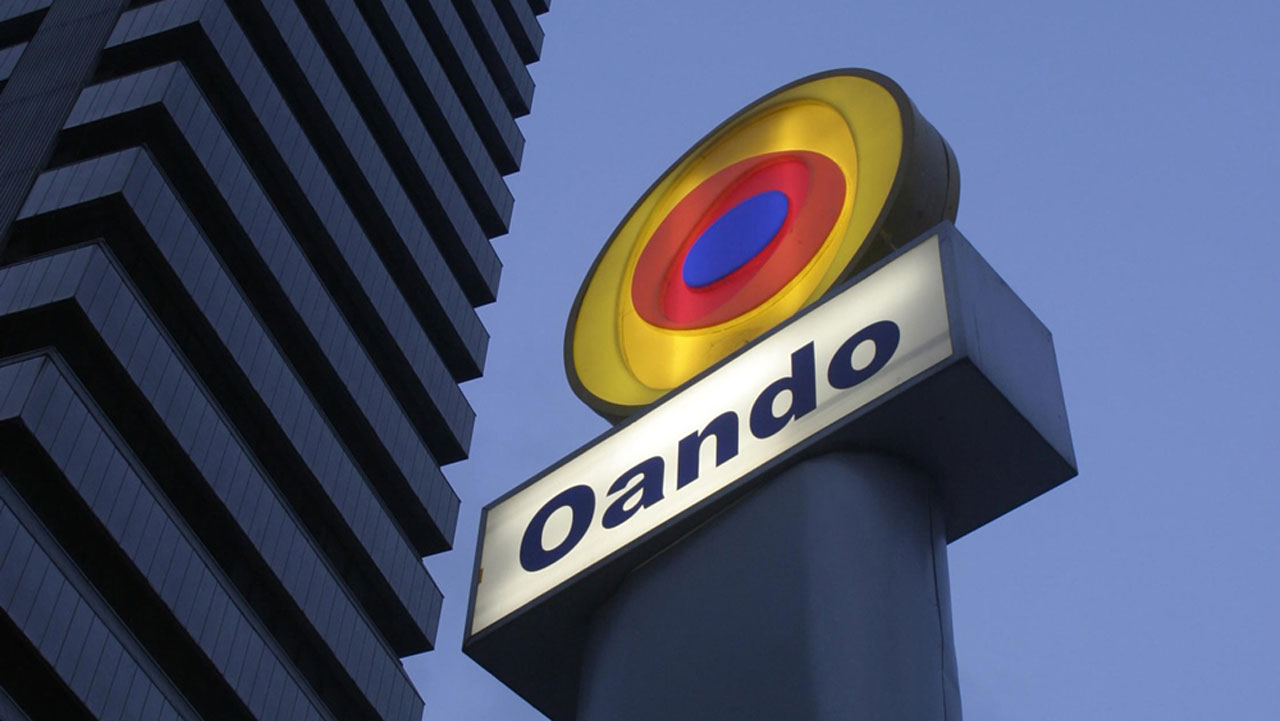
Leading indigenous energy group in Nigeria, Oando Plc, on Monday announced its audited results for the six months period ended June 30, 2017.

It is no doubt that the first half of this year witnessed the country’s production levels steadily recovering to normalcy largely due to relative peace in the oil-rich Niger Delta region.

In addition, the more recent resumption of activity on the Trans Forcados Pipeline has resulted into increase in the volume of oil produced by the nation.

There is also optimism around the approval of the Petroleum Industry Governance and Institutional Framework Bill (PIGB), which should result in a more efficiently regulated sector and a conducive business environment for industry players.

During the period under review, Oando Plc recorded an increase in its turnover by 26 percent, closing at N267.1 billion compared with N213.3 billion recorded in the first half of last year.

Also, its gross profit recorded a growth of 76 percent, finish at N33.4 billion on June 30, 2017, against N19 billion in the corresponding period of 2016.

Furthermore, the oil company posted a profit after tax of N4.6 billion in contrast to N26.9 billion loss it recorded a year ago, indicating a rise by 117 percent.

Commenting on the financial statements, the Group Chief Executive Officer of Oando Plc, Mr Wale Tinubu, stated that, “With security concerns in the Niger Delta receding, Nigeria’s economic recovery has been buoyed by a boost in oil output, while the legislative approval of certain segment of the Petroleum Industry Bill (PIB) provides greater long-term policy certainty for the sector.

“Our returns underline our continued successful foray into the upstream. Within the prevalent crude price regime, we remain committed to optimising out overall production base, seeking unique profit-driven opportunities to further partner with IOCs, while firming up our balance sheet to provide greater shareholder value.”

It was disclosed that Oando Energy Resources (OER) recorded an average production of 39,950 boe/day compared with 44,892 boe/day in the first half of 2016. This reduction was primarily due to significant reductions in gas production and delivery caused by a ruptured Gas Transmission System (GTS-4) gas line, which supplies the firm’s contractual gas to the Nigerian Liquefied Natural Gas Limited (NLNG).

Also, the Trans Forcados Pipeline continued to suffer downtime in the first five months of the year and due to repairs and planned maintenance activities which resulted in reduced production from Ebendo.

In June 2017, the company successfully realised N3.2 billion in net cash from the crystallisation of the Corporate Facility hedges (1,590 bbls/day) via early settlement with hedging counterparties N3.5 billion relating to settlement of hedges offset against N336.5 million representing the cost of the planned reset, which will be utilised in paying down its existing debt obligations.


Modupe Gbadeyanka is a fast-rising journalist with Business Post Nigeria. Her passion for journalism is amazing. She is willing to learn more with a view to becoming one of the best pen-pushers in Nigeria. Her role models are the duo of CNN's Richard Quest and Christiane Amanpour.

Click to comment

Leave a Reply

Your email address will not be published. Required fields are marked *

Economy

Oil Prices Rise 2% as Middle East Hostilities Escalate

Published

on

Oil Prices fall

By Adedapo Adesanya

Oil prices ‌rose around 2 per cent on Wednesday as hostilities in the Middle East erupted anew and talks between Iran and the United States showed little progress.

Brent futures grew by $1.81 or 1.89 per cent to $97.81 per barrel, and the US West Texas Intermediate (WTI) crude climbed $2.26 or 2.41 per cent to $96.02 a barrel.

According to reports, Iran launched ballistic missiles toward regional neighbours Kuwait and ​Bahrain, killing one person and injuring dozens, while the US forces conducted strikes on Iran’s Qeshm ​Island.

Iranian drones and missiles struck Kuwait International Airport overnight, causing the country to immediately suspend air traffic, activate emergency procedures, and divert flights to alternative airports.

Iran’s Revolutionary Guard said the operation was retaliation for recent US military actions and warned that regional states supporting American operations could face further consequences. Kuwait hosts major US military facilities and serves as a key logistics hub for American operations across the Middle East, but until then had largely avoided becoming a direct target.

Following the overnight attack, the United Arab Emirates (UAE) called for a united Gulf stance.

Meanwhile, President Donald Trump said Iran had agreed not to have a nuclear weapon and that Supreme Leader ‌Ayatollah Mojtaba ⁠Khamenei was involved in negotiations. He has insisted this week that discussions remain active and said a broader agreement could emerge within days, while Iranian officials have delivered contradictory messages.

Iranian Foreign Minister Abbas Araqchi said contacts with American representatives have not been cut off, but no progress has been made in the negotiations.

The prolonged closure of the Strait of Hormuz continues to bottleneck global energy supplies, driving sustained upward pressure on oil markets.

The International Energy Agency (IEA) has warned that global ​oil inventories could hit critical ​levels ahead of peak summer ⁠demand if stock draws continue at their current pace.

Crude oil inventories in the US decreased by 8.0 million barrels during the week ending May 29, according to data from the Energy Information Administration (EIA) released on Wednesday. The EIA’s data release follows figures by the American Petroleum Institute (API) that were released a day earlier, which reported that crude oil inventories saw a draw of 6.75 million barrels in the period.

Continue Reading

Economy

CSCS Boss Shantali Says T+1 Settlement Targets Long-Term Capital Market Growth

Published

on

Shehu Yahaya Shantali

By Adedapo Adesanya

The chief executive of the Central Securities Clearing System (CSCS) Plc, Mr Shehu Yahaya Shantali, says Nigeria’s shift to a T+1 settlement cycle goes beyond faster transactions and is intended to deepen long-term growth in the capital market.

Speaking at a ceremony marking the commencement of T+1 settlement in Lagos, Mr Shantali described the development as a strategic milestone that goes beyond faster transaction timelines to reinforce the market’s structural strength and future readiness.

According to him, the shortened settlement cycle reflects years of investment in infrastructure, technology, and stakeholder collaboration aimed at transforming Nigeria into a globally competitive investment destination.

Nigeria recently became the first market in Africa to adopt the T+1 framework, reducing the settlement period for securities transactions from two days to one.

According to the boss of the securities depository firm, the shortened settlement cycle reflects years of investment in infrastructure, technology, and stakeholder collaboration aimed at transforming Nigeria into a globally competitive investment destination.

“These investments are not solely for T+1 settlement but to position Nigeria’s capital market for sustained growth and longterm competitiveness,” he said.

The migration from T+1 settlement is expected to enhance liquidity, improve capital efficiency, and reduce counterparty risk across the market.

Mr Shantali explained that the T+1 transition represents the culmination of a decades-long evolution from a manual, paper-based system to a fully automated, technology-driven post-trade environment.

He recalled that investors previously waited several months to complete transactions under the old system, but successive reforms, including transitions to T+5, T+3, and T+2, steadily improved efficiency and market integrity.

The latest upgrade, he said, builds on extensive preparations undertaken over the past three years, including system enhancements, process optimisation, and market-wide readiness assessments coordinated by the SEC and industry stakeholders.

On his part, the Director-General of the Securities and Exchange Commission (SEC), Mr Emomotimi Agama, said the reform signals Nigeria’s readiness to compete at the highest levels of global finance, noting that the country transitioned from T+2 to T+1 within six months.

“The era of T+1 has begun,” Mr Agama said, adding that shorter settlement cycles are critical to attracting global capital and strengthening investor confidence.

He noted that leading markets such as the United States, Canada, and India have already adopted T+1 settlement, while several European markets are preparing to migrate, making Nigeria’s transition a crucial step in maintaining international relevance.

Continue Reading

Economy

Businesses Not Feeling Full Benefits of Tinubu’s Reforms—NECA

Published

on

NECA Adewale Smatt-Oyerinde

By Adedapo Adesanya

Many private sector operators have yet to experience the anticipated gains of President Bola Tinubu’s reforms as they continue to grapple with inflation, energy costs and exchange rate volatility, the Director-General of the Nigeria Employers’ Consultative Association (NECA), Mr Adewale-Smatt Oyerinde, has said.

Mr Oyerinde acknowledged that the removal of fuel subsidy and liberalisation of the foreign exchange market reflected the government’s commitment to market-driven economic policies and improved transparency across sectors.

He said the reforms had enhanced fuel availability, reduced recurring supply disruptions and signalled policy consistency to both local and foreign investors, but noted that while there are indications of improved investor confidence, many domestic businesses, particularly Micro, Small and Medium Enterprises (MSMEs), continue to contend with operational challenges.

The NEC chief said the depreciation of the Naira had increased production costs, affected competitiveness and heightened operational risks for many businesses.

“Many private sector operators are yet to experience the anticipated gains of the reforms as they continue to grapple with inflation, energy costs and exchange rate volatility,” he said in a recent interview with the News Agency of Nigeria (NAN) while assessing the administration’s economic performance.

Mr Oyerinde said declining consumer purchasing power and increasing production expenses had placed pressure on businesses, with some firms adjusting investment plans and operations in response to prevailing economic conditions.

On infrastructure and refining, the NECA DG said developments in housing, industrial investments and local petroleum refining had created opportunities and contributed to improved fuel supply.

He, however, identified power supply as a major challenge facing businesses, citing persistent grid instability and reliance on alternative energy sources.

“In spite of the ongoing reforms in the power sector, insufficient electricity supply remains the number one constraint to business productivity and competitiveness across the country,” he said.

Mr Oyerinde said that although some macroeconomic indicators, including foreign reserves and government revenues, had shown improvement, the gains were yet to be broadly reflected in business operations and household welfare.

“Inflation, high energy costs, multiple taxation, logistics challenges and weak consumer spending continue to constrain productivity and limit business expansion,” he said.

He said employers remained cautious about large-scale recruitment amid high borrowing costs, foreign exchange volatility and rising operating expenses.

According to him, sustainable job creation will depend on deeper structural reforms that reduce the cost of doing business and improve access to affordable finance.

He urged the government to prioritise stable power supply, lower energy costs, tax harmonisation, policy consistency and foreign exchange stability to accelerate economic recovery and strengthen investor confidence.

Continue Reading

Trending