
Economy
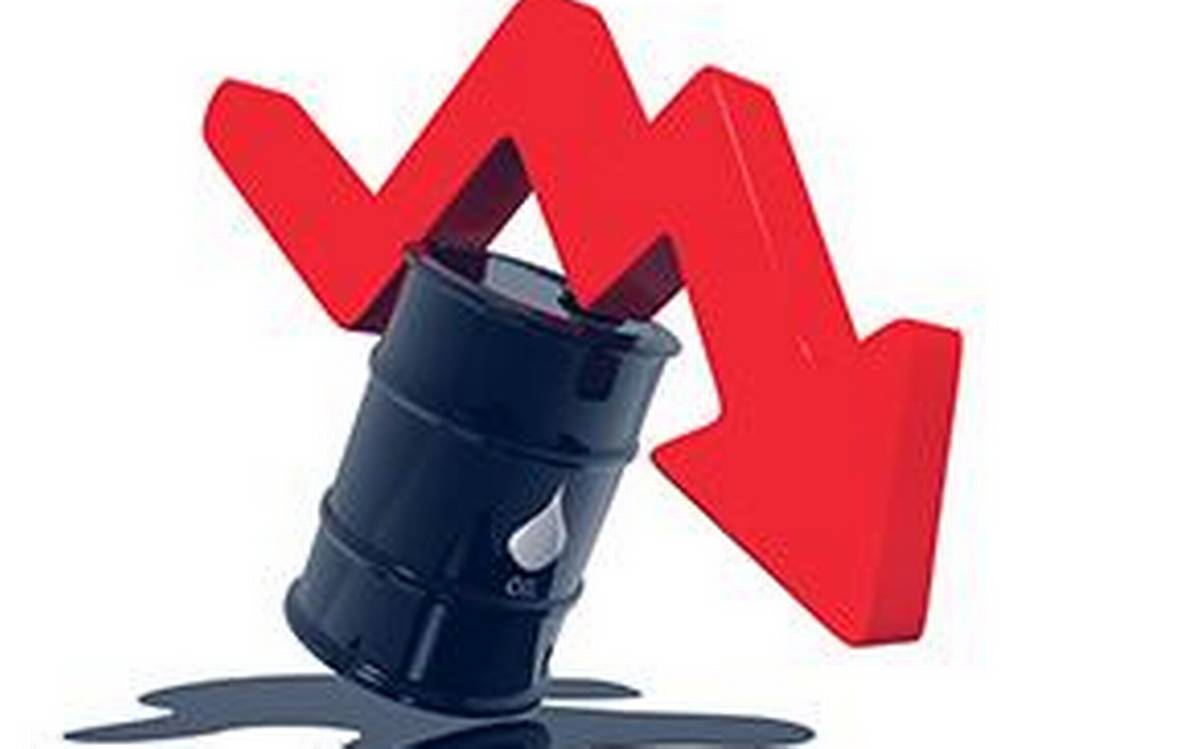
Oil Prices Fall on Smaller Crude Stocks Draw, Libya Supply Risks

By Adedapo Adesanya
Oil prices were down on Wednesday after a smaller-than-expected draw in US crude stockpiles and as concerns over Chinese demand persisted, with Brent crude futures losing 90 cents or 1.13 per cent to sell at $78.65 a barrel and the US West Texas Intermediate (WTI) crude futures shedding $1.01 or 1.34 per cent to quote at $74.52 per barrel.
The US Energy Information Administration reported inventories of the commodity had declined in the week to August 23.
Oil inventories shed 800,000 barrels in the reporting period, compared with a draw of 4.6 million barrels for the previous week.
A day before the EIA’s report was out, the American Petroleum Institute (EIA) reported an estimated crude oil inventory draw of 3.4 million barrels for the week to August 23, largely in line with analyst expectations.
Meanwhile, China demand worries also continued to weigh on prices as recent data pointed to a struggling economy and slowing oil demand from refiners.
Market analysts noted that demand in China remains weak and the expected second-half rebound has yet to show credible signs of commencing.
Also, traders were torn between supply worries amid Libya’s production shutdown, and demand suspicions on lower refining margins.
Libya is shutting down its oil fields amid a dispute between rival political factions. The fields being shut down are all in the east of the country, which is under the control of a government that is not internationally recognized and could see about 1.2 million barrels per day in production shut down.
Analysts warned that the Libyan disruptions could tighten the oil market, considering real barrels are removed, but investors may want to see a drop in Libyan crude exports first before moving ahead.
The geopolitical premium to oil prices remains in place as well as Israel continues to bomb Gaza and ceasefire talks stall, while Israel turns its missiles to Lebanon to pre-empt an attack threatened by Hezbollah.
Over the weekend, Israel and Hezbollah bombarded each other with rockets and missiles across the Lebanese border. This heightened worries that geopolitical risks will continue to put world crude oil prices on edge.







**Revokes Trading Licences of LMB, Platinum Stockbrokers
By Aduragbemi Omiyale
A stockbroking company, Premium Capital and Stockbrokers Limited, has been fined N5 million for engaging in “unauthorised sale of its clients’ securities.”
A circular issued by the Nigerian Exchange (NGX) Regulation Limited disclosed that the trading licence of the organisation has also been revoked.
In the notice signed by the Head of Market Regulation for NGX RegCo, Chinedu Akamaka, Premium Capital violated Rule 11.9 of the Rulebook of The Exchange, 2015 (Dealing Members’ Rules), which focuses on the Prohibition of Unauthorised Sale of Securities.
Business Post reports that Premium Capital was not the only stockbroker that had its trading licence withdrawn, as it also affected others.
The licence of LMB Stockbrokers Limited was revoked by NGX RegCo for prolonged inactivity, which falls contrary to Rule 6.4: Revocation of Inactive Dealing Members’ Licences, Rulebook of The Exchange, 2015 (Dealing Members’ Rules), as amended.
The same also affected Platinum Stockbrokers Limited, which has not witnessed activity on the floor of the NGX Limited for a while.
Similarly, the authorised dealing clerkship of Mr Bernard Oluwole Ilori, was taken back with immediate effect in alignment with an earlier determination by the Securities and Exchange Commission’s (SEC) Administrative Proceedings Committee (APC), which arose from his involvement in regulatory infractions connected to Mutual Alliance Investment and Securities Limited and resulted in his 10-year ban from the Nigerian capital market since March 25, 2021.
Investors have been “strongly advised not to engage in any activity with the firms” whose trading licenses have been revoked.

By Aduragbemi Omiyale
The securities of DN Tyre and Rubber Plc, and Greif Nigeria Plc have been delisted by the regulatory arm of the Nigerian Exchange (NGX) Group Plc, NGX Regulation Limited.
A statement signed by the Head of the Issuer Regulation Department of NGX RegCo, Mr Godstime Iwenekhai, said the delisting became effective on Thursday, April 9, 2026.
In the notice issued yesterday, it was further disclosed that the action complied with the provisions of Clause 14 of the Amended Form of General Undertaking, for Listing on Nigerian Exchange Limited General Undertaking.
According to this clause, “The exchange reserves the right to, at its sole and absolute discretion, suspend trading in any listed securities of the Issuer, delist such securities, or remove the name of the issuer (listed company) from the daily official list of the exchange with or without prior notice to the issuer, upon failure of the issuer to comply with any one or more of the provisions of this General Undertaking, or when in its sole discretion, the exchange determines that such suspension of trading or delisting is in the public interest, or otherwise warranted.”
It was explained that the shares of the two firms were delisted because they fell below the listing standards.
“The securities of DN Tyre and Rubber Plc and Greif Nigeria have been delisted from the facilities of Nigerian Exchange Limited (NGX) effective Thursday, April 9, 2026, on the grounds that the companies are operating below the listing standards of NGX and their securities are no longer considered suitable for continued listing and trading in the market,” the disclosure noted.
By Adedapo Adesanya
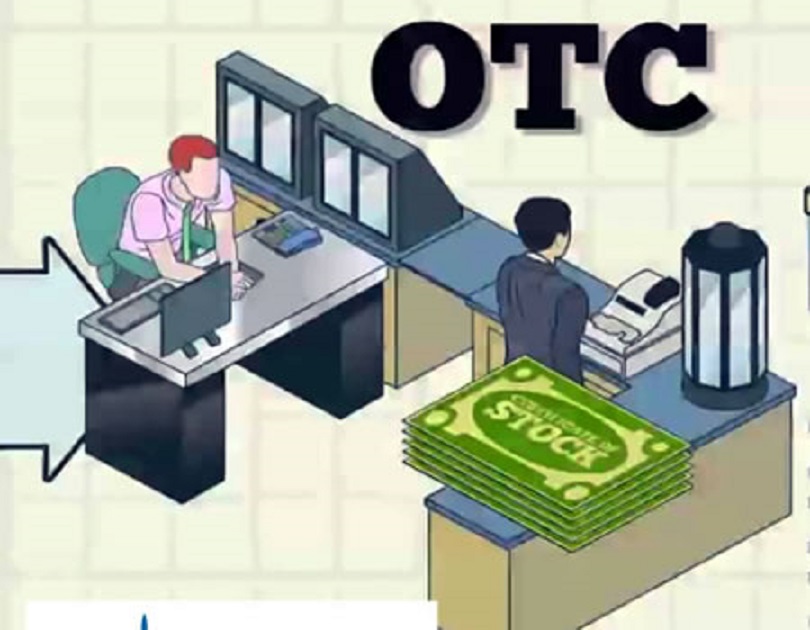
The NASD Over-the-Counter (OTC) Securities Exchange declined by 0.95 per cent on Thursday, April 9, plunging the Unlisted Security Index (NSI) by 37.41 points to 3,893.50 points from 3,930.91 points.
In the same vein, the market capitalisation lost N22.38 billion during the session to N2.329 trillion from the N2.351 trillion it ended at midweek.
The OTC securities exchange was under selling pressure yesterday, resulting in a negative market breadth index after three securities lost weight and one gained weight.
Central Securities Clearing System (CSCS) Plc led the losers’ table after it shed N3.74 to sell at N64.21 per unit versus N67.95 per unit. Food Concepts Plc went down by 19 Kobo to N2.68 per share from N2.87 per share, and Free Range Farms Plc dropped 10 Kobo to settle at 90 Kobo per unit versus N1.00 per unit.
On the flip side, MRS Oil gained N5 to close at N165.00 per share compared with the preceding day’s N160.00 per share.
At the trading session, there was a 23.5 per cent jump in the value of securities to N40.4 million from N32.7 million, but the volume of securities fell by 81.9 per cent to 1.04 million units from 5.7 million units, and the number of deals went down by 29.7 per cent to 26 deals from the preceding session’s 37 deals.
At the close of transactions, Great Nigeria Insurance (GNI) Plc remained the most active stock by value on a year-to-date basis with 3.4 billion units valued at N8.4 billion, followed by CSCS Plc with 57.5 million units exchanged for N3.9 billion, and Okitipupa Plc with 27.5 million units traded for N1.8 billion.
Also, GNI Plc ended the trading day as the most traded stock by volume on a year-to-date basis with the sale of 3.4 billion units worth N8.4 billion, trailed by Resourcery Plc with 1.1 billion units worth N415.7 million, and Infrastructure Guarantee Credit Plc with 400 million units sold for N1.2 billion.
-
 Feature/OPED6 years ago
Davos was Different this year
-
Travel/Tourism10 years ago
Lagos Seals Western Lodge Hotel In Ikorodu
-

 Showbiz3 years ago
Estranged Lover Releases Videos of Empress Njamah Bathing
-
 Banking8 years ago
Sort Codes of GTBank Branches in Nigeria
-

 Economy3 years ago
Subsidy Removal: CNG at N130 Per Litre Cheaper Than Petrol—IPMAN
-

 Banking3 years ago
Sort Codes of UBA Branches in Nigeria
-

 Banking3 years ago
First Bank Announces Planned Downtime
-

 Sports3 years ago
Highest Paid Nigerian Footballer – How Much Do Nigerian Footballers Earn