Connect with us

Economy

Oil Prices Rise 1% Ahead US, Iran Nuclear Talks

Published

on

crude oil prices

By Adedapo Adesanya

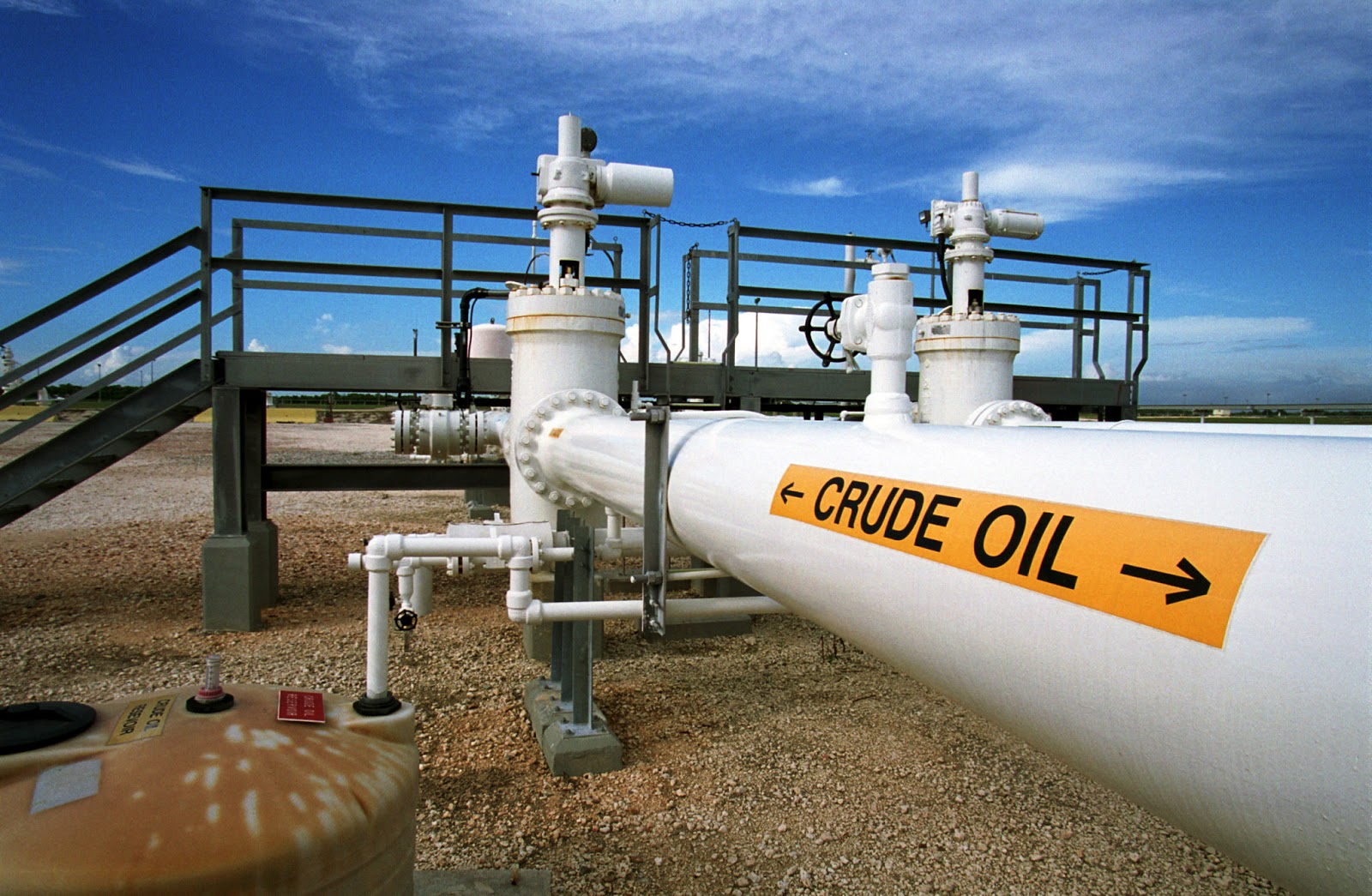
Oil prices moved up on Monday as investors weighed the implications of the forthcoming US-Iran talks aimed at de-escalating tensions against a backdrop of expected supply increases by the Organisation of the Petroleum Exporting Countries and allies (OPEC+).

Brent crude futures appreciated by 90 cents or 1.33 per cent to trade at $68.65 a barrel, while the US West Texas Intermediate (WTI) crude futures gained 86 cents or 1.37 per cent to close at $63.75 a barrel.

Fears of supply disruption from the US-Iran tensions have helped keep oil prices stable. The two countries are due to hold a second round of talks in Geneva, Switzerland, on Tuesday over Iran’s nuclear programme.

Iran has repeatedly threatened to close the Strait of Hormuz in retaliation against any attack, which would choke a fifth of global oil flows and send crude prices sharply higher.

Comments from US President Donald Trump that it could make a deal with Iran over the next month with US Secretary of State Marco Rubio emphasizing that the Trump administration prefers diplomacy with Iran, though military options remain implicitly on the table.

Iran signaled willingness to dilute 60 per cent enriched uranium but insists sanctions relief must be part of any agreement.

This comes ahead of new US-Iran talks in Geneva on February 17. The US delegation will include envoys Mr Steve Witkoff and Mr Jared Kushner, with representatives from Oman acting as mediators. Oman hosted indirect talks between Iran and the US earlier in February.

Ahead of the meeting, Iran’s foreign minister met with Mr Rafael Grossi, the head of the International Atomic Energy Agency (IAEA), the UN nuclear watchdog, on Monday.

Market analysts have warned that increased Iranian tension could drive Brent to $80 a barrel, while fading tension would drop it back to $60 a barrel.

OPEC+ is dampening oil prices as it appears the alliance is leaning toward a decision at their March 1 meeting to resume output increases from April after a three-month halt.

Oil prices also were supported by China’s continued strong crude imports and by some disruptions in oil exports.

China’s imports of Russian oil are set to climb for a third straight month in February, hitting a new record, after India slashed purchases following US pressure.


Adedapo Adesanya is a journalist, polymath, and connoisseur of everything art. When he is not writing, he has his nose buried in one of the many books or articles he has bookmarked or simply listening to good music with a bottle of beer or wine. He supports the greatest club in the world, Manchester United F.C.

Click to comment

Leave a Reply

Your email address will not be published. Required fields are marked *

Economy

NAICOM Withdraws Universal Insurance Operating Licence

Published

on

Universal Insurance shares

By Aduragbemi Omiyale

The operating licence of Universal Insurance Plc has been withdrawn by the National Insurance Commission (NAICOM).

This action was taken by the regulator over the failure of the underwriting firm, which is listed on the Nigerian Exchange (NGX) Limited, to meet the new recapitalisation requirements on or before July 31, 2026.

NAICOM said it revoked the company’s licence based on its powers stipulated in the Nigerian Insurance Industry Reform Act (NIIRA) 2025.

The regulator has appointed a Receiver/Provisional Liquidator for the insurance company, and he is Mr Ogbonna Chukwumerije, a partner at Pinheiro LP.

He will immediately trace, recover, secure and take possession of Universal Insurance’s assets, collate its liabilities and facilitate their settlement in accordance with the provisions of NIIRA 2025.

He is also required to liaise with NAICOM and submit periodic reports on the progress of the receivership and liquidation process.

Already, Mr Chukwumerije has informed banks, financial institutions, policyholders, creditors, debtors, customers and members of the public that Universal Insurance had entered receivership, advising parties dealing with the company’s funds, assets, records, policies, claims and liabilities to verify the authority of anyone claiming to act on its behalf.

Banks and other financial institutions were specifically warned against honouring withdrawals, transfers, payment mandates or other instructions issued on behalf of Universal Insurance unless authorised by the receiver.

However, Universal Insurance has taken steps to appeal NAICOM’s decision. The organisation was among six insurers that failed to meet the recapitalisation deadline.

Continue Reading

Economy

Oil Market Soars as UAE Suspends Economic Ties With Iran

Published

on

global oil market

By Adedapo Adesanya

The oil market was elevated on Wednesday as investors worried about escalating ‌tensions in the Middle East, with the United Arab Emirates suspending all financial and economic transactions with Iran.

Brent crude futures settled at $91.62 a barrel after soaring by 60 cents or 0.7 per cent, while the US West Texas ​Intermediate (WTI) crude futures rose by 89 cents or 1.1 per cent to $85.83 a barrel.

The UAE has halted all trade, financial, and commercial ties with Iran until further notice, after saying Tehran had fired ballistic missiles targeting its territory.

Late on Tuesday, the UAE’s Defence Ministry said that “assessments revealed the two ballistic missiles detected, originating from Iran, were targeting maritime navigation and fell into the sea.” One of the missiles fell outside the Emirates’s territorial waters, while the second fell within its territorial waters, the ministry added.

In light of these missiles fired from Iran, the UAE halted all economic ties with Iran.

This development comes after US President Donald Trump ​said no talks were taking place with Iran and that the Strait of Hormuz was open. Iran, however, said the waterway remained shut.

The oil market remains focused on the Strait of Hormuz, through ‌which about ⁠one-fifth of global oil and liquefied natural gas supplies passed before the US-Israeli war on Iran began at the end of February.

Available data from Kpler showed that only six commodity vessels crossed the strait on Tuesday, down from nine a day earlier and below the 10-day daily average of 11.

Meanwhile, oil shipments from Russia’s western ports have fallen to about 2.3 million barrels per day in the first half of ​August, 15 per cent below the initial loading plan, because of disruptions at the Black Sea ​port of Novorossiysk.

Crude oil inventories in the US saw a massive increase of 4.4 million barrels during the week ending August 14, according to new data from the US Energy Information Administration (EIA) released on Wednesday.

The EIA’s data release follows figures from the American Petroleum Institute (API) that were released a day earlier, which reported that crude oil inventories had fallen by 328,000 barrels in the period.

Continue Reading

Economy

Nigeria Saved N15.8trn from Petrol Subsidy Removal—Oyedele

Published

on

Taiwo Oyedele

By Adedapo Adesanya

The Minister of Finance and Coordinating Minister of the Economy, Mr Taiwo Oyedele, said the removal of petrol subsidy saved Nigeria N15.8 trillion between June 2023 and December 2025.

Mr Oyedele disclosed this on Wednesday at a press conference, where he provided a breakdown of the financial impact of the federal government’s economic reforms under President Bola Tinubu, the same day that the campaign for the 2027 presidential elections commenced.

He said the subsidy savings were reflected in the resources available to the federation, although they did not appear as a separate credit to the federation account under the description “subsidy savings”.

“Between June 2023 and December 2025, subsidy savings mobilised the sum of N15.8 trillion in resources for the federation.

“Many people will say, where is the subsidy savings? As a matter of fact, there wasn’t any alert to the Federation Account with the description ‘subsidy savings’,” Mr Oyedele said.

According to the minister, the federal government received N5.4 trillion of the N15.8 trillion, while N10.4 trillion was shared among state and local governments through the Federation Account.

Mr Oyedele said the government’s overall financial position during the period also reflected increased independent revenue and borrowing to fund its expenditure.

He said the federal government generated N3.1 trillion in incremental independent revenue, largely from remittances by government-owned entities and increased surpluses from government agencies.

The government also borrowed an additional N11.9 trillion between June 2023 and December 2025.

“People will say, you said you have exceeded your revenue, why are you still borrowing?” Mr Oyedele said, “The additional borrowing that the federal government took for that period of time, June 2023 to December 2025, amounted to N11.9 trillion.”

According to him, the combination of incremental independent revenue and additional borrowing brought the Federal Government’s incremental resources during the period to N20.4 trillion.

However, he said total incremental expenditure stood at N30.64 trillion.

Mr Oyedele said the figures demonstrated the fiscal implications of the reforms, which were introduced to address long-standing economic distortions and reduce pressure on government finances.

“The administration of President Bola Tinubu has embarked on major reforms to address age-long economic challenges,” he said.

He identified the removal of petrol subsidy and the unification of the foreign exchange market as key measures undertaken by the administration.

“The removal of fuel subsidy, which was quietly bankrupting the country, and the unification of an exchange rate system that had become a source of distortion and corruption rather than stability.

“Those decisions came at a cost, and we are not here to implement otherwise. What does reform cost?” Mr Oyedele questioned.

Continue Reading