Economy
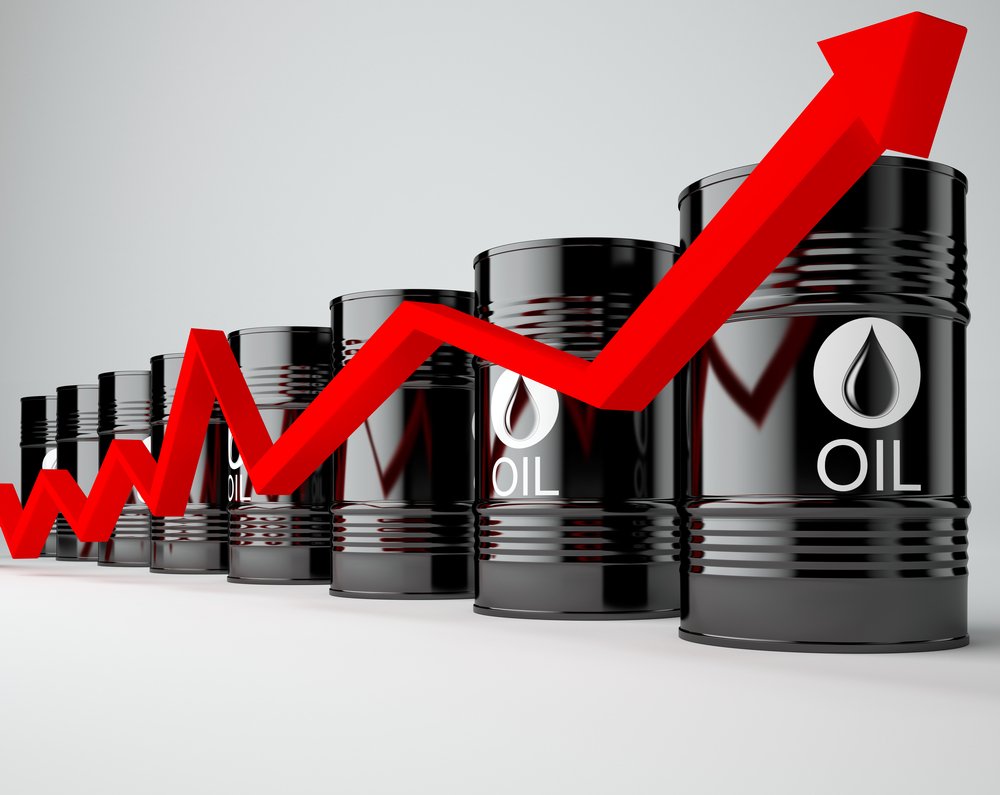
Oil Prices Rise as Earthquakes Hit Turkey, Syria
By Adedapo Adesanya
Oil prices rose on Monday, buoyed by supply concerns following earthquakes in Turkey and Syria.
Brent crude futures rose 46 cents or 0.6 per cent to $80.40 a barrel, as the United States West Texas Intermediate (WTI) crude futures jumped by 20 cents or 0.3 per cent to $73.59 a barrel.
Massive earthquakes that struck Turkey and Syria on Monday halted operations at Turkey’s major oil export hub in Ceyhan and stopped key crude oil flows from Iraq and Azerbaijan, officials said.
It has been regarded as the worst tremor to strike Turkey this century and was followed in the early afternoon by another large quake of magnitude 7.7.
The Tribeca shipping agency said in a notice that the BTC terminal at Ceyhan that exports Azeri crude oil will be closed through Wednesday pending damage assessments. Azerbaijan uses the Turkish port of Ceyhan as its main crude export hub, with a flow of about 650,000 barrels per day.
According to Reuters, following Monday’s earthquake, Iraq’s Kurdistan Regional Government (KRG) also halted flows through the pipeline it operates that runs from Iraq’s northern Kirkuk fields to Ceyhan, the region’s ministry of natural resources (MNR) said.
The KRG had been pumping 400,000 barrels per day, and Iraq’s federal government was pumping 75,000 barrels per day through the pipeline.
It was also reported that oil exports would resume after a “careful inspection of the pipelines is finalised,” the MNR said in a statement.
Also supporting prices was the prospect for China’s recovery after the relaxation of COVID-19 restrictions continued to drive the value of the commodity.
The International Energy Agency (IEA) expects half of this year’s global oil demand growth to come from China. The agency’s chief, Mr Fatih Birol, disclosed this on Sunday, adding that jet fuel demand was surging.
“If demand goes up very strongly, if the Chinese economy rebounds, then there will be a need, in my view, for the OPEC+ countries to look at their (output) policies,” Mr Birol said, referring to a call of action for the Organisation of the Petroleum Exporting Countries (OPEC) and its allies, OPEC+.
The 23-man group decided to cut output by 2 million barrels a day from November through 2023 instead of pumping more to cut fuel prices and help the global economy, as the US advised.
Also, price caps on Russian products took effect on Sunday, with Group of Seven (G7) nations, the European Union and Australia agreeing on price limits of $100 a barrel on diesel and other products that trade at a premium to crude and $45 a barrel for products that trade at a discount, such as fuel oil.
The price ceilings, together with an EU ban on Russian oil product imports, are part of a broader agreement among the Group of Seven (G7) countries. It follows a $60 per barrel cap on Russian crude that G7 countries imposed on December 5 as the G7, the EU and Australia seek to limit the country’s ability to fund its war in Ukraine.
Both caps prohibit Western insurance, shipping and other companies from financing, insuring, trading, brokering or carrying cargoes of Russian crude and oil products unless they were bought at or below the set price caps.
Economy
Akara, Kulikuli, Roasted Corn Business Not Capital Intensive—Remi Tinubu
By Modupe Gbadeyanka
Nigeria’s First Lady, Mrs Oluremi Tinubu, has given Nigerians business advice that may not involve a lot of money to start.
Speaking with newsmen recently, the wife of President Bola Tinubu said businesses like akara (fried bean cake), kulikuli (a crunchy snack from roasted peanuts or groundnuts) and roasted corn can be set up without breaking the bank.
She disclosed that to support her husband’s Renewed Hope agenda, she has provided funding packages to traders and others to the tune of N3.5 billion.
“To start akara business doesn’t take a lot of money. To start roasting corn and kuli-kuli doesn’t take much. We didn’t give them a loan; we gave it to them as a grant,” she stated.
She further said, “We’ve encouraged Nigerians as best as we could, what is within our hands, I have given, and I keep giving. Those are the things we’ve done.”
“I remember giving for TB (tuberculosis) when I heard of many TB cases; I gave N2 billion, to breast cancer, I gave N1 billion, and to [tackle] malnutrition, I gave N500 million.
“These are the things we’ve been doing to assist the government. So, we’ve had impact in agriculture, social investment, education (as scholarship and ICT training) and others. We are still open to doing more,” she disclosed.
Economy
NASD Exchange Extends Winning Streak by 1.70%
By Adedapo Adesanya
The NASD Over-the-Counter (OTC) Securities Exchange rallied by 1.70 per cent on Thursday, June 25, after three price gainers overpowered the two price losers recorded at the close of business.
Consequently, the market capitalisation of the trading platform increased by N43.79 billion to N2.618 trillion from N2.574 trillion, and the NASD Security Index (NSI) improved by 72.96 points to close at 4,362.32 points, in contrast to Wednesday’s 4,289.36 points.
Yesterday, the price advancers were led by Nipco Plc, which chalked up N31.79 to close at N349.76 per unit versus the preceding day’s N317.97 per unit. Okitipupa Plc gained N18.00 to end at N298.00 per share versus the previous session’s N280.00 per share, and Central Securities Clearing System (CSCS) Plc went up by N7.11 to N86.79 per unit from N79.68 per unit.
On the flip side, Nitrox Industrial Gases Plc crumbled by 32 Kobo to close at N21.09 per share compared with the N21.41 per share it closed at midweek, and Food Concepts Plc depreciated by 25 Kobo to N2.51 per unit from N2.76 per unit.
During the session, the value of securities traded by investors went down by 86.7 per cent to N10.9 million from the preceding session’s N82.9 million, and the volume of securities dropped 84.9 per cent to 10.9 million units from the previous 82.9 million, while the number of deals grew by 84.2 per cent to 35 deals from 19 deals.
At the close of trades, Great Nigeria Insurance (GNI) Plc remained the most traded stock by value on a year-to-date basis, with 3.4 billion units sold for N8.4 billion, trailed by Infrastructure Credit Guarantee (Infracredit) Plc with 2.3 billion units valued at N6.5 billion, and CSCS Plc with 68.4 million units exchanged for N4.7 billion.
GNI Plc was also the most traded stock by volume on a year-to-date basis, with 3.4 billion units worth N8.4 billion, followed by Infracredit Plc with 2.3 billion units traded for N6.5 billion, and Resourcery Plc with 1.1 billion units transacted for N415.7 million.
Economy
Bears Plunge NGX All-Share Index by 0.64% to 235,074.54 Points
By Dipo Olowookere
The Nigerian Exchange (NGX) Limited further suffered a 0.64 per cent decline on Thursday as the bears tightened their grip on the bourse.
For the second straight session, all the key sectors of Customs Street pointed south, with the energy counter down by 5.22 per cent. The insurance index slumped by 2.59 per cent, the banking space depreciated by 0.28 per cent, and the consumer goods segment moderated by 0.06 per cent, while the industrial goods sector was flat, though with a marginal fall.
As a result, the All-Share Index (ASI) contracted by 1,493.71 points to 233,580.83 points from 235,074.54 points, and the market capitalisation retreated by N959 billion to N149.888 trillion from N150.847 trillion.
Investor sentiment remained weak after a negative market breadth index, as there were 21 price gainers and 34 price losers.
Aradel and Deap Capital went down by 10.00 per cent each to N1,575.00 and N4.05, respectively. Trans-Nationwide Express fell by 9.90 per cent to N3.64, Regency Alliance slipped by 9.57 per cent to N85 Kobo, and C&I Leasing dipped by 9.48 per cent to N28.12.
Conversely, Red Star Express grew by 9.60 per cent to N24.55, Legend Internet expanded by 9.09 per cent to N6.00, Neimeth appreciated by 7.10 per cent to N8.30, Abbey Mortgage Bank rose by 5.45 per cent to N8.70, and Ellah Lakes improved by 4.65 per cent to N9.00.
Yesterday, market participants traded 393.7 million equities valued at N19.2 billion in 45,813 deals compared with the 488.1 million equities worth N20.9 billion transacted in 46,239 deals recorded a day earlier, implying a shortfall in the trading volume, value, and number of deals by 19.34 per cent, 8.13 per cent, and 0.92 per cent, respectively.
The most active stock for the session was Access Holdings with a turnover of 39.1 million units worth N896.2 million, Chams traded 24.5 million units valued at N96.5 million, Fidelity Bank sold 24.1 million units for N436.9 million, Sterling Holdings exchanged 23.8 million units valued at N182.2 million, and Zenith Bank transacted 18.9 million units worth N2.1 billion.
-
Feature/OPED6 years agoDavos was Different this year
-
Travel/Tourism10 years ago
Lagos Seals Western Lodge Hotel In Ikorodu
-
Showbiz3 years agoEstranged Lover Releases Videos of Empress Njamah Bathing
-
Banking8 years agoSort Codes of GTBank Branches in Nigeria
-
Economy3 years agoSubsidy Removal: CNG at N130 Per Litre Cheaper Than Petrol—IPMAN
-
Banking3 years agoSort Codes of UBA Branches in Nigeria
-
Banking3 years agoFirst Bank Announces Planned Downtime
-
Sports3 years agoHighest Paid Nigerian Footballer – How Much Do Nigerian Footballers Earn