Economy
Oil Prices Steady as US, China Signal Potential Trade Truce
By Adedapo Adesanya
Oil prices held steady on Thursday as investors assessed a potential trade truce between the United States and China after President Donald Trump lowered tariffs on China following a meeting with Chinese leader Xi Jinping in South Korea.
Brent futures rose 8 cents or 0.1 per cent to settle at $65.00 a barrel, while the US West Texas Intermediate (WTI) crude appreciated by 9 cents or 0.1 per cent to $60.57 per barrel.
The American president agreed to reduce tariffs on China to 47 per cent from 57 per cent in a one-year deal in exchange for China resuming US soybean purchases, keeping rare earths exports flowing and cracking down on the illicit fentanyl trade.
President Trump added he also discussed the war in Ukraine launched by Russia in February 2022, saying that he and Xi agreed to “work together.”
The meeting appears to have set the stage for a broader dialogue in the coming months, with Mr Trump saying that he plans to visit China in April and that a tentative trade deal could be signed soon.
Investors see the announced agreement between the world’s two largest economies as more of a de-escalation of tension than a structural change in the relationship.
Support also came as the US Federal Reserve lowered interest rates on Wednesday by a further 25 basis points, in line with market expectations.
The Chairman of the US central bank Mr Jerome Powell’s comments after the meeting struck a note of caution on what lies ahead, signalling that it might be the last cut of the year as the ongoing government shutdown threatens data availability.
Meanwhile, the European Central Bank and the Bank of Japan kept interest rates unchanged.
The euro zone economy grew a touch more quickly than expected in the third quarter, lifted by buoyant growth in France and Spain that more than offset faltering exports and persistent struggles in Germany’s oversized industrial sector.
There are expectations that the oil market is headed for a large surplus, with the Organisation of the Petroleum Exporting Countries and allies (OPEC+) group raising output and US production at record levels. The 22-member OPEC alliance may make an additional 137,000 barrels per day output boost.
Economy
Stock Market Gives up N34bn Despite Strong Investor Sentiment
By Dipo Olowookere
It was another bearish outcome for the Nigerian Exchange (NGX) on Wednesday due to persistent profit-taking.
The local bourse shed 0.05 per cent at midweek as investors tread cautiously, causing the All-Share Index (ASI) to contract by 78.28 points to 146,862.01 points from 146,940.29 points, with the market capitalisation giving up N34 billion to settle at N93.625 trillion compared with the previous day’s N93.659 trillion.
Chams ended the trading day as the worst-performing stock after it lost 10.00 per cent to trade at N3.06, Haldane McCall declined by 8.88 per cent to N4.00, UAC Nigeria slumped by 8.18 per cent to N80.80, and Sunu Assurance moderated by 6.98 per cent to N4.00.
The best-performing stock for the session was Japaul due to its 10.00 per cent rise, closing at N2.53. Prestige Assurance expanded by 9.40 per cent to N1.63, MeCure inflated by 7.72 per cent to N34.90, The Initiates rose by 7.30 per cent to N12.50, and Consolidated Hallmark gained 6.97 per cent to close at N4.30.
Business Post observed that despite the loss, the market breadth index was positive after Customs Street finished with 28 price gainers and 23 price losers, implying a strong investor sentiment.
The most traded equity was Cutix with 122.9 million units sold for N369.1 million, FCMB exchanged 80.7 million units worth N879.3 million, Consolidated Hallmark transacted 71.2 million units valued at N286.4 million, Fidelity Bank traded 63.8 million units worth N1.2 billion, and Tantalizers had a turnover of 57.8 million units valued at N136.5 million.
In all, investors bought and sold 747.1 million shares for N12.4 billion in 19,161 deals versus the 2.0 billion shares worth N30.2 billion executed in 23,038 deals on Tuesday, indicating a decline in the trading volume, value, and number of deals by 62.65 per cent, 58.94 per cent, and 16.83 per cent, respectively.
Economy
Naira Weakens 0.24% to N1,455/$1 at NAFEX on Yuletide Demand Pressure
By Adedapo Adesanya
The Naira depreciated against the United States Dollar by N3.52 or o.24 per cent in the Nigerian Autonomous Foreign Exchange Market (NAFEX) to N1,455.38/$1 on Wednesday, December 8, from the N1,451.86/$1 it was traded a day earlier.
It was a similar story for the local currency against the Pound Sterling in the same market window yesterday as its value shrank by N2.51 to close at N1,937.26/£1 versus the preceding session’s N1,934.75/£1 and lost N1.63 against the Euro to settle at N1,692.76/€1 compared with Tuesday’s closing value of N1,691.13/€1.
In the black market segment, the Naira weakened against the greenback yesterday by N5 to sell for N1,470/$1 compared with the previous day’s N1,465/$1 but traded flat at N1,460/$1 at GTBank.
The domestic currency faces pressures from increasing year-end Dollar demand as importers and retailers are actively sourcing FX for Christmas and New Year’s sales.
However, this is still stable, reflecting divergent currency dynamics between the regulated official segment and the informal markets as the Naira’s movement remains within the trading band.
This suggests that the FX market is adjusting gradually to seasonal pressures while awaiting further policy signals from the Central Bank of Nigeria (CBN).
Meanwhile, the cryptocurrency market tumbled despite the Federal Reserve’s decision to trim its fed funds rate range by 25 basis points. Traders were spooked by comments by Federal Reserve’s chairman Jerome Powell who sounded both dovish and hawkish.
While the rate cut is largely anticipated by market participants, looser financial conditions with a resilient US economy could help bolster risk appetite on markets. According to Mr Powell, the US labour market might be weaker than previously thought, while also sounding cautious about gains made in fighting inflation.
Cardano (ADA) depreciated by 7.0 per cent to $0.4311, Solana (SOL) fell by 5.9 per cent to $131.06, Dogecoin (DOGE) slid by 5.6 per cent to $0.1385, Litecoin (LTC) crashed by 3.9 per cent to $81.26, and Ripple (XRP) declined by 3.7 per cent to $2.01.
Further, Ethereum (ETH) moderated by 3.4 per cent to $3,209.84, Binance Coin (BNB) retreated by 2.6 per cent to $871.20, and Bitcoin (BTC) lost 2.5 per cent to sell at $90,316.82, while the US Dollar Tether (USDT) and the US Dollar Coin (USDC) remained unchanged at $1.00 each.
Economy
Crude Oil Prices Rise as US Seizes Oil Tanker in Venezuelan Waters
By Adedapo Adesanya
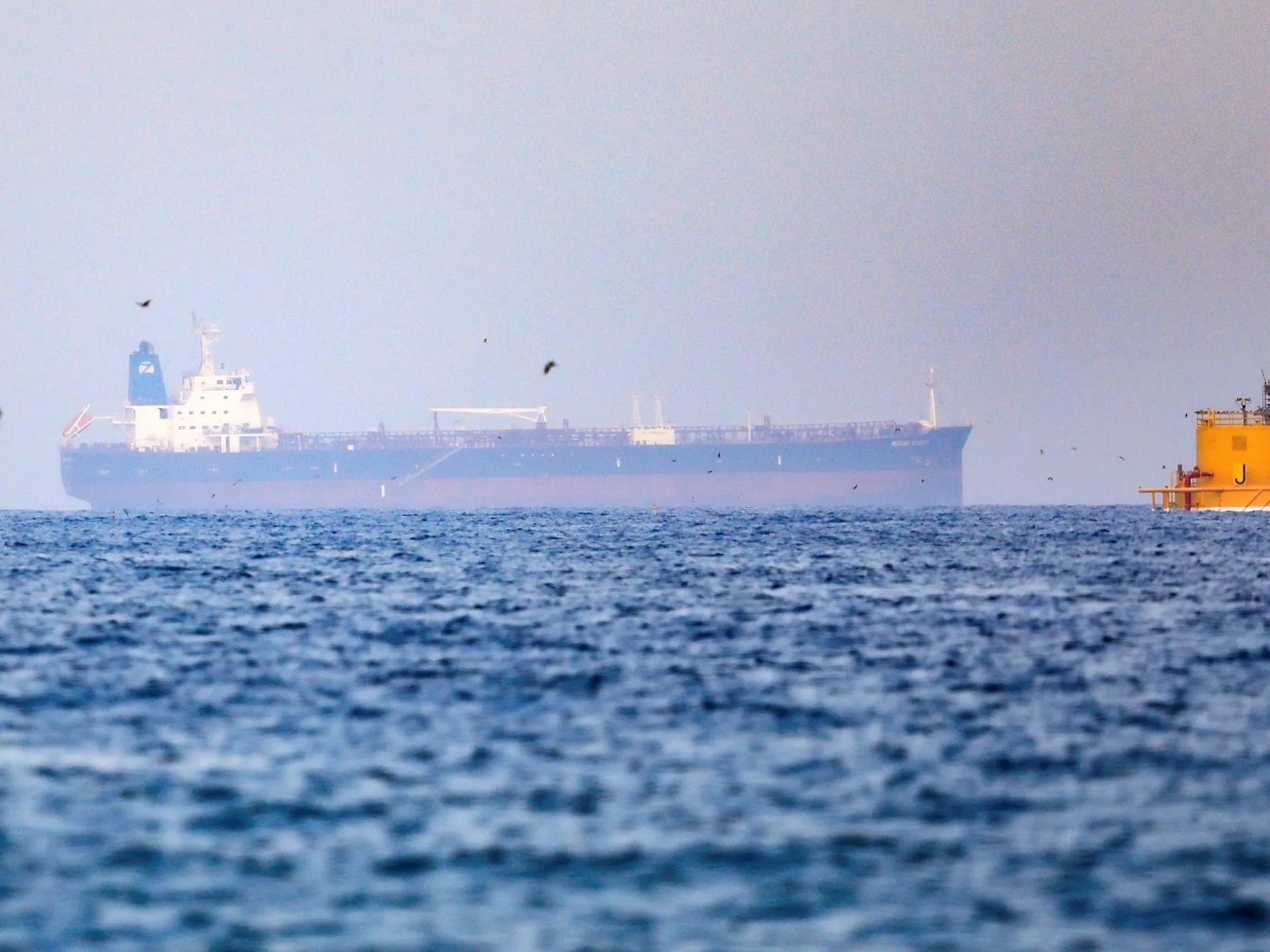
Crude oil prices settled higher on Wednesday as the US seized an oil tanker off the coast of Venezuela, adding to concerns about immediate supplies, with Brent futures up by 27 cents or 0.4 per cent to $62.21 a barrel, and the US West Texas Intermediate (WTI) futures up by 21 cents or 0.4 per cent to $58.46 per barrel.
The American government seized a large oil tanker off the coast of Venezuela, marking a major escalation in tensions between the two nations.
President Donald Trump confirmed the operation, saying, “We’ve just seized a tanker on the coast of Venezuela, large tanker, very large, largest one ever seized actually,” adding later that the US will keep the oil.
The US Coast Guard, Federal Bureau of Information (FBI), and Homeland Security, executed a seizure warrant, boarding the tanker by helicopter. The vessel, identified by maritime sources as the Panama-flagged Skipper (formerly named Adisa), had been under US sanctions for several years for its alleged role in transporting Venezuelan and Iranian crude via a shadow oil-shipping network tied to Hezbollah and the Islamic Revolutionary Guard Corps-Quds Force.
According to tracking data, the tanker had recently loaded heavy crude at Venezuela’s Puerto José.
In Caracas, the government of President Nicolás Maduro condemned the seizure, branding it “a blatant theft” and an act of “international piracy.”
The tanker seizure further inflames concerns about immediate supplies in a market that was already worried about movements of Venezuelan, Iranian and Russian barrels.
Meanwhile, the US Federal Reserve reduced its benchmark interest rate by a quarter of a percentage point, as expected, which could help lift oil demand by boosting economic growth.
The Chairman of the US Federal Reserve, Mr Jerome Powell declined to say whether there would be another rate cut in the near future, but said the central bank is well positioned to respond to what lies ahead for the economy.
Crude oil inventories in the US decreased by 1.8 million barrels during the week ending December 5, after adding a modest 600,000 barrels in the week prior, according to new data from the US Energy Information Administration (EIA) released on Wednesday.
The EIA’s data release follows figures from the American Petroleum Institute (API) that were released a day earlier, which suggested that crude oil inventories fell by 4.8 million barrels.
-
Feature/OPED6 years agoDavos was Different this year
-
Travel/Tourism9 years ago
Lagos Seals Western Lodge Hotel In Ikorodu
-
Showbiz3 years agoEstranged Lover Releases Videos of Empress Njamah Bathing
-
Banking7 years agoSort Codes of GTBank Branches in Nigeria
-
Economy3 years agoSubsidy Removal: CNG at N130 Per Litre Cheaper Than Petrol—IPMAN
-
Banking3 years agoFirst Bank Announces Planned Downtime
-
Banking3 years agoSort Codes of UBA Branches in Nigeria
-
Sports3 years agoHighest Paid Nigerian Footballer – How Much Do Nigerian Footballers Earn