Connect with us

Economy

Oil Turns Red After OPEC+ Alliance Meeting Thursday

Published

on

oil prices fall

By Adedapo Adesanya 

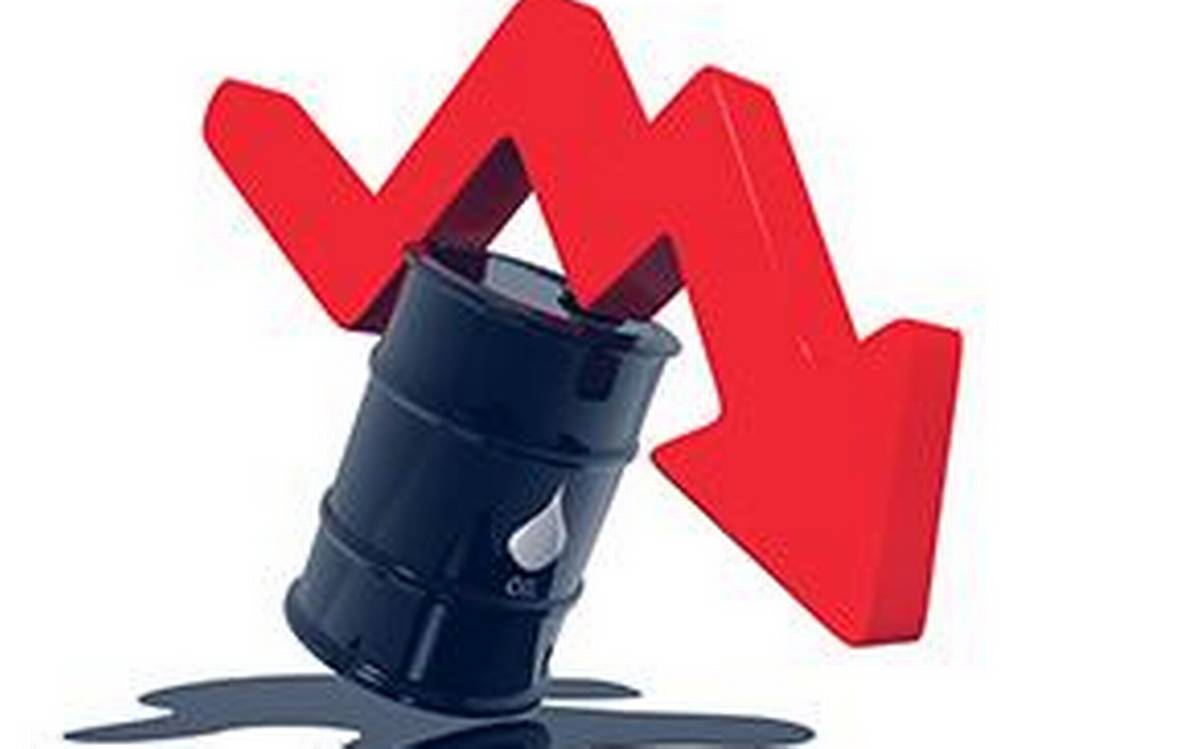
Oil prices continued to fall on Thursday as events on the political scene further brought about continuous fall for major oil futures on the global market.

Prices of the commodity started to decline further on the back of a media report that there could be no chance of a U.S.-China trade deal following a meeting of the OPEC+ alliance, which yielded no decision on deepening crude supply cuts.

This led to a drop for Brent crude which fell to $60 per barrel yesterday after dropping 35 Cents or 0.58 percent. The West Texas Intermediate (WTI) crude also dropped lower. In its case, it went down to the $55 mark after it lost 62 Cents or 1.11 percent to trade at $55.13 per barrel.

However, the OPEC Basket saw green yesterday after appreciating by 74 Cents or 1.19 percent to trade at $62.74 per barrel.

Reports showed that oil was pressured further after the European Central Bank (ECB) cut its deposit rate to a record low 0.5 percent from 0.4 percent and disclosed that it would restart bond purchases of 20 billion euros in December to allow for growth in the euro zone.

Also, oil futures extended their losses after a senior White House official denied a Bloomberg News report that the United States was considering a temporary trade agreement with China.

Another factor that led to the bearish prices was the International Energy Agency (IEA) report which projected that rising U.S. Oil output would make balancing the market very difficult in 2020.


Adedapo Adesanya is a journalist, polymath, and connoisseur of everything art. When he is not writing, he has his nose buried in one of the many books or articles he has bookmarked or simply listening to good music with a bottle of beer or wine. He supports the greatest club in the world, Manchester United F.C.

Click to comment

Leave a Reply

Your email address will not be published. Required fields are marked *

Economy

World Bank Backs Nigeria with $1.25bn Loan to Drive Investment, Jobs

Published

on

World Bank Blacklists

By Adedapo Adesanya

The World Bank has approved $1.25 billion in development financing to help Nigeria spur economic growth and create jobs.

Unveiled under its Nigeria Actions for Investment and Jobs Acceleration programme, the approval was announced on Wednesday alongside the launch of a new Country Partnership Framework for Nigeria, spanning 2026 to 2032.

The global lender, in a statement, noted that the newly endorsed strategy aims to guide its support over the next six years, primarily focusing on creating higher-quality jobs.

The Bretton Woods-based bank said the $1.25 billion Development Policy Financing operation is expected to back reforms aimed at improving Nigeria’s business environment and strengthening long-term economic growth.

According to the statement, the planned reforms include expanding capital markets, updating regulations for the digital economy and e-governance, accelerating electricity sector reforms, reducing trade barriers in line with Nigeria’s commitments under the Economic Community of West African States (ECOWAS) and the African Continental Free Trade Area (AfCFTA), improving access to quality agricultural seeds and increasing domestic revenue generation.

The loan comes amid increased criticism over the rate of borrowing under the Bola Tinubu-led administration, which has seen the country’s debt profile now almost at N160 trillion, as per the latest data from the Debt Management Office (DMO).

The Bank stressed that the new framework is built on Nigeria’s recent macroeconomic reforms, which it noted have successfully driven economic growth, bolstered external reserves, and improved investor confidence.

“The World Bank Group has endorsed a new Country Partnership Framework for Nigeria spanning 2026–2032, setting out a strategy to create more and better jobs at scale by unlocking private sector-led growth,” the bank stated in the statement.

World Bank Country Director for Nigeria, Mr Mathew Verghis, while highlighting the need to convert financial benchmarks into human development, emphasised the core mission of the project.

“Our new Country Partnership Framework provides the strategy for how the World Bank Group will support Nigeria over the coming years, with a strong focus on helping to create more and better jobs, particularly by enabling private sector-led growth.

“The recent macroeconomic gains have been critical to help stabilise the economy. Translating improved macroeconomic conditions into better living standards will require addressing the structural constraints to spur private sector investment and job creation,” Mr Verghis said.

Continue Reading

Economy

NASD Index Rises 0.89% as Market Capitalisation Hits N2.580trn

Published

on

NASD Unlisted Securities Index

By Adedapo Adesanya

The NASD Over-the-Counter (OTC) Securities Exchange improved by 0.89 per cent on Tuesday, June 30, spurring the market capitalisation to chalk up N22.72 billion to close at N2.580 trillion, in contrast to the preceding session’s N2.557 trillion.

In the same vein, the NASD Unlisted Security Index (NSI) added 37.85 points during the session to settle at 4,2991.41 points from Monday’s 4,261.56 points.

The unlisted securities market gained weight yesterday after finishing with three price losers and gainers, led by Nipco Plc, which improved its share price by N34.24 to N384.00 per unit from N349.76 per unit. FrieslandCampina Wamco Nigeria Plc appreciated by N10.25 to close at N152.01 per share versus N141.76 per share, and Food Concepts Plc soared by 7 Kobo to settle at N2.50 per unit versus N2.43 per unit.

On the flip side, Afriland Properties Plc weakened by N1.57 to N15.17 per share from N16.74 per share, Central Securities Clearing System (CSCS) Plc lost 48 Kobo to trade at N88.00 per unit compared with Monday’s N88.48 per unit, and Geo-Fluids Plc eased by 24 Kobo to N2.37 per share from N2.61 per share.

During the session, the volume of securities traded by market participants moved up by 268.9 per cent to 846,063 units from 229,314 units, while the value of securities dropped 34.9 per cent to N15.99 million from N24.6 million, and the number of deals crashed by 26.5 per cent to 25 deals from 34 deals.

Great Nigeria Insurance (GNI) Plc remained the most active stock by value on a year-to-date basis, with 3.4 billion units worth N8.4 billion, the second spot was occupied by Infrastructure Credit Guarantee (Infracredit) Plc with 2.3 billion units valued at N6.5 billion, and the third spot was taken by CSCS Plc with 68.8 million units traded for N4.7 billion.

GNI Plc also ended the day as the most active stock by volume on a year-to-date basis, with 3.4 billion units exchanged for N8.4 billion, followed by Infracredit Plc with 2.3 billion units transacted N6.5 billion, and Resourcery Plc with 1.1 billion units sold for N415.7 million.

Continue Reading

Economy

Naira Strengthens to N1,379/1$ at Official Market

Published

on

currency in circulation eNaira

By Adedapo Adesanya

The Naira appreciated against the US Dollar by N3.95 0r 0.29 per cent to exchange at N1,379.68/$1 in the Nigerian Autonomous Foreign Exchange Market (NAFEX) on Tuesday, June 30, compared with the previous day’s N1,383.63/$1.

The positive movement was also seen against the Pound Sterling at the same official market window, where it gained N6.59 to trade at N1,825.05/£1 versus the preceding day’s N1,831.64/£1, and improved against the Euro by N5.05 to sell for N1,572.98/€1 compared with Monday’s price of N1,578.03/€1.

At the GTBank FX counter, the Nigerian Naira, however, lost N2 against the Dollar yesterday to quote at N1,389/$1, in contrast to the previous session’s N1,387/$1, and at the black market, it remained unchanged at N1,395/$1,

A look at the cryptocurrency market yesterday showed that Bitcoin (BTC) depleted for the fifth straight day, selling at $58,668.93. This sits below the levels that sparked rebounds in February and earlier in June, as well as the 50-day and 200-day moving averages.

Dogecoin (DOGE) crashed by 1.5 per cent to sell at $0.0713, Binance Coin (BNB) lost 1.4 per cent to close at $544.98, Ethereum (ETH) went down by 1.0 per cent to $1,574.60, TRON (TRX) depreciated by 0.8 per cent to $0.3164, and Ripple (XRP) dropped 0.8 per cent to finish at $1.03.

Conversely, Cardano (ADA) grew by 2.9 per cent to $0.1493, and Solana (SOL) increased by 0.3 per cent to $74.19, while the US Dollar Tether (USDT) and the US Dollar Coin (USDC) traded flat at $1.00 apiece.

Continue Reading

Trending