Economy
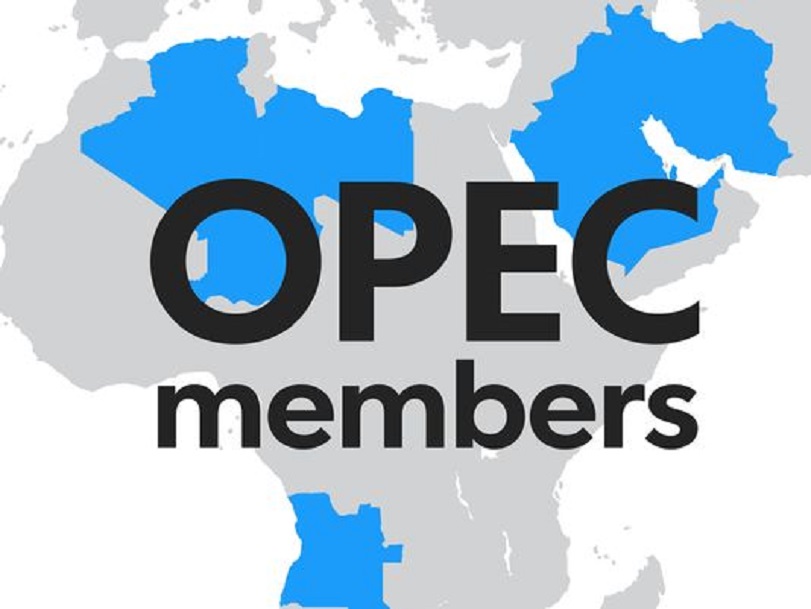
OPEC+ Okays 137,000b/d Hike for December, to Pause for Q1 2026
By Adedapo Adesanya
The Organisation of the Petroleum Exporting Countries and allies (OPEC+) on Sunday agreed a small oil output increase for December. But there will be no hike in the first quarter of next year.
The eight OPEC+ members taking part in the group’s monthly meeting – Saudi Arabia, Russia, the United Arab Emirates, Iraq, Kuwait, Oman, Kazakhstan, and Algeria – agreed to increase December output targets by 137,000 barrels per day, the same as for October and November.
“Beyond December, due to seasonality, the eight countries also decided to pause the production increments in January, February, and March 2026,” the group said in a statement.
The development followed its moderating plans to regain market share due to rising fears of a supply glut.
OPEC+ has raised output targets by around 2.9 million barrels per day or around 2.7 per cent of global supply since April, but slowed the pace from October amid predictions of a looming oversupply.
The group had been reducing output for several years until April, and cuts had peaked in March, amounting to 5.85 million barrels per day in total.
The reductions comprised three elements: voluntary cuts of 2.2 million barrels per day, 1.65 million barrels per day by eight members, and a further 2 million barrels per day by the whole group.
The group has been unwinding voluntary cuts, while the last element of the cuts for the whole group is meant to stay in place until the end of 2026.
Eight OPEC+ members will meet again on November 30, the same day as a full OPEC+ meeting.
Meanwhile, the latest sanctions on OPEC+ member Russia are adding to challenges as the Vladimir Putin-led country may struggle to further raise output after the US and Britain imposed new measures on top producers Rosneft and Lukoil.
Morgan Stanley raised its price forecast for Brent crude for 2026 to $60 per barrel from $57.50 following OPEC+’s decision to pause production hikes over the first three months of next year.
“Even if the OPEC announcement does not change the mechanics of our production outlook, it does send an important signal,” the bank’s analysts said in a note, adding that, “With OPEC involvement, volatility is reduced.”
Economy
Pathway Asset Management’s Adekunle Alade Unveils Blueprint for Sustainable Wealth, Investment Opportunities
In this interview with Mr Adekunle Alade, Founder and Director of Pathway Asset Management Limited, he discusses the blueprint for sustainable wealth and investment opportunities. Excepts;
Could you please tell us about Pathway Asset Management?
Pathway Asset Management is registered and regulated by the Securities and Exchange Commission (SEC) Nigeria as a fund and portfolio manager company with the main focus of helping individuals, retail, HNIs and institutions make smarter investment decisions and build long-term sustainable wealth. We understand how complex and unpredictable the Nigerian market can be because we operate in it every day. So, we’ve built a firm that is clear, disciplined, and driven by research, not guesswork.
Our offerings cut across Pathway Fixed Deposit Notes, Privately Managed Notes, Fixed Income Notes, Pathway Dollar Notes, Funds/Portfolio Management, Pathway Money Market Fund (coming soon), Pathway Dollar Funds (Coming Soon), and Investment Advisory services, all tailored to each client’s goal. But beyond the products, what really defines us is how we think: deep client understanding, strong governance, and a long-term mindset. That’s what guides every decision we make.
Can you walk us through Pathway Asset Management’s core investment philosophy and how it differentiates the firm in Nigeria’s asset management space?
Our philosophy is simple and profound. We are partners in our clients’ financial success. We create value, but never at the expense of disciplined risk management. Every investment is carefully assessed to ensure the returns justify the risk, helping clients move from speculation to structured, sustainable wealth building.
What sets us apart is our advisory DNA. We don’t just offer investment products; we bring an investment banker’s eye to asset management, combining strategic advice with precise execution.
We combine diversification, deep sector insight, and strong risk discipline to solve wealth preservation challenges, while prioritising transparency, client experience, and long-term outcomes.
Your portfolio includes Fixed Deposit Notes, Privately Managed Notes, and Portfolio Management services. How do these products cater to varying investor risk appetites?
We’ve designed our products to meet clients exactly where they are. For more conservative investors, our Fixed Deposit and Money Market offerings are focused on capital preservation, liquidity, and stable income. For clients looking for higher returns, our Privately Managed Notes, across fixed income, hybrid, equity and dollar structures, offer more optimised yield with a bit more structure.
For more sophisticated or institutional clients, our portfolio management services provide a fully tailored approach. Some clients prefer us to take full discretion, while others want to stay involved. Essentially, we have a vehicle specifically engineered for different investors’ financial goals.
What’s next for Pathway Asset Management? Where are you focusing growth?
With the recent unveiling of our Board of Directors, we’ve strengthened our governance and strategic direction, which is important for where we’re going.
Over the next few months, our focus is on deepening client relationships, expanding our product offerings, especially mutual funds like our upcoming Pathway Money Market Fund and positioning the firm to take advantage of emerging opportunities. For us, growth is not just about scale; it’s about scaling responsibly while maintaining the discipline and trust we’ve built.
What gap in the market is the upcoming Pathway Money Market Fund designed to fill?
For a long time, the Nigerian investment space has had a gap. You either had low-yield savings accounts or high-entry institutional investments. The Pathway Money Market fund is designed to bridge that gap.
With rising inflation, many people are losing value just by keeping money in traditional bank accounts. What we’re doing is opening access, giving everyday investors a simple, regulated way to benefit from high-quality government and corporate instruments with as low as N5,000 to start investing. We want someone with relatively small capital to still participate in opportunities that were previously out of reach. Our focus isn’t just on returns; it’s about providing a liquid, SEC-regulated vehicle where a small saver can get a big-market yield and still have capital preserved.
As a firm regulated by the Securities and Exchange Commission, how do you ensure compliance while maintaining operational efficiency?
At Pathway Asset Management Limited, we view compliance as a competitive advantage, built into how we operate every day. To maintain efficiency while meeting and compliance, we have adopted a ‘Compliance-by-Design’ approach from onboarding clients to tech-enabled reporting and risk management without over-leveraging our resources.
We’ve put in place strong internal controls, invested in the right people, have clear processes, and a culture of accountability across the firm. At the same time, we leverage technology and experienced professionals to ensure compliance is seamless, not a bottleneck.
So, for us, it’s about getting it right from the start; operating efficiently while staying fully aligned with regulatory standards.
How do you assess the impact of Nigeria’s current monetary policy direction on investment portfolios?
We’re in a transition phase, from aggressive tightening to a more stable environment.
For us, that creates opportunity. In fixed income, we’re locking in high yields now, knowing that rates may compress as inflation moderates.
At the same time, improving stability in exchange rates and interest rates creates a better environment for businesses, which supports selective equity exposure.
So, rather than reacting, we’re positioning clients to benefit from both sides: strong yields today and potential upside as the macro environment improves.
What safeguards are in place to protect investor capital across your managed portfolios?
At Pathway Asset Management, the security of investor capital is built into our operations through a multi-layered ‘Triple-Lock’ framework. We operate strictly under the license and oversight of the Securities and Exchange Commission, Nigeria. This means our operations are subject to periodic review, stringent reporting requirements, and minimum capital adequacy standards.
We don’t just follow the rules; we embrace them as a baseline for trust. But beyond that, one key safeguard is that we don’t hold client funds directly; assets (cash and securities) are held by independent SEC-approved custodians. That separation is critical for transparency and protection. We also apply disciplined investment policies. We don’t chase returns at the expense of safety. Every investment goes through a rigorous assessment process.
How does Pathway Asset Management manage downside risks, particularly in a volatile macroeconomic environment marked by inflation and FX instability?
In a market like Nigeria, volatility isn’t an anomaly; it’s a constant. Our approach to managing downside risk is built on dynamic asset allocation and financial discipline. We also hedge against currency risk by giving clients access to dollar-denominated investments, which helps preserve value.
On inflation, we focus on assets that can reprice or deliver returns above inflation over time. Our focus is not just on returns, but on protecting value and delivering consistency.
What is your outlook for Nigeria’s asset management industry over the next five years?
Nigeria’s asset management industry is entering a defining transition period, and the SEC’s recapitalisation directive is the central catalyst. Over the next five years, the industry will move from a fragmented, lightly capitalised landscape to a more consolidated, institutional, and competitive ecosystem.
Many smaller or undercapitalised firms will be unable to comply independently, leading to mergers, acquisitions, or outright exits. Within the first two to three years, the number of asset managers is likely to shrink significantly, leaving behind a smaller group of well-capitalised firms alongside a handful of specialised niche players.
In terms of growth, the outlook is structurally positive but cyclical. Assets under management (AUM) are expected to expand at a solid pace, supported by high domestic interest rates, increased financial savings, and improved macroeconomic reforms.
However, this growth will remain sensitive to macro conditions, particularly FX stability and interest rate cycles. Because a large portion of capital inflows into Nigeria is still short-term and yield-driven, the industry should expect periods of volatility rather than smooth, linear expansion.
Economy
Otedola Acquires Additional N43bn FirstHoldCo Shares
By Adedapo Adesanya
The Chairman of First HoldCo Plc, Mr Femi Otedola, maintained his grip on the company, acquiring additional shares valued at approximately N43.41 billion.
The transaction was disclosed in a regulatory filing submitted to the Nigerian Exchange (NGX) Limited and signed by the company secretary, Mrs Abiola Baruwa.
The acquisition, executed on the stock exchange on May 13, 2026, involved the purchase of 549,535,653 shares at an average price of N79 per share.
Following the latest purchase, Mr Otedola’s stake in First HoldCo Plc has climbed from 8,055,314,486 units reported in the FY 2025 audited accounts to 8,604,850,139.
The Nigerian billionaire’s total stake has now climbed to 19.36 per cent in his biggest single purchase since becoming chairman in January 2024.
On September 25, 2025, he increased his interest in First HoldCo with the purchase of 64.87 million shares valued at N2.01 billion.
Of this amount, 39.3 million shares were acquired directly on September 23 for about N1.2 billion, while an additional 25.6 million shares worth N793.6 million were bought indirectly through Calvados Global Services Limited on the same day.
Those earlier transactions raised his shareholding to 16.1 per cent, from the 13.15 per cent stake recorded in September 2024.
Apart from First Holdco, the business mogul also has interests in the power sector through Geregu Power, another firm listed on the domestic stock exchange.
He sold his stake in Ardova Plc to invest in the power-generating company.
Economy
NASD Investors Lose N7.51bn After Index Sheds 0.30%
By Adedapo Adesanya
The NASD Over-the-Counter (OTC) Securities Exchange fell by 0.30 per cent on Wednesday, May 13, extending the presence of the bourse in red.
During the session, the NASD Unlisted Security Index (NSI) depreciated by 12.55 points to close at 4,143.97 points compared with the previous day’s 4,156.52 points, and the market capitalisation dropped N7.51 billion to settle at N2.479 trillion versus Tuesday’s closing value of N2.486 trillion.
The loss recorded yesterday occurred as the platform ended with four price gainers and four price losers.
Nipco Plc lost N34.40 to sell at N309.60 per share versus N344.00 per share, Central Securities and Clearing System (CSCS) Plc declined by N4.00 to N72.00 per unit from N76.00 per unit, NASD Plc tumbled by N2.36 to N35.00 per share from N37.36 per share, and Food Concepts Plc dipped by 24 Kobo to quote at N2.26 per unit compared with the preceding session’s N2.50 per unit.
Conversely, FrieslandCampina Wamco Plc rose by N12.74 to N146.34 per share from N133.60 per share, IPWA Plc soared by 73 Kobo to N8.03 per unit from N7.30 per unit, First Trust Mortgage Bank Plc added 20 Kobo to finish at N2.52 per share versus its previous value of N2.32 per share, and Light House Financial Service Plc gained 8 Kobo to close at 94 Kobo per unit versus 86 Kobo per unit.
Yesterday, the volume of securities slumped by 48.3 per cent to 1.4 million units from 2.7 million units, the value of securities dropped 43.6 per cent to N36.8 million from N65.2 million, and the number of deals stumbled by 16.1 per cent to 36 deals from 31 deals.
Great Nigeria Insurance (GNI) Plc remained the most active stock by value on a year-to-date basis with 3.4 billion units traded for N8.4 billion, followed by CSCS Plc with 60.6 million units exchanged for N4.1 billion, and Okitipupa Plc with 27.8 million units transacted for N1.9 billion.
GNI Plc also ended the day as the most traded stock by volume on a year-to-date basis with 3.4 billion units worth N8.4 billion, followed by Resourcery Plc with 1.1 billion units valued at N415.7 million, and Infrastructure Guarantee Credit Plc with 400 million units sold for N1.2 billion.
-
Feature/OPED6 years agoDavos was Different this year
-
Travel/Tourism10 years ago
Lagos Seals Western Lodge Hotel In Ikorodu
-
Showbiz3 years agoEstranged Lover Releases Videos of Empress Njamah Bathing
-
Banking8 years agoSort Codes of GTBank Branches in Nigeria
-
Economy3 years agoSubsidy Removal: CNG at N130 Per Litre Cheaper Than Petrol—IPMAN
-
Banking3 years agoSort Codes of UBA Branches in Nigeria
-
Banking3 years agoFirst Bank Announces Planned Downtime
-
Sports3 years agoHighest Paid Nigerian Footballer – How Much Do Nigerian Footballers Earn