Connect with us

Economy

OPEC+ Predictions Have Been Accurate, Saudi Prince Claims

Published

on

OPEC+ predictions

By Adedapo Adesanya

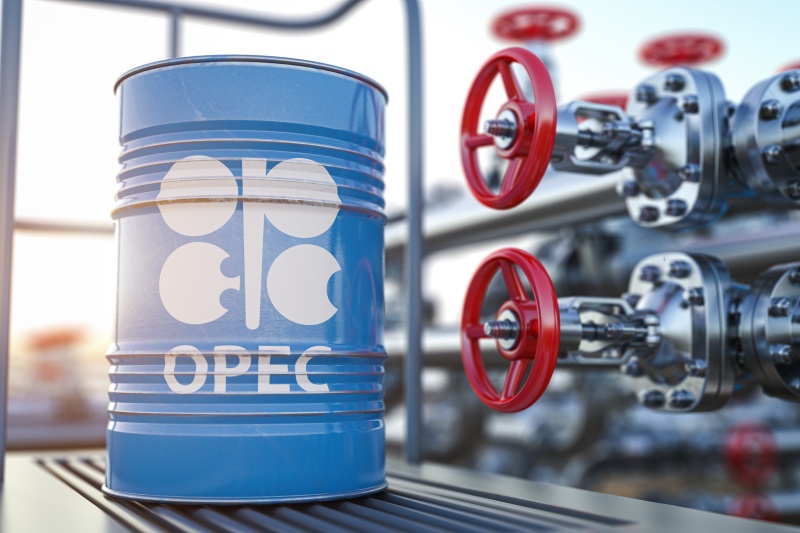
The Saudi energy minister, Prince Abdulaziz bin Salman, has said that despite heavy criticism of the recent decision by the Organisation of the Petroleum Exporting Countries and its allies (OPEC+) to cut oil output, the cartel’s market predictions have been more accurate than others.

Speaking with the Saudi state news agency (SPA), he said OPEC+ predictions had been spot on because they have been based on fundamentals rather than politics.

“As I have emphasized multiple times, in OPEC+, we leave politics out of our decision-making process, out of our assessments and forecasting, and we focus solely on market fundamentals. This enables us to assess situations in a more objective manner and with much more clarity and this, in turn, enhances our credibility,” Saudi Energy Minister Prince Abdulaziz bin Salman told the media.

He said a perfect example was the oil price prediction environment surrounding the early days of Russia’s invasion of Ukraine in February of this year.

“At the start of the Ukraine crisis, some predicted large supply losses of more than 3 million barrels per d which caused panic and contributed to extreme volatilities,” the Saudi prince said, noting accusations were flying that OPEC+ was not responding appropriately to the crisis, “these projected losses did not materialise,” he quipped.

The minister also argued that in October, when OPEC+ decided to cut oil output, the move was described as highly risky, and suggestions were that politics had driven it. Panic mongers, the prince suggested, sounded alarm bells that the decision would “tip the global economy into recession and cause harm to developing countries.”

“Again, in retrospect, the OPEC+ decision turned out to be the right one for supporting the stability of the market and the industry,” the Saudi energy minister told SPA.

Oil prices hit an all-time high of $147 per barrel in March, right after Russia invaded Ukraine, but the rest of the year has seen Brent and WTI pare most of those gains, with the benchmarks trading around $75 to $80 per barrel.


Adedapo Adesanya is a journalist, polymath, and connoisseur of everything art. When he is not writing, he has his nose buried in one of the many books or articles he has bookmarked or simply listening to good music with a bottle of beer or wine. He supports the greatest club in the world, Manchester United F.C.

Economy

Coronation Projects 15.95% for Nigeria’s April 2026 Inflation

Published

on

Nigeria's headline inflation

By Aduragbemi Omiyale

Analysts at Coronation Research have said the inflation rate in Nigeria would be at 15.95 per cent on a year-on-year basis in April 2026 as a result of the “energy price shock stemming from the continued conflict in the Middle East, seasonal issues in regard to food prices and relative exchange rate stability.”

In a note sighted by Business Post on Friday, the research arm of the organisation further disclosed that the average price of goods and services for the month under review should rise by 2.35 per cent on a month-on-month basis versus 4.18 per cent in March 2026, reflecting continued food price firmness, offset by a cooling in the monthly inflation momentum as the March energy price shock partially unwinds.

It said the projected 2.35 per cent inflation rate signals a return toward the underlying disinflation trajectory and could be a pivotal data point in shaping Monetary Policy Committee (MPC) deliberations at the next policy meeting.

The National Bureau of Statistics (NBS) is expected to release inflation numbers for last month later today. In March 2026, the rate soared by 15.38 per cent, triggered by the war in Iran waged by the United States.

Food inflation rate in March stood at 14.31 per cent on a year-on-year basis versus 25.22 per cent in the same month of last year, but on a month-on-month basis, it slowed to 4.17 per cent from the 4.69 per cent achieved in February 2026.

This was attributed to the rate of change in the average prices of Yam, Ginger (Fresh), Cassava Tuber, Groundnuts (Shelled), Irish Potatoes, Avenger (Ogbono/Apon) – Dried Ungrinded, Tomatoes (fresh), Cassava Flour sold loose, etc, according to the stats office.

In their report, Coronation Research expects food inflation to further ease, as food and non-alcoholic beverages remain the dominant contributor to headline CPI, accounting for about 40 per cent of the CPI basket.

Continue Reading

Economy

Unlisted Securities Market Further Suffers 0.33% Loss

Published

on

Unlisted Securities Market

By Adedapo Adesanya

The NASD Over-the-Counter (OTC) Securities Exchange further depreciated by 0.33 per cent on Wednesday, May 14, with the Unlisted Security Index (NSI) down by 13.76 points to 4,130.21 points from the previous day’s 4,143.97 points, and the market capitalisation dropping N8.23 billion to close at N2.471 trillion compared with Wednesday’s N2.479 trillion.

The unlisted securities market ended yesterday’s session with four price losers and one price gainer, led by Food Concepts Plc, which chalked up 9 Kobo to sell at N2.35 per unit, in contrast to midweek’s closing price of N2.26 per unit.

On the flip side, FrieslandCampina Wamco Plc depreciated by N1.58 to quote at N144.76 per share versus N146.34 per share, Central Securities and Clearing System (CSCS) Plc crumbled by N1.00 to trade at N71.00 per unit versus N72.00 per unit, First Trust Mortgage Bank Plc slid by 25 Kobo to N2.27 per share from N2.52 per share, and UBN Property Plc declined by 21 Kobo to N2.04 per unit from N2.25 per unit.

During the trading day, the volume of securities traded decreased by 70.2 per cent to 417,349 units from 1.4 million units, the value of securities dropped 36.9 per cent to N23.2 million from N36.8 million, and the number of deals stumbled by 13.9 per cent to 31 deals from 36 deals.

At the close of trades, Great Nigeria Insurance (GNI) Plc remained the most active stock by value on a year-to-date basis, with 3.4 billion units valued at N8.4 billion, followed by CSCS Plc with 60.7 million units exchanged for N4.1 billion, and Okitipupa Plc with 27.9 million units traded for N1.9 billion.

GNI Plc was also the most active stock by volume on a year-to-date basis, with 3.4 billion units worth N8.4 billion, followed by Resourcery Plc with 1.1 billion units sold for N415.7 million, and Infrastructure Guarantee Credit Plc with 400 million units sold for N1.2 billion.

Continue Reading

Economy

Mobile-First Platforms Like DeFi Hash Reflect Growing Investor Interest in AI-Driven Cloud Infrastructure and Automated Digital Asset Engagement

Published

on

DeFi Hash

As the cryptocurrency market enters a new phase of global growth, investor behavior is moving beyond the “buy and hold” strategy common in previous cryptocurrency cycles. Across the digital asset industry, a growing number of users are exploring AI-driven cloud infrastructure, automated computing systems, and mobile-based digital engagement models.

Industry analysts say the convergence of AI and blockchain infrastructure is becoming one of the defining trends of 2026.

With the accelerating global demand for AI computing resources, technology companies around the world are investing heavily in cloud infrastructure, data centers, and intelligent automation systems. Meanwhile, blockchain-based infrastructure platforms are increasingly positioning themselves at the intersection of decentralized finance, cloud computing, and AI-driven resource management.

Among the many emerging platforms, DeFi Hash is attracting significant attention. DeFi Hash is a mobile-centric digital infrastructure platform focused on intelligent cloud computing services and automated infrastructure engagement.

The Transition to AI-Driven Digital Infrastructure

For years, many cryptocurrency investors have relied primarily on market appreciation and speculative trading opportunities. However, the evolving market environment and the rapid development of artificial intelligence are prompting a shift towards infrastructure-centric platforms that offer alternative participation models.

Users no longer need to purchase expensive mining hardware or manage physical systems; instead, they are increasingly seeking simplified, mobile-accessible solutions for remote participation in digital infrastructure.

DeFi Hash states that its platform aims to lower traditional barriers to entry by combining cloud architecture, automation, and distributed infrastructure systems to create a seamless user experience. These platforms are accessible via mobile devices and web platforms.

According to company information, the platform has attracted over 3.5 million registered users globally.

Flexible Participation Options

To encourage new user onboarding and streamline the access process, DeFi Hash offers various infrastructure participation models and cloud-based automated contracts.

The company states that new registered users receive promotional rewards upon registration and can participate in an entry-level program designed for short-term participation.

The platform also offers various infrastructure contract categories designed to meet the needs of different participation levels.

Stable Return Contracts

Contract Range: $500 – $2,600

Estimated Daily Return: $6.25 – $36.40

Contract Duration: 7 – 15 days

Estimated Total Return: $43 – $546

Professional Profit Contracts

Contract Range: $5,000 – $15,000

Estimated Daily Return: $77.50 – $270

Contract Duration: 20 – 25 days

Estimated Total Return: $1,550 – $6,750

Advanced Long-Term Profit Contracts

Contract Range: $30,000 – $150,000

Estimated Daily Return: $570 – $3,750

Contract Duration: 30 – 45 days

Estimated Total Return: $17,100 – $168,750

The company states that users can choose one or more participation options based on their own strategies and goals.

The convergence of artificial intelligence and blockchain is expected to accelerate.

Industry insiders believe that the integration of artificial intelligence infrastructure and blockchain-based computing networks may become one of the most influential technological developments in the coming years.

With the global proliferation of artificial intelligence, the demand for scalable computing resources and automated digital infrastructure services is expected to continue to grow. Platforms integrating blockchain, cloud computing, and intelligent automation technologies will play an increasingly important role in shaping the future digital economy.

DeFi Hash states that its goal is to make cloud projects more accessible to ordinary users worldwide while continuously expanding its AI-driven infrastructure ecosystem.

For more information, please visit the company website or mobile app download page.

Official Website: https://defihash.com/

Mobile App Download: https://defihash.com/download/

Continue Reading

Trending