
Economy
Pension Fund Operators to Boost Private Equity Investment

By Adedapo Adesanya
Pension Fund Operators Association of Nigeria (PenOp) has partnered with the African Private Equity and Venture Capital Association (AVCA) to empower local investors and develop private equity (PE) as an asset class in Nigeria.
Private equity is an investment class that consists of capital that is not listed on a public exchange. It is made up of funds and investors that directly invest in private companies, or that engage in buyouts of public companies, resulting in the delisting of public equity.
Speaking about the partnership, the Chief Executive (CEO) of PenOp, Mr Oguche Agudah, said, “Pension funds realise that they need to diversify into alternative investments and private equity presents one of such opportunities.
“However, we haven’t seen that much uptake of this locally. In addition to other initiatives we are pursuing, we are hoping that this partnership with AVCA will help to further open up this space.”
He maintained that domestic capital plays a vital role in accelerating economic growth in Nigeria and across the continent in general.
He cited that over the last 10 years, the value of Nigerian pension funds has grown markedly to peak at over $25 billion in December 2020, of which a marginal 0.03 per cent has been allocated to private equity.
This partnership between PenOp and AVCA, Mr Oguche said, will focus on training and networking, including an introduction to Development Finance Institutions (DFIs), fund managers and other stakeholders within the global private equity ecosystem, to ensure the growth of private equity in Nigeria, especially for pension operators.
He submitted that as part of this collaboration, PenOp will also support AVCA’s research and advocacy by providing insight into pension fund investments in PE and their impact.
During the African Institutional Investor Roundtable hosted at AVCA’s annual conference in April, there was a discussion about ways to encourage pension funds on the continent to increase their allocations to private equity.
The roundtable event was a partnership between PenOp, AVCA, Southern African Venture Capital and Private Equity Association (SAVCA) and East Africa Venture Capital Association (EAVCA).
The event was attended by several Nigerian pension funds and international DFIs. It was enlightening and engaging, and the outcomes from the event will be reviewed by all associations involved, with a view to working on removing the identified roadblocks.
On his part, Mr Abi Mustapha-Maduakor, the CEO of AVCA, said: “Our mission at AVCA is to facilitate more private investment into Africa, and part of this work involves unlocking domestic capital by demystifying the asset class.
“We know that African institutional investors are increasingly looking at PE to diversify their portfolios, so this collaboration with PenOp will enable us to equip Nigerian pension funds with the tools and resources they need to achieve superior returns by investing in the continent’s growing businesses.”
The AVCA is the pan-African industry body that promotes and enables private investment in Africa. It plays a significant role as a champion and effective change agent for the industry, educating, equipping and connecting members and stakeholders with independent industry research, best practice training programs, and exceptional networking opportunities.
With a global and growing member base, AVCA members span private equity and venture capital firms, institutional investors, foundations and endowments, pension funds, international development finance institutions, professional service firms, academia, and other associations.
This diverse membership is united by a common purpose: to be part of the Africa growth story.
Pension Fund Operators Association of Nigeria (PenOp) is an independent, non-governmental, non-political and non-profit making body.
It was established to promote the operations of the pension industry, provide for self-regulation and ensure that international best practices relating to the industry are observed by the operators registered in Nigeria.
Its positioning is to be the influencer externally and the ‘mother to all’ internally.
Its role internally is to add value to its members across all levels; information, education, visibility, networking, strategy, product development, etc. Externally its role is to increase the awareness and visibility of the pension industry and enable external stakeholders to understand and participate in the development of this financial sub-sector wherever and whenever possible.



By Adedapo Adesanya
Crude oil deliveries from the Nigerian National Petroleum Company (NNPC) Limited to the Dangote Petroleum Refinery doubled in March, boosting prospects for improved fuel availability.
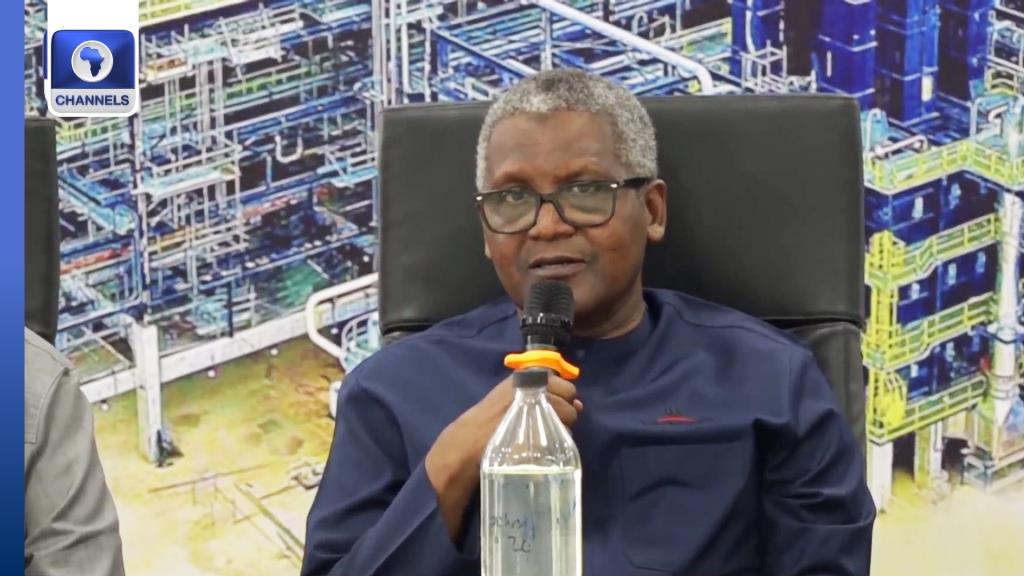
This was revealed by the chief executive of Dangote Industries Limited, Mr Aliko Dangote, on Tuesday, when he received the Deputy Secretary-General of the United Nations, Mrs Amina Mohammed, at the industrial complex in Ibeju-Lekki, Lagos.
While speaking on feedstock supply, Mr Dangote commended the NNPC for increasing crude deliveries to the refinery in March, noting that volumes rose to 10 cargoes—six supplied in Naira and four in Dollars—to support domestic fuel availability, according to a statement by the Refinery.
“Last month, they gave us six cargoes for Naira and four cargoes for Dollars,” he said.
Despite the improvement, Mr Dangote noted that the supply remains below the 19 cargoes required for optimal operations, with the refinery continuing to bridge the gap through imports from the United States and other African producers.
He also expressed concern over the unwillingness of international oil companies operating in Nigeria to sell to the refinery, stating that their preference for selling crude to traders forces it to repurchase at higher costs, with broader implications for the economy.
Mr Dangote added that the refinery is seeking increased access to domestically priced crude under local currency arrangements as part of efforts to moderate fuel costs and enhance long-term energy and food security across the continent.
On her part, Mrs Mohammed underscored the strategic importance of Dangote Industries Limited -particularly Dangote Fertiliser Limited—in addressing Africa’s mounting food security challenges, while calling for stronger global partnerships to scale its impact.
Mrs Mohammed said the United Nations would prioritise amplifying scalable solutions capable of mitigating the continent’s food crisis, describing Dangote’s integrated industrial model as a critical pathway.
“I think the UN’s job here is to amplify and to put visibility on the possibilities of mitigating a food security crisis, and this is one of them,” she said. “I hope that when we go back, we can continue to engage partners and countries that should collaborate with Dangote Industries.”

By Aduragbemi Omiyale
The Securities and Exchange Commission (SEC) has approved a 50 per cent hike in the X-Alert service fee per transaction in the Nigerian capital market.
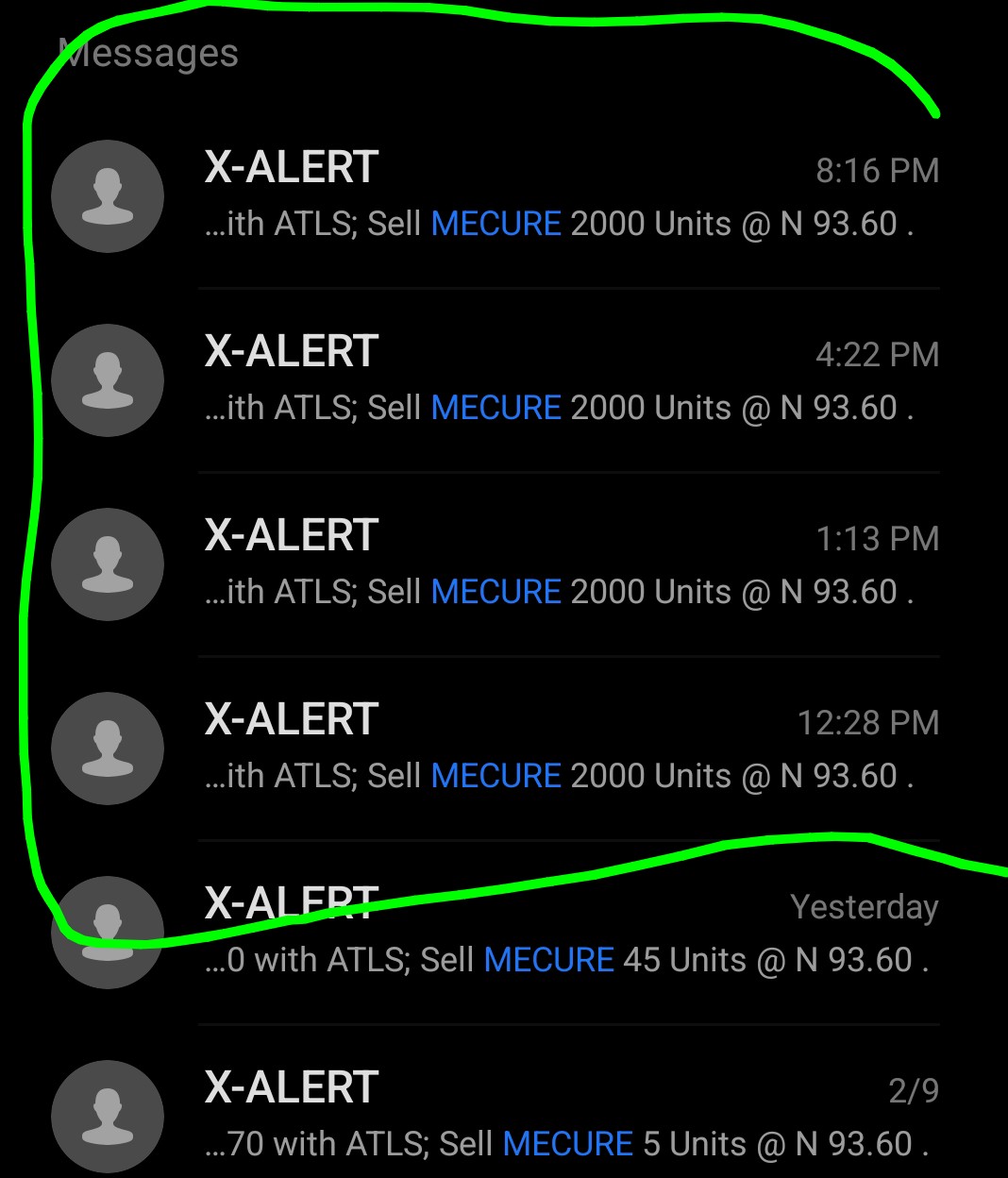
The X-Alert fee is a flat rate charged for sending real-time SMS/email notifications for transactions to investors from both buy and sell sides.
It was introduced by the Nigerian Exchange (NGX) to replace percentage-based charges, aimed at increasing transparency and reducing total transaction costs for investors.
Investors were earlier charged N4 per SMS, but the country’s apex capital market regulator has approved a 50 per cent increase in X-Alert service fee, meaning the new rate is N6 per SMS.
Business Post gathered from one of the players in the ecosystem that the effective date for the new price was Thursday, March 26, 2026.
“We wish to inform you of a revision to the X-Alert (SMS) service fee applicable to transactions executed on the Nigerian Exchange (NGX).
“Following approval by the Securities and Exchange Commission (SEC), the X-Alert fee has been reviewed upward from N4.00 to N6.00 per transaction,” the notice sighted by this newspaper read.
By Adedapo Adesanya
Nigeria’s economy is projected to remain resilient in the face of mounting global uncertainties, with the World Bank forecasting a 4.2 per cent growth rate in 2026.
However, the global lender has warned that rising fuel costs and persistent inflation, worsened by geopolitical tensions in the Middle East, could undermine household incomes and slow poverty reduction.
Speaking in Abuja, the bank’s lead economist for Nigeria, Mr Fiseha Haile, noted that while the ongoing US-Israel-Iran conflict has pushed up prices, overall economic activity has remained largely intact.
“Overall business activity has been expanding over the past few months, suggesting the impact on growth has been relatively contained. But the shock is still being felt through higher inflation,” Mr Haile said.
According to him, business activity has continued to expand in recent months, indicating that the broader impact on growth has been “relatively contained,” even as inflationary pressures intensify.
Nigeria’s inflation rate, though significantly reduced from around 33 per cent in December 2024 to 15.06 per cent in February 2026, remains elevated compared to regional peers.
“Inflation is still elevated and under increasing pressure, and that poses risks to incomes and poverty reduction,” Mr Haile said.
The renewed surge in fuel prices, reportedly rising by over 50 per cent during the Iran conflict, has had a ripple effect on transportation, food, and production costs, amplifying the cost-of-living crisis.
The World Bank urged Nigerian authorities to adopt prudent macroeconomic measures, including tightening monetary policy, avoiding blanket subsidies, and saving windfalls from higher oil prices to strengthen fiscal buffers.
It also recommended reconsidering restrictions on fuel imports as a potential tool to ease inflationary pressures.
The economic reforms under President Bola Tinubu — including the removal of fuel subsidies, exchange rate unification, and tax restructuring — were acknowledged as ambitious steps aimed at stabilising the economy.
These reforms have contributed to improved external buffers, with rising foreign exchange reserves and reduced volatility.
Additionally, Nigeria’s fiscal deficit stood at 3.1 per cent of GDP in 2025, while the debt-to-GDP ratio declined for the first time in a decade.
Yet, the World Bank cautioned that tighter global financial conditions could still pose risks to capital inflows, borrowing costs, and remittances.
-
 Feature/OPED6 years ago
Davos was Different this year
-
Travel/Tourism10 years ago
Lagos Seals Western Lodge Hotel In Ikorodu
-

 Showbiz3 years ago
Estranged Lover Releases Videos of Empress Njamah Bathing
-
 Banking8 years ago
Sort Codes of GTBank Branches in Nigeria
-

 Economy3 years ago
Subsidy Removal: CNG at N130 Per Litre Cheaper Than Petrol—IPMAN
-

 Banking3 years ago
Sort Codes of UBA Branches in Nigeria
-

 Banking3 years ago
First Bank Announces Planned Downtime
-

 Sports3 years ago
Highest Paid Nigerian Footballer – How Much Do Nigerian Footballers Earn