
Economy
Revenue: Ogun Customs Surpasses Monthly Target by 99.08%

By Dipo Olowookere
The Ogun Area Command of the Nigeria Customs Service (NCS) has said in the month of July 2019, it generated the sum of N1.3 billion, more than the amount it targeted to meet in the 31-day period.
A statement issued by the agency on Wednesday disclosed that this was part of the determination of the command to ensure that more funds is available for the government to provide critical infrastructure for citizens of the country.
The Area Controller of the command, Comptroller Michael Agbara, who gave the breakdown of revenue collection, said the amount was made within the period of July 1 to July 31, 2019.
He said at the beginning of the month, the command had a revenue generation target of N643.5 billion, but the efforts of his men resulted in the total revenue collection of N1.3 million.
This gave rise to the excess of N637.6 million made in the month, amounting to a percentage collection of 199.08 percent and a percentage excess of 99.08 percent.
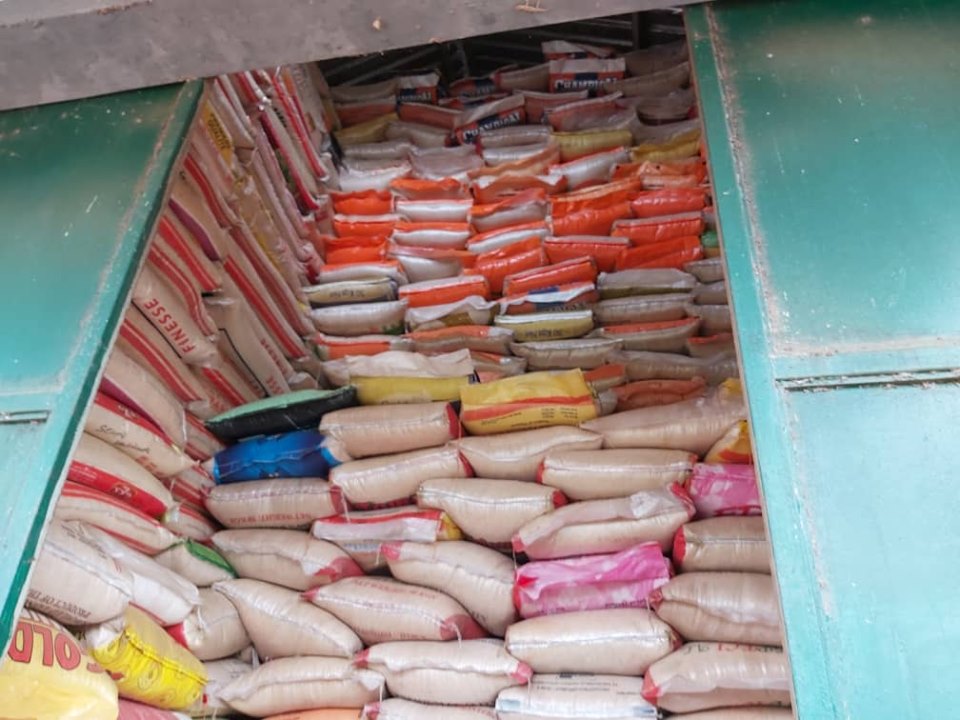
He said in the area of anti-smuggling during the period under review, the command made 102 seizures comprising 7,848 bags of foreign parboiled rice (50 kg each), 23 units of vehicles (7 used vehicles and16 means of conveyance), 32 kegs of vegetable oil (25 litres each, 201pairs of used tyres, 3 sacks of used foot wears, 320 bags of sugar (50kg each), 4 bales and one sack of second-hand clothing as well as 200 kegs of PMS (Petrol) of 25 litres each. According to him, the total duty paid value (DPV) all the seized items in the month was N138 million.
Mr Agbara noted that the seizure of over 7, 848 bags of rice (50kg each) in the month of July, 2019 was indeed a landmark among numerous successes recorded by the command.
“This is evidently a patriotic duty by the service to fully align with one of the cardinal federal government policies targeted at boosting agricultural development with a view to attaining national food self-sufficiency,” a statement from the agency said.



By Adedapo Adesanya
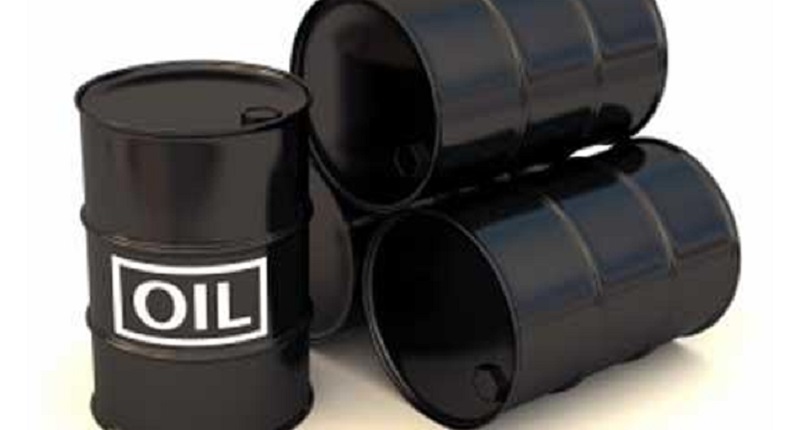
The chief executive of the Nigerian National Petroleum Company (NNPC) Limited, Mr Bayo Ojulari, has said that Nigeria could increase oil production by about 100,000 barrels per day over the next few months to realistically help the global shortfall.
Speaking with Reuters on the sidelines of the ongoing CERAWeek by S&P Global conference in Houston, the NNPC helmsman, when asked if Nigeria could help make up for the crude shortfall resulting from the US-Israel war on Iran, said the country was working towards it.
His comment comes as the war continued to rage on and affect crude prices as well as liquified natural gas (LNG), particularly due to the restrictions from the Strait of Hormuz.
The country averaged between 1.6 million barrels per day and 1.7 million barrels per day last year and is hoping to average 1.8 million barrels per day this year, but has faced several challenges to production, mainly underinvestment and oil theft.
“We are building that capacity,” he said, though he added, “We are not like Saudi Arabia,” referring to the top OPEC member. “But we can contribute.”
During an onstage interview at the conference, Mr Ojulari said NNPC completed a full portfolio review of its business last year and is beginning to implement changes this year.
He said a crucial focus that the state oil company is working on is to improve execution and ensure projects are delivered on budget and on time.
His comments followed the country recording a combined crude oil and condensate production shortfall of about 16.6 million barrels in January and February of 2026, according to an analysis of data released by the Nigerian Upstream Petroleum Regulatory Commission (NUPRC).
According to the data, Nigeria produced a total of 50.5 million barrels of crude oil and condensate in January, while output declined notably in February, with total production dropping to approximately 41.6 million barrels, bringing cumulative output for the two months to 92 million barrels.
Based on the government’s benchmark in the 2026 budget, the country was expected to produce about 57 million barrels in January and 51.5 million barrels in February, to reach about 108.6 million barrels for the period.
The daily production averages provided in the NUPRC report further illustrated the extent of the gap. In January, total liquids output, according to the data, averaged about 1.63 million barrels per day, falling short of the 1.84 million barrels per day target by roughly 210,000 barrels per day.
In the same vein, in February, the shortfall widened significantly, with production averaging about 1.48 million barrels per day, leaving a gap of around 360,000 barrels per day.
According to the report, over the course of the two months, the daily deficits accumulated into the overall shortfall of about 16.6 million barrels, reinforcing the scale of Nigeria’s underperformance relative to its fiscal assumptions.
Crude oil production remained the dominant component of Nigeria’s output in the period under review. In January, crude production averaged 1.46 million barrels per day, before declining to roughly 1.31 million barrels per day in February, dragging down overall output for the month.
On the other hand, condensate production, while significantly smaller in volume, provided some support to total output. It averaged just over 116,000 barrels per day in January and about 122,000 barrels per day in February.


By Aduragbemi Omiyale
One of the largest cocoa players in Nigeria, Sunbeth Global Concepts, which recently launched a N200 billion commercial paper programme, said it exported about 52,000 tonnes of cocoa out of the country in 2025.
The firm’s chief executive, Mr Olasunkanmi Owoyemi, in an interview with CNN, said the growth has been impressive despite the challenges of operating in Nigeria’s agricultural sector.
“Last year, we did around 52,000 tonnes of cocoa export out of Nigeria. And I mean that I remember when I started this business, when I bought 200 tonnes, I felt as though we are doing something great, but within eight years of doing 50,000 tonnes in over 50,000 tonnes in cocoa alone showed how much we’ve grown, how much people we’ve brought in, how much people have been able to contribute to our progress,” he said on CNN Marketplace hosted by Ms Zain Asher.
The latest edition of the programme focuses on the country’s agricultural sector, especially how the players have been navigating the challenges.
Mr Owoyemi said one of the major challenges of operating in Nigeria’s agricultural sector is “getting people to move back to the productive sector.”
“For us as a business, our vision is to empower the origin producers of food ingredients, products with the financing structure, logistics, markets, and education and technology. It’s a massive challenge and needs a massive scale of financing, massive scale of research, and technology.
“This challenge being resolved alone can turn us easily from just producing to processing, consuming, and exporting the refined products and to enable intra-African trades to be a model for the world,” he noted.
Speaking on the importance of investing in future talent, he said, “The Sunbeth Excellence Partnership programme we use to reward and celebrate the best graduating students in the local universities in Nigeria, which involves cash gift and we integrate them into our system and take them to put them into expose them globally by taking them into courses, like executive programmes in one of the best universities in the world to let them understand it.”
For the Operations Manager of Rural Farmers Hub, Nanshal Silas, maintaining healthy soil is a challenge for an increasing number of farmers worldwide as agricultural demand continues to grow.
“Most times, farmers have a very big challenge. And this challenge is not far from their inability to understand what is happening in the soil. First of all, for a farmer to grow crops and to maximise profit, he or she must have in-depth knowledge,” Silas stated.
An Extensionist at the agri-tech company, Aishatu Shuaibu, said Rural Farmers Hub helps farmers with soil testing.
“I get to search for local farmers within communities. Then I take their soil coordinates. After taking the soil coordinates to know what they need in their soils, I guide them on what to apply, the fertiliser that is needed and the major procedure that is supposed to be taken for them to have a bountiful harvest,” Ms Shuaibu said.
An Agricultural Biotechnologist at Sheda Science and Technology Complex in Abuja, Dr Andrew Iloh, told CNN that, “One of the biggest challenges for every kind of technology is adaptation. Not just bringing the technology, but every other thing needs to work hand in hand so that agricultural productivity in Nigeria can be improved.”

By Adedapo Adesanya
The Federation Account Allocation Committee (FAAC) at its March 2026 meeting, chaired by the Minister of Finance, Mr Wale Edun, shared the sum of N1.894 trillion from the N2.230 trillion earned in February to the three tiers of government.
From the stated amount, the federal government received N675.086 billion, the states got N651.525 billion, the local government councils were given N456.467 billion, while the oil-producing states shared N110.949 billion as 13 per cent of mineral revenue, with N77.302 billion taken for the cost of collection, and N259.078 billion for transfers, intervention and refunds (TIR).
In a communique issued by FAAC at the end of the meeting, Mr Edun disclosed that the gross revenue available from the Value Added Tax (VAT) for the month was N668.450 billion compared with N1.083 trillion distributed in the preceding month.
From this, N26.738 billion was used as the cost of collection, and N22.593 billion was deducted for TIR. The balance of N619.119 billion was distributed to the three tiers of government, with N61.912 billion going to the federal government, N340.515 billion to the state governments, and N216.692 billion to the councils.
It was disclosed that the gross statutory revenue for the month under review was N1.561 trillion, lower than N1.957 trillion received a month earlier by N395.138 trillion.
From the stated amount, N50.564 billion was allocated for the cost of collection and a total of N236.485 billion for TIR, while the remaining balance of N1.274 trillion was distributed as follows to the three tiers of government: federal government got N613.174 billion, the states received N311.010 billion, the local councils got N239.776 billion, and N110.949 billion was given to the oil-producting states.
Last month, oil and gas royalty and excise duty increased significantly, while Petroleum Profit Tax (PPT), Hydrocarbon Tax (HT), Companies Income Tax and VAT decreased substantially. Import Duty and CET levies increased marginally.








-
 Feature/OPED6 years ago
Davos was Different this year
-
Travel/Tourism10 years ago
Lagos Seals Western Lodge Hotel In Ikorodu
-

 Showbiz3 years ago
Estranged Lover Releases Videos of Empress Njamah Bathing
-
 Banking8 years ago
Sort Codes of GTBank Branches in Nigeria
-

 Economy3 years ago
Subsidy Removal: CNG at N130 Per Litre Cheaper Than Petrol—IPMAN
-

 Banking3 years ago
Sort Codes of UBA Branches in Nigeria
-

 Banking3 years ago
First Bank Announces Planned Downtime
-

 Sports3 years ago
Highest Paid Nigerian Footballer – How Much Do Nigerian Footballers Earn