
Economy
Rice Farmers Lose $200m Yearly to Parasitic Weeds

By Dipo Olowookere
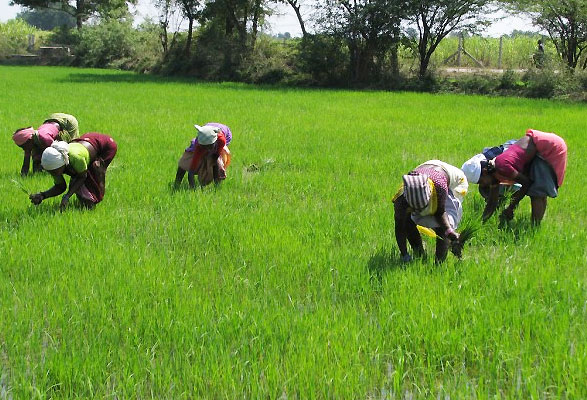
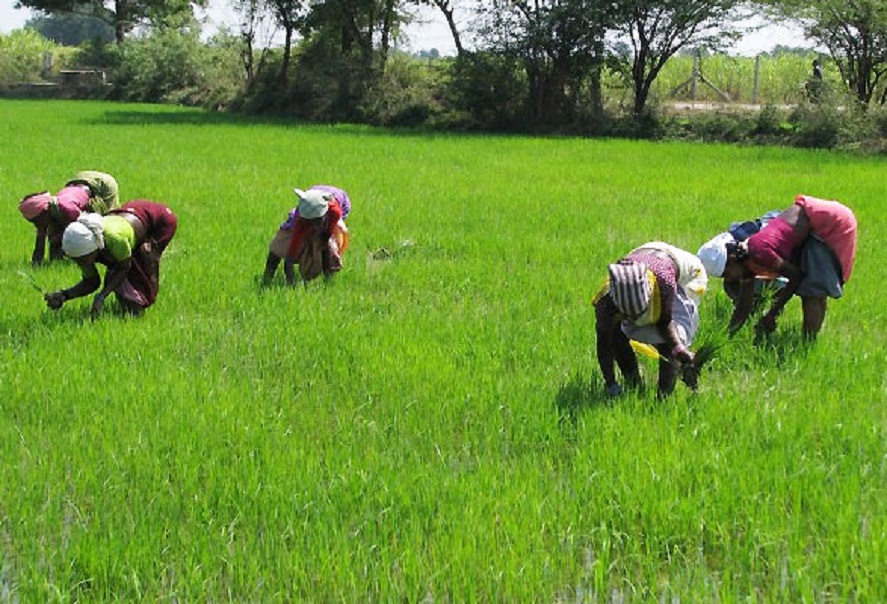
An international team of researchers representing the Africa Rice Center (AfricaRice), the International Rice Research Institute (IRRI) and Wageningen University, has raised the alarm over the enormous economic impact of parasitic weeds on rice production in Africa, threatening the food security and livelihoods of millions of resource-poor rice farmers and consumers in the region.
Smallholder farmers in the continent are losing every year half a million tons of rice worth about US $200 million because of parasitic weeds.
This is roughly equivalent to the annual rice consumption of Liberia, a low-income country, which is highly dependent on rice imports.
If the rice lost due to the parasitic weeds had been saved, it would have been enough to feed the total population of Liberia (4.5 million people) for a whole year.
Parasitic weeds are among the most destructive and problematic weeds to control.
“When these plants invade food crops, they turn into ferocious weeds,” said Dr Jonne Rodenburg, Agronomist at AfricaRice.
The most important parasitic weed species in rice are Striga asiatica, S. aspera, S. hermonthica and Rhamphicarpa fistulosa. They are all endemic to Africa and can also parasitize other cereal crops like maize, sorghum and millet.
The team of researchers reveal that these parasitic weeds, which survive by siphoning off water and nutrients from host crops, have invaded 1.34 million hectares of rainfed rice in Africa, affecting an estimated 950,000 rural households. They are increasingly becoming severe due to an intensification of agricultural production and climate changes.
The areas affected by parasitic weeds are home to some of the world’s poorest farmers.
Studies by AfricaRice and partners have shown that parasitic weeds seem to predominantly affect women farmers in Africa as they are often forced to grow rice on the most marginal and parasitic weed-infested plots.
Parasitic weeds threaten rice production in at least 28 countries in Africa that have rainfed rice systems. The most affected countries are Burkina Faso, Cameroon, Côte d’Ivoire, Guinea, Madagascar, Mali, Nigeria, Sierra Leone Tanzania and Uganda.
The researchers warn that these parasites are spreading fast in the rainfed rice area and if nothing is done to stop them in their tracks, the damage will increase by about US $30 million a year.
These findings were revealed in a recent article by Rodenburg, Demont, Zwart and Bastiaans, entitled “Parasitic weed incidence and related economic losses in rice in Africa,” published in Agriculture, Ecosystems and Environment 235 (306-317).
Rice is the second most important source of calories in Africa. It is also critical for smallholder incomes. Demand for rice is growing at a rate of more than 6% per year – faster than for any other food staple in sub-Saharan Africa (SSA), because of changes in consumer preferences and urbanization. Rice production is increasing across SSA, but the continent still imports some 40% of its rice.
Until now, there has been little information on the regional spread and economic importance of parasitic weeds in rice in Africa. “We have presented in this article best-bet estimates on the distribution as well as the agronomic and economic impact of parasitic weeds in rice in Africa,” explained Dr Rodenburg. “In fact, this is the first multi-species, multi-country impact assessment of parasitic weeds in Africa.”
The article focuses on the four most important parasitic weeds in rice. Striga species – known under the common name “witchweed” – occur in at least 31 countries with rain-fed upland rice systems. Rhamphicarpa fistulosa – known under the common name “rice vampireweed” – threatens rice production in at least 28 countries with rainfed lowland rice systems.
Dr Sander Zwart, AfricaRice Remote sensing and Geographic information systems specialist, explained that for this study, a map of rainfed rice production areas, compiled from different databases, was overlapped with parasitic weed observation data retrieved from public herbaria to visualize regional distribution of these four important parasitic weeds.
From this overlap, probabilities of actual infestation were estimated. These estimates together with secondary data on parasite-inflicted crop losses and efficacy of weed control were combined into a stochastic impact assessment model.
The knowledge acquired on the distribution as well as the agronomic and economic impact of parasitic weeds in rice in Africa underlines the importance of finding effective measures to control these pests through research.
AfricaRice and its partners have been investigating and developing efficient parasitic weed management strategies that are affordable and feasible for resource-poor rice farmers. “A range of high-yielding, short-cycle, farmer-preferred rice varieties have been identified with resistance or tolerance to different species and ecotypes of Striga, as well as varieties with good defense against R. fistulosa,” said Dr Rodenburg.
He explained that such varieties can be combined with different agronomic measures, such as late sowing (against R. fistulosa) or early sowing (against Striga), and the use of organic soil fertility amendments. Growing a leguminous cover crop such as Stylosanthes guianensisand following a zero-tillage approach also contribute to effective control of Striga, as demonstrated by agronomic experiments conducted by AfricaRice and its partners.
To study institutional and socio-economic constraints underlying the challenge posed by the parasitic weeds, and to raise awareness and improve communication on efficient management strategies, AfricaRice and its partners have brought together stakeholders, including national research institutes, extension services, crop protection services and private sector representatives in workshops in East and West Africa.
At a time where there is a decline in public sector investments in agricultural research, efficient targeting of resources is becoming increasingly important. “The results of our studies emphasize the importance of targeted investments in further research, the development and dissemination of control technologies and capacity building of farmers, extension agents and other stakeholders, to reverse the observed trend of increasing parasitic weeds in rice,” stated Dr Rodenburg.
AfricaRice.








By Adedapo Adesanya
Vert, a global cross-border payments platform, has announced a new solution under Verto Business Accounts that enables US-registered businesses to move money seamlessly between the United States and Africa.
With the ability to open a US Dollar account in their business name and have access to trusted emerging market payment rails, companies can now receive, hold, and transfer funds faster, more cost-effectively, and with greater control.
US-registered businesses with operations in Africa often encounter significant banking limitations, with US banks frequently delaying or blocking transactions to or from African markets, imposing high or hidden FX costs, and offering limited access to Emerging Market payment corridors. Businesses without a US bank account registered in their own name must rely on fragmented tools or intermediaries to move funds to Africa, creating operational inefficiencies and slowing growth.
Verto’s new solution directly addresses these challenges by giving US-domiciled businesses access to named USD accounts and a robust cross-border payment infrastructure, enabling them to move funds and settle transactions in local currencies with speed and efficiency.
Built for venture-backed startups, import-export SMEs, and investors funding emerging market innovation, this solution will enable clients to receive funds directly into a named USD business account from US based customers or investors, convert and settle between USD and local currencies such as NGN and KES quickly and at lower cost, as well as hold, receive, and pay in 48 currencies from a single dashboard.
The solution will also allow users to pay contractors, suppliers, and offshore teams instantly via local payment rails. It also equips teams with virtual cards to spend in 11 currencies without fees and leverage specialised onboarding and monitoring that navigates both US and African regulatory requirements
By combining US and African compliance expertise, Verto’s Business Accounts empowers companies to maintain a US domestic presence for investors, customers, and suppliers while using deep-liquidity rails to pay global contractors and settle trades in local currencies efficiently, ensuring uninterrupted trade, payroll, and investment flows, without the risk of blocked or delayed transactions.
“We believe founders building across borders should not be constrained by the limitations of traditional banking,” said Ola Oyetayo, CEO of Verto. “Providing named accounts in the US empowers businesses with the funds they need to operate globally, connecting the US and Africa more efficiently without friction.”
With over 8 years of experience and $25 billion in annual global cross-border transaction volume, Verto continues to provide the infrastructure, expertise, and trusted payment rails businesses need to operate confidently across borders and scale globally.
By Adedapo Adesanya
The Presidential Enabling Business Environment Council (PEBEC) has directed Ministries, Departments, and Agencies (MDAs) to suspend the introduction of new policies and regulatory changes to prevent disruptions to businesses.
The directive was issued in a statement by PEBEC director-general, Mrs Zahrah Mustapha-Audu, on Monday in Abuja, noting that the move is part of the Federal Government’s broader effort to improve regulatory quality, ensure policy consistency, and strengthen Nigeria’s ease of doing business environment.
The council emphasised that the suspension will remain in place until all MDAs fully comply with the Regulatory Impact Analysis (RIA) Framework, which governs evidence-based policymaking across government institutions.
The council said the directive is aimed at ensuring that all government policies are backed by verifiable data and do not negatively impact businesses or investors.
“It is imperative to emphasise that no new reform or policy will be permitted to proceed without being grounded in clear, verifiable evidence,” said Mrs Mustapha-Audu.
“The framework provides the structured mechanism through which such evidence-based decisions can be rigorously developed, assessed, and validated.
“This directive is necessary to prevent policy shocks that may adversely affect businesses, investors, and citizens, as well as to eliminate policy inconsistencies and frequent reversals.”
She added that the government remains committed to working collaboratively with regulators and does not intend to embarrass any institution.
The Regulatory Impact Analysis (RIA) Framework, introduced in January 2025, is designed to improve transparency and ensure that policies undergo proper evaluation before implementation.
All MDAs are required to align new policies and amendments with the RIA framework before approval and rollout.
The framework has been circulated by the Office of the Secretary to the Government of the Federation (SGF) and is available on the PEBEC website.
MDAs are encouraged to seek technical support from the PEBEC Secretariat to ensure proper implementation.
Exceptions to the directive will only be granted in cases of urgent national interest, subject to appropriate approvals.
PEBEC noted that the framework will help institutionalise evidence-based policymaking, enhance transparency, and improve stakeholder confidence in government decisions.


By Aduragbemi Omiyale
Subscription for the Federal Government of Nigeria (FGN) savings bonds for April 2026 has opened, a circular from the Debt Management Office (DMO) on Tuesday, April 7, 2026, confirmed.
The debt office is selling the retail debt instrument for this month in two tenors of two years and three years.
Offer for the savings bonds opened today and will close on Friday, April 10, 2026, a part of the disclosure stated.
The 2-year FGN savings bond due April 15, 2028, is being sold at a coupon rate of 13.082 per cent per annum, while the 3-year FGN savings bond due April 15, 2029, is being sold at a coupon rate of 14.082 per cent per annum.
The interests are paid every quarter, and the bullet repayment to subscribers on the maturity date.
The bonds are sold at N1,000 per unit, subject to a minimum subscription of N5,000 and in multiples of N1,000 thereafter, subject to a maximum subscription of N50 million.
Interested investors are required to reach out to the stockbroking firms appointed as distribution agents by the DMO via the agency’s website.
An FGN savings bond qualifies as securities in which trustees can invest under the Trustee Investment Act. It also qualifies as government securities within the meaning of the Company Income Tax Act (CITA) and the Personal Income Tax Act (PITA) for tax exemption for pension funds, amongst other investors, meaning it is tax-free.
It can be used as a liquid asset for liquidity ratio calculation for banks, and is listed on the Nigerian Exchange (NGX) Limited to allow for easy exit (liquidation) before maturity by selling at the secondary market.
-
 Feature/OPED6 years ago
Davos was Different this year
-
Travel/Tourism10 years ago
Lagos Seals Western Lodge Hotel In Ikorodu
-

 Showbiz3 years ago
Estranged Lover Releases Videos of Empress Njamah Bathing
-
 Banking8 years ago
Sort Codes of GTBank Branches in Nigeria
-

 Economy3 years ago
Subsidy Removal: CNG at N130 Per Litre Cheaper Than Petrol—IPMAN
-

 Banking3 years ago
Sort Codes of UBA Branches in Nigeria
-

 Banking3 years ago
First Bank Announces Planned Downtime
-

 Sports3 years ago
Highest Paid Nigerian Footballer – How Much Do Nigerian Footballers Earn