Economy
Rising Cost of Diesel, Cooking Gas Worries Lawmakers
By Modupe Gbadeyanka
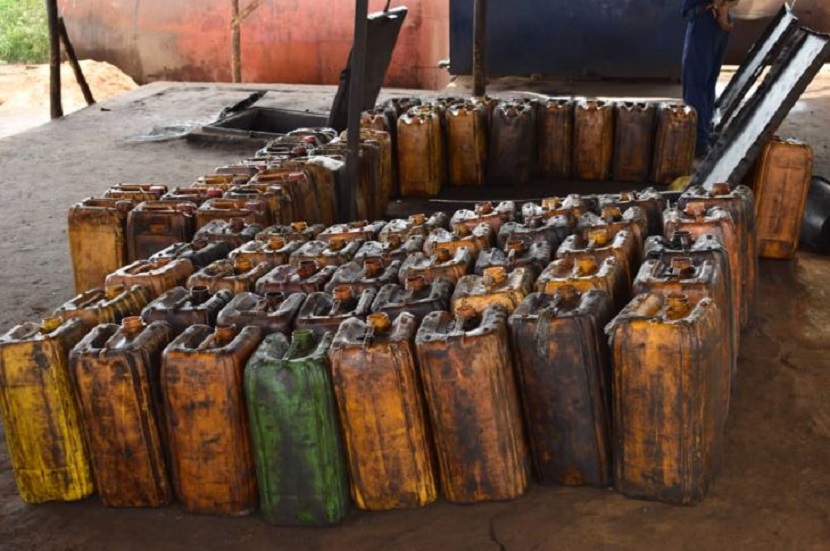
Lawmakers in the lower chamber of the National Assembly have expressed worry over the outrageous rise in the cost of diesel and cooking gas, launching an investigation into the cause.
At the plenary on Tuesday, a member of the House of Representatives from Imo State, Mr Chike John Okafor, moved a motion to look into the matter, warning that “if the ugly trend of the increasing price of diesel is not checked, the multiplier effect will spell doom for Nigeria’s economy.”
He stated that almost all businesses and households in Nigeria depend on diesel-powered generators as an alternative source of electricity and because of the current situation, the disposable income of consumers could be reduced as a result of “inflationary pressure,” thus making it impossible for average Nigerians to meet their basic needs.
According to him, the price of Automotive Gas Oil (diesel) was between N280 and N350 per litre three weeks ago, but at the moment, it is sold above N780 per litre and still rising on a daily basis accounting for over 115.4 per cent increase within the period.
He reminded his colleagues that the Nigeria Mainstream and Downstream Petroleum Regulatory Authority (NMDPRA) was created in August 2021 in line with the Petroleum Industry Act with the mandate to provide effective regulatory oversight, ensure sufficient product distribution and supply at an equitable and fair price.
In 2009, diesel was deregulated with an initial price of N100 per litre, and from 2009 to date, Nigerians have witnessed a rising percentage increase in the price of the product;
Mr Okafor informed the House that the hike in the cost of diesel is alleged to be the handiwork of unscrupulous stakeholders in the industry, and is tantamount to economic sabotage, causing untold hardships for Nigerians as it will result in an increase in the prices of food as well as other goods and services.
He urged the green chamber to quickly address the issue before things get out of hand and in responding, the Speaking of the House, Mr Femi Gbajabiamila, mandated the Committees on Petroleum Resources (Downstream) and Gas Resources to investigate the outrageous rise in the prices of diesel and cooking gas in the country and give a report in six weeks’ time.
Economy
LCCI Urges FG to Fix Manufacturing Bottlenecks, Stabilise Economy
By Adedapo Adesanya
The Lagos Chamber of Commerce and Industry (LCCI) has urged the federal government to prioritise reforms that address constraints in the manufacturing sector as it tackles broader macroeconomic and fiscal challenges facing the Nigerian economy.
President of LCCI, Mr Leye Kupoluyi, gave the advice on Thursday in Lagos, at the chamber’s quarterly state of the nation’s economy news conference.
He stated that the manufacturing sector remained a critical driver of revenue and industrial growth, citing a strong performance in 2025.
Mr Kupoluyi noted that the sector contributed N1.17 trillion in Value Added Tax (VAT), representing a 45.61 per cent increase from N803.53 billion recorded in 2024, adding that the Company Income Tax (CIT) from the sector rose to N881.29 billion, up by 32.83 per cent from N663.46 billion in the previous year.
“This strong year-on-year growth reinforces the sector’s expanding role in generating government revenue and in Nigeria’s industrial development.
“Following these results, we call on the government to invest more in productive infrastructure and economic policies that drive growth through job creation, lower production costs, and fiscal interventions,” he said.
On the global terrain, the LCCI president noted that the global economy remained unsettled, shaped by geopolitical tensions, supply chain disruptions and monetary tightening in advanced economies.
He said these trends had sustained inflationary pressures globally, while exposing emerging markets, including Nigeria, to capital outflows and currency volatility.
Mr Kupoluyi noted that Nigeria had benefited from high crude oil prices, warned against mismanaging the resulting windfall, urging the government to channel oil revenues into the Sovereign Wealth Fund, critical infrastructure and diversification initiatives to reduce import dependence and support long-term growth.
On monetary policy, the chamber’s president commended the Central Bank of Nigeria’s Monetary Policy Committee for reducing the Monetary Policy Rate by 50 basis points to 26.5 per cent at its February meeting.
He described the move as a cautious but important shift, reflecting growing confidence amid improvements in inflation and external sector performance.
Mr Kupoluyi also highlighted improvements in the foreign exchange market, noting that the naira had shown relative stability and appreciated to about N1,350.79 to the Dollar in the official market.
He said the performance reflects improved liquidity, investor confidence and the impact of ongoing reforms, but called for stronger policy coordination, increased FX inflows and fiscal discipline to sustain stability.
On fiscal operations, the LCCI president raised concerns over weak capital budget implementation, citing the rollover of N7.71 trillion in unexecuted 2025 capital projects.
He said delays in fund releases, bureaucratic bottlenecks and inefficiencies had continued to undermine project delivery and strain contractors.
He urged the government to develop a more effective framework for capital budget releases to ensure timely funding and execution of projects.
Addressing the oil and gas sector, Mr Kupoluyi welcomed the ongoing reform efforts aimed at boosting crude oil production and improving regulatory processes.
He called for a fully digital regulatory ecosystem to enhance transparency, accelerate approvals and restore investor confidence.
The official added that high global oil prices presented an opportunity for Nigeria to strengthen its position as a major supplier, provided local production and refining capacities are improved.
The LCCI president, however, expressed concern over high import duties on paper, printing materials and related inputs, noting that the policy had increased production costs across several value chains.
“The situation is worsened by port delays, multiple regulatory checks and inconsistent tariff classifications.
The chamber also called for a review of import duties, integration of regulatory agencies into the National Single Window and measures to reduce cargo clearance timelines.
“A balanced policy mix of moderate tariffs, support for local production and stable macroeconomic conditions would enhance industrial growth and reduce business costs,” he said.
He also reiterated its commitment to continued engagement with government and stakeholders to promote policies that support a thriving business environment.
Economy
NASD Index Gains 0.16% to Again Rise Above 4,000 Points
By Adedapo Adesanya
The NASD Over-the-Counter (OTC) Securities Exchange rose by 0.16 per cent on Thursday, April 29, with the Unlisted Security Index (NSI) returning above the 4,000-point mark after chalking up 6.55 points to settle at 4,005.78 points compared with the previous day’s 3,999.23 points.
During the trading session, the market capitalisation of the platform went up by N3.92 billion to close at N2.396 trillion, in contrast to the N2.392 trillion it ended on Wednesday.
The upliftment of the alternative stock market was influenced by the gains posted by four securities, which offset the losses printed by two securities.
According to data, Central Securities Clearing System (CSCS) Plc chalked up N4.03 to close at N76.02 per share versus the preceding session’s N71.99 per share, Food Concepts Plc appreciated by 24 Kobo to N2.67 per unit from N2.43 per unit, UBN Property Plc climbed 20 Kobo to trade at N2.23 per share versus N2.03 per share, and Geo-Fluids Plc improved by 9 Kobo to N3.00 per unit from N2.91 per unit.
On the flip side, MRS Oil Plc lost N17.65 to end at N178.10 per share compared with the previous price of N195.75 per share, and FrieslandCampina Wamco Nigeria Plc dipped by N9.76 to N90.24 per unit from N100.00 per unit.
The volume of securities traded during the trading day went up by 184.3 per cent to 877,682 units from 308,698 units, the value of securities jumped 5.7 per cent to N26.7 million from N25.2 million, and the number of deals soared by 100 per cent to 56 deals from 28 deals.
Great Nigeria Insurance (GNI) Plc remained the most traded stock by value (year-to-date) with 3.4 billion units worth N8.4 billion, followed by CSCS Plc with 60.1 million units exchanged for N4.1 billion, and Okitipupa Plc with 27.8 million units traded for N1.9 billion.
GNI Plc also closed as the most active stock by volume (year-to-date) with 3.4 billion units sold for N8.4 billion, followed by Resourcery Plc with 1.1 billion units worth N415.7 million, and Infrastructure Guarantee Credit Plc with 400 million units transacted for N1.2 billion.
The market will be closed on Friday, May 1, for Workers’ Day celebration.
Economy
Naira Appreciates to N1,374/$ at NAFEX
By Adedapo Adesanya
The Naira, in the Nigerian Autonomous Foreign Exchange Market (NAFEX) on Thursday, April 3, further appreciated against the United States Dollar by N4.52 or 0.33 per cent to N1,374.94/$1 from N1,379.46/$1.
Equally, the domestic currency gained against the Pound Sterling in the official market by N3.34 during the session to close at N1,858.24/£1 compared to the previous rate of N1,861.58/£1, and against the Euro, it improved by N5.29 to sell at N1,607.58/€1 versus N1,612.87/€1.
At the GTBank FX counter, the Nigerian Naira gained N4 against the Dollar to settle at N1,384/$1 versus Wednesday’s closing price of N1,389/$1, and at the parallel market, it improved by N5 to trade at N1,385/$1 compared with the N1,390/$1 it was transacted a day earlier.
Nigeria’s external reserves, which provide the Central Bank of Nigeria (CBN) with a buffer to support the Naira, continued their downward trend, declining to $48.36 billion as of April 29, 2026, according to data.
Market activity weakened sharply, with the NAFEM recording zero deals on Thursday, down from 393 deals on Wednesday. Total turnover in the official window also dropped from $802.44 million to zero, underscoring a severe liquidity squeeze.
Thursday’s price formation was driven entirely by the interbank segment, where turnover also fell significantly to $58.03 million from $249.91 million, suggesting that liquidity pressures extended across the broader FX market.
As for the cryptocurrency market, prices were up amid looming US inflation data, while high oil prices and rising bond yields weigh on risk assets.
The appreciation faces headwinds in the form of US March PCE inflation, which lands as oil prices keep pressure on risk assets, as well as reduced traffic through the Strait of Hormuz, which has kept energy markets fragile.
Dogecoin (DOGE) rose by 1.8 per cent to trade at $0.1082, Bitcoin (BTC) appreciated to $76,987.59, Ethereum (ETH) grew by 1.2 per cent to $2,276.11, Cardano (ADA) added 1.1 per cent to close at $0.2484, and Solana (SOL) soared by 1.1 per cent to $83.89.
Further, TRON (TRX) increased by 0.7 per cent to $0.3224, Ripple (XRP) jumped 0.4 per cent to $1.37, and Binance Coin (BNB) expanded by 0.2 per cent to $616.67, while the US Dollar Tether (USDT) and the US Dollar Coin (USDC) closed flat at $1.00 each.
-
Feature/OPED6 years agoDavos was Different this year
-
Travel/Tourism10 years ago
Lagos Seals Western Lodge Hotel In Ikorodu
-
Showbiz3 years agoEstranged Lover Releases Videos of Empress Njamah Bathing
-
Banking8 years agoSort Codes of GTBank Branches in Nigeria
-
Economy3 years agoSubsidy Removal: CNG at N130 Per Litre Cheaper Than Petrol—IPMAN
-
Banking3 years agoSort Codes of UBA Branches in Nigeria
-
Banking3 years agoFirst Bank Announces Planned Downtime
-
Sports3 years agoHighest Paid Nigerian Footballer – How Much Do Nigerian Footballers Earn