
Economy
Russia’s Lukoil Agrees to Sell International Assets in Nigeria, Others to Carlyle

By Adedapo Adesanya
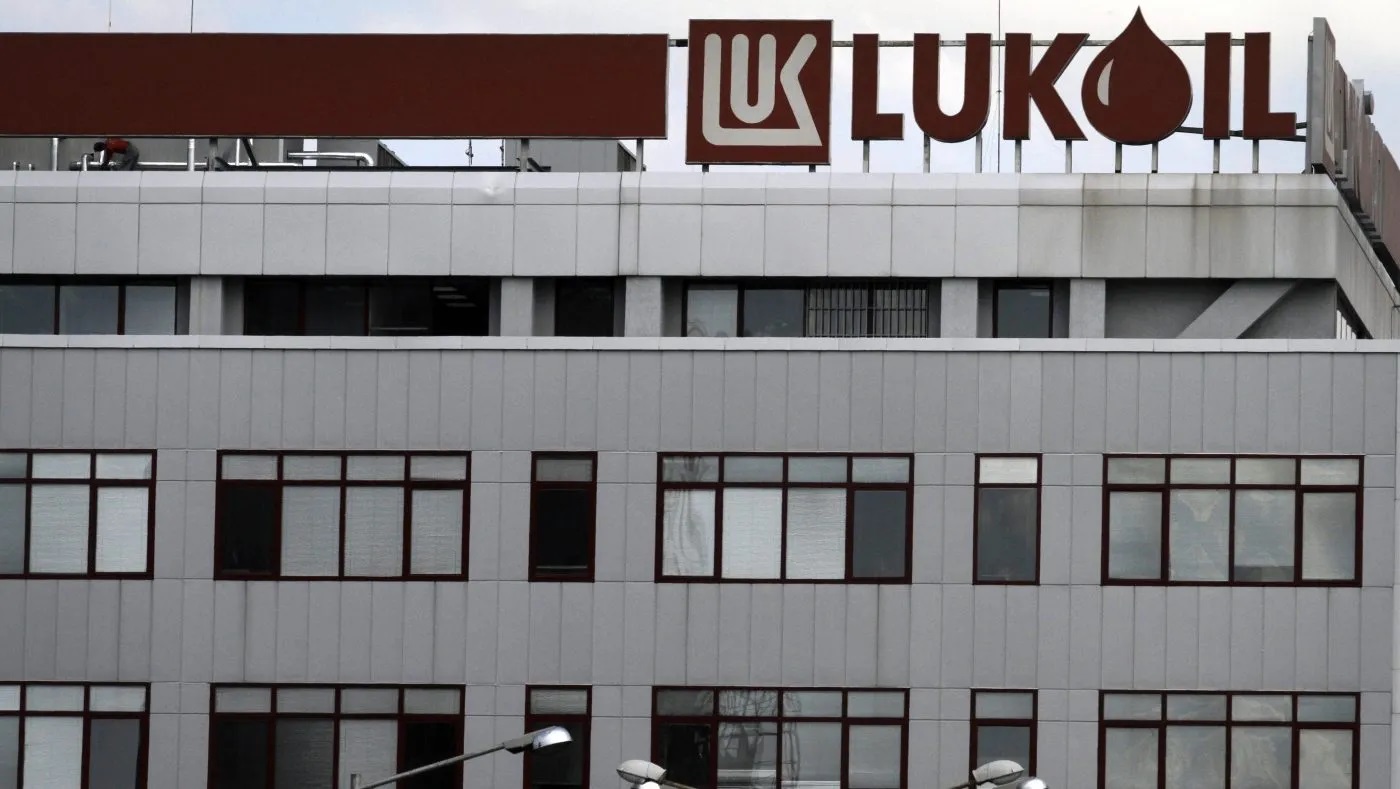
US sanctioned Russian oil giant Lukoil, will sell its foreign assets, including those in Nigeria and five other countries, to the US investment firm, The Carlyle Group.
According to an announcement on Thursday, Lukoil reached an agreement with the US investment firm on the sale of Lukoil International GmbH, the holding company that owns the group’s non-Russian international assets.
These foreign assets include shares in oil fields and refineries across the globe, including in Iraq, Azerbaijan, Egypt, the United Arab Emirates (UAE), Nigeria, and Mexico.
The sale follows the US sanctions on Lukoil and Rosneft, “as a result of Russia’s lack of serious commitment to a peace process to end the war in Ukraine.”
The Donald Trump administration in October 2025 had carried out the decision to put pressure on Russia’s state finances, adding the country’s two largest oil producers, Lukoil and Rosneft, to its blacklist of sanctioned entities. The US had initially given the oil firm one month to sell the holdings before gradually extending it as negotiations dragged on.
Lukoil had announced that same month that it would sell all of its international assets, initiating a formal process to receive bids from potential buyers.
After months of negotiations with potential buyers and one preliminary agreement with Gunvor blocked by the US Treasury, which described the trading group as “the Kremlin’s puppet”, it has now signed an agreement to sell Lukoil International GmbH to Carlyle.
Companies working with the sanctioned firms risk secondary sanctions that would deny them access to US banks, traders, transporters, and insurers.
The agreement is not exclusive and is subject to conditions such as the procurement of necessary regulatory approvals, including permission from the US Department of the Treasury’s Office of Foreign Assets Control (OFAC) for the transaction with Carlyle.
Carlyle said that the agreement “has been structured to be fully compliant” with US Treasury policies and that it was “conditional upon Carlyle’s due diligence and regulatory approvals”.
Prior to the Carlyle news, other US oil and gas supermajors Chevron and ExxonMobil, and International Holding Company (IHC) of Abu Dhabi expressed interest to the US Treasury to potentially acquire Lukoil’s international assets.
The sale would further dent Russian economy which has been struggling because of its war in Ukraine and Western sanctions have increased inflation and slowed economic growth. In 2025, the country’s oil and gas revenues, which make up about a quarter of government income and help fund the war, fell to their lowest level in five years.


By Adedapo Adesanya
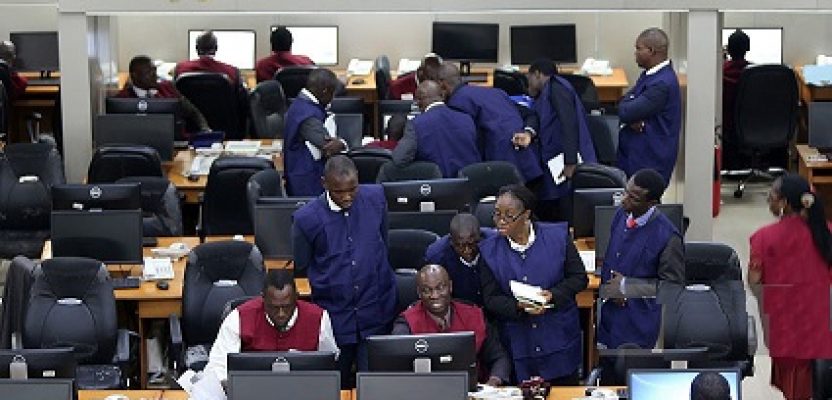
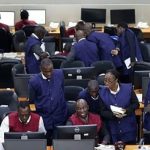
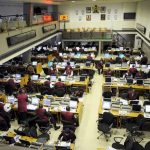
Four stocks weakened the NASD Over-the-Counter (OTC) Securities Exchange by 0.56 per cent on Thursday, March 12, making it the third consecutive loss this week.
The price losers were led by FrieslandCampina Wamco Nigeria Plc, which crumbled by N4.71 to N128.07 per share from N132.78 per share. Central Securities Clearing System (CSCS) Plc lost N1.98 to close at N78.02 per unit versus the previous day’s N80.00 per unit, First Trust Mortgage Bank Plc declined by 15 Kobo to N1.75 per share from N1.90 per share, and MRS Oil Plc crashed by 10 Kobo to settle at N210.00 per unit compared with the preceding session’s N210.10 per unit.
Consequently, the market capitalisation went down by N14.13 billion to N2.519 trillion from N2.533 trillion, and the NASD Unlisted Security Index (NSI) dipped by 23.61 points to 4,210.30 points from 4,233.91 points.
There were three price gainers yesterday, led by Okitipupa Plc, which gained N10.00 to N240.00 per share from N230.00 per share, IPWA Plc increased by 45 Kobo to N5.01 per unit from N4.56 per unit, and Afriland Properties Plc appreciated by 35 Kobo to N17.95 per share from N17.60 per share.
During the session, the value of securities surged by 197.4 per cent to N95.0 million from N31.9 million, the volume of securities grew by 185.8 per cent to 3.7 million units from 1.3 million units, and the number of deals improved by 44.4 per cent to 52 deals from 36 deals.
The most active stock by value (year-to-date) was CSCS Plc with 38.4 million units worth N2.4 billion, followed by Okitipupa Plc with 6.4 million units valued at N1.1 billion, and FrieslandCampina Wamco Nigeria Plc with 6.2 million units sold for N566.8 million.
The most traded stock by volume (year-to-date) was Resourcery Plc with 1.05 billion units traded for N408.7 million, trailed by Geo-Fluids Plc with 130.6 million units transacted for N503.8 million, and CSCS Plc with 38.4 million units worth N2.4 billion.
By Adedapo Adesanya
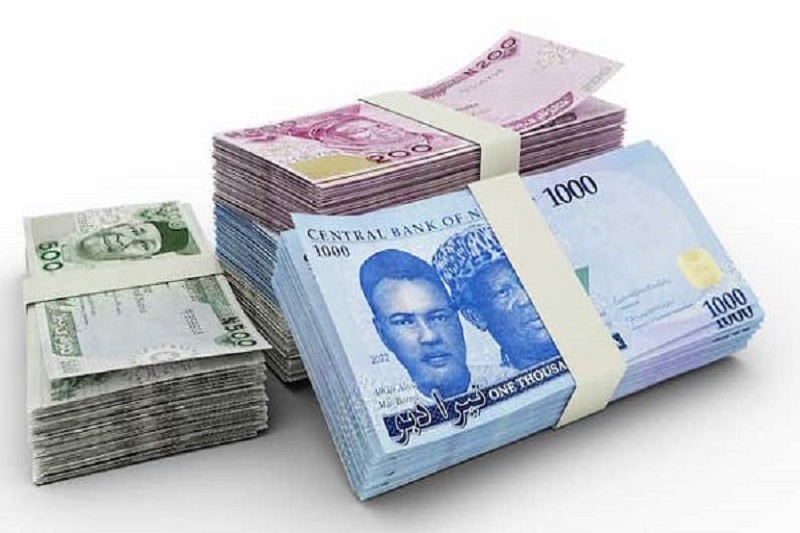
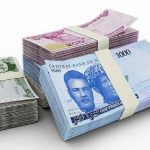
The Naira rallied against the United States Dollar by N4.68 or 0.34 per cent to trade at N1,371.51/$1 in the Nigerian Autonomous Foreign Exchange Market (NAFEX) on Thursday, March 12, compared with the N1,376.19/$1 it was traded on Wednesday.
The local currency also appreciated against the Pound Sterling in the same market window during the session by N10.67 to quote at N1,834.80/£1 versus midweek’s price of N1,845.47/£1, and strengthened against the Euro by N49.62 to finish at N1,581.89/€1, in contrast to the previous session’s N1,631.51/€1.
At the parallel market, the Naira also gained N10 against the Dollar yesterday to close at N1,410/$1 versus the preceding day’s rate of N1,420/$1, and gained N16 at the GTBank’s FX desk to settle at N1,391/$1 compared with the N1,407/$1 it was exchanged a day earlier.
Pressure further eased on the FX market as a result of inflows from foreign investors, exporters and non-bank corporates, among others.
With gross external reserves standing above $50 billion, the highest since 2009, analysts said the Naira has a positive outlook, amidst projections that the FX rate could rise to N1,300 per dollar in the first half of 2026.
However, external pressure threatens this, as increased demand for the US Dollar has strengthened globally due to the war triggered by the United States and Israel against Iran, which has been ongoing for two weeks.
A look at the digital currency market showed that prices extended a quiet stretch of consolidation that has kept the market largely unmoved by turbulence in global equities.
Amid geopolitical tensions in the Middle East and supply disruptions, crypto markets appear to be largely ignoring those pressures for now. Analysts noted that until a clear macro catalyst or wave of new capital arrives, the market appears content to consolidate gains rather than chase a breakout.
Cardano (ADA) appreciated by 6.0 per cent to $0.2743, Dogecoin (DOGE) grew by 4.9 per cent to $0.0966, Solana (SOL) added 4.6 per cent to sell for $88.99, Ethereum (ETH) rose by 4.3 per cent to $2,111.22, Ripple (XRP) jumped 3.9 per cent to $1.42, Bitcoin (BTC) expanded by 3.0 per cent to $71,546.01, Binance Coin (BNB) improved by 2.6 per cent to $661.08, and TRON (TRX) increased by 0.1 per cent to $0.2897, while the US Dollar Tether (USDT) and the US Dollar Coin (USDC) traded flat at $1.00 each.
By Adedapo Adesanya
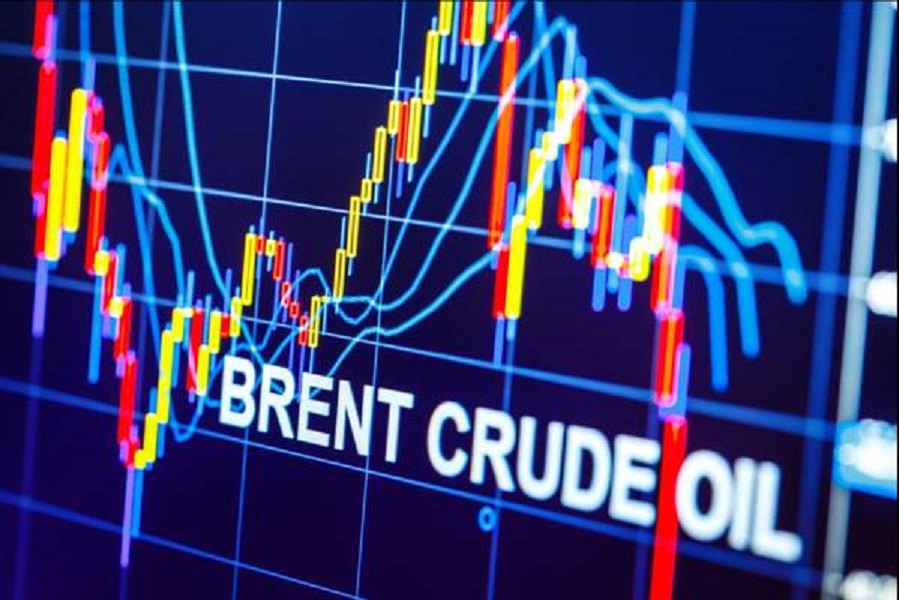
Brent crude crossed $100 a barrel again on Thursday as Iran stepped up attacks on oil and transport facilities across the Middle East, while vowing to keep the vital Strait of Hormuz shut.
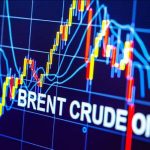
The oil grade chalked up $8.48 or 9.2 per cent to trade at $100.46 a barrel, while the US West Texas Intermediate (WTI) crude settled at $95.70, up $8.48 or 9.7 per cent.
At least six vessels in the strait were damaged in incidents across the Strait of Hormuz, where about a fifth of the world’s oil and gas supplies travel.
Commercial ships sailing under the flags of Thailand, Japan, and the Marshall Islands were targeted by unknown projectiles across the Persian Gulf’s key maritime artery.
Meanwhile, Iran’s Islamic Revolutionary Guards Corps (IRGC) said it had struck a Liberian-flagged vessel in the strait that it claimed was owned by Israel.
The country has indicated it considers the ships transferring oil to the US, Israel, and “their partners” as “legitimate” targets, with its new Supreme Leader, Mojtaba Khamene,i saying on Thursday that the Strait of Hormuz should remain closed as a tool of pressure.
Oman shifted all vessels out of its main oil export terminal at Mina Al Fahal outside the Strait of Hormuz in a precautionary move.
In Iraqi waters, Iranian explosive-laden boats reportedly attacked two fuel tankers, setting them ablaze and killing one crew member, while a Japan-flagged container ship sustained minor damage from an unknown projectile 46 kilometres northwest of Ras Al Khaimah in the United Arab Emirates (UAE).
The war is causing the biggest oil-supply disruption in the history of global markets, the International Energy Agency said on Thursday, a day after approving the release of a record volume of 400 million barrels of oil from strategic stockpiles.
It also said that Middle East Gulf countries have cut total oil production by at least 10 million barrels per day – a volume equaling almost 10 per cent of world demand.
The energy watchdog warned that in the wake of the war, global oil supply is set to plunge by 8 million barrels per day in March, with curtailments in the Middle East partly offset by higher output from non-OPEC+ producers, Kazakhstan, and Russia. It added that the emergency stock release wouldn’t be able to offset a prolonged supply loss.
Meanwhile, the Group of Seven (G7) nations, consisting of the United States, Canada, Japan, Italy, Britain, Germany, and France, is exploring the possibility of escorting ships through the Gulf region, including the crucial Strait of Hormuz.








-
 Feature/OPED6 years ago
Davos was Different this year
-
Travel/Tourism10 years ago
Lagos Seals Western Lodge Hotel In Ikorodu
-

 Showbiz3 years ago
Estranged Lover Releases Videos of Empress Njamah Bathing
-
 Banking8 years ago
Sort Codes of GTBank Branches in Nigeria
-

 Economy3 years ago
Subsidy Removal: CNG at N130 Per Litre Cheaper Than Petrol—IPMAN
-

 Banking3 years ago
Sort Codes of UBA Branches in Nigeria
-

 Banking3 years ago
First Bank Announces Planned Downtime
-

 Sports3 years ago
Highest Paid Nigerian Footballer – How Much Do Nigerian Footballers Earn