
Economy
SEC Lied, Never Gave us Fair Hearing—Oando Insists

By Dipo Olowookere
Embattled Nigerian energy company listed on both the Nigerian Stock Exchange (NSE) and the Johannesburg Stock Exchange (JSE), Oando Plc, has maintained its stance that it was not given the opportunity to defend itself during a forensic audit ordered by the Securities and Exchange Commission (SEC) to look into its books.
SEC had some days ago sanctioned the firm and some board members, with the Group CEO and his deputy asked to resign and barred from being on the board of any publicly quoted firm for a period of five year.
However, this was challenged at a Federal High Court in Lagos and an order obtained by Oando to stop the apex capital market regulator in Nigeria to executive its sanctions.
While reacting to a statement issued by Oando few days ago, SEC said it followed due process in punishing the company and that the firm was given fair hearing.
But Oando in a statement on Monday, said SEC was not truthful in its June 9, 2019 press released because it (Oando) was “not accorded a fair hearing because we simply co-operated with the process and responded to questions posed by the auditors in the course of their fieldwork for findings in a report that the company has still not seen.”
Oando stressed that a “hearing can only be said to be fair when all the parties to a dispute are given an opportunity to present their respective cases, and each side is entitled to know the details of the
case/findings being made against it and is given an opportunity to reply thereto.”
The firm noted that, “Prior to the commencement of the forensic audit, the company was not afforded the same opportunity to meet with the SEC as was afforded to the petitioners, despite repeated written requests to that effect.
“The first of these requests was on Thursday, August 24, 2017 from the Chairman, HRM Oba Michael Adedotun Gbadebo CFR who wrote to the then SEC Director General as follows ‘We would like to request for a meeting with you, in your capacity as Director General of the SEC and regulator on matters involving the securities of our company, to formally table our concerns to you and clarify any further questions that you may have in respect to the issues that we have raised in this and previous letters to the SEC.’
“During the 18 month long forensic audit exercise, the company was never given an opportunity to present its case based on the concerns or findings of the forensic auditor to the SEC.
“In the kick off meeting with Deloitte on the 29th of March 2018, they assured the company that we would be allowed to read their report on the forensic audit and give further clarification or comments on matters raised in their report. Minutes from the meeting which was shared with parties in attendance state ‘Deloitte concluded by repeating that the audit will be done fairly and from a factual perspective. There will be ‘no surprises’. Oando will be allowed to read their report on the forensic audit and give further clarification or comments on matters raised in the report.’
“In the course of Deloitte’s forensic audit exercise, the company had a second meeting with Deloitte on the 1st of November, 2018, and this was at the company’s insistence. At the said meeting, Deloitte promised that on the conclusion of its audit, it would hold a close out meeting with the company, however, this meeting never took place.
“With the exception of the aforementioned meetings, all other engagements with both the SEC and Deloitte were via letters and emails.
“On Monday, February 11, 2019 at Oando’s request the company’s management team met with the SEC for the purpose of getting approval for certain proposed transactions as part of our corporate strategy pending the release of the forensic audit. At the said meeting, the company was assured by the Acting Director General (DG), Mary Uduak, that they would call us in to defend the findings from the forensic report before making a final conclusion. A promise that she has not honoured.
“The company also disagrees with the assertion by SEC in its press release that ‘The actions of
the commission were properly effected pursuant to the provisions of the Investments and Securities Act (ISA) 2007 and the SEC Rules and Regulations mad pursuant to the ISA 2007’.
“Rule 599(1) of the SEC Rules and Regulations establishes the Administrative Proceedings Committee (APC) and states as follows:
“1) Pursuant to sections 310 of the Act, there is hereby established an administrative body to be known as Administrative Proceedings Committee (the Committee) for the purpose of hearing capital market operators and institutions in the market who are perceived to have violated or have actually violated or threatened to violate the provisions of the Act and the rules and regulations made there under and such operators or persons against whom complaints/allegations have been made to the commission”
“By virtue of this provision, it is evident that SEC circumvented its own rules and procedures when
it failed to invite Oando to appear before the APC and hear its position. The commission instead approached the media to publish the purported findings and punitive directives against the company.
“We are aware that the APC forum was rightly adopted by the SEC in the case of Mr Olubunmi
Oladapo Oni vs. Administrative Proceeding Committee & Securities and Exchange Commission (2014) N.W.L.R. (part 1424) 334 ‘The Cadbury Case’, the case of Afolabi Gabriel Oluwaseyi &
9 others vs. BGL Securities Limited & 22 others as well as in the case of the investigation of a certain financial institution. In these aforementioned cases cited, the parties involved were afforded opportunities to be heard before the panel prescribed appropriate punishments.
“For the avoidance of doubt, Schedule VIII of the SEC Rules stipulates as follows:
“The Administrative Proceedings Committee of the Commission is a body established pursuant
to the Investments and Securities Act for the purpose of resolving disputes in the capital market
and giving opportunity for fair hearing to capital market operators and other institutions in the market who are perceived to have violated or have actually violated or threatened to violate the provisions of the ISA and the Rules and Regulations made thereunder or such operators against whom investors have lodged complaint.”
“It would have therefore been in line with due process for the aforementioned committee to have
been rightly constituted by the SEC in accordance with the ISA, in order to afford Oando the
opportunity to present its case.
“We maintain that the SEC has not followed due process, failed to grant Oando a fair hearing, has
acted in a way that is contrary to best practice and has not proven itself to be a fair and reasonable regulator acting in the best interest of the capital market and minority shareholders, in all its dealings on this matter.”



By Aduragbemi Omiyale
The Frontier Market status of Nigeria, earlier yanked off by FTSE Russell, has now been fully restored.
The platform earlier reclassified the country’s status to Unclassified following several uncertainties and economic issues.
But after recommendations from its Equity Country Classification Advisory Committee and Policy Advisory Board, the Frontier Market status has been restored by FTSE Russell, marking a significant milestone in the country’s reintegration into global investment indices and signalling renewed opportunity for international investors.
However, this will take effect from September 2026, with the outcome announced as part of the March 2026 interim review and communicated to investors across key global markets.
The decision reflects sustained improvements in Nigeria’s market infrastructure, accessibility, and overall investability, driven in large part by enhancements to the Nigerian Exchange (NGX) platform. These include strengthened trading systems, improved settlement processes, and increased transparency, all of which have contributed to a more efficient and accessible market environment for domestic and international investors.
According to the FTSE Quality of Markets assessment, Nigeria recorded Pass ratings across several core criteria, including regulatory oversight, capital repatriation, brokerage competitiveness, tax framework, and settlement efficiency, with a T+2 settlement cycle in operation. These gains reflect deliberate efforts to align market operations with global standards and improve the investor experience.
While acknowledging this progress, the review also highlighted areas for further development, including foreign exchange market depth, transaction cost efficiency, derivatives market availability, and certain custody and clearing mechanisms. Addressing these gaps will require continued coordination across regulators, market operators, and the broader financial ecosystem.
FTSE Russell noted that its country classification process combines detailed technical assessment with input from global institutional investors, ensuring that both structural conditions and real-world investor experience are reflected. The organisation also commended Nigerian market authorities for their continued engagement.
“This milestone reflects the strength of collaboration across Nigeria’s capital market ecosystem, but importantly, the deliberate efforts to strengthen the underlying market infrastructure that supports efficient trading, transparency, and investor access,” the chief executive of NGX Group Plc, Mr Temi Popoola, said.
“At NGX Group, we have remained focused on building a more resilient, accessible, and globally competitive platform, and this reclassification affirms the progress made.
“We will continue to work closely with regulators, market operators and stakeholders to deepen reforms, address identified gaps, and sustain momentum towards higher market classifications,” he added.
The Frontier Market designation is expected to enhance Nigeria’s visibility among global asset managers and index-tracking funds, potentially unlocking new capital inflows and broadening participation in the market.
As global investors increasingly prioritise markets with strong infrastructure, transparency, and accessibility, Nigeria’s re-entry into the FTSE Frontier Market universe underscores the critical role of market infrastructure in enabling capital formation and connecting local opportunities to global capital.

By Adedapo Adesanya
A 1.61 per cent fall was recorded by the NASD Over-the-Counter (OTC) Securities Exchange on Tuesday, April 7, on the back of selling pressure.
The profit-taking chopped off N38.87 from the market capitalisation of the trading platform, leaving it at N2.378 trillion compared with the N2.417 trillion it ended last Thursday, when the bourse last witnessed trading activity.
Similarly, the NASD Unlisted Security Index (NSI) dropped 22.57 points to close the session at 3,975.34 points, in contrast to the preceding session’s 4,040.30 points.
The market breadth index was at equilibrium yesterday after recording three price gainers and three price losers, led by Okitipupa Plc, which depleted by N15.00 to N260.00 per share from N275.00 per share. Central Securities Clearing System (CSCS) Plc dipped by N6.31 to N71.69 per unit from N78.00 per unit, and FrieslandCampina Wamco Nigeria Plc went down by N1.00 to N92.00 per share from N93.00 per share.
Conversely, First Trust Mortgage Bank Plc appreciated by 20 Kobo to N2.28 per unit from N2.08 per unit, UBN Property Plc also improved by 20 Kobo to N2.18 per share from N1.98 per share, and Impresit Bakalori Plc gained 19 Kobo to sell at N2.20 per unit versus N2.01 per unit.
During the session, the volume of securities dipped by 99.7 per cent to 797,264 units from 260.2 million units, the value of securities went down by 83.1 per cent to N26.1 million from N154.2 million, and the number of deals decreased by 28.3 per cent to 33 deals from 46 deals.
Great Nigeria Insurance (GNI) Plc remained the most traded stock by value (year-to-date) with 3.4 billion units worth N8.4 billion, trailed by CSCS Plc with 57.1 million units sold for N3.9 billion, and Okitipupa Plc with 27.5 million units valued at N1.8 billion.
GNI Plc was also the most traded stock by volume (year-to-date) with 3.4 billion units traded for N8.4 billion, followed by Resourcery Plc with 1.1 billion units exchanged for N415.7 million, and Infrastructure Guarantee Credit Plc with 400 million units transacted for N1.2 billion.
By Adedapo Adesanya
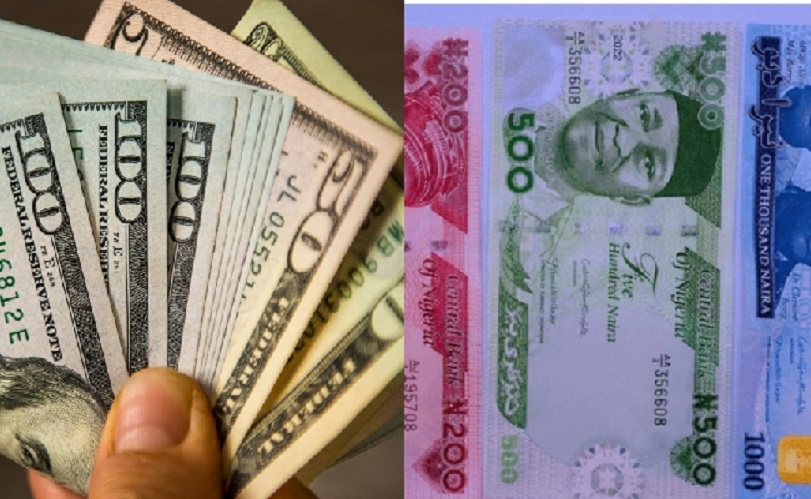
The Naira suffered a decline of N5.87 or 0.43 per cent against the US Dollar in the Nigerian Autonomous Foreign Exchange Market (NAFEX) on Tuesday, April 7, to trade at N1,386.66/$1 compared with the previous value of N1,380.79/$1.
It was the first trading day in the local currency market after it closed last Friday and Monday for the Easter holiday.
In the same market window, the Nigerian Naira also depreciated against the Pound Sterling during the session by N13.71 to sell for N1,838.57/£1 versus N1,824.86/£1, and lost N13.69 on the Euro to quote at N1,605.61/€1 versus N1,591.92/€1.
In the black market, the Nigerian currency maintained stability against the Dollar yesterday to remain unchanged at N1,4010/$1.
Despite the recent movement, analysts remain optimistic about the outlook of the currency in 2026, citing ongoing reforms by the Central Bank of Nigeria (CBN).
The Centre for the Promotion of Private Enterprise (CPPE) said Naira stability in the first quarter of the year boosted business confidence, noting that the currency remains relatively stable during the period, trading within the N1,340 to N1,430 per Dollar band.
It attributed the stability to improved foreign exchange liquidity, stronger oil earnings, and rising external reserves, which had climbed above 50 billion dollars.
In the cryptocurrency market, prices rose after US President Donald Trump announced a two-week cease-fire with Iran, abruptly reversing days of bearish positioning.
The spike triggered roughly $595 million in crypto liquidations, with short positions making up about $427 million, marking the most aggressive short squeeze since early March. Short positions occur when investors profit from a decline in the price of an asset, so when prices rise, losses occur for the shorts.
Cardano (ADA) rose by 8.3 per cent to $0.2629, Ethereum (ETH) appreciated by 7.3 per cent to $2,249.69, Solana (SOL) added 6.6 per cent to sell for $84.67, Ripple (XRP) jumped 5.8 per cent to $1.38, Dogecoin (DOGE) expanded by 5.1 per cent to $0.0949, Bitcoin (BTC) grew by 5.0 per cent to $71,897.41, Binance Coin (BNB) increased by 3.3 per cent to $616.35, and TRON (TRX) gained 0.1 per cent to trade at $0.3160, while the US Dollar Tether (USDT) and the US Dollar Coin (USDC) traded flat at $1.00 apiece.
-
 Feature/OPED6 years ago
Davos was Different this year
-
Travel/Tourism10 years ago
Lagos Seals Western Lodge Hotel In Ikorodu
-

 Showbiz3 years ago
Estranged Lover Releases Videos of Empress Njamah Bathing
-
 Banking8 years ago
Sort Codes of GTBank Branches in Nigeria
-

 Economy3 years ago
Subsidy Removal: CNG at N130 Per Litre Cheaper Than Petrol—IPMAN
-

 Banking3 years ago
Sort Codes of UBA Branches in Nigeria
-

 Banking3 years ago
First Bank Announces Planned Downtime
-

 Sports3 years ago
Highest Paid Nigerian Footballer – How Much Do Nigerian Footballers Earn