Connect with us

Economy

SEC, Police Join Forces to Tackle Investment, Cryptocurrency Frauds

Published

on

Social Impact Of Cryptocurrency Adoption

By Aduragbemi Omiyale

The Securities and Exchange Commission (SEC) has received a renewed backing of the Nigeria Police Force (NPF) to flush out criminals from the nation’s capital market.

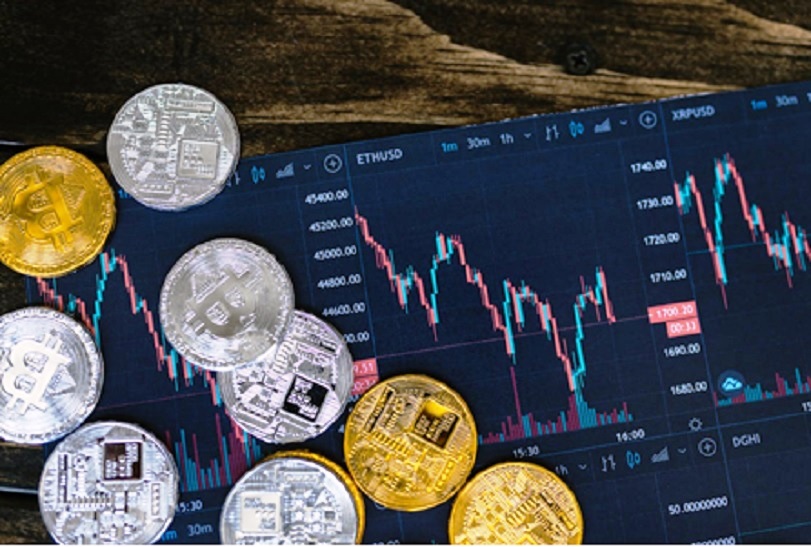
At a meeting with the Director General of SEC, Mr Emomotimi Agama, the Inspector General of Police, Mr Kayode Egbetokun, agreed to forge an alliance against illegal scheme operators, investment frauds, and cryptocurrency frauds in a bid to protect the hard-earned savings and the financial dreams of the Nigerian people.

He assured the capital market regulator of the readiness of the security agency to strengthen partnership in all the ways possible to achieve a clean market.

“SEC is very crucial to the Nigerian economy, and with our supervision and support from the government, we will ensure economic recovery and growth. If the police unit in SEC is strengthened, it is going to make so much impact in your enforcement drive. What you said speaks so much to your determination to ensuring effective drive in the capital market and when we are able to achieve effective enforcement, it comes with so many benefits,” the police chief said, approving the collaboration between SEC and the Cyber Security Centre of the NPF.

Earlier at the meeting on Wednesday in Abuja, Mr Agama informed Mr Egbetokun that his organisation has the mandate to protect investors, maintain fair, efficient, and transparent markets, and promote the growth of a vibrant economy built on trust, which are done by setting rules, licensing operators and market surveillance.

He, however, stated that the commission faces adversaries who operate in the shadows, outside regulated gates by exploiting the trust of people and promising miraculous returns such as 200 per cent in 30 days.

“They cloak their deceit in the glamorous but misunderstood language of cryptocurrency and forex trading. They target the vulnerable, the optimistic, and the simply unsuspecting, leaving behind a trail of shattered lives, depleted pensions, and broken trust. This is not just a financial crime; it is a social menace that erodes public confidence in our entire financial system.

“This is where our authority, as the SEC, meets its necessary complement: your power, your reach, and your mandate. The Nigeria Police Force is the primary law enforcement agency with the national presence, the investigative muscle, and the constitutional authority to track, apprehend, and bring these criminals to justice. Where we identify the illegality and the regulatory breach, you possess the apparatus for criminal investigation, arrest, and prosecution.

“Currently, there is a gap, a seam between identification and enforcement that these scammers exploit. Today, we aim to close that gap permanently. Therefore, we propose a robust, institutionalized collaboration with the following pillars: joint intelligence and operations task force: capacity building and knowledge transfer; streamlined processes for enforcement and national public awareness campaign,” he stated.

The SEC DG advocated the establishment of a dedicated SEC-NPF team that combines market intelligence, forensic accounting, and understanding of complex financial schemes with investigative and intelligence-gathering capabilities. This team will be the rapid-response unit to new frauds.

Mr Agama also sought the permission of the IGP to go into a Memorandum of Understanding with the Cyber Security Unit of the Police Force in a bid to ensure the cyber space is safe for all Nigerians

“Mr Inspector General, the fight against financial crime is a fight for the soul of our economy. It is a fight for the widow who has lost her savings, the youth lured by fake crypto promises, and the retiree seeking a safe return. The SEC cannot win this fight alone. The Police should not have to decipher these complex schemes without specialist support. Together, however, we form an impenetrable shield.

“Let this meeting be remembered as the day the two guardians of Nigeria’s safety the safety of our streets and the safety of our savings joined hands. Let us send a clear, unequivocal message to every scammer, from the dusty streets to the dark web: Your time is up. Nigeria’s investors are now under our combined protection. We are ready to work with you. We look forward to your guidance and partnership,” he added.


Click to comment

Leave a Reply

Your email address will not be published. Required fields are marked *

Economy

Nestoil Debt: EFCC Facilitates $60m Payment to Lenders

Published

on

Nestoil

By Adedapo Adesanya

The Economic and Financial Crimes Commission (EFCC) has facilitated the recovery of $60 million from Nestoil Limited, with the funds paid to a consortium of lenders as part of efforts to recover the oil and gas company’s outstanding debt.

According to a report by Nairametrics, the payment followed a structured repayment agreement between Nestoil and the lenders, reached during a meeting convened and chaired by EFCC Chairman, Mr Ola Olukoyede.

The meeting brought together Nestoil and the consortium of financial institutions as part of the Commission’s investigation into transactions involving the company and its creditors.

According to sources cited by the publication, operatives of the EFCC’s Lagos Zonal Directorate 2 facilitated the recovery as part of investigations into alleged criminal aspects of the transactions.

The $60 million payment represents the first phase of the repayment arrangement, with about $40 million expected to be received in the next tranche.

The consortium, which includes Access Bank, Zenith Bank, Ecobank, African Export-Import Bank (Afreximbank), First Bank of Nigeria, First City Monument Bank (FCMB), United Bank for Africa (UBA) and Union Bank of Nigeria, is expected to continue working with the EFCC and other stakeholders to recover the outstanding obligations.

The lenders had previously stated that Nestoil’s indebtedness stood at approximately $1.084 billion and N469.43 billion as of June 2026.

The debt arose from several bilateral credit facilities extended to Nestoil by the financial institutions from 2010. The facilities were subsequently consolidated under a restructuring arrangement known as the “Global Club”, which became effective in 2023.

However, the lenders alleged that repayment defaults continued after the restructuring, resulting in substantial outstanding obligations.

The dispute escalated in October 2025 when the Federal High Court in Lagos granted a Mareva injunction freezing assets, bank accounts and shares linked to Nestoil, its affiliate Neconde Energy Limited and their promoters.

The court subsequently appointed Mr Abubakar Sulu-Gambari, a Senior Advocate of Nigeria (SAN), as receiver-manager and authorised him to take possession of identified assets.

Nestoil, however, maintained that it remained operational and described the matter as a commercial dispute being addressed through the courts.

The legal dispute subsequently progressed through the Federal High Court, Court of Appeal and Supreme Court over issues relating to debt recovery, receivership and interim orders.

In June 2026, the Supreme Court set aside interim preservative orders previously granted by the Court of Appeal and directed the parties to return to the lower court to address the substantive issues.

The lenders subsequently clarified that the Supreme Court decision did not extinguish Nestoil’s indebtedness or invalidate the underlying debt recovery process.

The latest $60 million recovery is therefore a significant development in the prolonged debt dispute, although it represents only a fraction of the total amount claimed by the lenders.

Based on the consortium’s previously disclosed dollar-denominated debt of $1.084 billion, the recovered $60 million represents about 5.5 per cent of that amount, excluding the separate N469.43 billion naira obligation.

The recovery could provide a basis for further repayments under the structured arrangement while the EFCC investigation and related legal proceedings continue.

Continue Reading

Economy

Nigeria’s Headline Inflation Cools to 15.43% in July 2026

Published

on

Nigeria's Inflation

By Adedapo Adesanya

Nigeria’s headline inflation rate cooled to 15.43 per cent in July from 15.91 per cent in June, according to the National Bureau of Statistics (NBS) on Monday in its Consumer Price Index (CPI) Report.

“In July 2026, the headline inflation rate stood at 15.43 per cent, down from 15.91 per cent in June 2026 and [lower than the] 24.94 per cent in the same month of the preceding year (July 2025),” the stats office said in the report.

This beat the projection from Coronation Asset Management, which predicted that the July 2026 inflation rate should come at 15.80 per cent, lower than the 15.91 per cent recorded in June 2026.

Coronation explained that it projected a pullback in the rate because of “three primary forces: a fresh energy price shock stemming from renewed Strait of Hormuz hostilities and a domestic refinery pricing disruption, seasonal harvest-related relief on food prices, and continued relative exchange rate stability.”

The organisation noted that the disinflation trend in the first half of the year remained last month, with the fuel price shock denting the pace of improvement rather than reversing it.

Also, the headline inflation rate showed a decrease of 0.48 per cent compared to the June 2026 headline inflation rate.

On a month-on-month basis, the inflation in July 2026 was 1.57 per cent, which is 0.09 per cent lower than the rate recorded in June 2026 (1.66 per cent). This means that in July 2026, the rate of increase in the average price level was lower than the rate of increase in the average price level in June 2026.

The food inflation rate in July 2026 was 20.31 per cent on a year-on-year basis and stood at 26.20 per cent in the same month of the preceding year (July 2025). On a month-on-month basis, the food inflation rate in July 2026 was 5.56 per cent, up by 1.82 per cent from June 2026 (3.75 per cent).

The ease in headline inflation raises expectations that the Central Bank of Nigeria (CBN) may resume cutting interest rates from as early as next month.

Continue Reading

Economy

NGX Trading Volume Surges 127%, as Investors Trade 12.2bn Stocks in One Week

Published

on

Trading Volume

By Dipo Olowookere

A total of 12.153 billion shares worth N176.058 billion exchanged hands in 224,146 deals last week on the floor of the Nigerian Exchange (NGX) Limited compared with the 5.359 billion shares valued at N139.053 billion traded in 261,869 deals in the preceding week.

The surge in activity level was triggered by large-ticket transactions in Fortis Global Insurance, Cornerstone Insurance, and Consolidated Hallmark, accounting for 9.488 billion shares worth N36.219 billion in 1,781 deals, contributing 78.07 per cent and 20.57 per cent to the total equity turnover volume and value, respectively.

Analysis showed that the Financial Services space accounted for 11.212 billion shares valued at N88.991 billion in 102,246 deals, contributing 92.25 per cent and 50.55 per cent to the total trading volume and value, respectively.

The ICT sector traded 246.127 million shares worth N51.605 billion in 27,169 deals, and the Services industry transacted 198.195 million shares worth N1.995 billion in 13,747 deals.

In the week, 26 equities gained weight as in the previous week, while 59 equities shed weight versus 63 equities a week earlier, and 62 equities remained unchanged versus 58 equities in the previous week.

Trans-Nationwide Express chalked up 32.09 per cent to trade at N2.84, International Energy Insurance rose by 31.68 per cent to N5.32, Sovereign Trust Insurance expanded by 13.77 per cent to N1.90, Chams grew by 12.25 per cent to N4.58, and CWG increased by 9.74 per cent to N21.40.

On the flip side, AVA Capital lost 34.55 per cent to close at N7.20, Unilever Nigeria declined by 18.94 per cent to N118.30, Zichis depreciated by 15.08 per cent to N18.30, Thomas Wyatt slipped by 14.33 per cent to N2.75, and Dangote Sugar weakened by 11.58 per cent to N64.55.

Business Post reports that Customs Street was under selling pressure last week, depleting the All-Share Index (ASI) by 1.20 per cent to 242,619.20 points and cutting the market capitalisation by 1.19 per cent to N156.624 trillion.

In the same vein, all other indices finished lower while the sovereign bond index was flat.

Continue Reading