
Economy
How We Selected Beneficiaries of N5000 Monthly Stipends—FG


By Modupe Gbadeyanka
Details are emerging on how the Federal Government determined the beneficiaries of the Conditional Cash Transfer who are now receiving the N5000 monthly stipends across the nine pilot states.
According to the Senior Special Assistant on Media & Publicity in the Office of the Vice President, Mr Laolu Akande, the nine States are Bauchi, Borno, Cross Rivers, Ekiti, Kwara, Kogi, Niger, Osun and Oyo.
Mr Akande clarified that reference to Ogun, instead of Osun-among the pilot states- in his last press statement on the issue was a typo.
In his press update on the progress of the Buhari administration’s Social Investment Programmes, SIP, over the weekend, Mr Akande explained how the Community-Based Targeting, CBT model of the World Bank was used two years ago to identify most of the beneficiaries in the pilot States, as the World Bank is also an active agent in the entire process. But he added that the data collected belongs to Nigeria.
According to Mr Akande, ” there is no way anyone can describe the selection of the beneficiaries of the CCT as partisan as the beneficiaries from eight of the nine pilot States were picked even before this administration came into office.”
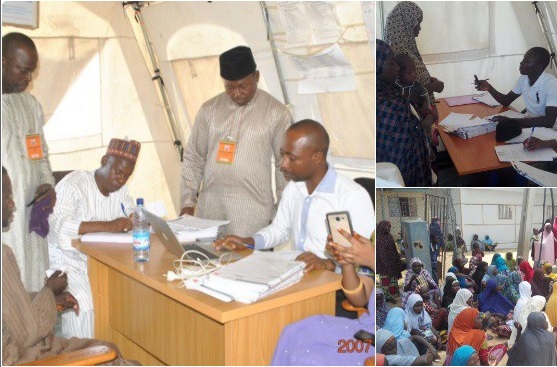
“First, the officials at Federal level, working with the State officials, identify the poorest Local Government Areas, using an existing poverty map for the State, then the LG officials identify the poorest communities in the LGAs and we send our teams there.
The first thing our team does after selection of the LGAs is to select members of the NOA, the LGA and community officials to form the CBT team. Then we train the selected officials on how to conduct Focus Group discussions at community level. These focus groups comprise of women, men, youth, as the community determines.
After training them, the CBT teams now go to each of their communities to sensitize the leaders, including traditional rulers, on the CBT process and the necessity for objectivity and openness in the process. At that meeting, they firm up a date to convene a community meeting at a designated location within the community.
On the set date, discussions are held in the local languages, using terminologies that resonate in that community. The CBT team will explain to the community the purpose of the gathering, i.e. to determine the parameters of poverty upon which persons can be described as poor and vulnerable within the context of that community.
The CBT teams will then engage each group (men, women and youth) in the conversation around the criteria and parameters for determining the poorest people. The groups would then be encouraged to identify those households that fall within the criteria that the community itself determines, and told that the information is required for government’s planning purposes.
(Various poverty criteria have been thrown up so far. In some cases, people have said it’s the number of times they eat, it’s the number of times the fumes of firewood go up from the house, the size of farmland or type of crops grown, etc.)
Then the groups resume in plenary and report back the criteria and parameters discussed.
The CBT team would then compile the criteria and parameters and ask each group to return to their break-out sessions and now begin to identify the households in the community that have been identified as fitting the criteria and parameters.
Once that is done at the groups, everybody comes together again with names compiled by each group. Now, when the same name is featured in at least two of the three groups, it is deemed qualified to be listed on the Social Register.
At this stage, we now enumerate the members of the household and open a bank account for each of the caregivers by capturing the biometric data of households identified as among the poorest and vulnerable.”
According to Mr Akande, in 8 of the nine pilot states, this process had taken place at least 2 years ago under a programme supported by the World Bank under an Agreement entered into directly with the state governments, on the YESSO project. The ninth state is Borno, which was added because of the IDP situation, with the list of the beneficiaries that has been verified by SEMA.
“This is an entirely fair and transparent process and short of mischief, there is no way you can describe this process as partisan. The President is President of the entire country and the SIPs are for all Nigerians as the case may be.”
In addition to the nine pilot states, and with the release of funds for the programmes, the CBT model has now commenced in other States.
The states have been updated on the requirements for the engagement by the Federal team and once the lists from States are enumerated, their details are uploaded onto a server at the Nigeria Inter-Bank Settlement System (NIBSS), which hosts the electronic platform that validates all the payments of the FG for the SIPs.
Banks have been informed that payments must be at community level, so those banks engaged for the pilot stage have in turn engaged several payment agents, to ensure cash-out to the beneficiaries in their places of residence which are distant to the bank locations.




By Adedapo Adesanya
Three stocks further weakened the NASD Over-the-Counter (OTC) Securities Exchange by 1.12 per cent on Wednesday, April 8, with the Unlisted Security Index (NSI) down by 44.43 points to 3,930.91 points from the previous day’s 3,975.34 points, and the market capitalisation went down by N26.59 to N2.351 trillion from N2.378 trillion.
MRS Oil lost N11.00 during the session to close at N161.00 per share compared with Tuesday’s closing price of N172.00 per share, Central Securities Clearing System (CSCS) Plc dipped by N3.74 to N67.95 per unit from N71.69 per unit, and Afriland Properties Plc fell by N1.10 to sell at N15.95 per share versus N17.05 per share.
There were two gainers at the midweek trading session, led by IPWA Plc, which appreciated by 55 Kobo to N6.61 per unit from N6.06 per unit, and First Trust Mortgage Bank Plc improved its value by 4 Kobo to N2.32 per share from N2.28 per share.
Yesterday, the volume of securities rose by 620.4 per cent to 5.7 million units from 797,264 units, the value of securities increased by 25.1 per cent to N32.7 million from N26.1 million, and the number of deals climbed by 12.1 per cent to 37 deals from the preceding session’s 33 deals.
Great Nigeria Insurance (GNI) Plc ended the day as the most traded stock by value on a year-to-date basis with 3.4 billion units sold for N8.4 billion, trailed by CSCS Plc with 57.2 million units exchanged for N3.9 billion, and Okitipupa Plc with 27.5 million units traded for N1.8 billion.
GNI Plc also finished the session as the most traded stock by volume on a year-to-date basis with 3.4 billion units valued at N8.4 billion, followed by Resourcery Plc with 1.1 billion units worth N415.7 million, and Infrastructure Guarantee Credit Plc with 400 million units transacted for N1.2 billion.

By Adedapo Adesanya
Foreign Exchange (FX) demand pressure eased on the Naira on Wednesday, April 8, in the Nigerian Autonomous Foreign Exchange Market (NAFEX) after gaining N14.84 or 1.07 per cent against the greenback to quote at N1,371.82/$1 compared with the previous day’s N1,386.66/$1.
Also, the local currency appreciated against the Euro in the same market window at midweek by N1.54 to close at N1,604.07/€1 versus Tuesday’s closing rate of N1,605.61/€1, but lost N6.26 against the Pound Sterling to trade at N1,844.83/£1 versus N1,838.57/£1.
In the parallel market, the exchange rate of the Naira to the US Dollar remained unchanged yesterday at N1,410/$1, according to data sourced by Business Post.
There were indicators that the official FX market experienced a liquidity surge, which eased worries around the dominant US Dollar on Wednesday, as the Central Bank of Nigeria (CBN) revealed interbank deals rose to 220 from 71 reported the previous day.
The domestic currency has been in strong demand from foreign portfolio investors seeking to purchase OMO bills and other fixed-income instruments.
Forecasts also show that the local currency will remain relatively stable during the second quarter of the year, trading within the N1,340 to N1,430 per Dollar band on improved FX liquidity, stronger oil earnings, and rising external reserves, which have climbed above 50 billion dollars.
As for the cryptocurrency market, it fell after an initial ceasefire-fueled rally, with markets retracing Wednesday’s “ceasefire euphoria” as cracks emerge in the US-Iran truce while the Strait of Hormuz remains effectively closed.
Global risk assets face renewed pressure as geopolitical uncertainty combines with what analysts call “uncoordinated tightening” by major central banks, reinforcing higher-for-longer interest-rate expectations.
The price of Cardano (ADA) fell by 4.7 per cent to $0.2500, Ripple (XRP) slumped 3.7 per cent to $1.33, Dogecoin (DOGE) shrank by 3.5 per cent to $0.0915, Binance Coin (BNB) slipped 2.6 per cent to $600.02, Ethereum (ETH) went down by 2.5 per cent to $2,183.82, Solana (SOL) dipped 2.5 per cent to $82.24, and Bitcoin (BTC) depreciated by 1.1 per cent to $70,995.20.
However, TRON (TRX) appreciated by 0.4 per cent to $0.3173, while the US Dollar Tether (USDT) and the US Dollar Coin (USDC) remained unchanged at $1.00 apiece.

By Dipo Olowookere
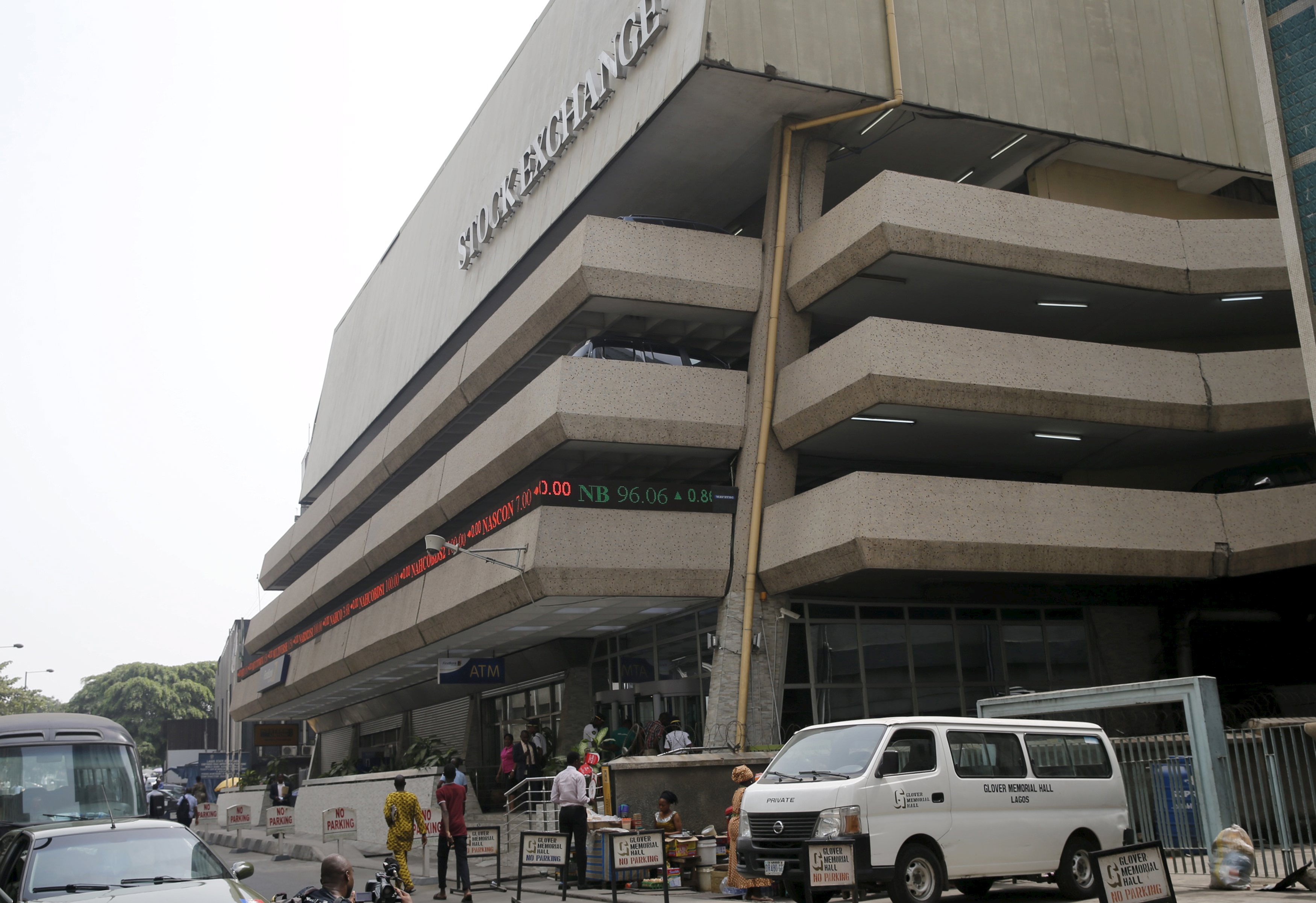
The Nigerian Exchange (NGX) Limited rallied by 0.28 per cent on Wednesday despite weak investor sentiment, as the bourse ended with 18 price gainers and 38 price losers, implying a negative market breadth index.
The growth recorded yesterday by Customs Street was influenced by the 2.11 per cent rise posted by the energy index, and the 1.79 per cent jump achieved by the banking sector.
The other sectors experienced profit-taking, with the consumer goods losing 1.07 per cent, the insurance counter down by 0.36 per cent, and the industrial goods space down by 0.19 per cent.
Universal Insurance chalked up 10.00 per cent to sell for N1.21, Omatek improved by 9.78 per cent to N2.47, VFD Group expanded by 9.71 per cent to N11.30, CWG appreciated by 9.64 per cent to N21.05, and Livestock Feeds gained 9.56 per cent to close at N7.45.
On the flip side, UPDC REIT lost 10.00 per cent to settle at N6.75, Fortis Global Insurance shed 9.92 per cent to quote at N1.18, Deap Capital depreciated by 9.85 per cent to N5.40, Chams went down by 9.47 per cent to N3.06, and Japaul declined by 8.82 per cent to N3.10.
Yesterday, the All-Share Index (ASI) went up by 562.43 points to 202,585.53 points from 202,023.10 points, and the market capitalisation advanced by N389 billion to N130.404 trillion from N130.015 trillion.
During the session, 1.0 billion stocks worth N40.6 billion exchanged hands in 52,723 deals compared with the 1.1 billion stocks valued at N40.3 billion executed in 78,006 deals a day earlier, indicating an uptick in the trading value by 0.74 per cent, and a shortfall in the trading volume and number of deals by 9.09 per cent and 32.41 per cent apiece.
The activity chart was led by Access Holdings, which sold 233.0 million units valued at N6.1 billion, Fidelity Bank exchanged 113.1 million units worth N2.2 billion, Wema Bank recorded a turnover of 103.3 million units valued at N2.7 billion, Zenith Bank transacted 60.6 million units for N6.5 billion, and Chams traded 47.5 million units worth N154.6 million.
-
 Feature/OPED6 years ago
Davos was Different this year
-
Travel/Tourism10 years ago
Lagos Seals Western Lodge Hotel In Ikorodu
-

 Showbiz3 years ago
Estranged Lover Releases Videos of Empress Njamah Bathing
-
 Banking8 years ago
Sort Codes of GTBank Branches in Nigeria
-

 Economy3 years ago
Subsidy Removal: CNG at N130 Per Litre Cheaper Than Petrol—IPMAN
-

 Banking3 years ago
Sort Codes of UBA Branches in Nigeria
-

 Banking3 years ago
First Bank Announces Planned Downtime
-

 Sports3 years ago
Highest Paid Nigerian Footballer – How Much Do Nigerian Footballers Earn