Connect with us

Economy

Senate Approves Conversion of N22.7trn CBN Loans to FG to Bonds

Published

on

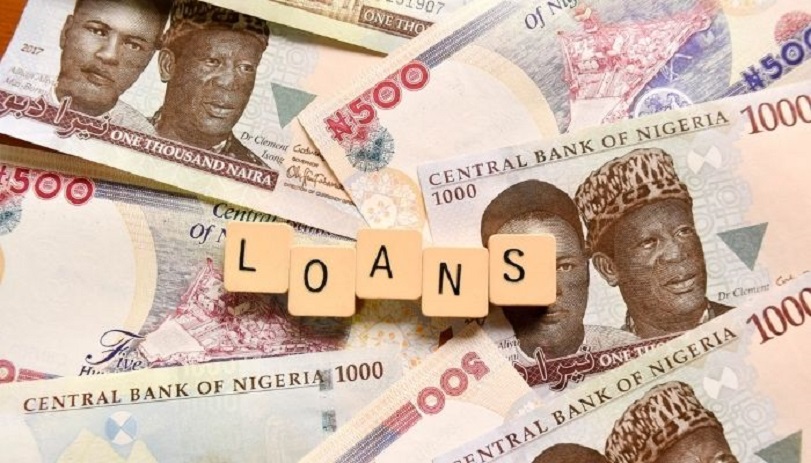
CBN loans to FG

By Aduragbemi Omiyale

The securitisation of the N22.7 trillion ways and means to the federal government for budget deficits has been approved by the Senate.

The approval was given by the upper chamber of the National Assembly at its plenary on Wednesday, months after President Muhammadu Buhari wrote a letter to the parliament on the issue.

The N22.7 trillion loans were given to the national government by the Central Bank of Nigeria (CBN) when it could not get short-term funds to run the country.

The CBN loans have caused controversies in the country because the apex bank violated the law to give such credit facilities to the government.

The CBN Act stipulates that only 5 per cent of the previous year’s revenue generated by the government should be loaned, but the bank went beyond this.

The administration of President Muhammadu Buhari approached the parliament to restructure the loans to 40-year bonds at a coupon rate of 9 per cent per annum.

While considering a report from its ad-hoc committee yesterday, the Senate said though the federal government exceeded the 5 per cent threshold of the previous year’s earnings as stipulated by the CBN Act, the loans were taken for the interest of the nation, which was facing a different crisis, including revenue shortfall, inflation and others.

A lawmaker, Mr Ibrahim Gobir, explained yesterday that part of the ways and means was given to state governments to enable them to remain functional and avert a crisis.

He informed his colleagues that the CBN loans were initially N19,326,745,239,660.20 as of June 30, 2022, but increased to N22,719,704,774,306.90 as of December 19, 2022, due to financial obligations to ongoing capital projects and additional expenditures which included domestic debt service gaps and interest rate.

“Part of the Ways and Means monies were given to state governments as loans to augment budgetary shortfall in their various states.

“That most of the requests for funds for an increase in Ways and Means were made to Mr President on the need to finance the budget due to revenue shortfall.

“Such requests were either made by the Hon. Minister of Finance, Budget and National Planning or the Central Bank Governor.

“That the federal government, as a result of revenue shortfalls occasioned by the COVID-19 pandemic and low oil prices, relied heavily on the Ways and Means to finance its budget deficit to keep the country working for the people.

“That the monies received by the federal government were actually used funding of critical projects across the country;

“That due to the serious shortfall in government revenue, the federal government in order for the economy not to collapse, was compelled to borrow repeatedly from the CBN, exceeding the five per cent threshold of the prior year’s revenue as stipulated by the CBN Act, 2007.

“That the federal government through the Ministry of Finance, Budget, and National Planning has concluded plans to convert the CBN loans to tradeable securities such as treasury bills and bond issuance,” Mr Gobir said.


1 Comment

Leave a Reply

Your email address will not be published. Required fields are marked *

Economy

Dangote Refinery Cuts PMS Gantry Price by N50 to N1,125 Per Litre

Published

on

Dangote refinery petrol

By Aduragbemi Omiyale

The gantry price of Premium Motor Spirit (PMS), commonly known as petrol, has been cut down by N50 to N1,125 per litre from N1,175 per litre by Dangote Petroleum Refinery.

The refinery confirmed this development via a statement on Thursday to newsmen.

Dangote Refinery described this downward review of the product’s price as a reflection of its ongoing commitment to ensuring price stability, improving affordability, and supporting Nigeria’s energy security objectives.

It further said it underscores its responsiveness to prevailing market conditions and its efforts to pass on cost efficiencies to downstream partners and consumers.

In the statement, the company said it remains focused on its broader mission of contributing to economic growth, enhancing fuel availability, and fostering a more competitive and sustainable petroleum sector in Nigeria.

Continue Reading

Economy

Crude Oil Jumps Over 2% After Vessel Hit Near Strait of Hormuz

Published

on

Cawthorne crude oil

By Adedapo Adesanya

Crude oil prices rose more than 2 per cent on Thursday after a cargo vessel was hit ‌by an unknown projectile near Oman, putting an evacuation effort for ships from the key Strait of Hormuz on hold.

Brent futures gained $1.52 or 2.1 per cent to ​settle at $75.26 a barrel, while the US West Texas Intermediate (WTI) crude chalked up $1.58 or 2.3 per cent to trade at $71.92 per barrel.

The flow of oil and gas has been disrupted since the joint US-Israeli attacks on Iran at the end of February, but the agreement between the US and Iran to end the war has ​allowed the resumption of traffic through the crucial strait.

The United Nations International Maritime Organisation on Thursday paused its effort ​to shepherd ships and seafarers through the strait after the cargo ship reported a suspected attack. This reawakened concerns about the worldwide flow of oil.

Reuters reported that Iran fired on the cargo ship ​as it attempted to pass through the strait after Iranian authorities said the security of vessels passing outside designated Hormuz routes is not guaranteed.

Previously, crude shipments through the strait rose to their highest since the start of the war on Wednesday. Before the war, about 20 per cent of world oil supplies passed through the ​Strait, located between Iran and Oman.

Key fuel oil producers Iraq, Saudi Arabia, and Oman have moved to increase shipments from ports outside the Persian Gulf. Middle Eastern fuel oil exports are set to jump by 20 per cent from May to about 508,000 barrels per day in June.

US ‌Secretary of ⁠State Marco Rubio told Gulf allies on Thursday that any deal with Iran would take their interests into account, as he wrapped up a Middle East trip aimed at winning over regional partners with deep reservations about the preliminary accord.

The US and the six-member Gulf Cooperation Council (GCC) said a lasting peace would mean addressing Iran’s ballistic missiles, drones and support for proxy groups. However, the US also threatened that if Iran threatens or blocks ships ​in the strait, there will be a “problem.”

The ​Wall Street Journal reported that Iran estimates charging for security, safety and environmental services in the strait, which would bring ​in $40 billion a year ⁠for the states involved.

In Venezuela, thousands were feared dead ⁠after two ​powerful earthquakes affected the capital, Caracas. The quakes could slow the ​increase in Venezuelan oil exports expected by US President Donald Trump’s administration after it captured Venezuela’s President Nicolas Maduro in January.

Continue Reading

Economy

Distributors Kick Against Plans by Lagos to Tackle Egg Glut

Published

on

egg glut

By Adedapo Adesanya

The Eggs Sellers and Distributors Association of Nigeria (ESDAN) has kicked against the proposed plan involving the production of egg powder to tackle the glut of eggs.

The National President of ESDAN, Mrs Olaide Graham, made the position clear in an interview with the News Agency of Nigeria (NAN) this week.

Egg glut occurs when egg production exceeds consumer demand, resulting in a surplus that often forces farmers to sell at reduced prices to avoid spoilage.

The Lagos State Government recently announced plans to establish an egg powder processing facility as part of efforts to address seasonal egg glut in the poultry sector.

Mrs Graham described the initiative as a welcome development but maintained that it would not address the fundamental challenges facing the industry.

“The establishment of an egg powder factory in Lagos to address the egg glut situation will have a positive impact if it is properly implemented and the product meets market standards.

“It could help reduce waste and, to some extent, stabilise prices temporarily.

“However, egg powder may not be widely accepted as a substitute for fresh eggs in this part of the country because of differences in taste, texture and consumer perception.

“Many consumers still regard fresh eggs as more nutritious,” she said.

According to her, the major issue is identifying and addressing the root causes of the egg glut rather than focusing solely on processing surplus eggs.

“We have a population of over 200 million people. Why should there be an egg glut?

“We need to examine what farmers, distributors and other stakeholders are not getting right and provide the necessary support.

“Egg powder is not the cure for egg glut in Nigeria. Stakeholders should come together to identify sustainable solutions,” she said.

Mrs Graham noted that egg powder could serve as a raw material for the production of other goods, but should not be viewed as a long-term remedy for the challenge.

She emphasised the need for improved distribution systems across the egg value chain.

“Effective distribution can go a long way in addressing the problem.

“We should remember that Lagos distributes not only eggs produced within the state but also eggs brought in from other parts of the country.

“In every challenge, there is always a solution, but egg powder is not the major solution to egg glut,” she said.

The ESDAN president also dismissed concerns that egg distributors could be negatively affected by the proposed factory.

“Distributors have nothing to fear because Nigerians are accustomed to consuming fresh eggs.

“The number of consumers who will continue to prefer fresh eggs will still be higher.

“Even if egg powder production affects access to fresh eggs, there will still be ways to address that challenge.“If the purpose of producing egg powder is to reduce glut, then that is why distributors have joined the conversation,” she said, according to the news agency.

Continue Reading

Trending