Connect with us

Economy

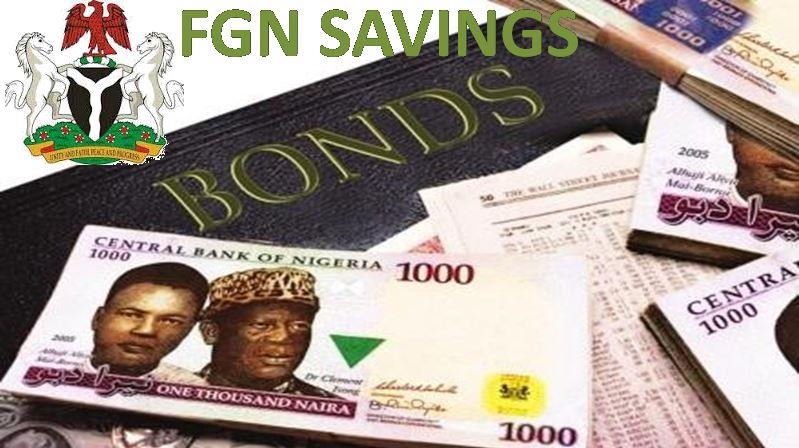
Sept 2017 FGN Savings Bond Opens Today

Published

on

Savings Bond

By Modupe Gbadeyanka

Subscription for the September 2017 Federal Government of Nigeria Savings Bond has commenced today, Monday, September 11, 2017.

Business Post gathered that the bond subscription period will run from 8am today till 12 noon on Friday, September 15, 2017.

Our correspondent further gathered that for the September edition, federal government will offer two different tenors (2 and 3 years); at different interest rates while other features of the bond remains the same.

However, investors can decide to invest in one of the tenors or both tenors at the same time.

But the 2-year and 3-year FGNSB are due September 20, 2019 and September 20, 2020 respectively and coupon will be paid quarterly while the principal will be paid at maturity.

Bond holders will have their holdings credited into their CSCS Account. (In the event a customer purchases the bond but does not have a CSCS account or inputs a wrong account number on the form, his/her holdings will be credited into an account domiciled with the CSCS till the account is opened or the mistake is rectified.

Investors can subscribe for the bond with a minimum of N5,000 plus multiples of N1,000 and maximum of N50 million and the bond will be listed and tradeable on the Nigerian Stock Exchange (NSE).

Investors are advised to subscribe through stockbroking firms accredited by the Debt Management Office (DMO) to act as distribution agents.


Modupe Gbadeyanka is a fast-rising journalist with Business Post Nigeria. Her passion for journalism is amazing. She is willing to learn more with a view to becoming one of the best pen-pushers in Nigeria. Her role models are the duo of CNN's Richard Quest and Christiane Amanpour.

Click to comment

Leave a Reply

Your email address will not be published. Required fields are marked *

Economy

Naira Depreciates to N1,380/$ in Official Market

Published

on

Naira 4 Dollar

By Adedapo Adesanya

The value of the Naira further depreciated by 0.72 per cent or N9.90 against the United States Dollar to N1,380.54/$1 in the Nigerian Autonomous Foreign Exchange Market (NAFEX) on Wednesday, June 24, in contrast to Tuesday’s exchange rate of N1,370.64/$1.

Equally, the local currency weakened against the Pound Sterling in the same official market yesterday by N4.88 to close at N1,815.63/£1 versus the previous session’s N1,810.75/£1, and lost N2.61 on the Euro to sell at N1,563.63/€1 compared with the preceding day’s N1,561.02/€1.

However, at the GTBank forex counter, the domestic currency maintained stability against the US Dollar during the session at N1,380/$1, and at the parallel market, it closed flat at N1,395/$1.

Rising FX payments and a strong US Dollar have generally put significant pressure on emerging-market currencies, like the Naira.

According to the data from the Central Bank of Nigeria (CBN), NFEM interbank FX turnover was relatively steady at $125.588 million across 126 deals, from $125.314 million the previous day.

Interbank FX activity among financial institutions has fluctuated amid a sharp slowdown in forex market interventions by the apex bank, with more than six weeks of no support for the local currency.

Meanwhile, Nigeria’s foreign reserves increased further to $51.142 billion, while global oil prices entered the lower $70s.

Meanwhile, in the cryptocurrency market, nearly $1 billion worth of futures positions were liquidated across crypto majors to tokenised versions of stocks such as Micron Technology Inc (MU) and Sandisk (SNDK).

The dip triggered roughly $430 million in long liquidations on Bitcoin-tracked futures, or bets on higher prices that were automatically closed as the price fell.

Thursday’s PCE inflation print, the Fed’s preferred price gauge, is the next data point that could move the market in either direction, with Dogecoin (DOGE) down by 2.4 per cent to $0.0771.

Further, Bitcoin (BTC) fell by 1.9 per cent to $61,584.02, Ethereum (ETH) shed 1.6 per cent to trade at $1,645.50, Ripple (XRP) depreciated by 1.6 per cent to $1.08, Binance Coin (BNB) slumped by 1.5 per cent to $570.95, Cardano (ADA) crashed by 1.1 per cent to $0.1495, and Solana (SOL) slipped by 1.0 per cent to $69.19.

But TRON (TRX) gained 0.1 per cent to finish at $0.3288, while the US Dollar Tether (USDT) and the US Dollar Coin (USDC) remained unchanged at $1.00 each.

Continue Reading

Economy

Brent Crude Slides Below $74 as Hormuz Supply Fears Ease

Published

on

brent crude oil

By Adedapo Adesanya

The price of Brent crude futures, the global oil benchmark, declined by $3.34 or 4.3 per cent on Wednesday to settle ​at $73.74 per barrel, its lowest level before the start of the Iran war on February 28, 2026.

Also, the US West Texas Intermediate (WTI) crude futures lost $2.87 or 3.9 per cent during the session to sell for $70.34 a barrel.

The development came as supply concerns eased with more stranded oil tankers exiting the Strait of ‌Hormuz, which had been blocked since late February.

Market analysts noted that crude oil flows through the Strait of Hormuz are similar to ​what they were before the start of the Iran war, as tankers exit the key waterway with the help of military escorts. Around 20 million barrels of crude oil have exited the Strait of Hormuz in the last 24 hours.

Before the war began in late February, roughly 125 ships passed through the chokepoint each day, but current traffic remains a fraction of that.

Reuters reported that three stranded tankers ​carrying 5 million barrels of crude oil exited the strait on Wednesday, with two heading to Asia, shipping data showed, as the interim deal between Iran and the US began to unlock more supply stuck in the Gulf.

As Middle Eastern producers scramble to move crude that has spent months stranded in the Persian Gulf, tanker rates have exploded higher. The cost of hiring a tanker in the Gulf has nearly doubled in just a week, jumping from around $106,000 per day to more than $190,000 per day. For some very large crude carriers (VLCCs) hauling cargoes through Hormuz, daily earnings have surged to nearly $470,000.

The US also authorised Iranian oil sales this week, easing decades-old sanctions as it pushes toward a final peace deal with Iran in return for commitments on nuclear inspections and free transit through the Strait of Hormuz.

Oman said it would keep ​the strait open to shipping without imposing ⁠tolls and had designated two temporary routes north and south of the existing shipping lane to facilitate the safe passage of vessels leaving the region.

Crude inventories in the US remained tight ​on strong refining demand ⁠and amid a release of oil from the government’s emergency stash. The Energy Information Administration (EIA) said crude stocks, including commercial and those in the Strategic Petroleum Reserve, fell by 15.1 million barrels to 743.3 million barrels in the week ended June 19, which was the lowest level since 1984.

Continue Reading

Economy

Bellwether Equities Shrink Nigerian Stock Market by 2.35%

Published

on

Nigerian Stock Market

By Dipo Olowookere

The Nigerian stock market crashed by 2.35 per cent on Wednesday after some bellwether equities performed badly as a result of profit-taking in them.

BUA Cement, Dangote Cement, and Geregu Power lost 10.00 per cent each to settle at N340.20, N963.00, and N917.40, respectively. Custodian Investment shrank by 9.97 per cent to N73.15, and Academy Press weakened by 9.88 per cent to N28.12.

On the flip side, SAHCO gained 9.92 per cent to trade at N171.20, International Energy Insurance grew by 9.66 per cent to N6.70, Tantalizers improved by 6.98 per cent to N4.60, Omatek added 5.70 per cent to close at N2.04, and AIICO Insurance increased by 5.19 per cent to N4.26.

At the close of business, the Nigerian Exchange (NGX) Limited recorded 10 appreciating stocks and 21 depreciating stocks.

Data from the activity log revealed that 488.1 million shares worth N20.9 billion exchanged hands in 46,239 deals at midweek compared with the 564.9 million shares valued at N39.4 billion traded in 49,230 deals on Tuesday, representing a fall in the trading volume, value, and number of deals by 13.60 per cent, 46.95 per cent, and 6.08 per cent, respectively.

On top of the activity chart yesterday was First Holdco, which sold 57.4 million equities for N3.5 billion. Chams transacted 42.3 million shares valued at N166.9 million, Access Holdings traded 36.1 million stocks worth N831.1 million, Linkage Assurance exchanged 32.0 million equities for N49.4 million, and Sterling Holdings traded 29.4 million shares valued at N224.8 million.

Business Post observed that the bears dominated Customs Street during the trading day, resulting in all the major sectors closing in the red.

The industrial goods space suffered the heaviest loss, 8.31 per cent, as a result of the sell-offs in cement stocks. The insurance counter shed 0.97 per cent, the banking segment declined by 0.71 per cent, the consumer goods landscape gave up 0.29 per cent, and the energy sector crumbled by 0.11 per cent.

Consequently, the All-Share Index (ASI) retreated by 5,668.65 points to 235,074.54 points from 240,743.19 points, and the market capitalisation moderated by N3.637 trillion to N150.847 trillion from N154.484 trillion.

Continue Reading

Trending