Economy
Shippers Council Requests Cooperation for Effective Port Processes
By Adedapo Adesanya
The Nigerian Shippers Council (NSC) has sought the cooperation and collaboration of shipping companies to drive efficiency, transparency and effectiveness of port processes.
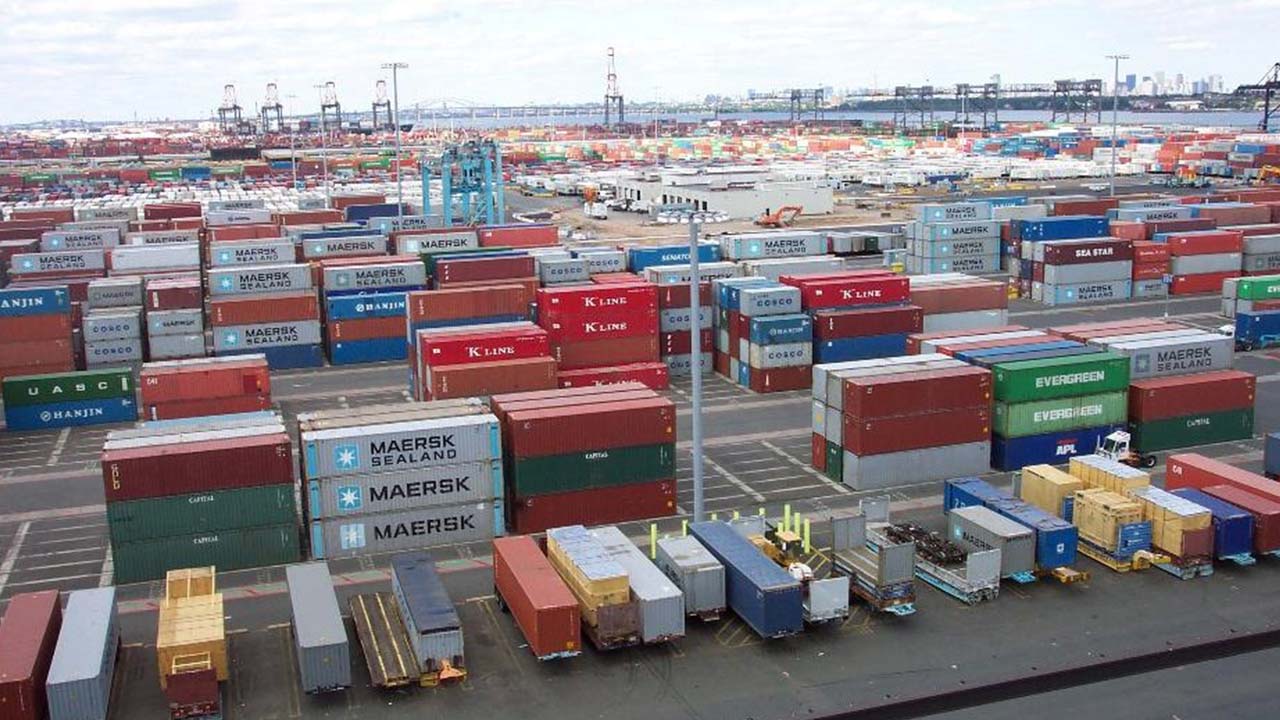
The Executive Secretary and Chief Executive Officer of the Council, Mr Emmanuel Jime, disclosed this when he led the agency on a courtesy visit to Maersk Line and Mediterranean Shipping Company (MSC) in Lagos, urging the operators to ensure the continuity of the robust relationship they are having with NSC.
The NSC boss wants the shipping companies to operate and conduct their operations within the regulatory framework of the council.
Mr Jime said they were expected to give NSC team unfettered access to monitor their operations to ensure strict compliance to set standards.
He raised issues that included ensuring that charges or fees collected by shipping companies were tied to service rendered in order to stem exploitative tendencies and arbitrariness.
“Others are to ensure shipping companies put in place a Customer Care Desk to handle timeously issues and complaints on service delivery. There should be frequent interaction with customers.
“There should be full digitisation of operational processes for greater efficiency, effective management of return of empty containers and they should adhere to government directives on the evacuation of empty containers out of the country.
“Shipping companies should ensure that consignees are not charged demurrage within the period of the network downtime, they must give adequate notification on the arrival of vessels and stemming of containers to shippers.
“Ensure prompt refund of container deposit within the agreed period of 10 days, to ensure 24-hour port operations and incorporate a multimodal approach to cargo delivery,” he said.
In her response, the Managing Director, Maersk Line, Ms Lara Lana, expressed delight that NSC paid the visit and lauded the council for calling for the establishment of a customers’ desk.
“NSC is the only agency that places the interest of their customers at the forefront.
“Maersk Line has created mobile applications for their customers to aid operations,” he said.
At the Mediterranean Shipping Company, the Managing Director, Mr Andrew Lynch, said deplorable access to the port was one of the challenges facing their operations.
He affirmed their readiness to abide by NSC’s regulatory activities at the ports.
Economy
Recapitalisation: NIA Says Seven New Insurers Have Met Threshold
By Adedapo Adesanya
The Nigerian Insurers Association (NIA) has disclosed that seven additional insurance companies have secured full recapitalisation approval from the National Insurance Commission (NAICOM), bringing the industry-wide recapitalisation exercise to a successful conclusion.
In a statement on Friday, NIA Chairman, Mrs Ebelechukwu Nwachukwu, said the milestone represented significant progress towards building a stronger, more competitive and trusted insurance market in Nigeria.
She said the seven companies, alongside the 41 insurance companies and two reinsurance companies earlier approved, had demonstrated resilience, financial discipline and corporate strength by successfully completing the final verification process.
“Having successfully navigated the rigorous final verification process, these companies, alongside the earlier approved 41 insurance companies and two reinsurance companies, have demonstrated exceptional resilience, corporate fortitude, and financial discipline,” Mrs Nwachukwu said.
She added that the successful recapitalisation had positioned the companies to deliver greater value to policyholders and contribute to deeper insurance penetration nationwide.
Mrs Nwachukwu commended NAICOM for its regulatory oversight during the exercise, describing the commission’s approach as fair, structured and focused on strengthening market integrity.
“NAICOM’s strategic foresight and structured execution have elevated the Nigerian insurance industry, reinforcing its position within the broader financial sector as a substantially stronger, highly resilient, and globally competitive market,” she said.
The NIA chairman reaffirmed the association’s commitment to supporting insurance companies as they adapt to new regulatory requirements under the Nigerian Insurance Industry Reform Act (NIIRA) 2025.
She said the association would continue to work with NAICOM to promote a sustainable and future-ready insurance sector.
Mrs Nwachukwu also assured policyholders, investors and other economic stakeholders that the recapitalised industry was better positioned to support economic growth.
“With this recapitalization complete, the Nigerian insurance sector enters a transformative era. The industry is fully equipped to settle genuine claims promptly, absorb higher local and international risks, and serve as a cornerstone of financial stability, directly supporting President Bola Ahmed Tinubu’s vision of achieving a $1 trillion economy by 2030,” she said.
Economy
SEC Orders Freezing of Assets, Funds of Nine Terrorism Financiers
By Aduragbemi Omiyale
Capital market operators have been directed to immediately freeze the assets, funds, and other economic resources belonging to six individuals and three entities designated as terrorist financiers by the Nigeria Sanctions Committee (NSC).
This directive was given by the Securities and Exchange Commission (SEC) via a circular to all Capital Market Regulated Entities (CMREs), warning that failure to comply would constitute a violation of the Investments and Securities Act, 2025, and the SEC Anti-Money Laundering/Combating the Financing of Terrorism (AML/CFT) Rules and Regulations.
It said violations could attract regulatory sanctions, including fines, suspension of operations or revocation of registration, reminding capital market operators that all unusual or suspicious transactions must be promptly reported to the NFIU.
The regulator, which stated that the designations were made in line with the Terrorism Prevention and Prohibition Act (TPPA) 2022, listed the six individuals as Babangida Muhammed Adamu Hammajam, Abdullahi Umar Usman, Ibrahim Abubakar, Adamu Chiroma, Muktar Muhammad Adamu and Yakubu Ogirima Ibrahim. The three designated entities are Nine to Nine BDC Ltd, Generation Currency BDC Ltd and Abbal Bako & Sons Bureau de Change.
According to the SEC, Hammajama was listed on June 18, 2026, for involvement in terrorism financing and support for the Islamic State West Africa Province (ISWAP), while Usman was designated for providing material support to a designated terrorist organisation through repeated financial transactions.
The commission said Abubakar was listed for involvement in terrorism financing and membership of ISWAP, while Chiroma was designated for allegedly using Bureau De Change (BDC) operations and related corporate entities to facilitate the movement of funds linked to terrorist activities.
Muktar Muhammad Adamu was listed on June 15, 2026, for providing financial support and facilitating transactions linked to the financing network of the ISWAP Okene cell, while Ibrahim was designated for providing material and financial support to the ISWAP Kogi cell.
The SEC said the three entities were listed for their alleged involvement in facilitating and channelling funds connected to the ISWAP Okene financing network.
The commission directed CMREs to immediately identify and freeze, without prior notice, all funds, assets and other economic resources in their possession belonging to the designated persons and entities.
They are also required to report frozen assets and other compliance actions, including attempted transactions, to the Secretariat of the Nigeria Sanctions Committee.
In addition, the SEC directed regulated entities to immediately file suspicious transaction reports with the Nigerian Financial Intelligence Unit (NFIU) for further analysis of the financial activities.
It further instructed operators to report as suspicious transactions all cases of name matches in financial transactions, whether occurring before or after receipt of the sanctions list.
The regulated entities are also required to prohibit dealings with the designated persons and entities and continue monitoring for transactions involving them.
The SEC said any findings should be reported to the Nigeria Sanctions Committee through its designated reporting channel.
Economy
Dangote Sugar Raises N486bn Rights Issue to Reduce Debt, Strengthen Capital Base
By Adedapo Adesanya
Dangote Sugar Refinery Plc, Nigeria’s biggest sugar producer, has raised N486 billion ($356 million) through an oversubscribed rights issue as the company moves to reduce its debt burden and strengthen its capital base after three consecutive years of losses.
The company, founded by Mr Aliko Dangote, raised the funds through the issuance of 8.1 billion ordinary shares at N60 per share, according to a filing with the Nigerian Exchange (NGX) Limited on Friday.
The development follows shareholders’ approval of the capital-raising plan at the company’s 20th Annual General Meeting held in April.
In a statement signed by the Company Secretary, Mr Temitope Hassan, the sugar firm said the rights issue is part of efforts to improve its financial position and provide funding to support its long-term growth plans.
The company’s directors are authorised to raise up to N500 billion through a rights issue, on terms and at a time to be determined by the Board.
Dangote Sugar increased its share capital to accommodate the new shares issued under the rights issue. The sugar producer’s board also authorised to allot the shares and the management of any fractional holdings in accordance with regulatory requirements.
The organisation said any shares remaining unallotted after the offer would be cancelled as permitted by law, describing the capital raise as one of the largest rights issues in Nigeria’s corporate history.
The capital raise comes against the backdrop of improved revenue performance but continued losses at the company.
In its 2025 audited results, Dangote Sugar recorded a 24.56 per cent increase in revenue to N829.2 billion, compared with the previous year. The growth was driven largely by strong demand for 50kg sugar, which generated N807 billion in revenue.
Retail sugar sales contributed N17.7 billion, while molasses and freight income generated N4.02 billion and N66.4 million, respectively.
Cost of sales increased by 11.35 per cent to N706.5 billion, largely due to raw material costs of N573.3 billion. This resulted in a gross profit of N122.6 billion.
Despite the improvement in revenue and gross profit, the company recorded a pre-tax loss of N72.2 billion in 2025, although this represented a significant improvement from the N270.8 billion loss reported in 2024.
Lagos remained the company’s largest market, accounting for 55.82 per cent of regional sales, followed by the North with 35.35 per cent, the West with 6.45 per cent and the East with 2.38 per cent.
The fresh capital is expected to provide Dangote Sugar with additional financial capacity as it works to reduce its debt obligations, strengthen its balance sheet and advance its long-term expansion plans.