Connect with us

Economy

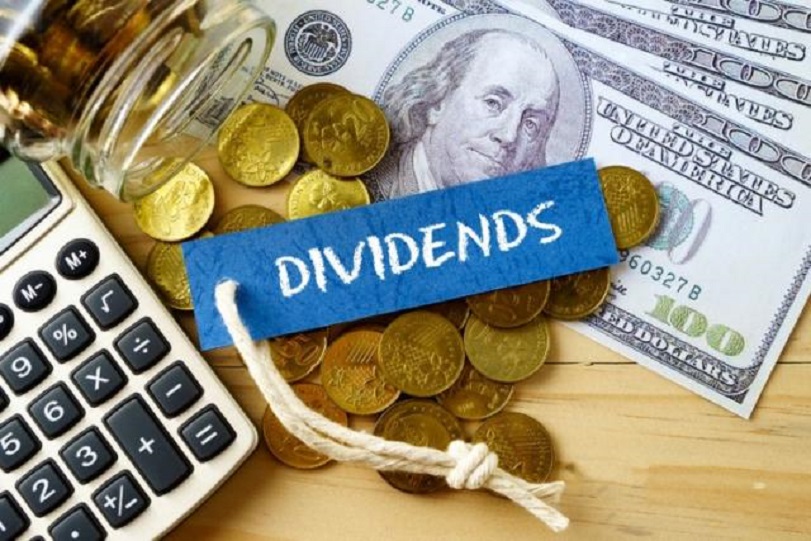
Some NGX Companies Want to Pay Dividends in Dollars But…—Popoola

Published

on

pay dividends in dollars

By Aduragbemi Omiyale

The federal government and the Central Bank of Nigeria (CBN) have been urged to give priority to companies trading their stocks on the Nigerian Exchange (NGX) Limited in terms of access to foreign exchange (FX) to attract more firms to the bourse.

The chief executive of the exchange, Mr Temi Popoola, made this appeal at a recent event, noting that some organisations want to pay dividends to shareholders in Dollars but are unable to do so due to the forex liquidity crisis in the country.

At the moment, only a few companies on the domestic stock exchange pay their dividends in Dollars and they are mainly Seplat Energy, Airtel Africa and Airtel Africa.

Nigeria has suffered a shortfall in FX earnings because of its inability to produce more crude oil, its main source of forex earnings. This issue has put pressure on the Naira and has badly affected the economy.

But Mr Popoola believes if listed companies are accorded priority in their procurement processes, more firms will join the NGX.

“There are companies that would like to list on our exchange, but they earn in dollars, their revenue to their bottom line is in dollars.

“There are also listed companies that would like to pay their dividends in dollars. However, the current regulation does not allow that,” he said.

However, he assured that the NGX was working with the government to use the capital market to fix government problems which enabled the execution of dollar-denominated transactions on NGX can address forex illiquidity.

The capital market expert noted that the bourse was excited with the new change in administration and its renewed hope agenda as it presents an opportunity to work with market stakeholders, including the regulators to address the challenges faced by the government and listed corporates.

“We are working with regulators and policymakers to try to address that because this would create a lot more benefit to the government which is looking for FX resolutions to their challenges.

“We believe this will also unlock the dollars that people have saved in domiciliary accounts to be put into useful work in the capital market and economy,” he stated.

He emphasised that increased listings would boost government revenue, citing the transparency, higher tax contributions, and better governance exhibited by listed companies.

Mr Popoola highlighted the historical role of government support in facilitating the presence of many companies currently listed on the exchange.


Advertisement
Click to comment

Leave a Reply

Your email address will not be published. Required fields are marked *

Economy

Naira Trades N1,348/$1 as CBN Opens Official Market to BDC Operators

Published

on

naira street value

By Adedapo Adesanya

The Naira appreciated against the US Dollar in the Nigerian Autonomous Foreign Exchange Market (NAFEX) on Wednesday, February 11, by N2.07 or 0.15 per cent to N1,348.95/$1 from N1,351.02/$1 as the Central Bank of Nigeria (CBN) moved to further ease shortages and narrow the gap between the official and street rates.

The CBN approved the participation of licensed Bureaux De Change (BDC) operators in the Nigerian Foreign Exchange Market (NFEM) as part of efforts to improve forex liquidity in the retail segment of the market and meet the legitimate needs of end users.

The apex bank capped the weekly FX purchases at $150,000, adding that utilisation complies with existing BDC operational guidelines.

In the same official market, the Nigerian currency gained N6.46 against the Pound Sterling to quote at N1,840.11/£1 versus N1,846.57/£1, and added N6.36 on the Euro to close at N1,600.13/€1, in contrast to the preceding session’s N1,606.49/€1.

At the GTBank FX counter, the Nigerian Naira gained N5 on the greenback to settle at N1,358/$1 versus the previous day’s N1,363/$1, but remained unchanged at N1,430/$1 in the black market.

Meanwhile, the digital currency market was bearish yesterday as traders sold their positions after digesting a more hawkish macro outlook.

Analysts mainly attributed the latest crypto selloff to shifting expectations around US macro policy, following a “hawkish shift” in Federal Reserve expectations after Kevin Warsh’s nomination as chairman of the US central bank, which signals tighter liquidity and fewer rate cuts ahead.

Traders will be watching key US labour market data for signs on the future path of interest rates and broader risk appetite.

Solana (SOL) shed 3.2 per cent to sell at $79.86, Ethereum (ETH) depreciated by 2.7 per cent to $1,958.44, Bitcoin (BTC) dropped 1.5 per cent to $67,540.62, Cardano (ADA) slid 1.5 per cent to $0.2579, Ripple (XRP) dipped 1.4 per cent to $1.37, Binance Coin (BNB) slumped 1.2 per cent to $609.73, Litecoin (LTC) went down by 1.2 per cent to $52.58, and Dogecoin (DOGE) crashed by 1.1 per cent to $0.0917, while the US Dollar Tether (USDT) and the US Dollar Coin (USDC) closed flat at $1.00 each.

Continue Reading

Economy

Nigerian Stocks Near N115trn Valuation After Midweek’s 0.78% Rise

Published

on

exposure to Nigerian stocks

By Dipo Olowookere

The positive momentum witnessed on the Nigerian Exchange (NGX) Limited lately continued on Wednesday after it further closed higher by 0.78 per cent.

More investors are showing interest in Nigerian stocks because of the recent bull run, leaving the market capitalisation to grow further by N880 billion yesterday to N114.377 trillion from N113.497 trillion, while the All-Share Index (ASI) increased by 1,374.93 points to 178,184.35 points from 176,809.42 points.

Though the level of activity waned at midweek, data showed that it remained high, with a turnover of 939.2 million shares worth N34.0 billion in 61,279 deals compared with the 1.3 billion shares valued at N50.4 billion traded in 58,965 deals in the preceding session.

This showed that the trading volume went down by 27.75 per cent, and the trading value shrank by 32.54 per cent, while the number of deals jumped 3.92 per cent.

The busiest equity on Wednesday was Tantalizers with the sale of 85.3 million units worth N498.8 million, Access Holdings transacted 61.4 million units for N1.5 billion, Chams exchanged 38.6 million units valued at N174.1 million, Japaul sold 38.2 million units worth N89.5 million, and Deap Capital sold 36.8 million units valued at N314.1 million.

Fortis Global Insurance, Consolidated Hallmark, Nestle Nigeria, and Meyer all gained 10.00 per cent each to close at 33 Kobo, N4.95, N2,420.00, and N20.90 apiece, and CAP rose by 9.98 per cent to N99.20.

On the flip side, Honeywell Flour declined by 9.70 per cent to N22.80, Neimeth slipped by 9.15 per cent to N12.90, The Initiates crashed by 5.81 per cent to N19.45, RT Briscoe tumbled by 5.70 per cent to N14.40, and Sterling Holdings depreciated by 5.56 per cent to N7.65.

At the close of business, 49 stocks ended on the gainers’ table and 31 stocks finished on the losers’ chart, showing a positive market breadth index and strong investor sentiment.

As for the performance of the bourse’s sectors, four of the five monitored by Business Post were in green, with the industrial goods down by 0.02 per cent due to profit-taking in Lafarge Africa.

The banking counter improved by 1.58 per cent, the insurance counter appreciated by 1.53 per cent, the consumer goods index gained 1.28 per cent, and the energy sector soared by 0.02 per cent.

Continue Reading

Economy

Oil Prices Rise on Fresh Iran-US Tensions

Published

on

crude oil prices

By Adedapo Adesanya

Oil prices gained about 1 per cent on Wednesday, as investors worried about escalating tensions between Iran and the United States, which were preparing to resume negotiations.

Brent crude oil futures chalked up 60 cents or 0.87 per cent to sell for $69.40 a barrel, while the US West Texas Intermediate (WTI) crude oil futures appreciated by 67 cents or 1.05 per cent to $64.63 per barrel.

US President Donald Trump said nothing definitive was decided during his meeting with the Prime Minister of Israel, Mr Benjamin Netanyahu, on Wednesday, but that negotiations with Iran toward a deal would continue.

On Tuesday, the American leader said he was considering sending a second aircraft carrier to the Middle East if a deal is not reached with Iran, even as both oil producers are prepared to resume talks.

US and Iranian diplomats held indirect talks last week in Oman, amid a regional naval buildup by the US threatening Iran. The date and venue of the next round of talks have yet to be announced.

After talks between US and Iranian teams in Oman on February 6, the US government imposed additional sanctions on Iran’s oil sector.

Meanwhile, Iran signalled readiness for nuclear verification while denying any intent to build weapons.

Also supporting oil prices was data showing that US job growth unexpectedly accelerated in January and the unemployment rate fell to 4.3 per cent, signalling a healthy economy.

The Organisation of the Petroleum Exporting Countries (OPEC) left its oil supply-demand expectations largely unchanged in its monthly report, but highlighted that global oil demand for the wider group’s crude will drop by 400,000 barrels per day in the second quarter compared to the first.

The OPEC+ group, comprising OPEC nations, plus other allies, began raising output last year after years of cuts, but paused production hikes in the first quarter of 2026 amid predictions of a glut. Eight OPEC+ members meet on March 1, where they are expected to decide whether to resume the hikes in April.

Crude oil inventories in the US increased by 8.5 million barrels during the week ending February 6, according to new data from the U.S. Energy Information Administration (EIA) released on Wednesday. The increase brings commercial stockpiles to 428.8 million barrels according to government data.

EIA’s data release followed earlier figures released by the American Petroleum Institute (API), which suggested that crude oil inventories rose by 13.4 million barrels.

Continue Reading

Trending