Connect with us

Economy

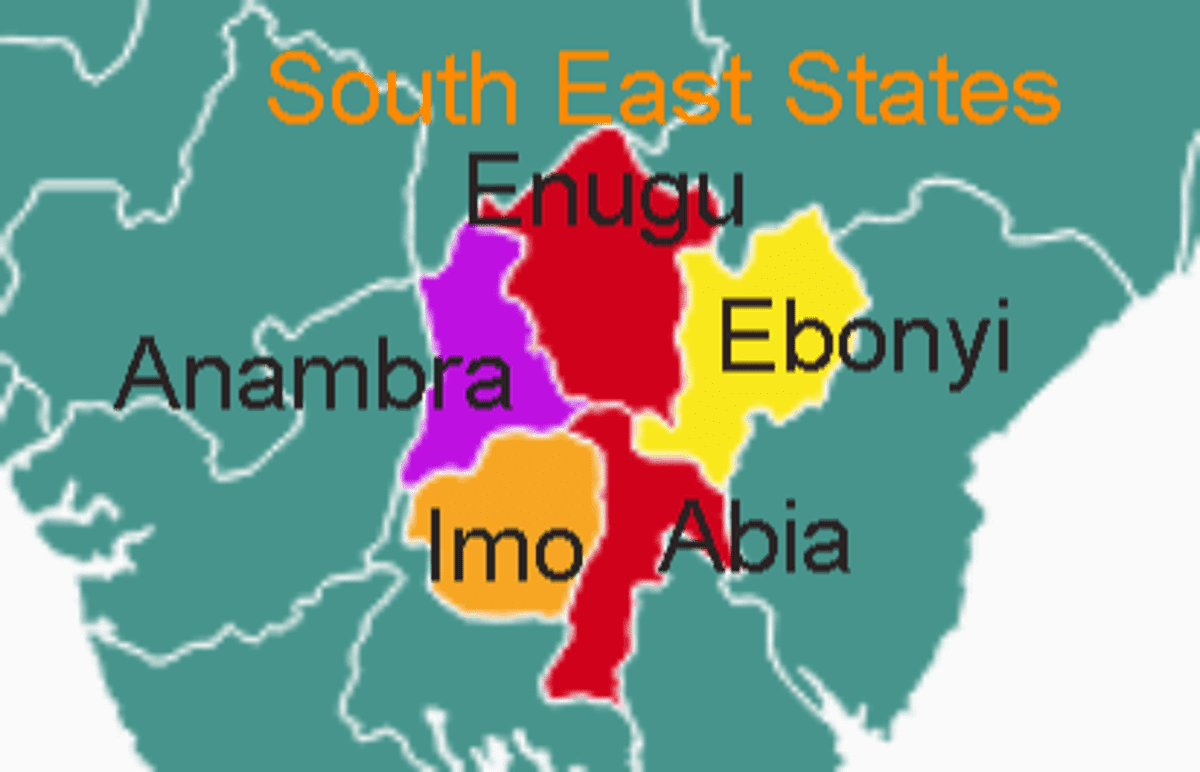
South East Economy Under Threat as IPOB Declares Tuesday Work-Free

Published

on

South East Economy

By Adedapo Adesanya

Economic activities in the south eastern part of Nigeria will likely be halted on Tuesday, September 14, 2021, as the outlawed secessionist group, the Indigenous People of Biafra (IPOB), has asked residents of the region to observe a sit-at-home order to commemorate victims of the invasion of the compound of its leader, Mr Nnamdi Kanu, at Afaraukwu Ibeku Umuahia, Abia State, by the Nigerian Army in 2017.

The Media and Publicity Secretary of IPOB, Mr Emma Powerful, in a statement said, “We the global movement of the Indigenous People of Biafra (IPOB) wish to remind all Biafrans, friends of Biafra and lovers of Biafra freedom across the globe that the sit-at-home order issued by the IPOB leadership to be observed tomorrow, Tuesday, September 14, 2021, is sacrosanct.”

The group had started the sit-at-home strategy more than a month ago following the alleged smuggling of Mr Kanu back to Nigeria from Kenya in the last week of June 2021. IPOB said it believes that the economic sabotage would force the government to release him even as casualties keep mounting.

Since Monday, August 8, 2021, commercial activities have been put on hold and businesses cannot operate due to strict enforcement as seen in cases where people have been killed and properties damaged.

The implication of the sit-at-home directive continues to tell on the South East economy with analysts stating that it will hurt the ability of the region to contribute to the country’s recovering economy.

A glimpse of this is seen from research conducted by socioeconomic intelligence firm, SBM Intelligence last week following a survey, with a sample size of 1,012, that showed that the five states in the South-East geopolitical zone were affected by the order.

According to them, Ebonyi state was the most affected economically by the protest with as many as 84 per cent of the survey’s respondents admitting so, followed by 74.42 per cent of respondents in Enugu.

Anambra and Imo states were tied at 55 per cent while Abia state had the least disruption to economic activity with only 42 per cent of respondents affected by the protest.


Adedapo Adesanya is a journalist, polymath, and connoisseur of everything art. When he is not writing, he has his nose buried in one of the many books or articles he has bookmarked or simply listening to good music with a bottle of beer or wine. He supports the greatest club in the world, Manchester United F.C.

Economy

Presidential Directives Boost Efforts to Unlock Owowo Deepwater Resources—Baxi

Published

on

Jagir Baxi

By Adedapo Adesanya

The Managing Director and Lead Country Manager of ExxonMobil’s affiliates in Nigeria, Mr Jagir Baxi, has noted that recent presidential directives have been instrumental in strengthening the company’s efforts to unlock deepwater resources.

Mr Baxi was appointed to the position in July 2025 to oversee ExxonMobil’s business in Nigeria, including Esso Exploration and Production Nigeria Limited and Esso Exploration and Production Nigeria (Offshore East) Limited.

In an interview with The Energy Year, he said the directives issued by President Bola Tinubu in May 2025 were specifically designed to eliminate rent-seeking, slash project timelines, reduce contracting costs, and restore investor confidence in the Nigerian upstream sector.

According to him, Esso Nigeria is now focusing on advancing deepwater oil and gas developments as part of ExxonMobil’s portfolio after its divestment from the joint venture with Nigerian National Petroleum Company (NNPC) Limited.

“The presidential directives have been instrumental in strengthening Nigeria’s competitiveness in the oil and gas sector. For Esso Nigeria and our shareholder, ExxonMobil, they’ve provided a meaningful platform to reassess our discovered but undeveloped resources – most notably Owowo.

“These directives signal a commitment from the highest levels of government to address long‑standing barriers to deepwater investment, and that’s an important catalyst for industry confidence,” he said.

The ExxonMobil executive noted that the directives have enabled the oil major to take tangible steps forward while working closely with the state oil company and other agencies in the sector.

“We are co‑developing a contracting strategy tailored specifically to the scale and complexity of a world‑class deepwater project,” he noted, adding, “In parallel, we’ve collaborated with the Nigerian Content Development and Monitoring Board to shape a project‑specific National Content Strategy – one designed to both enable the project and deliver sustained, impactful benefits to Nigerian businesses and the workforce. That alignment is critical if we want to create value that extends far beyond the life of a single development.”

“That said, one essential element is still outstanding: codified implementation guidance. For investors, particularly those making multi‑billion‑dollar commitments over 20 to 30‑year horizons, clarity and predictability are non‑negotiable. Our concern stems from recent experience – instances where progress delivered through certain government actions was later eroded by others. It underscores why stability in fiscal and regulatory frameworks is so vital.

“If Nigeria can translate these directives into consistent, durable rules of engagement, the country will be positioned to unlock deepwater investment at a scale that delivers long‑term value for the nation, its citizens, and its partners. And we believe that is absolutely achievable,” he explained.

Continue Reading

Economy

CAC Pushes for Harmonised National Register to Strengthen Anti-Crime Fight

Published

on

corporate affairs commission cac

By Adedapo Adesanya

The Corporate Affairs Commission (CAC) has called for the establishment of a single, harmonised national register for beneficial ownership to strengthen Nigeria’s anti-corruption framework and improve the fight against corporate and financial crimes.

The Registrar-General of CAC, Mr Hussaini Magaji, made the call during the commission’s 35th anniversary celebration, designated as Anti-Corruption Day on Tuesday in Abuja.

Mr Magaji said the current fragmented system of beneficial ownership disclosure, where some sectors maintained separate registers outside the CAC framework, created duplication, inconsistencies and regulatory loopholes that could be exploited for illicit activities.

According to him, CAC is legally and institutionally positioned to serve as the central repository for beneficial ownership information in Nigeria.

He said that access to accurate corporate records was critical to the successful investigation and prosecution of financial crimes.

He said that the CAC remained the custodian of information on company ownership, control and management.

“No successful prosecution of corporate and financial crimes can be achieved without the support of the Corporate Affairs Commission,” Mr Magaji said.

He reaffirmed the commission’s commitment to sustained collaboration with anti-corruption and law enforcement agencies.

“These include the Economic and Financial Crimes Commission (EFCC), Independent Corrupt Practices and Other Related Offences Commission (ICPC), Nigerian Financial Intelligence Unit (NFIU) and the National Drug Law Enforcement Agency (NDLEA),” he said.

Mr Magaji called for deeper information sharing, joint investigations and real-time verification processes to enhance enforcement outcomes.

The CAC boss also urged stakeholders to support the passage of the Persons with Significant Control (PSC) Rules into an Act of the National Assembly, saying a stronger legal framework was required to address sophisticated abuses of corporate structures.

He disclosed that companies that failed to disclose their beneficial owners were flagged as inactive in CAC records, adding that such entities should not enjoy the privileges of legality.

Mr Magaji, however, expressed concern that some financial institutions continued to transact with non-compliant companies, describing the practice as a major weakness in the national compliance chain.

On internal reforms, he said, CAC had demonstrated zero tolerance for corruption by surrendering three staff members to the ICPC over alleged misconduct and submitting details of 248 fake company registrations to the EFCC for investigation.

According to him, the fight against corruption requires coordinated efforts across institutions and sustained commitment to transparency and accountability.

Continue Reading

Economy

NASD OTC Index Jumps to 3,830.31 Points on 1.68% Gain

Published

on

NASD OTC market

By Adedapo Adesanya

The NASD Over-the-Counter (OTC) Securities Exchange extended its gains by 1.68 per cent on Tuesday, February 10, further lifting the Unlisted Security Index (NSI) by 63.37 points to 3,830.31 points from the previous session’s 3,766.94 points.

In the same vein, the market capitalisation of the bourse expanded by N37.92 billion during the session to N2.291 trillion from the N2.253 trillion it ended on Monday.

The growth was helped by six price gainers led by Central Securities Clearing System (CSCS), which gained N5.88 to sell at N64.73 per share versus N58.85 per share, FrieslandCampina Wamco Nigeria Plc rose by N3.67 to N69.67 per unit from N66.00 per unit, Afriland Properties Plc increased by 94 Kobo to N15.95 per share from N15.01 per share, Geo-Fluids Plc appreciated by 33 Kobo to N4.41 per unit from N4.08 per unit, IPWA Plc soared by 26 Kobo to N2.85 per share from N2.59 per share, and Food Concepts Plc improved by 26 Kobo to N2.89 per unit from N2.63 per unit.

Business Post reports that there were three price losers yesterday, led by MRS Oil, which lost N20.00 to trade at N180.00 per share versus N200.00 per share, NASD Plc dipped by N3.60 to N51.40 per unit from N55.00 per unit, and Air Liquide Plc depreciated by N2.21 to N20.32 per share from N22.53 per share.

The activity level was down on Tuesday, as the volume of securities slid 50.1 per cent to 6.9 million units from 13.3 million units, the value of securities decreased by 10.4 per cent to N89.1 million from N99.3 million, and the number of deals reduced by 2.1 per cent to 46 deals from 47 deals.

CSCS Plc was the most traded stock by value on a year-to-date basis, with 17.7 million units sold for N752.8 million, Geo-Fluids Plc recorded the sale of 29.2 million units valued at N149.8 million, and FrieslandCampina Wamco Nigeria Plc ended with a turnover of 1.8 million units worth N119.8 million.

The most traded stock by volume on a year-to-date basis was Geo-Fluids Plc with 29.2 million units exchanged for N149.8 million, followed by CSCS Plc with 17.7 million units traded for N752.8 million, and Mass Telecom Innovation Plc with 15.1 million units valued at N6.1 million.

Continue Reading

Trending