Connect with us

Economy

Stanbic IBTC Pension Managers Denies Defying Pencom’s Directive on Gifts

Published

on

Stanbic IBTC Pension Managers1

By Aduragbemi Omiyale

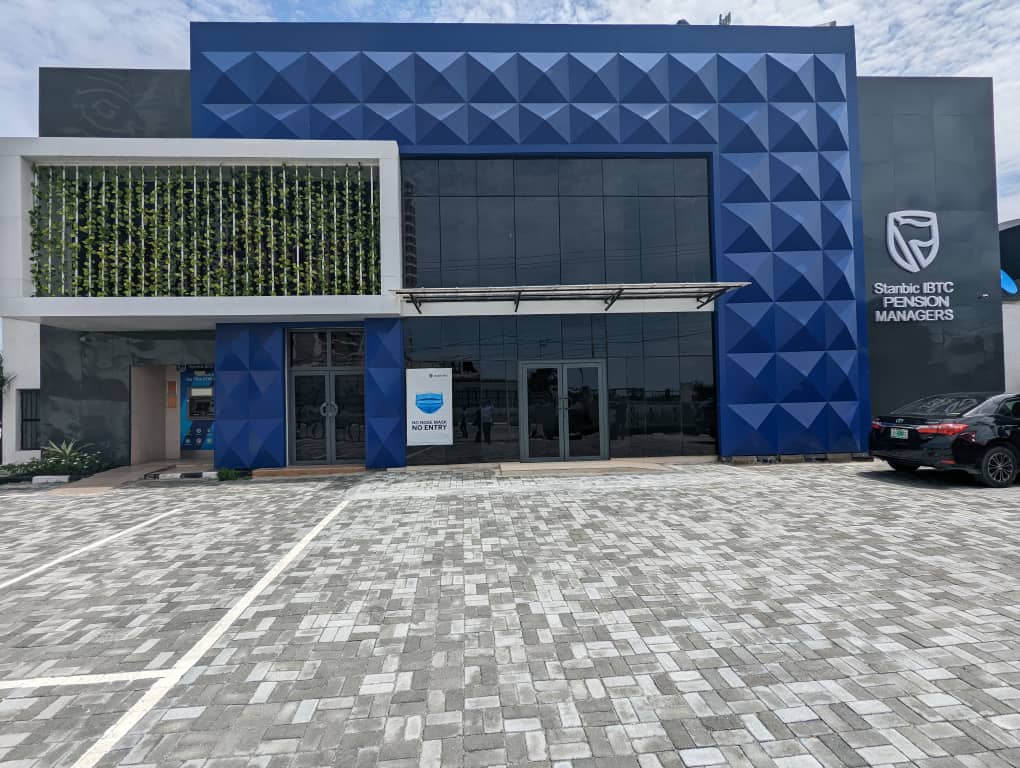
The largest pension fund administrator (PFA) in Nigeria, Stanbic IBTC Pension Managers Limited, has refuted reports making the round that it gave out gift items to its clients last December in defiance of the directive of the National Pension Commission (PenCom).

In order to stop unhealthy competition in the pension industry in the country, PenCom directed operators to stop luring customers with incentives.

It was reported that Stanbic IBTC Pension Managers, which controls over 1.9 million retirement savings accounts (RSAs) and over N4.5 trillion in assets under management, gave out loyalty gift vouchers last month.

But the company denied this, describing the reports as “unfounded, incorrect, and defamatory,” adding that it is “a fabrication of reckless journalism.”

The organisation stressed after the directive was issued by PenCom in October 2022, it notified its clients of the development and its subsequent implications, “leading to the discontinuation of our Loyalty Programme on November 5, 2022, as approved by PenCom.”

“To further reinforce our commitment and alignment with PenCom’s directives, we partnered with PenCom’s representatives to sensitise clients on this development at our annual clients’ engagement fora held in Lagos, Abuja and Port Harcourt, late 2022,” it added.

Stanbic IBTC Pension Managers reaffirmed that it did not disobey the regulator as it “has a responsibility to uphold the highest operational and ethical standards for operators in the industry.”

“Stanbic IBTC remains resolute in its position and would like to reiterate that it conducts its business with integrity in compliance with extant laws of the operating environment and international best practices. We will continue to do business the right way,” the company said in a statement on Wednesday, explaining that its reaction to the reports was to “clarify any misconception or doubts in the minds of the general public.”


Click to comment

Leave a Reply

Your email address will not be published. Required fields are marked *

Economy

Brent Tops $91 as Middle East Tensions Stoke Supply Fears

Published

on

brent crude oil

By Adedapo Adesanya

Oil prices rose roughly 2 per cent on Tuesday as investors reacted to mounting concerns that escalating hostilities between the United States and Iran and threats by Yemen’s Houthis to blockade Saudi Arabia could disrupt global energy supplies.

Brent futures rose $1.79 or 2.0 per cent to $91.01 a barrel, while the US West Texas Intermediate (WTI) crude gained $1.68 or ​2.0 per cent to settle at $84.91 per barrel.

US forces bombed targets in the south and west of Iran while Iran targeted American sites in Bahrain, ​Kuwait and Jordan and at least one tanker was hit in the Strait of Hormuz.

Supply concerns resurfaced with the Strait essentially closed again and tanker traffic at multi-month lows, to the level from before the ceasefire between the US and Iran, which appears to be over at the moment.

Prices could go much higher if the renewed conflict drags on for a few more months, as the world has now drained a lot of the buffers that had kept oil surges in check between March and May.

Drained strategic and commercial inventories in many key oil-consuming economies, including the US, are setting the stage for further oil price rallies during the busiest oil demand season.

The just-declared Houthi blockade on Saudi maritime shipping has already begun to witness ill-effects, as reports emerge of two oil tankers having made U-turns while initially en route toward the Suez Canal. It was reported that their crews received threats from Houthi militants in Yemen.

The two oil tankers, which loaded Saudi crude for China and India, made U-turns in the Red Sea and headed toward ‌the Suez following the warning from the militia.

Meanwhile, Kuwait’s power and desalination plants caught fire for a second straight day as US and Iran traded strikes for a tenth day.

As Russia’s war with Ukraine ​expands beyond Ukraine’s borders, the Caspian ​Pipeline Consortium (CPC) has stopped receiving ⁠oil from Kazakhstan after suspending loadings on Monday due to attacks on oil tankers at its Black Sea terminal.

Continue Reading

Economy

Senate Passes Bill to Rename NAICOM as Insurance Regulatory Commission

Published

on

Nigerian insurance industry

By Adedapo Adesanya

The Senate has passed a bill to repeal and re-enact the law establishing the National Insurance Commission (NAICOM), paving the way for the regulatory agency to be renamed the Insurance Regulatory Commission (IRC).

The legislation, titled the Insurance Regulatory Commission (Establishment) Bill, 2026, was passed after the Senate considered and adopted the report of its committee on banking, insurance and other financial institutions.

The Chairman of the committee, Mr Adetokunbo Abiru, the senator representing Lagos East, who presented the report, stated that the proposed legislation was necessary because the existing National Insurance Commission Act of 1997 had become outdated and no longer reflected the realities of Nigeria’s evolving insurance industry or global regulatory standards.

According to the Senate, the decision to change the Commission’s name was informed by the need to eliminate confusion associated with the existing designation and to better reflect the institution’s regulatory mandate within Nigeria’s insurance industry.

The bill also provides legal protection for the commission and its officers against adverse claims arising from the lawful execution of their statutory duties.

However, he noted that the commission’s enabling law had become obsolete, exposing significant regulatory gaps that required urgent legislative intervention.

‘The current National Insurance Commission Act 1997 is outdated and does not adequately address the emerging economic growth, needs and development of the insurance business,” the lawmaker said.

He explained that the new legislation seeks to strengthen the independence of the commission by empowering it to make regulatory decisions without undue influence in the country’s insurance sector.

According to him, the bill also enhances the commission’s authority to exchange information and collaborate with domestic and international regulatory bodies, issue regulations, guidelines, standards and directives on insurance-related matters, and intervene more effectively in financially distressed insurance companies to protect policyholders and preserve financial stability.

This marks yet another move to strengthen the country’s insurance sector following the enactment of the Nigerian Insurance Industry Reform Act (NIIRA) of 2025 and the industry-wide recapitalisation exercise, which will wrap up by July 31.

Continue Reading

Economy

143 Firms Jostle for 50 Oil, Gas Blocks at NUPRC Commercial Bid Conference

Published

on

seven offshore oil blocks

By Adedapo Adesanya

About 143 companies that successfully passed the technical and prequalification stages of the Nigerian Upstream Petroleum Regulatory Commission’s (NUPRC) 2025 Licensing Round will, today, compete for 50 oil and gas blocks at the commercial bid conference in Abuja, the final stage in the allocation process for the assets.

The commission said only the prequalified companies have been invited to attend the event, which will hold at the Conference Centre of the Transcorp Hilton Hotel, Abuja, stressing that participation is strictly by invitation.

The commercial bid conference will determine the successful bidders for oil and gas assets located across Nigeria’s producing and frontier basins.

The 50 blocks comprise 16 onshore blocks and 18 shallow water blocks in the Niger Delta, one deep offshore block, three onshore blocks in the Benin Basin, four in the Anambra Basin, four in the Chad Basin, and four in the Benue Trough.

According to the commission, the winning bids will be determined through a transparent evaluation process based on clearly defined commercial parameters. These include the signature bonus offered by bidders, the proposed work programme commitment and the level of performance security provided. The final selection will be based on a weighted technical and commercial score.

The licensing round is being conducted under the provisions of the Petroleum Industry Act (PIA) 2021, which requires a transparent and competitive process for the award of petroleum assets.

NUPRC had announced the commencement of the 2025 Licensing Round on November 11, 2025, before opening the online bid portal on December 1, 2025, to enable interested companies to register and participate in the exercise.

To ensure prospective investors fully understood the requirements, the commission organised a pre-bid conference on January 14, 2026, at Eko Hotels and Suites, Lagos. The event provided detailed explanations on the licensing guidelines and bidding procedures to registered participants and other stakeholders.

Registration and submission of prequalification documents closed on February 27, 2026, while the prequalification evaluation was completed on March 16, 2026.

NUPRC disclosed that 286 companies initially submitted applications for prequalification.

Following the evaluation process, 196 companies were cleared to participate in the technical and commercial bid stages.

The prequalified 143 companies eventually submitted a total of 200 bids for the available oil and gas blocks. These companies are now set to compete at the commercial bid conference, where the financial offers will be opened and evaluated to determine the eventual winners.

The licensing round is expected to attract fresh investment into Nigeria’s upstream petroleum sector, boost exploration activities across both producing and frontier basins, increase crude oil and gas reserves, and support the country’s drive to grow production and government revenue.

It also underscores the regulator’s commitment to implementing a transparent, competitive and investor-friendly licensing regime under the Petroleum Industry Act.

Continue Reading