Connect with us

Economy

What Each State Got as Paris Club Refund from FG

Published

on

By Dipo Olowookere

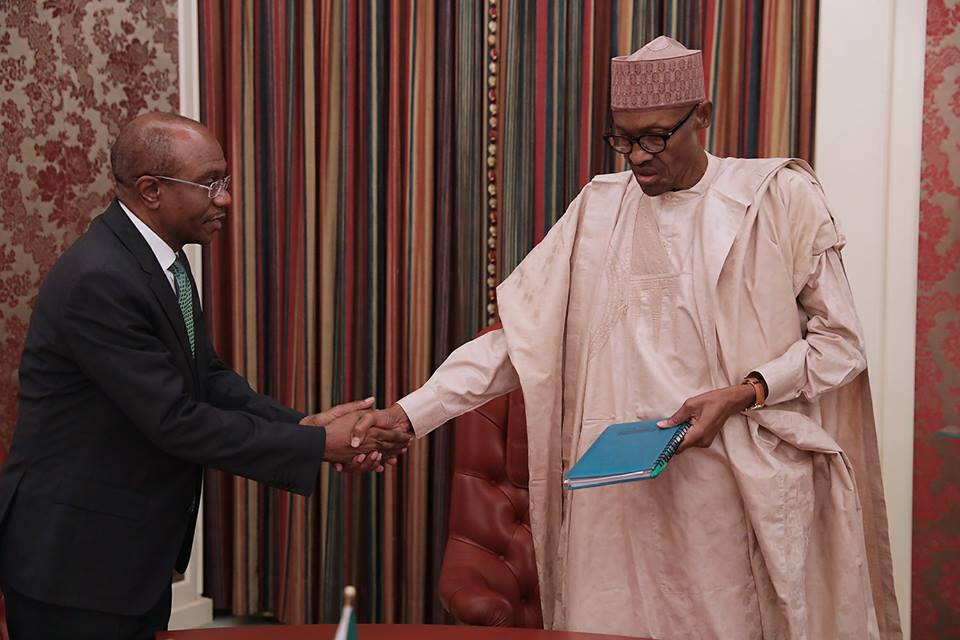
Yesterday, the Federal Government, through the Ministry of Finance, announced the release of another tranche of N243 billion of the Paris Club Refund to the 36 states of the federation as well as the FCT.

The money was released on the condition that a minimum of 75 percent would be used to pay workers’ salaries and pensions for states that owe salaries and pension.

It was another tranche of Paris Club refund of over-deductions on Paris Club, London Club Loans and Multilateral debts on the accounts of states and Local Governments from 1995-2002.

Below is what each state received as refund from the FG:

S/N            STATE                                          AMOUNT PAYABLE (NGN)

  • ABIA                                                 N5,715,765,871.48
  • ADAMAWA                                     N6,114,300,352.68
  • AKWA-IBOM                                  N10,000,000,000.00
  • ANAMBRA                                      N6,121,656,702.34
  • BAUCHI                                           N6,877,776,561.25
  • BAYELSA                                         N10,000,000,000.00
  • BENUE                                             N6,854,671,749.25
  • BORNO                                            N7,340,934,865.32
  • CROSS RIVER                                N6,075,343,946.93
  • DELTA                                             N10,000,000,000.00
  • EBONYI                                           N4,508,083,379.98
  • EDO                                                  N6,091,126,592.49
  • EKITI                                                N4,772,836,647.08
  • ENUGU                                            N5,361,789,409.66
  • GOMBE                                            N4,472,877,698.19
  • IMO                                                   N7,000,805,182.97
  • JIGAWA                                           N7,107,666,706.76
  • KADUNA                                          N7,721,729,227.55
  • KANO                                                N10,000,000,000.00
  • KATSINA                                          N8,202,130,909.85
  • KEBBI                                               N5,977,499,491.45
  • KOGI                                                 N6,027,727,595.80
  • KWARA                                            N5,120,644,326.57
  • LAGOS                                              N8,371,938,133.11
  • NASARAWA                                    N4,551,049,171.12
  • NIGER                                              N7,210,793,154.95
  • OGUN                                               N5,739,374,694.46
  • ONDO                                               N 7,003,648,314.28
  • OSUN                                                N6,314,106,340.62
  • OYO                                                   N7,901,609,864.25
  • PLATEAU                                         N5,644,079,055.41
  • RIVERS                                             N10,000,000,000.00
  • SOKOTO                                           N6,441,128,546.76
  • TARABA                                           N5,612,014,491.52
  • YOBE                                                 N5,413,103,116.59
  • ZAMFARA                                        N5,442,385,594.49
  • 37 FCT                                               N684,867,500.04
  • TOTAL                                              N243,795,465,195.20

Dipo Olowookere is a journalist based in Nigeria that has passion for reporting business news stories. At his leisure time, he watches football and supports 3SC of Ibadan. Mr Olowookere can be reached via [email protected]

Click to comment

Leave a Reply

Your email address will not be published. Required fields are marked *

Economy

FG Approves Payments to 1,240 Contractors to Ease Liquidity Pressure

Published

on

FG contractors protest

By Modupe Gbadeyanka

This news will surely excite local contractors with verified claims of N100 million or less, as the federal government has approved their payments.

This approval for the disbursement was given by the Minister of Finance and Coordinating Minister of the Economy, Mr Taiwo Oyedele.

This followed a verification and reconciliation exercise designed to ensure only validated claims qualify for payment.

The beneficiaries cover contractors across multiple ministries, departments and agencies. The release of the funds is expected to enable contractors to return to project sites, pay workers, settle suppliers and meet outstanding financial commitments.

In an announcement on Monday, the Federal Ministry of Finance also said this latest batch of payments would ease liquidity pressure on small businesses and accelerate economic activity nationwide.

It was noted that the payments for verified claims of N100 million below were strategically done to spread economic impact broadly rather than concentrate disbursements among a handful of large firms.

The payments form part of a broader push to clear inherited contractor obligations, with over N700 billion verified in recent months.

“For many beneficiaries, the release of funds represents more than a financial transaction. It provides the certainty needed to sustain operations, preserve jobs, complete ongoing projects, and contribute to economic recovery and growth,” the ministry said in a statement.

Continue Reading

Economy

Excitement as Invest in Lagos Summit 3.0 Kicks Off

Published

on

lagos view

By Aduragbemi Omiyale

Lagos State is currently agog because of the high-profile guests in the city for the Invest in Lagos Summit 3.0 commencing today, Monday, June 8, 2026.

The programme, which ends tomorrow, is themed Lagos: Business Gateway to Africa. It will feature a line-up of sessions focused on Lagos as Africa’s Global Gateway, the Future of Technology and Innovation, Unlocking Investment, Building the Cities of the Future, Global Partnerships for Growth, Talent, Creativity and Culture, and Energy and Sustainability.

The event is being put together by the Lagos State government and Commonwealth Enterprise and Investment Council (CWEIC).

The venue of the summit, Eko Hotel and Suites, is already lively, with the Lagos State Governor, Mr Babajide Sanwo-Olu; the Minister of Finance and Coordinating Minister for the Economy, Mr Taiwo Oyedele; the co-chair of the Lagos Finance and Investment Council (LFIC), Aigboje Aig-Imoukhuede; and the chief executive of Moniepoint Incorporated, Mr Tosin Eniolorunda, amongst others expected to speak.

The workshop is designed to position Lagos as Africa’s premier destination for investment, trade, innovation, infrastructure development, and economic partnerships.

It is focused on unlocking investment opportunities and accelerating sustainable economic growth. It will bring together high-level participants from across the public and private sectors to explore opportunities in technology, infrastructure, energy, manufacturing, finance, creative industries, and urban development.

According to the Lagos Commissioner for Information and Strategy, Mr Gbenga Omotoso, the programme has been carefully structured to move beyond conversations and focus on actionable outcomes that can stimulate investment inflows into Lagos State.

He said the conference will provide a platform to showcase the state’s investments in transportation, technology, energy, manufacturing, tourism, and urban development, while also highlighting opportunities for local and international investors.

“Invest in Lagos 3.0 is more than a conference; it is a strategic platform designed to connect investors with opportunities, facilitate meaningful partnerships, and showcase Lagos as Africa’s most attractive investment destination.

“Through this summit, we are bringing together government leaders, global investors, development institutions, and business executives to explore opportunities that will unlock growth, create jobs, and accelerate economic development across Lagos and Nigeria,” the Commissioner, who doubles as the Head of the Media Subcommittee, stated.

The gathering will also feature investment pitches by governors, exhibitions by participating organisations, networking opportunities, a gala dinner, and site visits to major infrastructure and industrial projects, including the Dangote Petroleum Refinery, Lagos Free Zone, Lagos Port, and RusselSmith’s advanced manufacturing facility.

Continue Reading

Economy

Nigeria to Frustrate Illegal Fishing Via €59m West Africa Ocean Initiative

Published

on

illegal fishing

By Adedapo Adesanya

The federal government has expressed readiness to leverage the €59 million West Africa Sustainable Ocean Programme (WASOP) as part of intensified efforts to combat illegal, unreported and unregulated (IUU) fishing while strengthening sustainable management of its marine resources.

The Minister of Marine and Blue Economy, Mr Adegboyega Oyetola, made this known in Abuja during a meeting with the European Union Ambassador to Nigeria, Mr Gautier Mignot, where both sides reaffirmed their commitment to deepening cooperation on maritime security and sustainable ocean governance.

Welcoming the EU Ambassador, Mr Oyetola commended the group for its longstanding partnership with Nigeria, particularly its support for maritime stability in the Gulf of Guinea, a region critical to global shipping and regional economic development.

He noted that the West Africa Sustainable Ocean Programme (WASOP) presents a timely opportunity to strengthen coordinated action against illegal fishing, improve ocean governance, and promote sustainable exploitation of marine resources across West Africa.

He said Nigeria is keen to fully engage with the programme to attract technical and financial support that will enhance enforcement capacity and boost the country’s blue economy ambitions.

The Minister stressed that illegal fishing remains a major threat to the marine ecosystem and coastal livelihoods, warning that IUU fishing continues to deplete fish stocks, undermine food security, and erode the economic well-being of coastal communities.

He said: “Illegal, unreported, and unregulated (IUU) fishing is a direct threat to national security, food sovereignty, and the survival of our coastal communities. We cannot afford to stand by and watch our marine ecosystems be depleted and economic livelihoods eroded.

“We are calling for an era of stronger international collaboration, backed by aggressive monitoring and uncompromised enforcement systems, to permanently dismantle these illicit operations and safeguard our waters.”

Mr Oyetola also highlighted ongoing reforms in Nigeria’s maritime sector under the National Policy on Marine and Blue Economy, which prioritises innovation, private sector investment, and sustainable development of ocean resources.

He referenced key milestones in the sector, including improvements in port operations and logistics, as well as enhanced maritime security.

He further noted that Nigeria is strengthening initiatives aimed at expanding its maritime infrastructure and improving competitiveness in global trade.

The Minister also reiterated the need for broader cooperation beyond piracy control, urging development partners to support Nigeria in addressing environmental crimes, human trafficking, and illegal fishing in a more integrated and coordinated manner.

He sought increased technical assistance from the European Union, particularly in surveillance systems, fisheries monitoring, and enforcement capacity to strengthen Nigeria’s ability to curb IUU fishing across the Gulf of Guinea.

On his part, Mr Mignot reaffirmed the European Union’s commitment to strengthening maritime cooperation with Nigeria and supporting regional efforts to ensure safer and more sustainable oceans.

He highlighted the West Africa Sustainable Ocean Programme (WASOP), a major EU-funded initiative designed to promote integrated ocean governance, sustainable fisheries management, and protection of coastal and marine ecosystems across West African countries.

According to him, the programme will support improved coordination among coastal states, strengthen enforcement mechanisms, and promote a more inclusive and sustainable blue economy in the region.

Continue Reading

Trending