
Economy
Steep Price Pressures Limit Business Growth in Nigeria

By Modupe Gbadeyanka
Growth in the Nigerian private sector was stunted by steep price pressures in July, as the citizens struggled with growing hardships triggered by the removal of fuel subsidy and the devaluation of the Naira by the federal government.
The Purchasing Managers’ Index (PMI) readings of Stanbic IBTC Bank showed that last month, the sector scored 51.7 points, lower than the 53.2 points achieved in June.
However, it was the fourth month running that the index has remained above the 50.0 mark, signalling a further improvement in business conditions in the Nigerian private sector during the month.
The lender said overall input costs rose at a pace unsurpassed in more than nine-and-a-half years of data collection, with selling prices up rapidly in response.
Rising price pressures impacted demand, with growth of both new orders and business activity softening as the second half of the year got underway.
Meanwhile, business confidence hit a new low.
There was more positive news on the employment front, however, as the rate of job creation quickened to the fastest since January.
It stated that the softer improvement in the health of the private sector reflected trends in output and new orders during July.
In both cases, rates of growth eased to the weakest since the respective returns to expansion following the cash crisis at the start of the year.
While some firms reported having been able to secure new contracts amid rising customer numbers, others highlighted the negative impact on demand of rising prices. July data signalled a steep increase in overall input prices, with the rate of inflation the joint-fastest since the series began in January 2014, equal to that posted in November 2021.
Purchase costs were a key driver of overall input price inflation. Higher fuel costs following the subsidy removal and currency weakness were the main factors leading purchase prices to rise.
Meanwhile, staff cost inflation hit a six-month high as firms increased pay to help staff deal with rising transport costs. With input costs up rapidly, companies increased their output prices accordingly and at one of the strongest rates on record.
More than half of companies increased their charges over the month. More positively, employment increased for the third month running in July, and at a solid pace that was the fastest since the start of the year.
Backlogs of work continued to rise, however, as some firms reported delays while checks were made to make sure customers were able to pay for orders. Input buying and stocks of purchases rose further, but rates of increase softened.
Finally, business confidence continued to trend downwards in July and was the lowest in just over nine-and-a-half years of data collection.











By Adedapo Adesanya
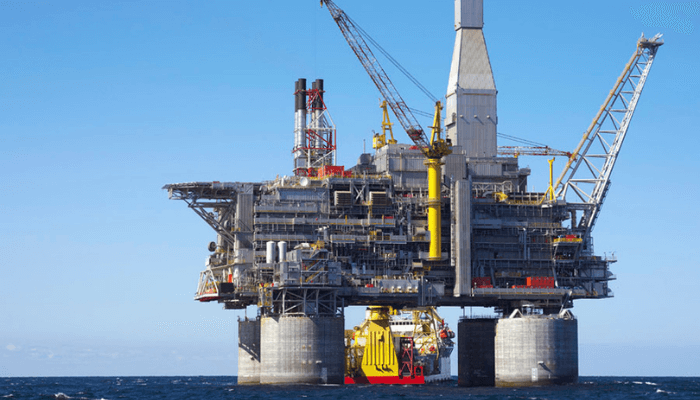
Nigeria has broken up the OPL 245 oil block into four new assets to be operated by Eni and Shell, potentially settling the future of the field at the centre of one of the oil industry’s biggest historic corruption trials.
According to Reuters, the agreement clears the way for the development of OPL 245, one of Nigeria’s biggest deepwater reserves that has remained untapped for almost three decades amid overlapping lawsuits in multiple countries.
The final contracts are expected to be signed starting Monday, the report said, citing a source familiar with the situation.
The Nigerian government had signalled for years that it was keen to find a solution that would bring the block into production. The source wished to remain anonymous as they are not authorised to comment on government policy before an official announcement.
Located in the Niger Delta’s deepwaters, the field has languished since its initial award in 1998 to Malabu Oil and Gas, a shadowy firm controlled by Mr Dan Etete, Nigeria’s oil minister at the time. The block is estimated to hold up to 9 billion barrels of oil equivalent in reserves—enough to rival Nigeria’s entire proven reserves if fully developed.
Mr Etete controversially awarded the lucrative licence to his own company for a nominal $20 million fee, sparking immediate controversy over conflicts of interest.
The saga escalated in 2011 when Malabu sold its rights to a Shell-Eni joint venture for $1.3 billion.
Italian and Nigerian prosecutors alleged that over $1 billion of that sum was siphoned off through bribes to politicians, middlemen, and Mr Etete himself, including hefty payments to then-President Goodluck Jonathan’s associates.
The two European energy giants and some of their former and current executives, including Eni CEO, Mr Claudio Descalzi, faced trial in Italy but all were acquitted in 2021, having denied all wrongdoing.
Shell and Eni have consistently denied wrongdoing, insisting the payments complied with due diligence.
The anti-graft agency, the Economic and Financial Crimes Commission (EFCC), has pursued parallel probes, recovering over $200 million in frozen funds, but progress stalled amid political shifts.
Operations at the Nigerian oil block have been halted for more than a decade by a series of trials and competing legal claims.
In 2023, the federal government withdrew civil claims totalling $1.1 billion against Eni, ending the long battle.

By Modupe Gbadeyanka
The price of Premium Motor Spirit (PMS), otherwise known as petrol, has been increased by at least N100 per litre at the pump.
This followed the recent increase in the price of crude oil in the global market as a result of the bombardment of Iran by the United States and Israel over the weekend.
The air strikes killed the Supreme Leader of Iran, Mr Ayatollah Ali Khamenei, and several others.
Iran has responded by firing missiles at US facilities in some Gulf countries, including Saudi Arabia, Qatar, Kuwait, Bahrain, the UAE, and others.
Crude oil prices rose to about $80 per barrel on the market from about $70 per barrel before the Middle East crisis.
Oil marketers in Nigeria have responded to the tension and have raised the prices of petroleum products.
At most MRS Oil retail stations in Lagos, the new price notice showed an increase of about N100 per litre.
As of Monday, the price of PMS was N837 per litre, but on Tuesday morning, it had changed to N938 per litre, while at NNPC retail stations, it was N930 per litre instead of the previous N830 per litre.

By Adedapo Adesanya
The NASD Over-the-Counter (OTC) Securities Exchange remained in the positive territory on Monday after it closed higher by 1.41 per cent at the close of business.
During the session, the NASD Unlisted Security Index (NSI) added 57.66 points to close at 4,141.53 points compared with last Friday’s 4,083.87 points, and the market capitalisation added N44.50 billion to settle at N2.477 trillion versus the preceding session’s N2.433 trillion.
Yesterday, the volume of securities went down by 60.7 per cent to 1.8 million units from 4.5 million units, the value of securities decreased by 79.3 per cent to N17.1 million from N82.5 million, and the number of deals dropped 38.6 per cent to finish at 27 deals compared to the preceding session’s 44 deals.
Closing the day as the most traded stock by value on a year-to-date basis was with Central Securities Clearing System (CSCS) Plc with 35.1 million units exchanged for N2.1 billion, trailed by Okitipupa Plc with 6.3 million units traded for N1.1 billion, and Geo-Fluids Plc with the sale of 122.8 million units valued at N480.4 million.
On the flip side, the most traded stock by volume on a year-to-date basis was Resourcery Plc with 1.05 billion units sold for N408.7 million, followed by Geo-Fluids Plc with 122.8 million units valued at N480.4 million, and CSCS Plc with 35.1 million units worth N2.1 billion.
On the first trading day of the week, there were three price gainers and three price losers led by FrieslandCampina Wamco Nigeria Plc, which lost N1.46 to quote at N110.00 per share versus the previous N111.46 per share, Afriland Properties Plc tumbled by 14 Kobo to close at N18.74 per unit versus N18.88 per unit, and Industrial and General Insurance (IGI) depreciated by 5 Kobo to close at 45 Kobo per share versus 50 Kobo per share.
The price gainers were led by MRS Oil Plc, which added N10.00 to trade at N210.00 per unit versus N200.00 per unit, CSCS Plc appreciated by N6.88 to N77.00 per share from N70.12 per share, and First Trust Mortgage Bank Plc gained 16 Kobo to close at N1.75 per unit versus N1.59 per unit.










-
 Feature/OPED6 years ago
Davos was Different this year
-
Travel/Tourism10 years ago
Lagos Seals Western Lodge Hotel In Ikorodu
-

 Showbiz3 years ago
Estranged Lover Releases Videos of Empress Njamah Bathing
-
 Banking8 years ago
Sort Codes of GTBank Branches in Nigeria
-

 Economy3 years ago
Subsidy Removal: CNG at N130 Per Litre Cheaper Than Petrol—IPMAN
-

 Banking3 years ago
Sort Codes of UBA Branches in Nigeria
-

 Banking3 years ago
First Bank Announces Planned Downtime
-

 Sports3 years ago
Highest Paid Nigerian Footballer – How Much Do Nigerian Footballers Earn