
Economy
Sterling Bank Assures Shareholders More Value With New Structure

By Aduragbemi Omiyale
Recently, shareholders of Sterling Bank Plc authorised the board of the company to transform its organizational structure into a holding firm to be known as Sterling Financial Holdings Company.
A holding company or Holdco is a company set up for the purpose of making and managing, for its own account, equity investment in two or more companies, being its subsidiaries, engaged in the provision of financial services, one of which must be a bank.
The Chief Executive of Sterling Bank, Mr Abubakar Suleiman, said with the new arrangement, shareholders would have value for their money as the company would have the opportunity to increase its income streams because of its involvement in new ventures.
He disclosed that the advantages of the newly formed holding company include value creation to maximise earnings through new businesses, agility to optimise for opportunities and adapt to a rapidly changing market, maximise current and future talent potential with opportunities within the group and subsidiaries to nurture and engage its wealth of young and innovative talent.
According to him, the holding company also affords Sterling another opportunity to leverage its successful HEART strategy, which has seen the bank make consolidated investments in the Health, Education, Agriculture, Renewable Energy and Transportation sectors, growing the company’s year-on-year profits to record highs despite strong economic headwinds.
With the adoption of a Holdco structure, Sterling now possesses the latitude to make inroads into other sectors within financial services, such as pensions, asset management, payment services, real estate, and different verticals, along with the current banking licenses held by the commercial and non-interest banking subsidiaries, Sterling Bank and The Alternative Bank.
In recent times, the bank has doubled down on digitisation with specialised products through the development and introduction of Specta, OneBank, I-invest, Gazelle and Omni X to fulfil the market’s needs for innovative retail and commercial banking solutions.
On his part, the Chairman of Sterling Bank, Mr Asue Ighodalo, said, “Following the implementation of the scheme, shareholders will exchange their shares in the Bank for shares in HoldCo in the same proportion as their current holdings in the Bank, which will be a regulated entity for CBN purposes.”
He added that the scheme would provide several benefits to the shareholders of the bank, some of which include facilitating diversification into other permissible business lines, thereby promoting growth and enhancing shareholder value and facilitating a consolidated financial strength of the group, which will improve access and ability to raise capital.
It was gathered that upon the final ratification by the regulators, the commercial banking subsidiary of the holding company, Sterling Bank; will continue to operate with its current name as a limited liability company, with shares transferred from the publicly traded company transferred to the newly formed Sterling Financial Holdings Company.







By Adedapo Adesanya
Four stocks weakened the NASD Over-the-Counter (OTC) Securities Exchange by 0.56 per cent on Thursday, March 12, making it the third consecutive loss this week.
The price losers were led by FrieslandCampina Wamco Nigeria Plc, which crumbled by N4.71 to N128.07 per share from N132.78 per share. Central Securities Clearing System (CSCS) Plc lost N1.98 to close at N78.02 per unit versus the previous day’s N80.00 per unit, First Trust Mortgage Bank Plc declined by 15 Kobo to N1.75 per share from N1.90 per share, and MRS Oil Plc crashed by 10 Kobo to settle at N210.00 per unit compared with the preceding session’s N210.10 per unit.
Consequently, the market capitalisation went down by N14.13 billion to N2.519 trillion from N2.533 trillion, and the NASD Unlisted Security Index (NSI) dipped by 23.61 points to 4,210.30 points from 4,233.91 points.
There were three price gainers yesterday, led by Okitipupa Plc, which gained N10.00 to N240.00 per share from N230.00 per share, IPWA Plc increased by 45 Kobo to N5.01 per unit from N4.56 per unit, and Afriland Properties Plc appreciated by 35 Kobo to N17.95 per share from N17.60 per share.
During the session, the value of securities surged by 197.4 per cent to N95.0 million from N31.9 million, the volume of securities grew by 185.8 per cent to 3.7 million units from 1.3 million units, and the number of deals improved by 44.4 per cent to 52 deals from 36 deals.
The most active stock by value (year-to-date) was CSCS Plc with 38.4 million units worth N2.4 billion, followed by Okitipupa Plc with 6.4 million units valued at N1.1 billion, and FrieslandCampina Wamco Nigeria Plc with 6.2 million units sold for N566.8 million.
The most traded stock by volume (year-to-date) was Resourcery Plc with 1.05 billion units traded for N408.7 million, trailed by Geo-Fluids Plc with 130.6 million units transacted for N503.8 million, and CSCS Plc with 38.4 million units worth N2.4 billion.
By Adedapo Adesanya
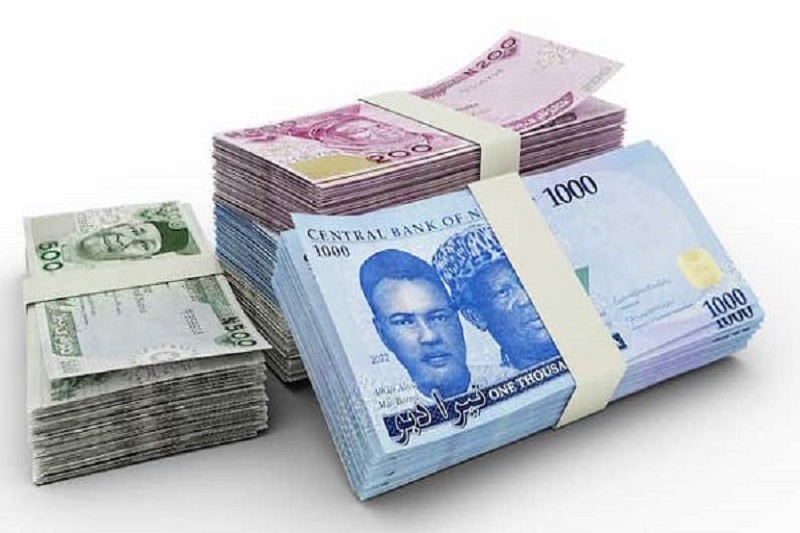
The Naira rallied against the United States Dollar by N4.68 or 0.34 per cent to trade at N1,371.51/$1 in the Nigerian Autonomous Foreign Exchange Market (NAFEX) on Thursday, March 12, compared with the N1,376.19/$1 it was traded on Wednesday.
The local currency also appreciated against the Pound Sterling in the same market window during the session by N10.67 to quote at N1,834.80/£1 versus midweek’s price of N1,845.47/£1, and strengthened against the Euro by N49.62 to finish at N1,581.89/€1, in contrast to the previous session’s N1,631.51/€1.
At the parallel market, the Naira also gained N10 against the Dollar yesterday to close at N1,410/$1 versus the preceding day’s rate of N1,420/$1, and gained N16 at the GTBank’s FX desk to settle at N1,391/$1 compared with the N1,407/$1 it was exchanged a day earlier.
Pressure further eased on the FX market as a result of inflows from foreign investors, exporters and non-bank corporates, among others.
With gross external reserves standing above $50 billion, the highest since 2009, analysts said the Naira has a positive outlook, amidst projections that the FX rate could rise to N1,300 per dollar in the first half of 2026.
However, external pressure threatens this, as increased demand for the US Dollar has strengthened globally due to the war triggered by the United States and Israel against Iran, which has been ongoing for two weeks.
A look at the digital currency market showed that prices extended a quiet stretch of consolidation that has kept the market largely unmoved by turbulence in global equities.
Amid geopolitical tensions in the Middle East and supply disruptions, crypto markets appear to be largely ignoring those pressures for now. Analysts noted that until a clear macro catalyst or wave of new capital arrives, the market appears content to consolidate gains rather than chase a breakout.
Cardano (ADA) appreciated by 6.0 per cent to $0.2743, Dogecoin (DOGE) grew by 4.9 per cent to $0.0966, Solana (SOL) added 4.6 per cent to sell for $88.99, Ethereum (ETH) rose by 4.3 per cent to $2,111.22, Ripple (XRP) jumped 3.9 per cent to $1.42, Bitcoin (BTC) expanded by 3.0 per cent to $71,546.01, Binance Coin (BNB) improved by 2.6 per cent to $661.08, and TRON (TRX) increased by 0.1 per cent to $0.2897, while the US Dollar Tether (USDT) and the US Dollar Coin (USDC) traded flat at $1.00 each.
By Adedapo Adesanya
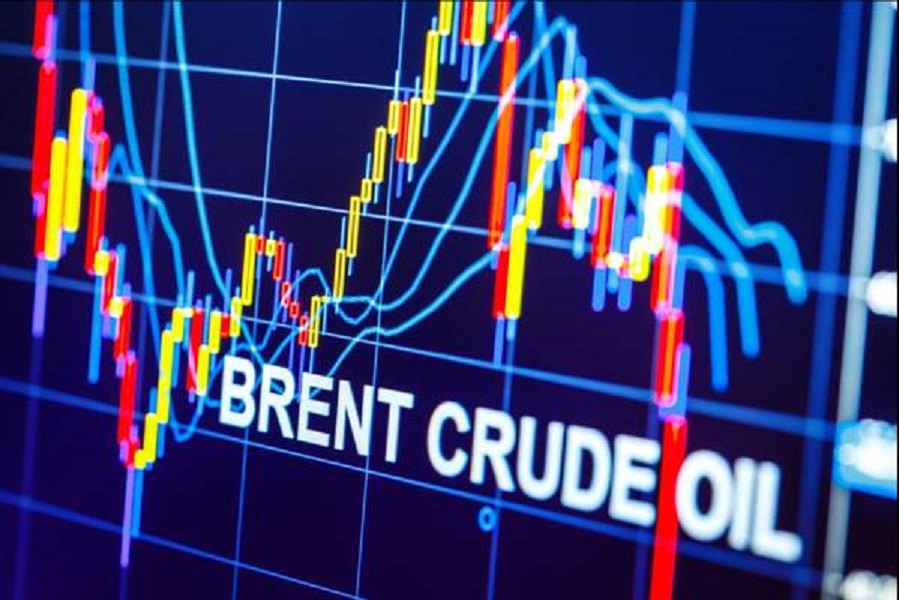
Brent crude crossed $100 a barrel again on Thursday as Iran stepped up attacks on oil and transport facilities across the Middle East, while vowing to keep the vital Strait of Hormuz shut.
The oil grade chalked up $8.48 or 9.2 per cent to trade at $100.46 a barrel, while the US West Texas Intermediate (WTI) crude settled at $95.70, up $8.48 or 9.7 per cent.
At least six vessels in the strait were damaged in incidents across the Strait of Hormuz, where about a fifth of the world’s oil and gas supplies travel.
Commercial ships sailing under the flags of Thailand, Japan, and the Marshall Islands were targeted by unknown projectiles across the Persian Gulf’s key maritime artery.
Meanwhile, Iran’s Islamic Revolutionary Guards Corps (IRGC) said it had struck a Liberian-flagged vessel in the strait that it claimed was owned by Israel.
The country has indicated it considers the ships transferring oil to the US, Israel, and “their partners” as “legitimate” targets, with its new Supreme Leader, Mojtaba Khamene,i saying on Thursday that the Strait of Hormuz should remain closed as a tool of pressure.
Oman shifted all vessels out of its main oil export terminal at Mina Al Fahal outside the Strait of Hormuz in a precautionary move.
In Iraqi waters, Iranian explosive-laden boats reportedly attacked two fuel tankers, setting them ablaze and killing one crew member, while a Japan-flagged container ship sustained minor damage from an unknown projectile 46 kilometres northwest of Ras Al Khaimah in the United Arab Emirates (UAE).
The war is causing the biggest oil-supply disruption in the history of global markets, the International Energy Agency said on Thursday, a day after approving the release of a record volume of 400 million barrels of oil from strategic stockpiles.
It also said that Middle East Gulf countries have cut total oil production by at least 10 million barrels per day – a volume equaling almost 10 per cent of world demand.
The energy watchdog warned that in the wake of the war, global oil supply is set to plunge by 8 million barrels per day in March, with curtailments in the Middle East partly offset by higher output from non-OPEC+ producers, Kazakhstan, and Russia. It added that the emergency stock release wouldn’t be able to offset a prolonged supply loss.
Meanwhile, the Group of Seven (G7) nations, consisting of the United States, Canada, Japan, Italy, Britain, Germany, and France, is exploring the possibility of escorting ships through the Gulf region, including the crucial Strait of Hormuz.












-
 Feature/OPED6 years ago
Davos was Different this year
-
Travel/Tourism10 years ago
Lagos Seals Western Lodge Hotel In Ikorodu
-

 Showbiz3 years ago
Estranged Lover Releases Videos of Empress Njamah Bathing
-
 Banking8 years ago
Sort Codes of GTBank Branches in Nigeria
-

 Economy3 years ago
Subsidy Removal: CNG at N130 Per Litre Cheaper Than Petrol—IPMAN
-

 Banking3 years ago
Sort Codes of UBA Branches in Nigeria
-

 Banking3 years ago
First Bank Announces Planned Downtime
-

 Sports3 years ago
Highest Paid Nigerian Footballer – How Much Do Nigerian Footballers Earn