Economy
Stock Investors Recover N93bn after Previous Day’s Loss
By Dipo Olowookere
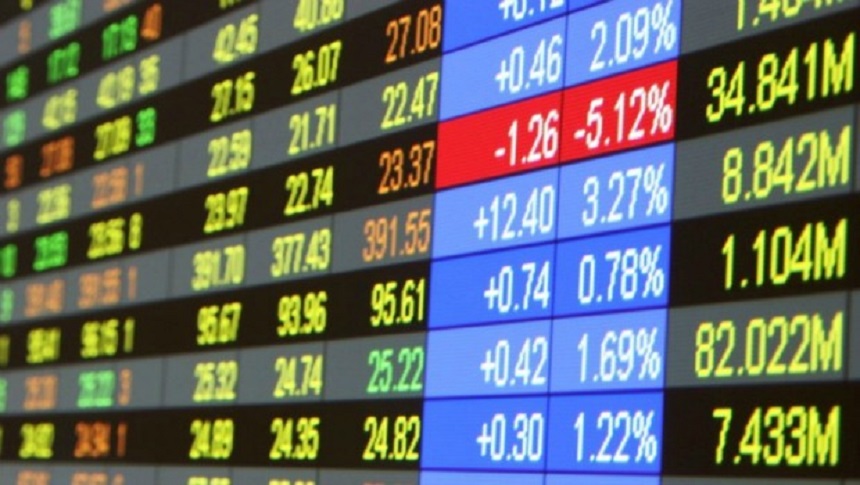
The Nigerian Exchange (NGX) Limited returned to green territory on Tuesday after it chalked up 0.09 per cent on the back of renewed buying pressure.
The market regained strength yesterday despite profit-taking in the banking space, which caused its index to close lower by 0.69 per cent.
Business Post reports that insurance counter was up by 2.80 per cent, the energy sector appreciated by 2.40 per cent, the commodity segment grew by 1.22 per cent, and the consumer goods industry improved by 0.03 per cent, while the industrial goods counter closed flat.
At the close of transactions, the All-Share Index (ASI) went up by 144.32 points to 166,256.82 points from 166,112.50 points and the market capitalisation gained N93 billion to finish at N106.436 trillion compared with the N106.343 trillion it settled on Monday.
During the session, investors transacted 795.5 million equities valued at N20.0 billion in 45,410 deals versus the 629.6 million equities worth N14.8 billion executed in 57,858 deals a day earlier, indicating a rise in the trading volume and value by 26.35 per cent and 35.14 per cent apiece and a decline in the number of deals by 21.52 per cent.
Tantalizers was the busiest stock yesterday with a turnover of 87.0 million units valued at N300.9 million, Secure Electronic Technology traded 74.2 million units worth N87.6 million, a new member of the NGX, Zichis Agro Allied Industries, transacted 69.6 million units for N138.5 million, Zenith Bank sold 49.1 million units valued at N3.5 billion, and GTCO exchanged 39.1 million units worth N3.8 billion.
On Tuesday, the market breadth index was positive after Customs Street ended with 39 appreciating shares and 25 depreciating shares, representing a bullish investor sentiment.
Deap Capital, NPF Microfinance Bank, and Red Star Express gained 10.00 per cent each to sell for N5.39, N4.73, and N15.95 apiece, as NCR Nigeria soared by 9.97 per cent to N155.50, and Morison Industries also increased by 9.97 per cent to N6.84.
Conversely, Aluminium Extrusion lost 9.95 per cent to settle at N17.20, Jaiz Bank declined by 9.88 per cent to N7.21, FTN Cocoa shrank by 8.44 per cent to N7.05, UPDC decreased by 8.06 per cent to N5.70, and Caverton slumped by 5.59 per cent to N7.60.
Economy
Naira Trades Flat at Official Market as CBN Makes Minimal FX Intervention
By Adedapo Adesanya
The Naira closed flat against the United States Dollar at N1,370.19/$1 in the Nigerian Autonomous Foreign Exchange Market (NAFEX) on Friday, July 3.
However, it appreciated against the Pound Sterling in the same market segment by N2.29 to settle at N1,829.88/£1 compared with the previous day’s N1,832.17/£1, and marginally depreciated against the Euro by 4 Kobo to close at N1,568.32/€1 versus Thursday’s closing price of N1,568.28/€1.
At the parallel market, the Naira also traded flat against the US Dollar at N1,390/$1, and at the GTBank forex desk, it also maintained stability at N1,832/$1.
Market conditions improved shortly after the following minimal intervention by the Central Bank of Nigeria (CBN) through modest Dollar sales, which boosted liquidity and supported stronger trading activity.
Easing pressure came after half-year profit-taking tapered down, while continued stronger policy signals from the central bank add to near-term support.
Deals executed at the official market on Friday came in at $70.430 million across 82 interbank deals, from $85.517 million the previous day.
Meanwhile, the cryptocurrency market continued its recovery after June non-farm payrolls printed at 57,000, less than half the 113,000 consensus, sending the implied probability of a September Federal Reserve rate hike from 64 per cent to 54 per cent and dragging AI stocks sharply lower.
Weak labour data reduces inflationary pressure and, by extension, the Federal Reserve’s justification for holding rates elevated. That transmission mechanism is direct: lower rate-hike odds compress the opportunity cost of holding non-yielding assets like crypto.
Bitcoin regained the $62,000 mark after it rose by 1.3 per cent to $62,475.29.
Cardano (ADA) gained 6.6 per cent to trade at $0.1759, Ripple (XRP) appreciated by 3.5 per cent to $1.14, Ethereum (ETH) expanded by 2.4 per cent to $1,756.82, Dogecoin (DOGE) improved by 2.1 per cent to $0.0768, Solana (SOL) chalked up 1.8 per cent to $82.65, TRON (TRX) increased by 1.5 per cent to $0.3235, and Binance Coin (BNB) soared by 1.4 per cent to $569.12, while the US Dollar Tether (USDT) and the US Dollar Coin (USDC) traded flat at $1.00 apiece.
Economy
Oil Prices Marginally Rise as US-Iran Peace Efforts Hold
By Adedapo Adesanya
Oil prices rose minimally on Friday, as traders held on to hopes for a successful outcome from attempts to secure peace between the United States and Iran.
Brent futures were up 14 cents or 0.19 per cent to $71.94 a barrel, and the US West Texas Intermediate (WTI) grew by 9 cents or 0.13 per cent to $68.78 a barrel.
Trading was light as US markets were closed ahead of the country’s Independence Day holiday on Saturday. On Thursday, the two oil benchmarks hit their lowest levels since before the US-Israeli war with Iran began in late February.
Analysts noted that investor hopes for a full reopening of the Strait of Hormuz are being buoyed by peace talks between the US and Iran. The dealmaking process remains fragile but continues for now, as the question of the Strait of Hormuz tolls and administration remains contentious.
Citi Bank noted that there are expectations that the memorandum of understanding (MoU) will hold, not because trust has suddenly emerged, but because the incentives to break are poor for both sides.
China’s crude buying remains weak; physical prices have crumbled due to the surge of prompt supply from the Middle East, while inventories have drawn far less than expected.
Some shipping has resumed through the Strait of Hormuz, as called for under the initial US-Iranian deal, but uncertainty is high after the two countries exchanged strikes last weekend following an Iranian attack on a cargo ship.
With the prospect of shipping more oil, Gulf producers are working to increase output. Kuwait’s oil production rose sharply to 1.65 million barrels per day in June, from 580,000barrels per day in May while at least five supertankers carrying a total of 10 million barrels of Saudi oil have left the strait and Saudi Aramco has switched to spot pricing from longer-term contracts to speed sales in Asia.
According to Reuters’ monthly survey, the 11 members of the Organisation of the Petroleum Exporting Countries (OPEC) produced 19.43 million barrels per day in June, up 3.3 million barrels per day from May, when output plunged to the lowest level recorded by the survey since at least 2000.
Saudi Arabia and Iraq also boosted output, while Nigeria and Libya posted smaller increases despite avoiding the worst of the Gulf disruptions.
Economy
OPEC+ Eyes Further 188,000bpd Output Hike as Strait of Hormuz Gradually Reopens
By Adedapo Adesanya
The seven-member subgroup of oil producers under the Organisation of the Petroleum Exporting Countries and its allies (OPEC+) is set to extend a series of output quota hikes by 188,000 barrels per day when they meet on Sunday, July 5.
The small group launched the hikes after the US and Israeli forces struck Iran in late February, setting off the latest war in the Middle East.
According to Reuters, the OPEC+ subgroup, including Saudi Arabia, Russia, Iraq, Kuwait, Algeria, Kazakhstan, and Oman, will likely decide to boost their production quotas for August by another 188,000 barrels daily, after last month agreeing a same-size production boost for July, which, unlike the previous hikes, may actually take place.
OPEC+ has been hiking production almost since the war began, but these hikes have remained on paper as production in the Persian Gulf remained paralysed by the hostilities and Iran’s decision to close the Strait of Hormuz.
This decision forced Gulf producers to stock up after shutting in wells. Iraq was especially hard hit by the Hormuz shutdown, with its production dropping from over 4 million barrels daily to less than 2 million barrels daily while the United Arab Emirates (UAE) started shipping record volumes of crude abroad, right after it quit OPEC.
After six decades as a member, the Emirates decided to reduce the group members to 11 after it pulled out, sparking predictions that they would immediately start boosting production, but for now, the country is only boosting exports.
The Iran war has led to a sharp drop in production among key members, with OPEC+ output dropping to 33.13 million barrels per day in May, according to OPEC data, from 42.77 million barrels per day in February.
Still, oil prices have returned to pre-war levels, pressured by weaker Chinese imports, higher exports from non-Middle East producers, a record strategic stock release coordinated by the International Energy Agency (UAE) and the US-Iran memorandum of understanding to end the war that helped ease supply concerns.
-
Feature/OPED6 years agoDavos was Different this year
-
Travel/Tourism10 years ago
Lagos Seals Western Lodge Hotel In Ikorodu
-
Showbiz4 years agoEstranged Lover Releases Videos of Empress Njamah Bathing
-
Banking8 years agoSort Codes of GTBank Branches in Nigeria
-
Economy3 years agoSubsidy Removal: CNG at N130 Per Litre Cheaper Than Petrol—IPMAN
-
Banking3 years agoSort Codes of UBA Branches in Nigeria
-
Banking3 years agoFirst Bank Announces Planned Downtime
-
Sports3 years agoHighest Paid Nigerian Footballer – How Much Do Nigerian Footballers Earn