Economy
Stocks Shed 0.15% as Investors Await Buhari’s Next Level Team
By Dipo Olowookere
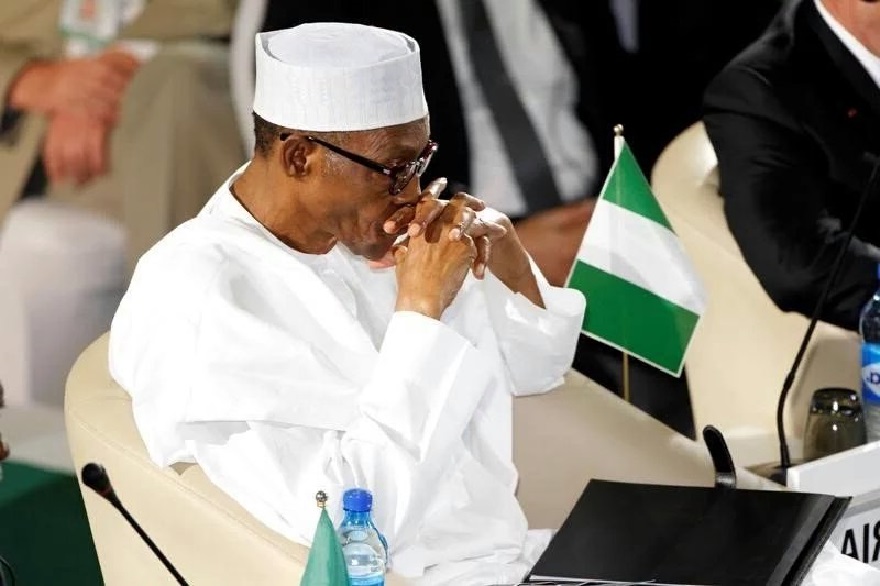
The Nigerian Stock Exchange (NSE) further closed negative on Wednesday as investors continue to patiently await those who will make the ministerial list of President Muhammadu Buhari.
During his campaign for a second time in office, the President promised to take Nigerians to the “Next Level,” dumping his first term slogan of “Change.”
On May 28, 2019, the tenure of Ministers appointed by Mr Buhari after six months of his swearing in ceremony on May 29, 2015, ended and since then, there have been speculations as to who could make the new cabinet to help the President achieve his goal.
At the midweek trading session, the stock market settled 0.15 percent lower as the wait for the ministerial list continues.
The All-Share Index (ASI), which is the main gauge of the market, depleted yesterday by 46.08 points to close at 29,772.72 points, while the market capitalisation depreciated by N20 billion to finish at N13.120 trillion.
Business Post reports that the market breadth closed positive as a result of the price appreciation posted by 21 counters as against the 19 stocks, which printed losses.
Topping the losers’ chart on Wednesday was Nestle Nigeria, which lost N20 of its share value to settle at N1400 per unit.
Seplat declined by N16.40k to close at N497 per share, while Presco depreciated by N5 to finish at N50 per unit.
Conoil went down by N1.35k to quote at N21.65k per share, while Unilever Nigeria dropped N1 to finish at N31 per unit.
At the other side, it was a good day for Forte Oil as its share price rose yesterday by N3.15k to close at N34.65k per share.
Dangote Sugar appreciated by N1 to settle at N12 per share, while Ecobank improved by 80 kobo to quote at N11 per unit.
Access Bank garnered 25 kobo to end at N6.70k per share, while NEM Insurance raked 22 kobo to settle at N2.45k per share.
Business Post observed that the activity level was mixed during the midweek session as the volume of shares traded by investors went down by 57.64 percent, but the value increased by 504.82 percent.
A total of 1.2 billion shares worth N67.9 billion exchanged hands on Wednesday in 3,441 deals in contrast to the 2.9 billion equities valued at N11.2 billion transacted on Tuesday in 3,324 deals.
Forte Oil led the activity chart on Wednesday with a turnover of 973.3 million shares transacted for N64.4 billion. This came from the divestment of the holdings of the company’s chairman, Mr Femi Otedola.
Prestige Assurance sold 53.9 million equities worth N26.9 million, while eTranzact exchanged 42.1 million units valued at N100.1 million.
GTBank traded 34 million shares for N1.1 billion, while FBN Holdings transacted 31.5 million shares for N220.2 million.
Economy
Nigeria’s Oil Exploration Declines 41.7% as Rig Counts Falls to 12 in April
By Adedapo Adesanya
Nigeria’s oil exploration and drilling activities declined by 41.7 per cent in April 2026, following reduced upstream operations and investment activities.
According to the May 2026 Monthly Oil Market Report (MOMR) of the Organisation of the Petroleum Exporting Countries (OPEC), Nigeria’s rig count, a major indicator of upstream oil and gas activities, dropped to 12 in April 2026 from 17 recorded in March 2026.
The decline came amid persistent upstream investment and operational challenges, according to the latest monthly report released by OPEC.
Earlier data contained in the May 2026 edition of the MOMR also showed that Nigeria’s average rig count declined to 13 in 2025 from 15 recorded in 2024, indicating reduced exploration and drilling activities in the upstream petroleum sector.
The report showed that Nigeria’s rig count fell by five rigs month-on-month, from 17 rigs in March 2026 to 12 rigs in April 2026.
Rig count is widely regarded in the petroleum industry as a key indicator of exploration, field development and investment activities.
The decline comes despite ongoing efforts by the Nigerian government and industry operators to raise crude oil production, boost reserves and attract fresh upstream investments under the Petroleum Industry Act (PIA)
Nigeria’s performance contrasted with the broader African trend, where total rig count increased marginally from 42 in March 2026 to 48 in April 2026.
However, Nigeria accounted for a significant share of the continent’s decline in operational rigs during the period.
Within OPEC, Nigeria remained behind major producers such as Saudi Arabia, which recorded 265 rigs in April 2026, the United Arab Emirates with 66 rigs, and Iraq with 19 rigs.
The development also comes at a time when Nigeria is struggling to meet its crude oil production quota allocated by OPEC consistently.
Economy
Nigeria’s Central Bank Holds Rate at 26.50% Despite Heightened Disruptions
By Adedapo Adesanya
The Monetary Policy Committee (MPC) of the Central Bank of Nigeria (CBN) has retained the headline interest rate, the Monetary Policy Rate (MPR), at 26.50 per cent.
This was disclosed by the Governor of Nigeria’s central bank, Mr Yemi Cardoso, on Wednesday, after the conclusion of the MPC meeting. He noted that the decision was hinged on Nigeria being largely insulated from external shocks relating to developments in the Middle East.
He also acknowledged that inflation and exchange rate stability were put into consideration during the two-day meeting.
The committee reduced the benchmark interest rate by 50 basis points from 27.0 per cent to 26.5 per cent at its 304th MPC gathering in February.
Nigeria’s inflation rose to 15.69 per cent in April 2026, affected by the fallout from the Iran war, which continued to impact the global economy. Noting that year-on-year, the figures show a moderation rather than worry.
The headline inflation rate for April on a month-on-month basis was 2.13 per cent, while the food inflation rate in the review month was 16.06 per cent on a year-on-year basis.
Mr Cardoso noted that the Cash Reserve Ratio (CRR) was also retained at 45 per cent for commercial Banks, 16 per cent for Merchant Banks, and 75 per cent for non-TSA public sector deposits.
He added that the Standing Facilities Corridor was also held flat at +50 / -450 basis points around the MPR.
Economy
World Bank’s MIGA Targets $6.4bn Annual Guarantees for Africa
By Adedapo Adesanya
The Multilateral Investment Guarantee Agency (MIGA), a World Bank financer, is ramping up efforts to unlock private capital for Africa, with plans to more than double its annual guarantee issuance on the continent to $6.4 billion over the next three and a half years.
The move is expected to catalyse as much as $23 billion in private sector investment across key sectors, including energy infrastructure, food security, trade finance, digital connectivity and sovereign debt restructuring.
The expansion underscores a growing shift among development finance institutions toward deploying guarantees as a primary tool for de-risking investments in frontier markets and attracting private capital flows into economies often viewed as high-risk.
MIGA’s Managing Director, Mr Tsutomu Yamamoto, said the scaled-up programme would play a critical role in mobilising investment, creating jobs and strengthening economic resilience across African countries.
He noted that the agency’s instruments, ranging from political risk insurance to credit enhancement, debt swaps and portfolio guarantees, are designed to reduce investor exposure and improve project bankability.
The guarantee push will continue to focus on strategic sectors such as power grids, local banking systems, agriculture and food supply chains, as well as digital infrastructure, all of which are seen as foundational to long-term economic growth across the continent.
Although the agency did not disclose specific projects in its pipeline, it said the expansion reflects rising demand for risk-sharing mechanisms in emerging markets, particularly as governments grapple with tight fiscal conditions and limited access to affordable financing.
The development follows a broader restructuring within the World Bank Group nearly two years ago, which consolidated guarantee operations to scale up private sector investment mobilisation globally.
MIGA has already played a role in pioneering debt swap transactions in the Ivory Coast and Angola, while also supporting food security initiatives in Kenya and backing more than 100 energy projects across emerging markets. Its guarantees have further underpinned lending operations in countries such as Ghana and Zambia, helping to stabilise financial systems and sustain credit flows.
The agency’s latest push reflects a wider evolution in development finance strategy, where guarantees are increasingly used to stretch limited public funds and crowd in private investors. By lowering perceived risks, these instruments make large-scale infrastructure and development projects more attractive to commercial financiers who would otherwise stay on the sidelines.
This shift is gaining urgency as many advanced economies scale back aid budgets while simultaneously seeking stronger economic ties and resource access in Africa.
In response, multilateral lenders are leaning more heavily on innovative financial tools like guarantees to bridge funding gaps and sustain development momentum.
MIGA’s broader ambition is to help lift the World Bank Group’s global guarantee issuance to $20 billion annually by 2030, positioning guarantees as a central pillar in financing sustainable development across emerging markets.
-
Feature/OPED6 years agoDavos was Different this year
-
Travel/Tourism10 years ago
Lagos Seals Western Lodge Hotel In Ikorodu
-
Showbiz3 years agoEstranged Lover Releases Videos of Empress Njamah Bathing
-
Banking8 years agoSort Codes of GTBank Branches in Nigeria
-
Economy3 years agoSubsidy Removal: CNG at N130 Per Litre Cheaper Than Petrol—IPMAN
-
Banking3 years agoSort Codes of UBA Branches in Nigeria
-
Banking3 years agoFirst Bank Announces Planned Downtime
-
Sports3 years agoHighest Paid Nigerian Footballer – How Much Do Nigerian Footballers Earn