
Economy
Strong Dollar, Chinese Data Sink Oil Prices

By Adedapo Adesanya
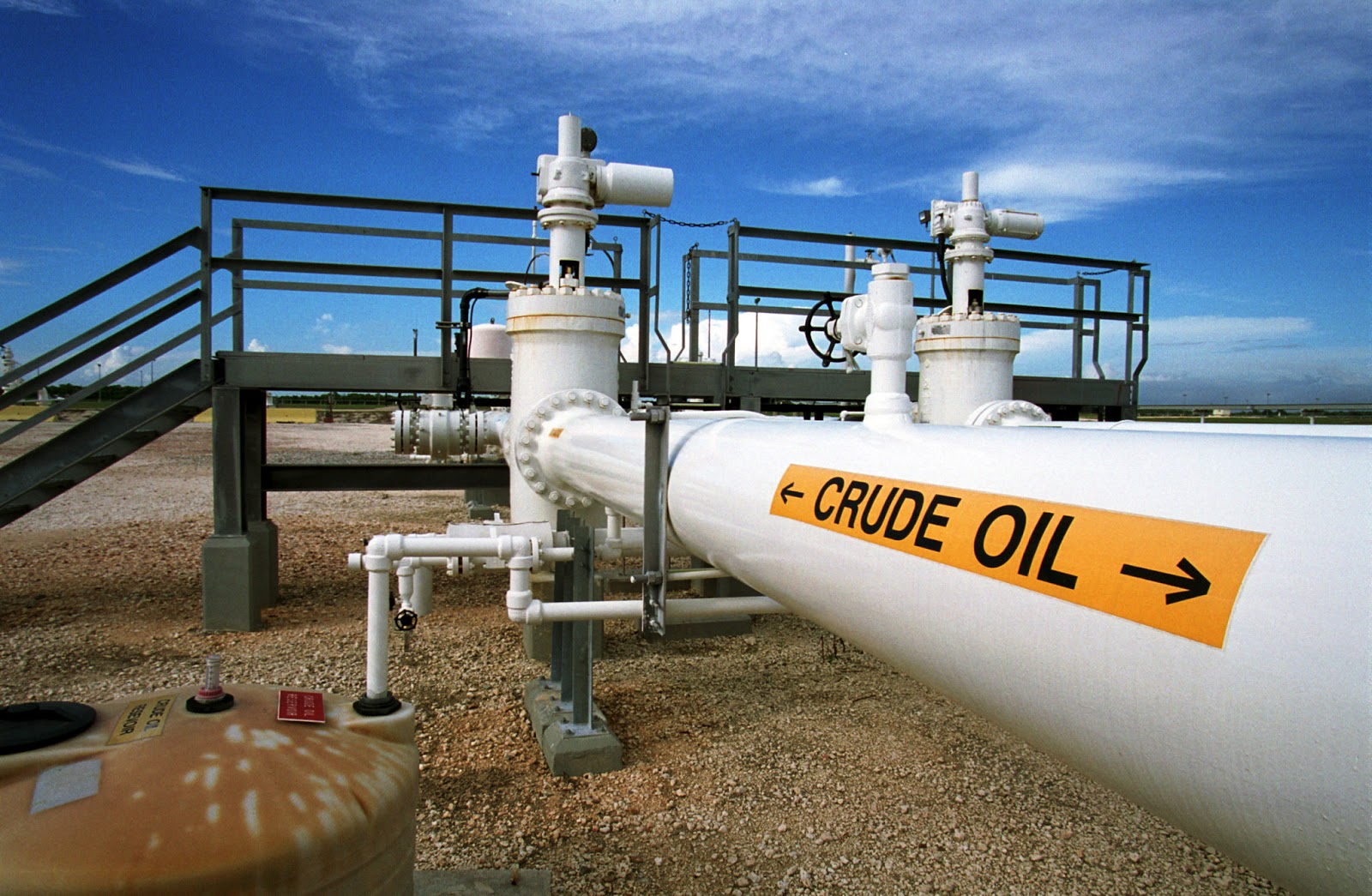
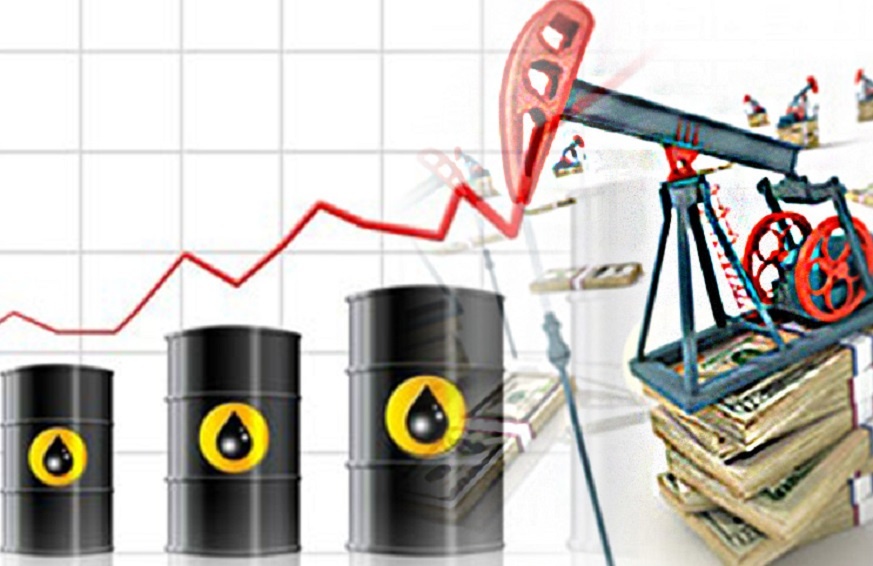
Oil prices settled lower on Wednesday, pressured by a stronger US Dollar and weak data from top oil importer China that fed demand fears.
Brent crude futures closed lower by $1.11 to $72.60 a barrel, as the US West Texas Intermediate crude (WTI) fell by $1.37 to $68.09 per barrel.
The US Dollar index, which measures the greenback against six major peers, saw support from cooling European inflation and progress on a long-debated US debt ceiling bill, which will advance to the House of Representatives for debate.
House passage would send the bill to the Senate, where debate could stretch to the weekend, as a June 5 deadline looms.
A stronger US Dollar makes oil more expensive for buyers holding other currencies.
Prices were also affected as Chinese data showed manufacturing activity contracted faster than expected in May, as weakening demand cut the official manufacturing purchasing managers’ index (PMI) down to 48.8 from 49.2 in April.
US data showed job openings unexpectedly rose in April, pointing to persistent strength in the labour market that could push the Federal Reserve to raise interest rates when they meet June 13 -14.
Crude oil inventories in the United rose this week by 5.202 million barrels, the American Petroleum Institute (API) data showed on Wednesday.
It doesn’t fully offset the 6+ million barrel drop last week, meaning that the total number of barrels of crude oil gained so far this year is just over 40 million barrels.
This week, SPR inventory dropped for the ninth week in a row as another 2.6 million barrels of congressionally mandated crude oil was sold during the week ending May 26. There are now 355.4 million barrels—the lowest amount of crude oil in the SPR since September 1983.
The market will confirm the official figures when it is released by the Energy Information Administration (EIA) following delays caused by a national holiday.
The market will be watching out for the upcoming June 4 meeting of the Organisation of the Petroleum Exporting Countries and allies, including Russia, OPEC+.
Mixed signals by major producers on further production cuts have sparked volatility in oil prices as Saudi Arabia and Russia appear to be at loggerheads.
Saudi Arabia worries that Russia has not kept its promise to reduce oil production as pledged, complicating the Saudi efforts to lift oil prices to at least the Kingdom’s oil price breakeven level of $81 per barrel.
However, banks HSBC and Goldman Sachs and analysts do not expect OPEC+ to announce further cuts at this meeting.







By Aduragbemi Omiyale
One of the largest cocoa players in Nigeria, Sunbeth Global Concepts, which recently launched a N200 billion commercial paper programme, said it exported about 52,000 tonnes of cocoa out of the country in 2025.
The firm’s chief executive, Mr Olasunkanmi Owoyemi, in an interview with CNN, said the growth has been impressive despite the challenges of operating in Nigeria’s agricultural sector.
“Last year, we did around 52,000 tonnes of cocoa export out of Nigeria. And I mean that I remember when I started this business, when I bought 200 tonnes, I felt as though we are doing something great, but within eight years of doing 50,000 tonnes in over 50,000 tonnes in cocoa alone showed how much we’ve grown, how much people we’ve brought in, how much people have been able to contribute to our progress,” he said on CNN Marketplace hosted by Ms Zain Asher.
The latest edition of the programme focuses on the country’s agricultural sector, especially how the players have been navigating the challenges.
Mr Owoyemi said one of the major challenges of operating in Nigeria’s agricultural sector is “getting people to move back to the productive sector.”
“For us as a business, our vision is to empower the origin producers of food ingredients, products with the financing structure, logistics, markets, and education and technology. It’s a massive challenge and needs a massive scale of financing, massive scale of research, and technology.
“This challenge being resolved alone can turn us easily from just producing to processing, consuming, and exporting the refined products and to enable intra-African trades to be a model for the world,” he noted.
Speaking on the importance of investing in future talent, he said, “The Sunbeth Excellence Partnership programme we use to reward and celebrate the best graduating students in the local universities in Nigeria, which involves cash gift and we integrate them into our system and take them to put them into expose them globally by taking them into courses, like executive programmes in one of the best universities in the world to let them understand it.”
For the Operations Manager of Rural Farmers Hub, Nanshal Silas, maintaining healthy soil is a challenge for an increasing number of farmers worldwide as agricultural demand continues to grow.
“Most times, farmers have a very big challenge. And this challenge is not far from their inability to understand what is happening in the soil. First of all, for a farmer to grow crops and to maximise profit, he or she must have in-depth knowledge,” Silas stated.
An Extensionist at the agri-tech company, Aishatu Shuaibu, said Rural Farmers Hub helps farmers with soil testing.
“I get to search for local farmers within communities. Then I take their soil coordinates. After taking the soil coordinates to know what they need in their soils, I guide them on what to apply, the fertiliser that is needed and the major procedure that is supposed to be taken for them to have a bountiful harvest,” Ms Shuaibu said.
An Agricultural Biotechnologist at Sheda Science and Technology Complex in Abuja, Dr Andrew Iloh, told CNN that, “One of the biggest challenges for every kind of technology is adaptation. Not just bringing the technology, but every other thing needs to work hand in hand so that agricultural productivity in Nigeria can be improved.”

By Adedapo Adesanya
The Federation Account Allocation Committee (FAAC) at its March 2026 meeting, chaired by the Minister of Finance, Mr Wale Edun, shared the sum of N1.894 trillion from the N2.230 trillion earned in February to the three tiers of government.
From the stated amount, the federal government received N675.086 billion, the states got N651.525 billion, the local government councils were given N456.467 billion, while the oil-producing states shared N110.949 billion as 13 per cent of mineral revenue, with N77.302 billion taken for the cost of collection, and N259.078 billion for transfers, intervention and refunds (TIR).
In a communique issued by FAAC at the end of the meeting, Mr Edun disclosed that the gross revenue available from the Value Added Tax (VAT) for the month was N668.450 billion compared with N1.083 trillion distributed in the preceding month.
From this, N26.738 billion was used as the cost of collection, and N22.593 billion was deducted for TIR. The balance of N619.119 billion was distributed to the three tiers of government, with N61.912 billion going to the federal government, N340.515 billion to the state governments, and N216.692 billion to the councils.
It was disclosed that the gross statutory revenue for the month under review was N1.561 trillion, lower than N1.957 trillion received a month earlier by N395.138 trillion.
From the stated amount, N50.564 billion was allocated for the cost of collection and a total of N236.485 billion for TIR, while the remaining balance of N1.274 trillion was distributed as follows to the three tiers of government: federal government got N613.174 billion, the states received N311.010 billion, the local councils got N239.776 billion, and N110.949 billion was given to the oil-producting states.
Last month, oil and gas royalty and excise duty increased significantly, while Petroleum Profit Tax (PPT), Hydrocarbon Tax (HT), Companies Income Tax and VAT decreased substantially. Import Duty and CET levies increased marginally.

By Adedapo Adesanya
Nigeria’s first indigenous broadband company to be listed on the Nigerian Exchange (NGX) Limited, Legend Internet Plc, has commenced talks with Spectranet for a possible merger deal before the end of June 2026.
In a notice on Monday, Legend Internet said the proposed merger aligns with its long-term strategy to expand broadband infrastructure and strengthen its position within Nigeria’s telecommunications sector.
The Abuja-based Nigerian technology company, founded in 2021, specialises in fibre-to-the-home (FTTH) broadband, fintech, and digital services. The company operates a high-speed, 1Gbps-capable fibre network, focusing on premium digital.
The transaction is expected to deliver significant strategic and financial benefits, including enhanced network capacity through the integration of fibre and wireless infrastructure, improved operational efficiency, and expanded coverage across key urban markets.
The firm’s board believes the transaction will create sustainable long-term value for shareholders by strengthening its competitive position, supporting revenue growth, and improving earnings capacity through operational synergies and increased scale. The deal is expected to be value accretive to shareholders over the medium to long term.
However, it is subject to the approval of relevant regulatory authorities, including the Federal Competition and Consumer Protection Commission (FCCPC) and the Nigerian Communications Commission (FCCPC). Subject to obtaining the required approvals, completion is anticipated in Q2 2026.
Legend assured stakeholders in the capital market that it remains committed to maintaining transparency and will continue to keep NGX and the investing public informed of any material developments in respect of the transaction.
Spectranet was awarded a License from the Nigerian Communications Commission in 2009 to promote Internet services across Nigeria. Spectranet was the first Internet Service Provider to launch 4G LTE internet service in Nigeria and aims to be a leader in the Internet Services space.











-
 Feature/OPED6 years ago
Davos was Different this year
-
Travel/Tourism10 years ago
Lagos Seals Western Lodge Hotel In Ikorodu
-

 Showbiz3 years ago
Estranged Lover Releases Videos of Empress Njamah Bathing
-
 Banking8 years ago
Sort Codes of GTBank Branches in Nigeria
-

 Economy3 years ago
Subsidy Removal: CNG at N130 Per Litre Cheaper Than Petrol—IPMAN
-

 Banking3 years ago
Sort Codes of UBA Branches in Nigeria
-

 Banking3 years ago
First Bank Announces Planned Downtime
-

 Sports3 years ago
Highest Paid Nigerian Footballer – How Much Do Nigerian Footballers Earn