

Economy
Tinubu Advocates Conversion of Gas Flaring into Economic Benefit

By Aduragbemi Omiyale
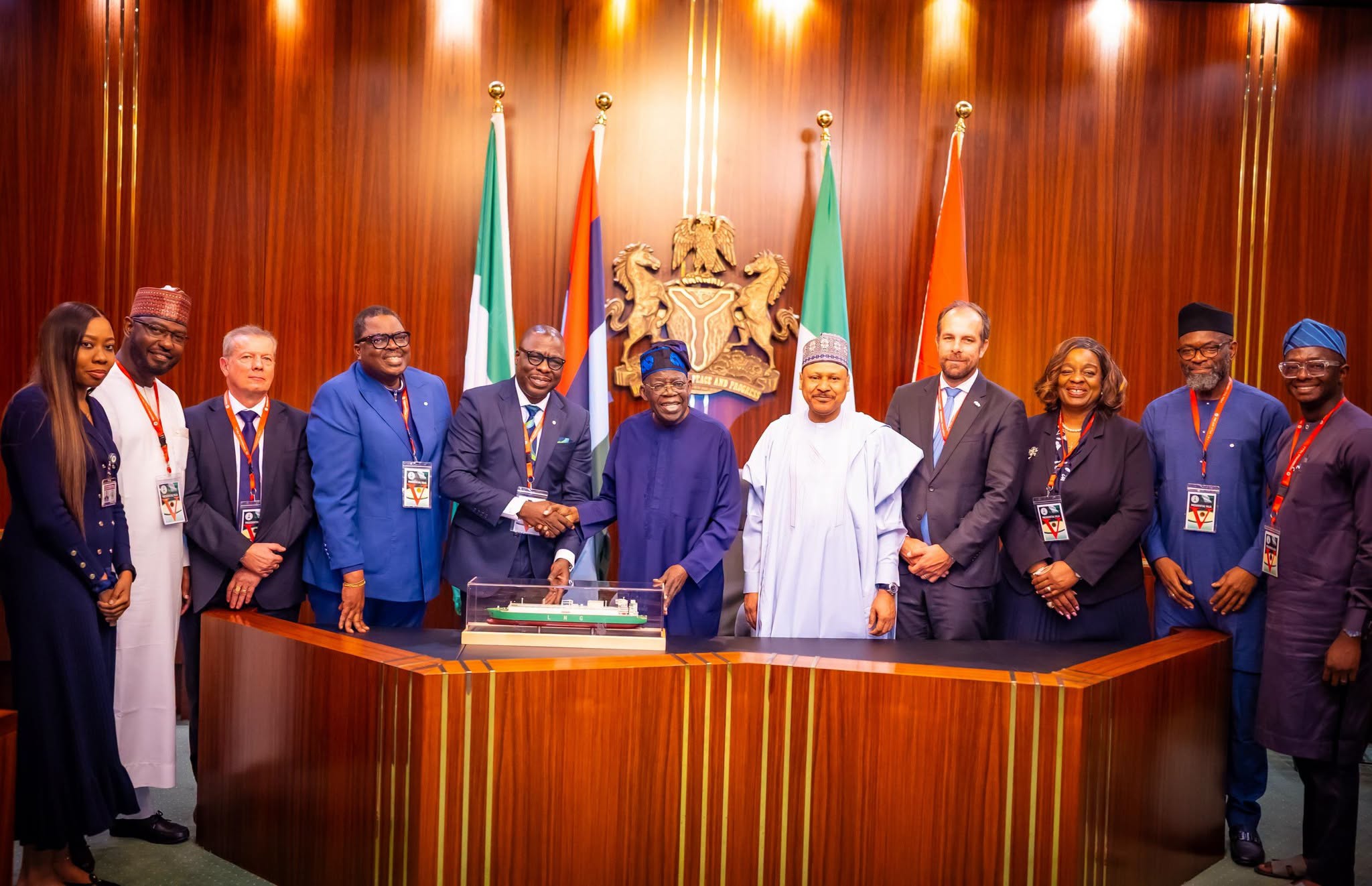
President Bola Tinubu has stressed the need to convert gas flaring into an economic benefit for the country, tasking the Nigeria Liquefied Natural Gas (NLNG) to work on this.
“My major concern is the domestic utilisation, where you must be able to take out the flaring and convert potential environmental liability to what could be strategically and economically beneficial to the consumers in the country.
“Yes, you are doing great to really want the revenue up and taking advantage of international interests so that Nigeria might be deriving benefits, but help us back home,” Mr Tinubu said when he received the board of the organisation in Abuja on Wednesday.
In a statement issued by the Special Adviser to the President on Information and Strategy, Mr Bayo Onanuga, the President commended the team for maximising and increasing the organisation’s capacity, adding that the company was ensuring a good return on investment.
“I am inspired to understand that you are not limiting yourself to the gradual objective of upgrading.
“I enjoy the teamwork and the way the NLNG is going, and you all, as team leaders, are giving value to what was the initial objective of the company. If any other incentive is needed to stimulate growth and expand your capacity, I will be willing to do that.
“We look straight far into the future, and I believe that this country has what it takes; but whatever asset that we have in the ground is nothing unless it’s brought up to service the economy, the people, and realisation of a good return on investment.
“I think that is the primary focus. But think of people, the need for domestication of some of these energy requirements and pricing mechanisms so that the ordinary man will feel it,” he stated.
In his remarks, the chief executive of NLNG, Mr Adeleye Falade, told the President that the firm has generated over $150 billion since inception, with shareholders, including Nigeria, receiving about $47 billion as dividends. Nigeria has a 49 per cent stake in the organisation.
He disclosed that NLNG was earlier operating at about 60 per cent capacity because the country could not produce crude optimally, resulting in the use of only four of the six available trains.
He told the President that for now, all LPG production, commonly known as cooking gas, is concentrated on the domestic market, adding that due to increased oil production from positive developments in the oil and gas sector, capacity has been increased to five trains, with more improvements expected.
Mr Falade informed the President that NLNG is keen to inaugurate Train Seven, which will boost its capacity by 35 per cent and further increase its current capacity, adding that Nigeria LNG has a five per cent share of the global LNG market.


