Economy
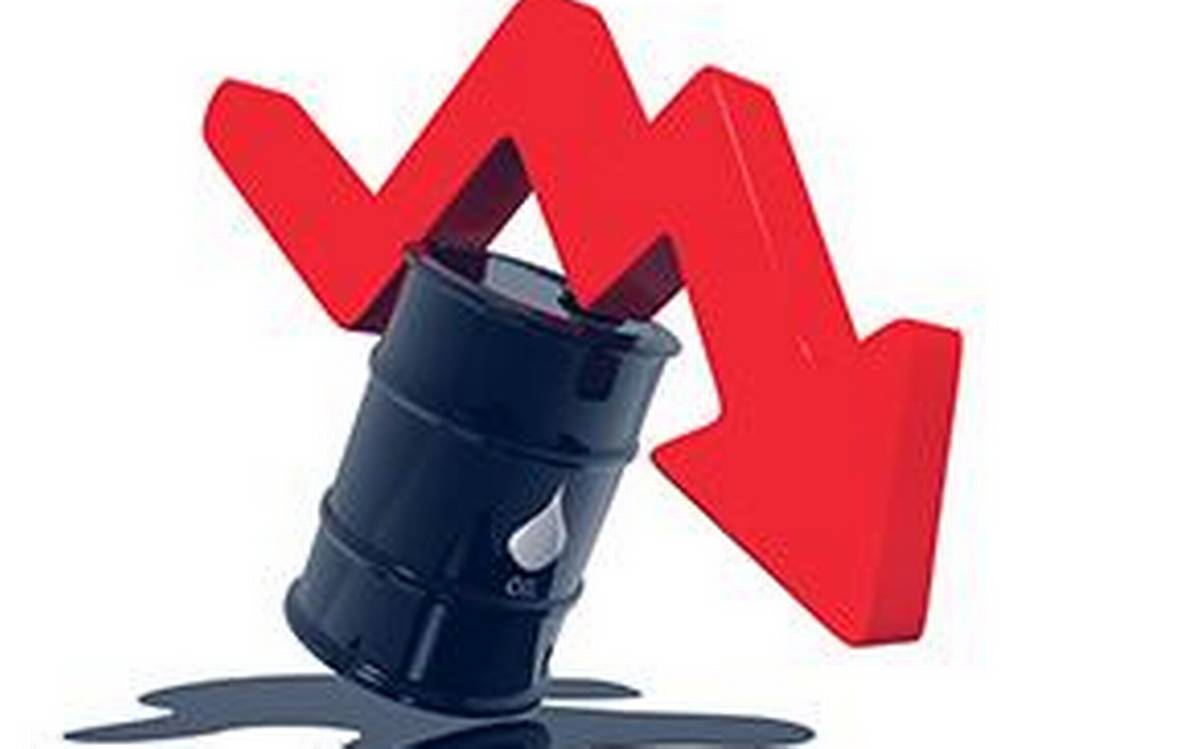
Trade War Concerns, OPEC+ Tumble Oil Prices
By Adedapo Adesanya
The prices of the major crude oil grades went down by about 2 per cent on Tuesday as investors braced for plans by the Organisation of the Petroleum Exporting Countries and its allies (OPEC+) to boost output.
Also, worries that US President Donald Trump’s tariffs would hit the global economy and slow demand for the fuel brought down Brent crude futures by $1.61 or 2.4 per cent to $64.25 per barrel as the US West Texas Intermediate (WTI) crude futures dropped $1.63 or 2.6 per cent to settle at $60.42.
There are increasing fears that President Trump’s aggressive tariffs on imports into the US have made it probable that the global economy will fall into recession this year.
China, hit with the steepest tariffs, has responded with its levies on US imports, stoking a trade war between the top two oil-consuming nations.
The Asian giant appears to be adamant, denying President Trump statements that negotiations were taking place, and calling on the US to remove the tariffs.
Analysts have sharply lowered their oil demand and price forecasts due to the deadlock.
Evidence have already started propping up with the US trade deficit in goods widened to a record high in March as businesses ramped up efforts to bring in merchandise ahead of President Trump’s sweeping tariffs, suggesting trade was a large drag on economic growth in the first quarter.
Also, there have been announcement of job cuts, while some other companies dependent on oil in their businesses continue to delay expected events.
Several OPEC+ members will suggest an acceleration of output hikes for a second straight month in June.
Market analysts warned that another production hike from OPEC+ could not happen at a worse time when sentiment is already weak.
The American Petroleum Institute (API) estimated that crude oil inventories in the US rose 3.76 million barrels in the week ending April 25, after analysts had estimated a much smaller 390,000-barrel build. The API reported a 4.565 million barrel dip in the prior week.
So far this year, crude oil inventories are up more than 23 million barrels, according to Oilprice calculations of API data.
Economy
NASD OTC Exchange Gains N26.99bn as Investors Drive 1.04% Rally
By Adedapo Adesanya
The NASD Over-the-Counter (OTC) Securities Exchange jumped 1.04 per cent on Wednesday, June 17, with the market capitalisation adding N26.99 billion to settle at N2.619 trillion compared with the previous session’s N2.592 trillion, and the Unlisted Security Index (NSI) rising by 45.1 points to close at 4,378.45 points, in contrast to the preceding day’s 4,333.35 points.
The rally was driven by the gains reported by two securities, which outweighed the losses posted by three securities, led by FrieslandCampina Wamco Nigeria Plc, which dipped by N1.95 to N178.19 per unit from N180.14 per unit. Geo-Fluids Plc lost 19 Kobo to close at N2.61 per share compared with Tuesday’s closing price of N2.80 per share, and Food Concepts Plc slid by 1 Kobo to N1.77 per unit from N1.78 per unit.
On the flip side, Central Securities Clearing System (CSCS) Plc recorded a N6.33 appreciation to trade at N86.57 per share versus the previous day’s N80.24 per share, and Light House Financial Services Plc grew by 10 Kobo to N1.13 per unit from the N1.03 per unit it closed a day earlier.
In the midweek session, the value of stocks traded by investors surged by 181.0 per cent to N128.3 million from the preceding session’s N45.6 million, the volume of securities increased by 305.6 per cent to 2.8 million units from Tuesday’s 688,290 units, and the number of deals executed jumped by 6.5 per cent to 33 deals from 31 deals.
At the close of trades, Great Nigeria Insurance (GNI) Plc remained the most active stock on a year-to-date basis, with 3.4 billion units valued at N8.4 billion, followed by Infrastructure Credit Guarantee (Infracredit) Plc with 2.3 billion units sold for N6.5 billion, and CSCS Plc with 67.3 million units exchanged for N4.6 billion.
GNI Plc also ended as the most traded stock by volume on a year-to-date basis, with 3.4 billion units worth N8.4 billion, followed by Infracredit Plc with 2.3 billion units sold for N6.5 billion, and Resourcery Plc with 1.1 billion units traded for N415.7 million.
Economy
Ayobo-Ipaja LCDA Explores Commercial Ostrich, Crocodile Farming
By Dipo Olowookere
As part of moves to boost its internally generated revenue (IGR) and increase its streams of income, Ayobo-Ipaja Local Council Development Area (LCDA) is considering commercial ostrich and crocodile farming.
The council recently held a sensitisation programme, where agribusiness experts engaged stakeholders, including residents and entrepreneurs, on the viability of this.
The programme provided participants with the knowledge on investment requirements, training opportunities, startup funding, and regulatory frameworks guiding ostrich and crocodile farming in Nigeria.
The chairman of Ayobo-Ipaja LCDA, Mr Lukmon Agbaje, commended the initiative, reiterating his administration’s commitment to promoting innovative agricultural practices as a pathway to sustainable development.
He described agriculture as a critical driver of economic transformation, stressing that modern farming has evolved into a profitable business venture with immense potential for youth empowerment and enterprise development.
Mr Agbaje further assured participants of the council’s readiness to partner with investors, agricultural institutions, and other relevant stakeholders to facilitate training, capacity building, and access to opportunities across the agricultural value chain.
On his part, the council’s Head of Department of Agriculture, Mr Wale Atepe, emphasised the growing market demand for products such as leather, meat, feathers, and other valuable by-products, adding that strategic investment in the sector could unlock significant opportunities for employment, wealth creation, and export earnings.
Economy
Naira Tumbles to N1,360/$1 at Official Market
By Adedapo Adesanya
The Naira depreciated against the United States Dollar by 0.21 per cent or N2.89 in the Nigerian Autonomous Foreign Exchange Market (NAFEX) on Wednesday, June 17, to N1,360.07/$1 from Tuesday’s closing rate of N1,357.18/$1.
In the same vein, the Nigerian Naira weakened against the Pound Sterling in the official market during the session by N4.42 to trade at N1,824.81/£1 versus the preceding session’s N1,820.39/£1, and lost N4.19 on the Euro to sell at N1,577.96/€1 compared with the previous day’s N1,573.79/€1.
However, at the GTBank segment, the local currency gained N1 against the greenback yesterday to exchange at N1,372/$1 versus N1,373/$1, and at the parallel market, it remained unchanged at N1,385/$1 at midweek.
The Naira’s performance comes amid tight inflows from exporters, non-bank corporates, and foreign investors, evidenced by the slow movement of the country’s gross external reserves level of $50.505 billion, despite muted inflows from oil sales after a recent drop in prices.
There have been reduced FX market interventions by the Central Bank of Nigeria (CBN) as it maintains its stance to keep the local unit stable enough to retain foreign investments.
The Nigerian government also dismissed a report suggesting that it was considering new taxes on telecommunications services and petroleum products, which would have spooked investors.
The federal government said that the reports misrepresented recommendations contained in the International Monetary Fund (IMF) Article IV Consultation Report on Nigeria, explaining that the recommendations were advisory and do not constitute government policy or binding obligations on Nigeria.
In the cryptocurrency market, prices were negative as traders and investors shrugged off a signed Iran peace deal that lifted stocks, after the Federal Reserve held interest rates but made clear it is more worried about inflation than growth.
Under the new Chair, Mr Kevin Warsh, the Federal Reserve left rates unchanged at 3.5 per cent to 3.75 per cent, in line with expectations, but its updated projections pointed to higher inflation and a slower pace of future rate cuts, and some officials floated the possibility that rates may still need to rise.
Cardano (ADA) slid 4.5 per cent to trade at $0.1731, Ripple (XRP) went down by 4.2 per cent to $1.16, Ethereum (ETH) shrank by 3.5 per cent to $1,727.55, Solana (SOL) lost 3.4 per cent to sell $71.05, Dogecoin (DOGE) also fell by 3.4 per cent to $0.0843, Binance Coin (BNB) slumped by 3.1 per cent to $587.53, and Bitcoin (BTC) crashed by 2.6 per cent to $63,892.28, while TRON (TRX) gained 0.7 per cent to finish at $0.3201, with the US Dollar Tether (USDT) and the US Dollar Coin (USDC) closing flat at $1.00 each.
-
Feature/OPED6 years agoDavos was Different this year
-
Travel/Tourism10 years ago
Lagos Seals Western Lodge Hotel In Ikorodu
-
Showbiz3 years agoEstranged Lover Releases Videos of Empress Njamah Bathing
-
Banking8 years agoSort Codes of GTBank Branches in Nigeria
-
Economy3 years agoSubsidy Removal: CNG at N130 Per Litre Cheaper Than Petrol—IPMAN
-
Banking3 years agoSort Codes of UBA Branches in Nigeria
-
Banking3 years agoFirst Bank Announces Planned Downtime
-
Sports3 years agoHighest Paid Nigerian Footballer – How Much Do Nigerian Footballers Earn