Economy
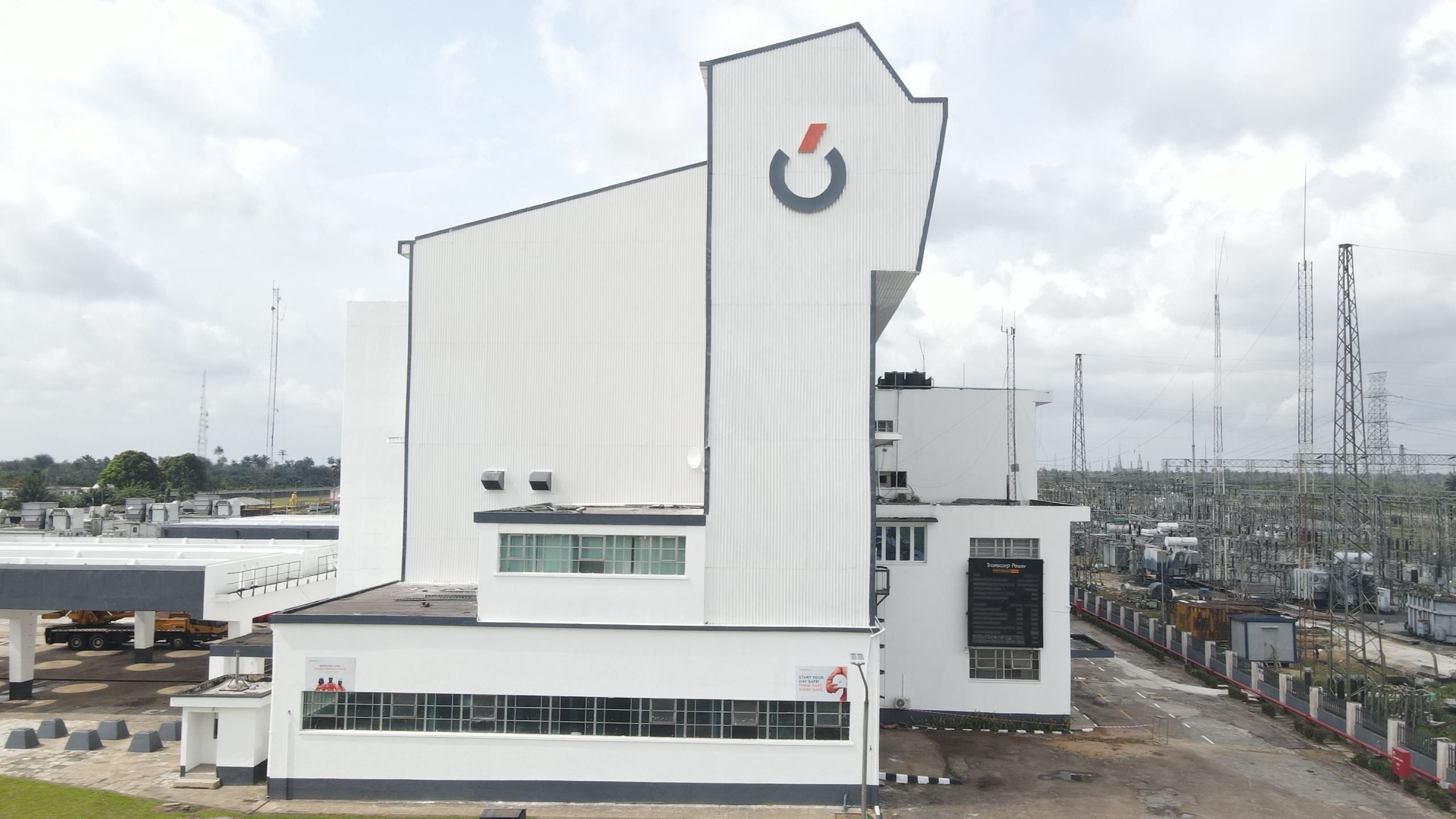
Transcorp Power Generates N182bn Revenue, Posts N55bn PBT in H1 2026
By Aduragbemi Omiyale
Details of the financial statements of Transcorp Power Plc for the first half of the year ended June 30, 2026, showed that the company demonstrated resilience in the face of industry challenges, which mildly impacted its top and bottom lines.
These issues were mainly recurring transmission line vandalism, which materially constrained the organisation’s ability to evacuate available generation capacity.
Business Post reports that earnings contracted in the first six months of this year to N181.97 billion from the N205.81 billion recorded in the same period of last year, while profit before tax moderated to N54.99 billion from N58.73 billion.
However, on a year-to-date basis, total assets went up to N619.02 billion from N563.48 billion in December 2025, as shareholders’ funds grew to N189.34 billion from N183.40 billion in FY 2025, while retained earnings soared to N140.90 billion from N123.41 billion in FY 2025.
It was observed that the increase in receivables and borrowings largely drove the expansion in the balance sheet during the period.
Also, the firm’s gross margin expanded to 38.4 per cent from 34.7 per cent in H1 2025, operating margin increased to 30.6 per cent from 28.5 per cent, and PBT margin rose to 30.2 per cent from 28.5 per cent, reflecting cost optimisation efforts and disciplined financial management, positioning the company to continue delivering sustainable value for shareholders.
“Our H1 2026 performance is a reflection of the resilience of our business operations despite significant sector-wide existential challenges.
“Regrettably, recurring transmission line vandalisation materially constrained our ability to evacuate available generation capacity.
“Nonetheless, we continued to deliver strong profitability, maintain operational efficiency, and strengthen our balance sheet,” the chief executive of Transcorp Power, Mr Peter Ikenga, stated.
“We remain committed to working with relevant stakeholders to put an end to transmission line vandalisation and to further improving operational performance, power generation supply reliability, and creating sustainable value for our shareholders. We remain highly confident that we will recover lost ground in H1 2026 and finish FY 2026 stronger than FY 2025,” he added.

Economy
Naira Gains N5.55, Sells N1,360/$1 at Official Market
By Adedapo Adesanya
The Naira opened the week on a positive note, appreciating against the US Dollar by N5.55 or 0.41 per cent in the Nigerian Autonomous Foreign Exchange Market (NAFEM) on Monday, August 10, to N1,360.14/$1 from N1,365.69/$1.
The domestic currency also improved its exchange rate against the Pound Sterling in the official market during the session by 67 Kobo to sell at N1,838.50/£1 compared with the preceding session’s N1,839.17/£1, and gained N4.64 against the Euro to quote at N1,571.09/€1, in contrast to last Friday’s N1,575.73/€1.
However, the Naira maintained stability against the Dollar in the black market and the GTBank forex counter on Monday at N1,400/$1 and N1,371/$1, respectively.
Data from the Central Bank of Nigeria (CBN) showed that interbank FX turnover fell by 46 per cent yesterday to $213.845 million from the $393.477 million recorded at the close of trading on Friday.
The decline came despite a sharp increase in the volume of foreign exchange transactions executed during the session, indicating weaker participation by high-ticket FX customers and other major market participants.
The lower turnover suggests reduced demand for FX among large-scale buyers, even as market makers continued to facilitate transactions through the NAFEM window, with the number of FX traded rising to 182 from 102.
In the cryptocurrency market, traders and investors took profit as broader markets’ focus shifted to rising bond yields, higher oil prices and upcoming US inflation data.
Cardano (ADA) depreciated by 5.2 per cent to $0.1873, Ethereum (ETH) slipped by 2.6 per cent to $1,873.43, Ripple (XRP) slumped by 2.3 per cent to $1.01, Bitcoin (BTC) fell by 1.8 per cent to $63,949.22, Solana (SOL) crashed by 1.3 per cent to $75.81, and Binance Coin (BNB) tumbled by 0.6 per cent to $599.49.
But TRON (TRX) gained 0.5 per cent to trade at $0.3314, and Dogecoin (DOGE) grew by 0.2 per cent to $0.0700, while the US Dollar Tether (USDT) and the US Dollar Coin (USDC) traded flat at $1.00 apiece.
Economy
Airtel Africa Buoys Nigerian Exchange’s 1.20% Surge
By Dipo Olowookere
The first trading session of the week on the floor of the Nigerian Exchange (NGX) Limited ended in the green territory on Monday, with a 1.20 per cent rise.
This was buoyed by the gains recorded by Airtel Africa and other equities, according to analysis of data harvested from the Customs Street yesterday.
During the trading day, the consumer goods index grew by 0.76 per cent, enough to offset the losses recorded by the other sectors.
The insurance counter shrank by 1.64 per cent, the banking space lost 0.24 per cent, the energy sector contracted by 0.09 per cent, and the industrial goods segment retreated by 0.05 per cent.
When trading activities ended for the day, the All-Share Index (ASI) was up by 2,956.15 points to 248,529.75 points from 245,573.60 points, and the market capitalisation gained N1.909 trillion to finish at N160.422 trillion compared with the previous session’s N158.513 trillion.
Fortis Global Insurance expanded by 10.00 per cent to N2.86, Chams surged by 9.80 per cent to N4.48, NAHCO jumped by 9.29 per cent to N153.00, Airtel Africa soared by 8.59 per cent to N6,300.00, and Sovereign Trust Insurance rose by 6.59 per cent to N1.78.
Conversely, AVA Capital shed 10.00 per cent to N9.90, Ecobank decreased by 9.92 per cent to N64.95, Caverton crashed by 9.09 per cent to N5.00, Ikeja Hotel slipped by 8.41 per cent to N43.00, and FTN Cocoa dropped 8.37 per cent to trade at N8.10.
A total of 23 equities were on the gainers’ chart yesterday, while 37 equities ended on the losers’ table, indicating a negative market breadth index and weak investor sentiment.
As for the activity log, the trading volume remained elevated, though lower than the preceding session, as it receded by 26.67 per cent to 1.1 billion units from 1.5 billion units. The trading value, however, increased by 1.12 per cent to N27.0 billion from N26.7 billion, while the number of deals advanced by 39.00 per cent to 59,185 deals from 42,580 deals.
Consolidated Hallmark was the most active stock yesterday, with a turnover of 354.1 million units valued at N1.5 billion, Fortis Global Insurance traded 307.3 million units worth N818.3 million, Access Holdings exchanged 48.1 million units for N1.4 billion, Chams transacted 37.4 million units worth N163.3 million, and First Holdco sold 35.8 million units valued at N5.1 billion.
Economy
Oil Prices Surge 5% as Iran Sets Conditions for Hormuz Reopening
By Adedapo Adesanya
Oil prices traded 5 per cent higher on Monday after Iran and the United States argued about demands for compensation, further stalling a possible deal to reopen the Strait of Hormuz.
Brent crude futures chalked up $4.17 or 4.99 per cent to sell at $87.72 a barrel, while the US West Texas Intermediate (WTI) crude futures surged $3.95 or 5.05 per cent to $82.13 per barrel.
Iran said the US must lift sanctions on it and meet other conditions for reopening the vital waterway, which carried a fifth of the world’s oil and liquefied natural gas before the start of the Middle East conflict in late February.
Meanwhile, US President Donald Trump said Iran must pay compensation for “all of the people that they have killed and gravely wounded.”
This comes as the Middle East country said it was nearing a final pact with Oman to define new shipping lanes through the strait but repeated that the US must meet other conditions, including compensation and an end to sanctions and military threats before the strategic waterway is reopened.
In a further threat to supply, the Iran-aligned Houthis said they had struck Saudi Aramco’s Jazan refinery on Sunday. Saudi Aramco has postponed the restart of the 400,000-barrel-per-day refinery to August 30 after two Houthi attacks in recent weeks.
ADNOC, a state-owned oil company in the United Arab Emirates, said on Friday that 15 of its vessels had been attacked while transiting the Strait of Hormuz since the beginning of the conflict.
Meanwhile, Ukraine’s military continued to attack Russia’s energy infrastructure, hitting the Taneco oil refinery in Tatarstan and the ZapSibNeftekhim petrochemical plant in Russia’s Tyumen region.
On the US supply side, stocks of crude oil in the Strategic Petroleum Reserve (SPR) fell by about 6.1 million barrels to 298.7 million barrels last week, the lowest level since January 1983.
Bank of America (BoFA) warned that oil prices could continue climbing into the winter if the US and Iran fail to reach an agreement reopening the Strait of Hormuz, with severe shortages already emerging in diesel, petrol, and global natural gas markets.
Mr Francisco Blanch, Bank of America’s head of commodities and derivatives research, told CNBC on Monday that only around 5 to 10 ships per day are currently passing through Hormuz, compared with roughly 140 before the war. With some crude now being rerouted through Saudi Arabia and the UAE, traffic would need to recover to around 80 to 100 ships per day just to stabilise energy markets.