Connect with us

Economy

UBA’s N157.8bn Rights Issue Ends Friday September 5

Published

on

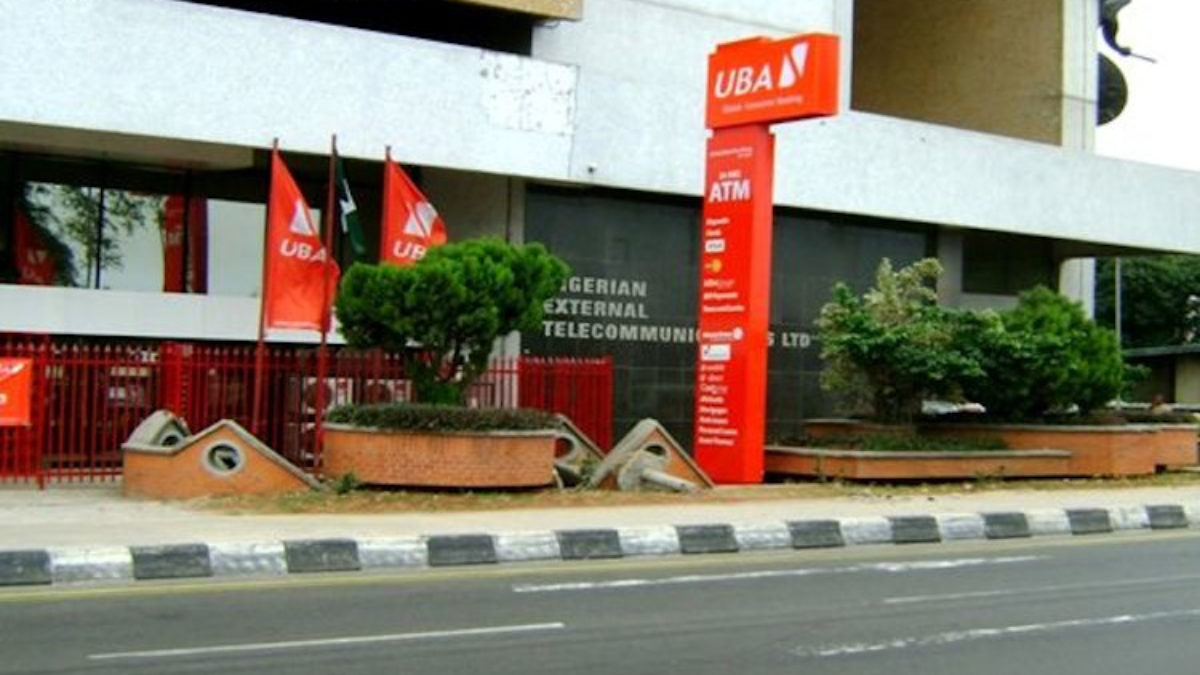
sort codes of UBA

By Aduragbemi Omiyale

The N157.8 billion rights issue of the United Bank for Africa (UBA) Plc will close on Friday, September 5, 2025.

The exercise commenced on Wednesday, July 30, 2025, and offered a total of 3,156,869,665 ordinary shares at a unit price of N50.

The financial institution is selling the shares to shareholders on the basis of one new ordinary share for every 13 ordinary shares held as of the close of business on Wednesday, July 16, 2025.

Proceeds from the rights issue, tradable on the floor of the Nigerian Exchange (NGX) Limited during the period of the offering, would be used to boost the capital base of the lender in line with minimum capital requirements of the Central Bank of Nigeria (CBN), which regulates the banking sector in the country.

The bank will specifically use about 40 per cent (N61.9 billion) of the total funds to increase its lending portfolio in the next 12 months, use about 30 per cent (N46.4 billion) to upgrade its business network, and the remaining 30 per cent (N46.4 billion) to invest in technology to improve its digital footprints within the next four years.

UBA is one of the big five banks in Nigeria. Apart from operating in Nigeria, it has branches in other African nations as well as in Europe.

Based on its spread, especially outside the country, it is required by the regulator to have at least N500 billion as capital base. All banks are expected to meet the new threshold on or before March 31, 2026.


Click to comment

Leave a Reply

Your email address will not be published. Required fields are marked *

Economy

Oil Prices Dip as Markets Eye US-China Developments, Interest Rate Hike

Published

on

oil prices fall

By Adedapo Adesanya

Oil prices ​settled lower on Wednesday as investors worried about possible US interest rate hikes amid anticipation of the outcomes of a meeting between US President Donald Trump and China’s Xi Jinping.

Brent crude lost $2.14 or 2 per cent to trade at $105.63 a barrel, and the US West Texas Intermediate crude futures fell by $1.16 or 1.14 per cent to $101.02 per barrel.

Boston Federal Reserve President Susan Collins said on Wednesday the US central bank may need to raise interest rates if ​inflation pressures do not ease, a sign that the war has begun to weigh on the American economy.

Higher ​oil prices have pushed up fuel costs, and economists expect to see effects in the months ⁠ahead.

Producer prices in the US posted their biggest increase in four years in April, boosted by soaring costs for goods and services, the latest sign ​of accelerating inflation during the war with Iran. Also in the same month, US consumer prices rose sharply for a second straight month, producing the largest annual increase in ​inflation in nearly three years.

Higher interest rates increase borrowing costs for businesses and consumers, which could slow economic growth and reduce oil demand.

President Trump landed in Beijing on Wednesday, a day after saying he did not think he would need China’s help to end the war. The American President is scheduled to meet Mr Xi on Thursday and Friday.

This comes amid prospects for a lasting ​peace deal with Iran weakened, and the Middle East country tightened its grip over the Strait of Hormuz.

China is the biggest buyer of Iranian oil despite pressure ​from the Trump administration.

The Organisation of the Petroleum Exporting Countries (OPEC) on Wednesday lowered its forecast for world oil demand growth in 2026. The International Energy Agency (IEA) said global oil supply would not meet total demand this year as the war wreaks havoc on Middle East production.

Crude oil inventories in the US decreased by 4.3 million barrels during the week ending May 8, according to data from the US Energy Information Administration (EIA) released on Wednesday.

Iran’s Foreign Minister, Mr Abbas Araqchi, said on Wednesday that Kuwait had attacked an Iranian boat and detained four Iranian citizens in the Gulf. He added that Iran demands their ⁠release and ​reserves the right to respond, raising fresh tensions in the region.

Continue Reading

Economy

OPEC Cuts 2026 Global Oil Demand Forecast Over Iran War

Published

on

opec oil output

By Adedapo Adesanya

The Organisation of the Petroleum Exporting Countries (OPEC) on Wednesday lowered its forecast for global oil demand growth in 2026 due to the Iran war.

According to the cartel, world oil demand will rise by 1.17 ​million barrels per day in 2026, down from the previous 1.38 million barrels per day.

OPEC said consumption would rebound later and raised its demand growth forecast ​for 2027. For next year, it expects oil demand to rise by 1.54 million barrels per day, up 200,000 barrels per day ‌from the ⁠previous forecast.

OPEC joins other forecasters, such as the International Energy Agency (IEA), in cutting expectations due to the war that started in February.

The ​producer group sees a smaller hit to demand than the IEA, which earlier ​on Wednesday increased its estimate of the decline in oil use ⁠this year.

The ​IEA sees demand falling by ⁠420,000 barrels per day this year, compared with a previous forecast of an 80,000 barrels per day drop. Overall, global oil supply will fall by around 3.9 million barrels per day across 2026 due to the war, slashing its previous forecast, which had projected a 1.5 ​million barrels per day drop.

The war has effectively closed the Strait of Hormuz, a key global oil route, ​curbing millions of barrels of Middle East output and sending fuel prices soaring. The surge is hitting consumers and businesses, and prompting government steps to conserve supplies.

“The global economic growth continues to show resilience for this year despite geopolitical tensions, particularly in the Middle East,” OPEC said, leaving its economic growth forecasts unchanged.

Global oil demand is expected to average 104.57 million barrels per day in the second quarter, down from the 105.07 ​million barrels per day forecast last ​month, OPEC said. ⁠The previous report had already cut the second-quarter estimate by 500,000 barrels per day.

The wider OPEC+, which groups the OPEC ​and allies such as Russia, had agreed to resume output increases ​from April, ⁠but the closure of Hormuz has made it impossible to deliver on the deal. The report said output fell further in April.

OPEC+ crude output averaged 33.19 million barrels per day in April, ⁠down ​1.74 million barrels per day from March, the report said, citing ​secondary sources OPEC uses to monitor its production.

The April figure includes the United Arab Emirates (UAE), which left OPEC ​on May 1.

Continue Reading

Economy

We Will Continue to Borrow Responsibly—Tinubu

Published

on

tinubu in kenya

By Adedapo Adesanya

President Bola Tinubu has said that Nigeria would continue to borrow responsibly amid rising concerns about the country’s swelling debt profile.

According to a statement by presidential spokesperson, Mr Bayo Onanuga, President Tinubu made the remarks on Tuesday while leading Nigeria’s government, diplomatic, and business delegation to the Africa Forward Summit at the Kenyatta Convention Centre in Nairobi.

Mr Tinubu noted that the debt to be repaid in the year is nearly half of the projected revenue, at about $11.6 billion.

“Every single dollar that leaves our treasury to pay punitive interest rates is a Dollar that did not go into our steel sector, our textile mills, our agro-processing plants, or our digital industries. It is a dollar that did not train a young Nigerian engineer or provide affordable power for our factories.

“Our industrial base is being starved of the blood it needs — long-term, affordable finance — while creditors and rating agencies treat African sovereigns as permanent high-risk borrowers, regardless of our fiscal performance.

“So, I ask this gathering: how can an African manufacturer compete with a competitor in Europe, Asia, or North America when the cost of borrowing in our nations is five to ten times higher? How can we build cross-border industrial value chains under the African Continental Free Trade Area when our infrastructure projects face a financing gap deepened by the very institutions meant to bridge it? The answer is plain: we cannot. The international financial architecture, as currently constituted, is an instrument of industrial disarmament for Africa.”

He emphasised that Nigeria is not asking for charity, adding that the country will have to borrow, albeit responsibly.

“We are demanding a financial system that intentionally enables Africa to industrialise — to process its own minerals, refine its own crude oil, manufacture its own pharmaceuticals, and compete fairly in global markets.

“We will continue to borrow responsibly, but we insist that our creditworthiness be measured by our economic fundamentals and our industrial potential, not by outdated stereotypes,” he noted.

He called for deeper economic integration across Africa, stressing the need for policies that prioritise the continent’s industrial growth and prosperity.

Mr Tinubu highlighted Nigeria’s blue economy potential as a key driver of Africa’s development, noting that it had long been underutilised due to insecurity and uncertainty.

“Today, I make an explicit commitment: Nigeria will intensify regional coordination by offering our Deep Blue Project’s maritime intelligence infrastructure as a shared data hub for willing Gulf of Guinea states. Interoperable systems, harmonised laws, and seamless joint enforcement must become the daily reality, not an aspiration on paper.

“Let no one misunderstand: maritime sovereignty does not repel investment — it attracts it. Secure sea lanes, predictable regulation, and functional courts are the preconditions that unlock private capital. Governance has de-risked Nigeria’s maritime proposition. We now invite partners to build on these gains as we advance climate-aligned port modernisation and the digital transformation of our maritime sector.

“As we endorse the Nairobi Declaration, Nigeria affirms that maritime sovereignty and ocean governance are the non-negotiable foundations of Africa’s Blue Economy transformation. We will continue to earn that sovereignty — through institutions, through assets, through law, and through iron-clad regional solidarity that turns our waters from a theatre of risk into a story of shared resilience.

“The oceans have no duplicate as a common heritage of mankind. For Africa, moving from sea blindness to ocean sovereignty is not a choice — it is a generational duty. Nigeria is ready, and we invite all present to join us in that duty,” the President stated.

Continue Reading

Trending