Connect with us

Economy

UN, Stanbic IBTC Bank Give Nigerian Female Farmers Funds

Published

on

Graduates Farmers

By Modupe Gbadeyanka

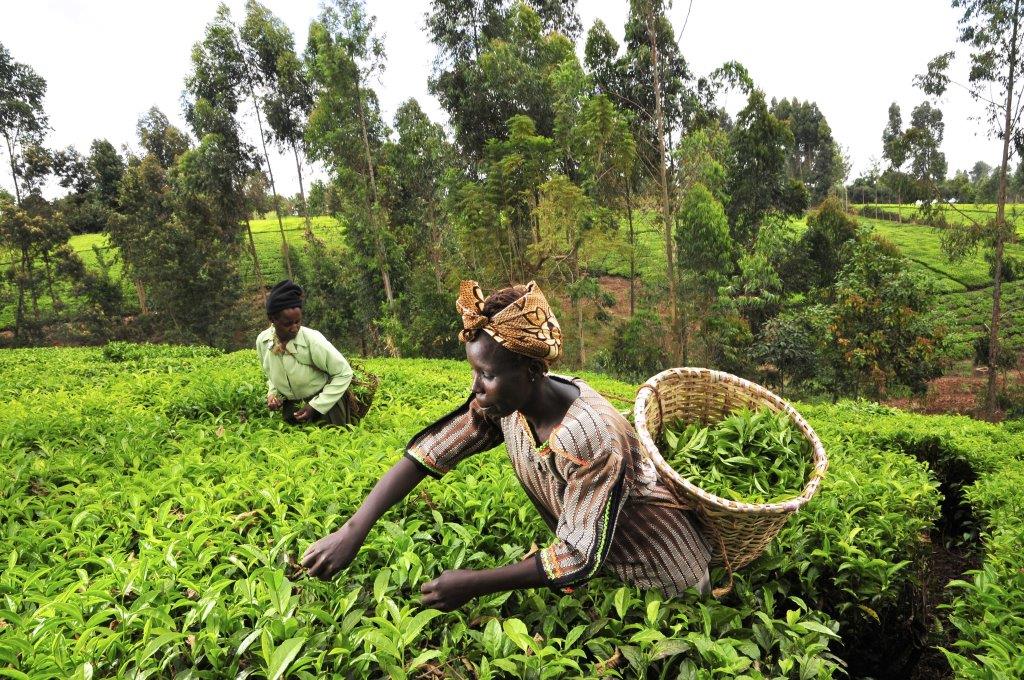
A partnership for the provision of seed funding to female farmers in the six geopolitical zones of Nigeria and the Federal Capital Territory (FCT) Abuja has been entered into by Stanbic IBTC Bank Plc and the United Nations (UN).

The UN initiative, tagged The UN Women Project, was borne out of the need to provide economic empowerment for women and close the gender gap in agricultural productivity and incomes while increasing their access to resources and markets.

With a total budget of $40 million for five years from 2019 to 2023, the initiative targets Ogun, Ebonyi, Cross River, Niger, Bauchi and Sokoto States as well as Abuja.

Stanbic IBTC Bank has always shown its commitment to enhancing food security and providing employment for women in Nigeria across the agricultural value chain.

In line with the objectives of the federal government’s Economic Recovery and Growth Plan (ERGP 2016-2020), the UN Women collaborated with three sister UN agencies which are the Food and Agriculture Organization, International Labour Organisation and United Nations Industrial Development Organization (UNIDO).

Key mandates of the programme include restoring growth, skills acquisition and building a globally competitive economy, through investments in the agricultural sector.

To pilot the flagship programme, Stanbic IBTC Bank PLC provided seed funding to support women working in the shea nut and rice value chains in Niger and Ebonyi States, respectively.

The pilot programme is expected to reach at least 30 women-owned agribusiness organisations and cooperatives in five Local Government Areas (LGAs) in the two states.

The beneficiary LGAs are Mashegu, Munya and Katcha in Niger State as well as Ezza South and Ohoazara in Ebonyi State.

Speaking on the role of the financial institution in the project, Remy Osuagwu, Executive Director, Personal and Business Banking, Stanbic IBTC Bank PLC, said: “The impact of women in the society is visible in every ramification. Being an organisation that celebrates gender balance, we recognise the call to keep empowering women, and we take advantage of every opportunity to support their endeavours.”

Wole Oshin, Head, Agribusiness Banking, Stanbic IBTC Bank PLC, said that the key objective of the project is to create resource centres in both states for capacity building, data creation and management. This is aimed at supporting women in undertaking climate-smart agricultural practices for their economic development.

He further reiterated that the bank is committed to providing an enabling environment for women to thrive and get access to developmental opportunities.

“It cannot be overemphasised that investing in the agricultural sector is very key to nation-building. We have to keep providing entrepreneurial and financial capacities as well as an affordable technology for value addition.

“Using information and communications technology to increase access to finance and markets will support the advocacy for women’s secured rights to land,” he said.

He further disclosed that this project is in tune with the #HeforShe initiative of Standard Bank Group, the parent company of Stanbic IBTC Holdings PLC.

‘HeForShe’ is a global solidarity movement for gender equality initiated by the UN. Its goal is to achieve balance by encouraging all genders to partake as agents of change and take action against negative stereotypes and behaviours.


Modupe Gbadeyanka is a fast-rising journalist with Business Post Nigeria. Her passion for journalism is amazing. She is willing to learn more with a view to becoming one of the best pen-pushers in Nigeria. Her role models are the duo of CNN's Richard Quest and Christiane Amanpour.

Click to comment

Leave a Reply

Your email address will not be published. Required fields are marked *

Economy

Oil Prices Rise 2% as Middle East Hostilities Escalate

Published

on

Oil Prices fall

By Adedapo Adesanya

Oil prices ‌rose around 2 per cent on Wednesday as hostilities in the Middle East erupted anew and talks between Iran and the United States showed little progress.

Brent futures grew by $1.81 or 1.89 per cent to $97.81 per barrel, and the US West Texas Intermediate (WTI) crude climbed $2.26 or 2.41 per cent to $96.02 a barrel.

According to reports, Iran launched ballistic missiles toward regional neighbours Kuwait and ​Bahrain, killing one person and injuring dozens, while the US forces conducted strikes on Iran’s Qeshm ​Island.

Iranian drones and missiles struck Kuwait International Airport overnight, causing the country to immediately suspend air traffic, activate emergency procedures, and divert flights to alternative airports.

Iran’s Revolutionary Guard said the operation was retaliation for recent US military actions and warned that regional states supporting American operations could face further consequences. Kuwait hosts major US military facilities and serves as a key logistics hub for American operations across the Middle East, but until then had largely avoided becoming a direct target.

Following the overnight attack, the United Arab Emirates (UAE) called for a united Gulf stance.

Meanwhile, President Donald Trump said Iran had agreed not to have a nuclear weapon and that Supreme Leader ‌Ayatollah Mojtaba ⁠Khamenei was involved in negotiations. He has insisted this week that discussions remain active and said a broader agreement could emerge within days, while Iranian officials have delivered contradictory messages.

Iranian Foreign Minister Abbas Araqchi said contacts with American representatives have not been cut off, but no progress has been made in the negotiations.

The prolonged closure of the Strait of Hormuz continues to bottleneck global energy supplies, driving sustained upward pressure on oil markets.

The International Energy Agency (IEA) has warned that global ​oil inventories could hit critical ​levels ahead of peak summer ⁠demand if stock draws continue at their current pace.

Crude oil inventories in the US decreased by 8.0 million barrels during the week ending May 29, according to data from the Energy Information Administration (EIA) released on Wednesday. The EIA’s data release follows figures by the American Petroleum Institute (API) that were released a day earlier, which reported that crude oil inventories saw a draw of 6.75 million barrels in the period.

Continue Reading

Economy

CSCS Boss Shantali Says T+1 Settlement Targets Long-Term Capital Market Growth

Published

on

Shehu Yahaya Shantali

By Adedapo Adesanya

The chief executive of the Central Securities Clearing System (CSCS) Plc, Mr Shehu Yahaya Shantali, says Nigeria’s shift to a T+1 settlement cycle goes beyond faster transactions and is intended to deepen long-term growth in the capital market.

Speaking at a ceremony marking the commencement of T+1 settlement in Lagos, Mr Shantali described the development as a strategic milestone that goes beyond faster transaction timelines to reinforce the market’s structural strength and future readiness.

According to him, the shortened settlement cycle reflects years of investment in infrastructure, technology, and stakeholder collaboration aimed at transforming Nigeria into a globally competitive investment destination.

Nigeria recently became the first market in Africa to adopt the T+1 framework, reducing the settlement period for securities transactions from two days to one.

According to the boss of the securities depository firm, the shortened settlement cycle reflects years of investment in infrastructure, technology, and stakeholder collaboration aimed at transforming Nigeria into a globally competitive investment destination.

“These investments are not solely for T+1 settlement but to position Nigeria’s capital market for sustained growth and longterm competitiveness,” he said.

The migration from T+1 settlement is expected to enhance liquidity, improve capital efficiency, and reduce counterparty risk across the market.

Mr Shantali explained that the T+1 transition represents the culmination of a decades-long evolution from a manual, paper-based system to a fully automated, technology-driven post-trade environment.

He recalled that investors previously waited several months to complete transactions under the old system, but successive reforms, including transitions to T+5, T+3, and T+2, steadily improved efficiency and market integrity.

The latest upgrade, he said, builds on extensive preparations undertaken over the past three years, including system enhancements, process optimisation, and market-wide readiness assessments coordinated by the SEC and industry stakeholders.

On his part, the Director-General of the Securities and Exchange Commission (SEC), Mr Emomotimi Agama, said the reform signals Nigeria’s readiness to compete at the highest levels of global finance, noting that the country transitioned from T+2 to T+1 within six months.

“The era of T+1 has begun,” Mr Agama said, adding that shorter settlement cycles are critical to attracting global capital and strengthening investor confidence.

He noted that leading markets such as the United States, Canada, and India have already adopted T+1 settlement, while several European markets are preparing to migrate, making Nigeria’s transition a crucial step in maintaining international relevance.

Continue Reading

Economy

Businesses Not Feeling Full Benefits of Tinubu’s Reforms—NECA

Published

on

NECA Adewale Smatt-Oyerinde

By Adedapo Adesanya

Many private sector operators have yet to experience the anticipated gains of President Bola Tinubu’s reforms as they continue to grapple with inflation, energy costs and exchange rate volatility, the Director-General of the Nigeria Employers’ Consultative Association (NECA), Mr Adewale-Smatt Oyerinde, has said.

Mr Oyerinde acknowledged that the removal of fuel subsidy and liberalisation of the foreign exchange market reflected the government’s commitment to market-driven economic policies and improved transparency across sectors.

He said the reforms had enhanced fuel availability, reduced recurring supply disruptions and signalled policy consistency to both local and foreign investors, but noted that while there are indications of improved investor confidence, many domestic businesses, particularly Micro, Small and Medium Enterprises (MSMEs), continue to contend with operational challenges.

The NEC chief said the depreciation of the Naira had increased production costs, affected competitiveness and heightened operational risks for many businesses.

“Many private sector operators are yet to experience the anticipated gains of the reforms as they continue to grapple with inflation, energy costs and exchange rate volatility,” he said in a recent interview with the News Agency of Nigeria (NAN) while assessing the administration’s economic performance.

Mr Oyerinde said declining consumer purchasing power and increasing production expenses had placed pressure on businesses, with some firms adjusting investment plans and operations in response to prevailing economic conditions.

On infrastructure and refining, the NECA DG said developments in housing, industrial investments and local petroleum refining had created opportunities and contributed to improved fuel supply.

He, however, identified power supply as a major challenge facing businesses, citing persistent grid instability and reliance on alternative energy sources.

“In spite of the ongoing reforms in the power sector, insufficient electricity supply remains the number one constraint to business productivity and competitiveness across the country,” he said.

Mr Oyerinde said that although some macroeconomic indicators, including foreign reserves and government revenues, had shown improvement, the gains were yet to be broadly reflected in business operations and household welfare.

“Inflation, high energy costs, multiple taxation, logistics challenges and weak consumer spending continue to constrain productivity and limit business expansion,” he said.

He said employers remained cautious about large-scale recruitment amid high borrowing costs, foreign exchange volatility and rising operating expenses.

According to him, sustainable job creation will depend on deeper structural reforms that reduce the cost of doing business and improve access to affordable finance.

He urged the government to prioritise stable power supply, lower energy costs, tax harmonisation, policy consistency and foreign exchange stability to accelerate economic recovery and strengthen investor confidence.

Continue Reading

Trending