
Economy
UPDATED: Etisalat Nigeria Gets New Management Team


By Modupe Gbadeyanka
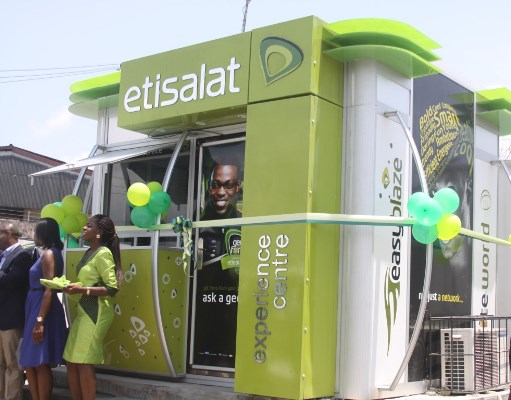
Information reaching us confirms that a new board has been constituted by Etisalat Nigeria as a result of the ongoing restructuring efforts.
A statement issued by the company’s representative disclosed that Mr Joseph Nnanna has been appointed as Chairman of the Board of Directors of Etisalat Nigeria. He replaces Mr Hekeem Belo-Osagie, who resigned last week as Chairman of the telecom firm.
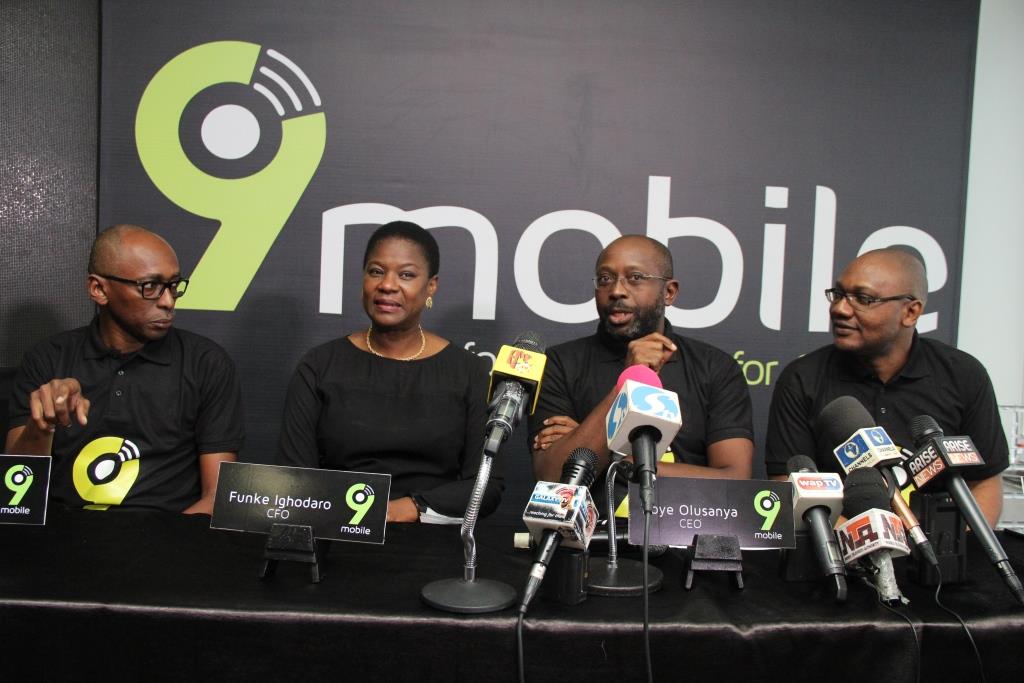
It was also revealed in the statement made available to Business Post on Tuesday, July 4, 2017, that Mr Boye Olusanya has been confirmed as the Chief Executive Officer of the company, to replace Mr Matthew Willsher.
In addition, Mrs Funke Ighodaro takes over from Mr Olawole Obasunloye as Chief Finance Officer (CFO) of Etisalat Nigeria.
Other appointments announced by Etisalat Nigeria today were Mr Oluseyi Bickersteth as a Non-Executive Director of the board, and Mr Ken Igbokwe, also a Non-Executive Director.
The statement noted that, “The consortium of lenders, working with the regulators; the Nigerian Communications Commission (NCC) and the Central Bank of Nigeria (CBN) are committed to the on-going efforts to restructure the company towards a path of long term success of the business and the appointment of a seasoned board of directors and top management is a testament to this.
“The decisions reached so far reflect the high confidence all the stakeholders have in the continued viability and sustainability of the business.
“The smooth transition is also proof of management’s commitment to ensure that the operations of the company run seamlessly, and customers continue to enjoy superior network quality and positive customer experience.
“Etisalat Nigeria remains committed to continuously serving our subscribers, through the provision of innovative products and services with its committed staff, partners and vendors to empower the needs of our customers and improve their experience on the network.”
Etisalat Nigeria concluded the statement by thanking “all our customers for your loyalty, understanding and continued patronage.”
Etisalat Nigeria is the country’s fourth largest telecoms firm with over 20 million subscribers. It came into the country in 2008.
Mr Joseph Nnanna is an economist and a Central Banker. He has three decades of post qualification professional experience.
He attended William Paterson University in Wayne, New Jersey and University of Houston, in Houston Texas, USA from 1975-80, where he read Finance, Public Policy and Economics. He graduated with B.A, M.A and PhD diplomas. Since graduation, Dr Nnanna has attended several economic policy oriented training programs.
In 2003 and 2004, he studied at Harvard University and participated in the macroeconomic policy and leadership/ organizational management training programs. Dr Nnanna was appointed Deputy Governor (Financial System Stability) Central Bank of Nigeria on February 3, 2015.
His work experience includes: a brief period of teaching at the University of Houston at Clear Lake City campus (USA) and at the federal government Polytechnic, Akure (Nigeria) in 1980-82. And from 1982-1989, he worked as a staff economist in the international trade and exchange rate section of the Research Department of the Central Bank of Nigeria.
Dr Nnanna also served as full time consultant to the government of Nigeria as a technical assistant to the National Economic Management Team and the Presidential Steering Committee on Global economic crisis.
He was also a part-time consultant to the United Nations Conference on Trade and Development (UNCTAD). In 2012-2014, Dr Nnanna served as the Alternate Executive Director, representing Nigeria and 21 other sub-sahara African countries on the Board of the International Monetary Fund (IMF), Washington D.C.
Mr Boye Olusanya – Managing Director/CEO is bringing on board an impeccable wealth of experience from the Nigerian telecoms sector.
At ECONET Wireless, he was Deputy Chief Executive Officer and subsequently the Acting Chief Executive Officer where he successfully managed the affairs of the Company after the disengagement of the former operators.
At CELTEL NIGERIA LIMITED, Mr Olusanya assumed the role of Deputy Chief Executive Officer and led the business strategy initiative for data services as well as key strategic operational changes in the business.
He has handled high level responsibilities at Dangote Industries Limited where he served as Chief Business Transformation Officer responsible for management of all enterprise-wide projects in the Group.
He was also MD at Dancom Technologies Limited with responsibility for managing all the telecom assets and the IT Infrastructure. He oversaw the sale of the 3G subsidiary as well as managed the rollout of the fibre backbone network covering 4400km across the country.
Mrs Funke Ighodaro Executive Director, Finance was Chief Financial Officer of Tiger Brands Limited from 2011 to 2016. She held the position of Chief Financial Officer of Primedia (Pty) Ltd, from 2001 to 2011.
Prior to 2001, she was Managing Director of a private equity firm, Kagiso Ventures Limited and Executive Director of its parent company, Kagiso Trust Investment Company.
Mrs Ighodaro also worked in the corporate finance division of Standard Corporate and Merchant Bank. She trained and qualified as a Chartered Accountant with PricewaterhouseCoopers in London, where she spent a total of 10 years in audit and tax. She is a Fellow of the Institute of Chartered Accountants in England and Wales.
Mr Oluseyi Bickersteth – Non Executive Director, is the National Senior Partner of KPMG Professional Services, Nigeria; he oversees KPMG West Africa Region and is a Member of the Global Board.
Mr Bickersteth has provided advisory services to major companies in varied industries, including oil and gas, financial services, telecommunications, manufacturing, commercial, public sector and not for profit organisations.
He has been extensively involved in privatisation activities and has provided tax and business advice to several local and international companies on privatisation, business organisation, entity restructuring and business regulatory issues.
Mr Bickersteth was a member of the Trade and Investment Committee of the Nigerian-American Chamber of Commerce; was a director of the Nigerian-South African Chamber of Commerce and currently a Director of the Nigerian Economic Summit Group. He was also involved in Vision 2010, which prepared a memorandum on the vision for Nigeria by year 2010. He chaired a working group on “Nigerian Tax Reforms 2003 & Beyond” for the Federal Government of Nigeria.
Mr Ken Igbokwe – Non Executive Director joined Price Waterhouse in London in 1978 and moved to PwC Nigeria in 1988. He became the Country Business Executive Leader of PwC Nigeria and West Africa and was a member of the PwC Africa Executive Committee.
Mr Igbokwe holds a B.Sc. (Eng.) degree in Mechanical Engineering from Imperial College, London University, and over 36 years’ experience in the provision of assurance, taxation, business advisory, and consulting services.
He specialises in strategy, enterprise transformation, process reengineering, taxation advisory and business reconstruction.
He is a member, the Institute of Chartered Accountants of England & Wales, and Nigeria; Member, City and Guilds Institute London; Member, Chartered Institute of Taxation of Nigeria, and Member, Business Recovery & Insolvency Practitioners Association of Nigeria.







By Adedapo Adesanya
Three stocks further weakened the NASD Over-the-Counter (OTC) Securities Exchange by 1.12 per cent on Wednesday, April 8, with the Unlisted Security Index (NSI) down by 44.43 points to 3,930.91 points from the previous day’s 3,975.34 points, and the market capitalisation went down by N26.59 to N2.351 trillion from N2.378 trillion.
MRS Oil lost N11.00 during the session to close at N161.00 per share compared with Tuesday’s closing price of N172.00 per share, Central Securities Clearing System (CSCS) Plc dipped by N3.74 to N67.95 per unit from N71.69 per unit, and Afriland Properties Plc fell by N1.10 to sell at N15.95 per share versus N17.05 per share.
There were two gainers at the midweek trading session, led by IPWA Plc, which appreciated by 55 Kobo to N6.61 per unit from N6.06 per unit, and First Trust Mortgage Bank Plc improved its value by 4 Kobo to N2.32 per share from N2.28 per share.
Yesterday, the volume of securities rose by 620.4 per cent to 5.7 million units from 797,264 units, the value of securities increased by 25.1 per cent to N32.7 million from N26.1 million, and the number of deals climbed by 12.1 per cent to 37 deals from the preceding session’s 33 deals.
Great Nigeria Insurance (GNI) Plc ended the day as the most traded stock by value on a year-to-date basis with 3.4 billion units sold for N8.4 billion, trailed by CSCS Plc with 57.2 million units exchanged for N3.9 billion, and Okitipupa Plc with 27.5 million units traded for N1.8 billion.
GNI Plc also finished the session as the most traded stock by volume on a year-to-date basis with 3.4 billion units valued at N8.4 billion, followed by Resourcery Plc with 1.1 billion units worth N415.7 million, and Infrastructure Guarantee Credit Plc with 400 million units transacted for N1.2 billion.
By Adedapo Adesanya
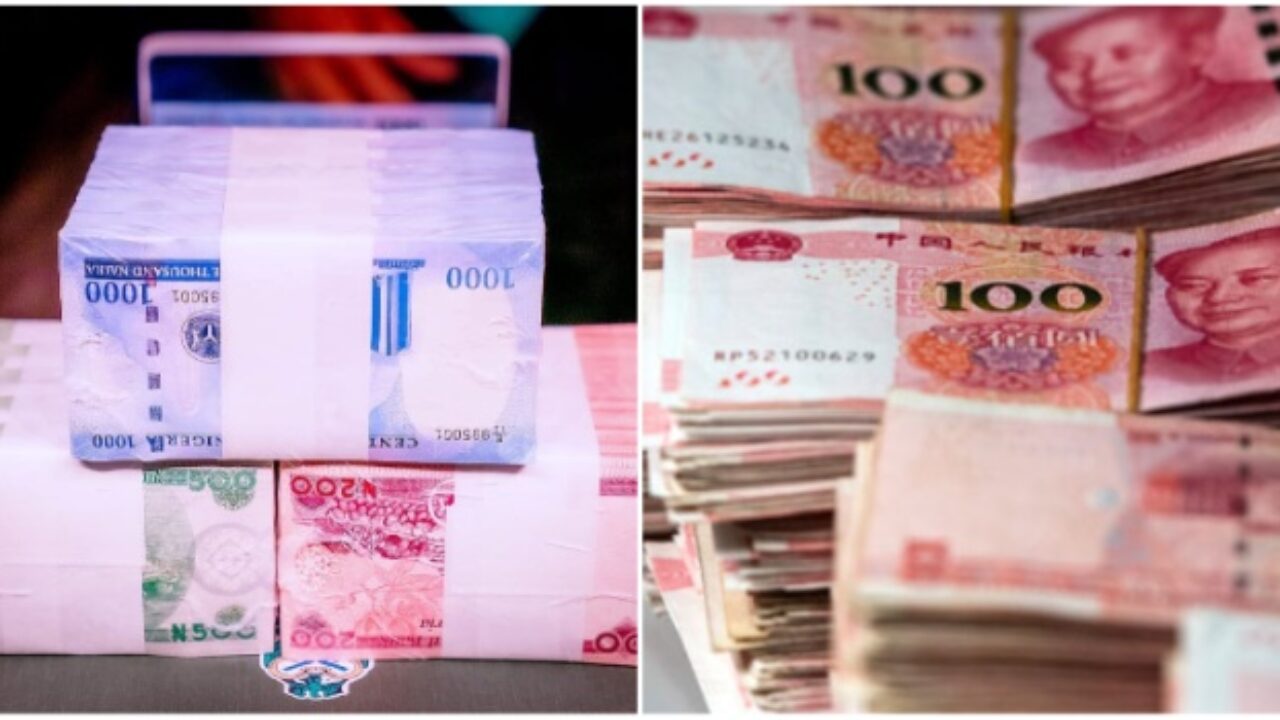
Foreign Exchange (FX) demand pressure eased on the Naira on Wednesday, April 8, in the Nigerian Autonomous Foreign Exchange Market (NAFEX) after gaining N14.84 or 1.07 per cent against the greenback to quote at N1,371.82/$1 compared with the previous day’s N1,386.66/$1.
Also, the local currency appreciated against the Euro in the same market window at midweek by N1.54 to close at N1,604.07/€1 versus Tuesday’s closing rate of N1,605.61/€1, but lost N6.26 against the Pound Sterling to trade at N1,844.83/£1 versus N1,838.57/£1.
In the parallel market, the exchange rate of the Naira to the US Dollar remained unchanged yesterday at N1,410/$1, according to data sourced by Business Post.
There were indicators that the official FX market experienced a liquidity surge, which eased worries around the dominant US Dollar on Wednesday, as the Central Bank of Nigeria (CBN) revealed interbank deals rose to 220 from 71 reported the previous day.
The domestic currency has been in strong demand from foreign portfolio investors seeking to purchase OMO bills and other fixed-income instruments.
Forecasts also show that the local currency will remain relatively stable during the second quarter of the year, trading within the N1,340 to N1,430 per Dollar band on improved FX liquidity, stronger oil earnings, and rising external reserves, which have climbed above 50 billion dollars.
As for the cryptocurrency market, it fell after an initial ceasefire-fueled rally, with markets retracing Wednesday’s “ceasefire euphoria” as cracks emerge in the US-Iran truce while the Strait of Hormuz remains effectively closed.
Global risk assets face renewed pressure as geopolitical uncertainty combines with what analysts call “uncoordinated tightening” by major central banks, reinforcing higher-for-longer interest-rate expectations.
The price of Cardano (ADA) fell by 4.7 per cent to $0.2500, Ripple (XRP) slumped 3.7 per cent to $1.33, Dogecoin (DOGE) shrank by 3.5 per cent to $0.0915, Binance Coin (BNB) slipped 2.6 per cent to $600.02, Ethereum (ETH) went down by 2.5 per cent to $2,183.82, Solana (SOL) dipped 2.5 per cent to $82.24, and Bitcoin (BTC) depreciated by 1.1 per cent to $70,995.20.
However, TRON (TRX) appreciated by 0.4 per cent to $0.3173, while the US Dollar Tether (USDT) and the US Dollar Coin (USDC) remained unchanged at $1.00 apiece.

By Dipo Olowookere
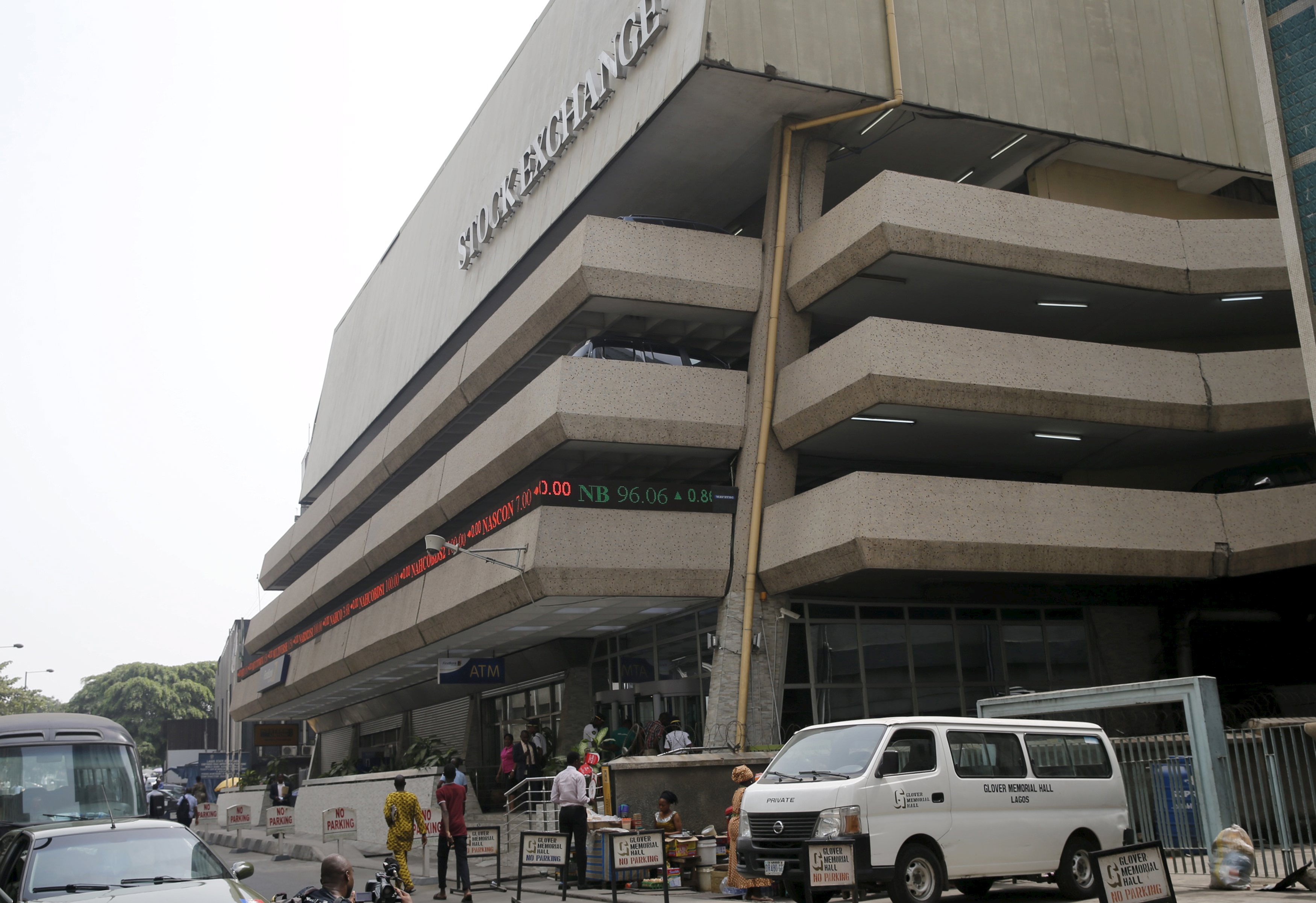
The Nigerian Exchange (NGX) Limited rallied by 0.28 per cent on Wednesday despite weak investor sentiment, as the bourse ended with 18 price gainers and 38 price losers, implying a negative market breadth index.
The growth recorded yesterday by Customs Street was influenced by the 2.11 per cent rise posted by the energy index, and the 1.79 per cent jump achieved by the banking sector.
The other sectors experienced profit-taking, with the consumer goods losing 1.07 per cent, the insurance counter down by 0.36 per cent, and the industrial goods space down by 0.19 per cent.
Universal Insurance chalked up 10.00 per cent to sell for N1.21, Omatek improved by 9.78 per cent to N2.47, VFD Group expanded by 9.71 per cent to N11.30, CWG appreciated by 9.64 per cent to N21.05, and Livestock Feeds gained 9.56 per cent to close at N7.45.
On the flip side, UPDC REIT lost 10.00 per cent to settle at N6.75, Fortis Global Insurance shed 9.92 per cent to quote at N1.18, Deap Capital depreciated by 9.85 per cent to N5.40, Chams went down by 9.47 per cent to N3.06, and Japaul declined by 8.82 per cent to N3.10.
Yesterday, the All-Share Index (ASI) went up by 562.43 points to 202,585.53 points from 202,023.10 points, and the market capitalisation advanced by N389 billion to N130.404 trillion from N130.015 trillion.
During the session, 1.0 billion stocks worth N40.6 billion exchanged hands in 52,723 deals compared with the 1.1 billion stocks valued at N40.3 billion executed in 78,006 deals a day earlier, indicating an uptick in the trading value by 0.74 per cent, and a shortfall in the trading volume and number of deals by 9.09 per cent and 32.41 per cent apiece.
The activity chart was led by Access Holdings, which sold 233.0 million units valued at N6.1 billion, Fidelity Bank exchanged 113.1 million units worth N2.2 billion, Wema Bank recorded a turnover of 103.3 million units valued at N2.7 billion, Zenith Bank transacted 60.6 million units for N6.5 billion, and Chams traded 47.5 million units worth N154.6 million.
-
 Feature/OPED6 years ago
Davos was Different this year
-
Travel/Tourism10 years ago
Lagos Seals Western Lodge Hotel In Ikorodu
-

 Showbiz3 years ago
Estranged Lover Releases Videos of Empress Njamah Bathing
-
 Banking8 years ago
Sort Codes of GTBank Branches in Nigeria
-

 Economy3 years ago
Subsidy Removal: CNG at N130 Per Litre Cheaper Than Petrol—IPMAN
-

 Banking3 years ago
Sort Codes of UBA Branches in Nigeria
-

 Banking3 years ago
First Bank Announces Planned Downtime
-

 Sports3 years ago
Highest Paid Nigerian Footballer – How Much Do Nigerian Footballers Earn