Connect with us

Economy

Uzoka-Anite Warns Against Inflation Risks from Oil, Gas Earnings Surge

Published

on

Nigeria’s Headline Inflation

By Adedapo Adesanya

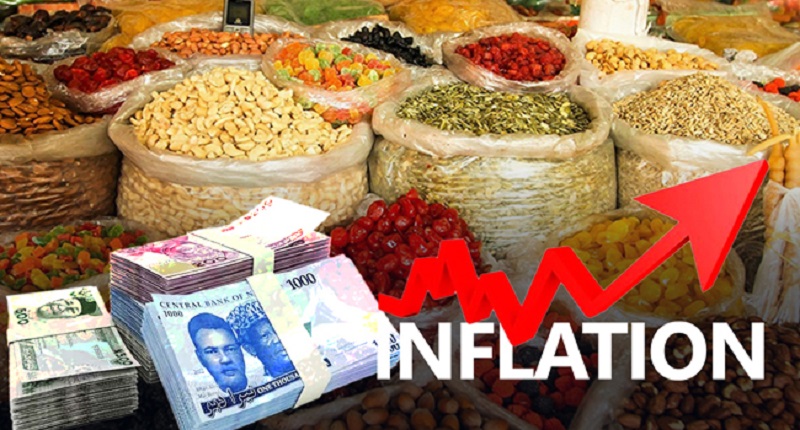
The Minister of State for Finance and chairman of the Federation Account Allocation Committee (FAAC), Mrs Doris Uzoka-Anite, has cautioned that a projected surge in oil and gas revenues following President Bola Tinubu’s latest executive order could trigger inflationary pressures and exchange rate volatility if not carefully managed.

She said that the recent executive order mandating the direct remittance of certain oil sector revenues to the federation account would provide regulatory clarity and significantly strengthen revenues accruing to the federation account, but warned that sudden liquidity injections into the economy may complicate monetary policy coordination with the Central Bank of Nigeria and erode the real value of allocations to federal, state and local governments.

While addressing members of FAAC in Abuja, Mrs Uzoka-Anite commended President Tinubu on the order, describing the development as a structural fiscal correction aimed at restoring constitutional discipline to petroleum revenue management and enhancing distributable income across the three tiers of government.

She said that the revenue outlook was improving due to ongoing structural reforms introduced by the Federal Government.

According to her, the newly implemented tax reform measures are broadening the tax base, improving compliance and enhancing administrative efficiency.

“Also, the executive order signed by Mr President on February 13 is reinforcing revenue discipline in the oil and gas sector and reducing leakages,” she said.

The minister said that the order suspends the 30 per cent allocation to the Frontier Exploration Fund (FEF) and suspends the 30 per cent management fee on oil and gas profit payable to NNPC Limited.

She said that the order also directed that gas flare penalties be paid into the federation account, and mandated full remittance of petroleum revenues without unconstitutional deductions.

Mrs Uzoka-Anite said that the reform marks a shift from a retention-based oil revenue model to a gross remittance, federation-first model.

“The implications for FAAC are very significant; more oil and gas profit will now flow directly into the federation account.

“Gas flare penalties will become distributable revenue, and previously retained management fees will no longer reduce remittable inflows,” she said.

She said that the reforms were expected to result in higher monthly gross inflows into the federation account, and increased allocations to federal, state and local governments.

The minister said that a retrospective audit of the FFF, the Midstream and Downstream Gas Infrastructure, was due, and NNPC management fee deductions could lead to recoveries that may provide a one-off fiscal boost.

She welcomed the improved revenue outlook and cautioned against the risks associated with sudden liquidity injections.

“Experience shows that when revenues rise sharply and are distributed fully and immediately, large liquidity injections can increase inflationary pressures, complicate monetary management and reduce the real purchasing power of allocations,” she said.

She said that excess aggregate demand, exchange rate pressure, asset price distortions and inflationary risks could arise if increased inflows were not carefully managed.

Mrs Uzoka-Anite said that to mitigate such risks, she proposed phased disbursement of one-off recoveries.

She suggested that retrospective recoveries be staggered rather than injected into the economy in bulk, with a portion temporarily warehoused in a stabilisation buffer.

She also recommended strengthening the excess crude and stabilisation buffer mechanism to channel part of incremental inflows into a fiscal stabilisation window.

“This could offset revenue shortfalls in weaker months and reduce procyclicality in spending.

According to her, enhanced coordination with the CBN would be pursued to align fiscal injections with liquidity management tools and support open market operations where necessary.

Mrs Uzoka-Anite urged states and federal Ministries, Departments and Agencies (MDAs) to prioritise capital expenditure over recurrent expenditure.

She called for investment in infrastructure, agriculture, energy and other productive sectors, and avoid unsustainable wage or consumption spikes.

“Productive spending expands supply capacity and mitigates inflation,” she said.

She also announced plans to introduce monthly revenue transparency dashboards, production-to-remittance reconciliation reporting, and clear reporting of incremental inflows arising from tax reforms and the executive order.

The junior finance minister said that the reforms presented an opportunity to deepen fiscal federalism, enhance distributable revenue, restore constitutional clarity and strengthen trust among tiers of government.

She also advised that increased revenue must not translate into fiscal complacency.

“We must resist the temptation to treat incremental inflows as permanent windfalls. We should reduce debt burdens, clear arrears responsibly, build buffers and invest in growth-enhancing sectors,” she said.


Adedapo Adesanya is a journalist, polymath, and connoisseur of everything art. When he is not writing, he has his nose buried in one of the many books or articles he has bookmarked or simply listening to good music with a bottle of beer or wine. He supports the greatest club in the world, Manchester United F.C.

Economy

Nigerian Equity Market Surpasses N145trn After 1.30% Expansion

Published

on

Nigerian equity market

By Dipo Olowookere

The Nigerian equity market showed no signs of slowing down, as it further appreciated by 1.30 per cent on Friday on the back of sustained buying pressure.

Unlike the preceding sessions, investor sentiment was bullish yesterday after the Nigerian Exchange (NGX) Limited ended with 43 price gainers and 26 price losers, implying a positive market breadth index, the first this week.

UPDC gained 10.00 per cent to close at N4.40, Academy Press also appreciated by 10.00 per cent to quote at N7.70, Haldane McCall improved by 9.97 per cent to N3.97, Zichis soared by 9.94 per cent to N15.60, and Wema Bank added 9.84 per cent to settle at N31.25.

Conversely, Meyer lost 9.92 per cent to sell for N16.80, Trans-Nationwide Express also crashed by 9.92 per cent to end at N7.90, C&I Leasing slipped by 8.53 per cent to N5.90, Omatek dipped by 7.34 per cent to N2.02, and eTranzact decreased by 5.28 per cent to N17.05.

When the bourse closed its doors to business, the All-Share Index (ASI) rose by 2,884.81 points to 225,722.49 points from 222,837.68 points, and the market capitalisation grew by N1.858 trillion to N145.335 trillion from N143.477 trillion.

A look at the activity chart showed that market participants transacted 627.6 million shares worth N44.5 billion in 55,232 deals during the trading day compared with the 667.9 million shares valued at N38.1 billion traded in 53,062 deals a day earlier.

This indicated that the volume of transactions went down by 6.03 per cent, the value of trades went up by 16.80 per cent, and the number of deals jumped by 4.09 per cent.

Access Holdings closed the session as investors’ toast, with a turnover of 75.6 million units worth N2.4 billion. UBA transacted 43.1 million units valued at N2.3 billion, Wema Bank exchanged 41.5 million units for N1.3 billion, Zenith Bank traded 38.4 million units valued at N5.2 billion, and Universal Insurance sold 29.5 million units for N35.9 million.

Continue Reading

Economy

Oyedele Eyes Fiscal Discipline, Investor-friendly Environment, Fair Taxation

Published

on

taiwo oyedele wale edun

By Aduragbemi Omiyale

Mr Taiwo Oyedele has set some goals he intends to achieve as Nigeria’s Minister of Finance and Coordinating Minister of the Economy.

While taking over from his predecessor, Mr Wale Edun, on Thursday, the tax expert assured that he has no plans to overturn some of the reforms already put in place by the former occupier of the seat.

In a message on Friday, he emphasised that, “Our immediate task is to consolidate these gains, deepen ongoing reforms, and ensure they translate into tangible benefits for all Nigerians.”

He promised to ensure fiscal discipline by embracing transparent and prudent management of public resources, while also harmonising revenue administration, broadening the tax base, reducing the burden on the vulnerable population, and supporting economic growth.

Mr Oyedele further said his other strategic priorities include creating a predictable and investor-friendly environment anchored on policy coherence, consistency, and clarity; and aligning efforts across all tiers and institutions to maximise policy impact.

He also said efforts would be made to deepen collaboration with the private sector and other key stakeholders for data-driven policy design, co-implementation, and feedback for continuous improvement.

According to him, “Good policy design alone is not enough; success will be defined by execution. We are committed to disciplined implementation, accountability, and measurable results.”

“I look forward to working with colleagues across government, the private sector, and all Nigerians as we move from reform to result, accelerate growth and build a more stable, inclusive, and prosperous economy,” he stated.

Continue Reading

Economy

NASD Bourse Edges Up 0.23% as NSI Nears 3,970 Points

Published

on

NASD OTC Bourse

By Adedapo Adesanya

The NASD Over-the-Counter (OTC) Securities Exchange further appreciated by 0.23 per cent on Thursday, April 23, with the Unlisted Security Index (NSI) adding 8.99 points to close at 3,969.96 points against the previous day’s 3,968 points.

The rise in the share price of Central Securities Clearing System (CSCS) Plc by N2.86 to N69.34 per unit from N66.48 per unit raised the market capitalisation of the NASD bourse by N5.38 billion to N2.380 trillion from N2.375 trillion.

Yesterday, there were two price losers, led by Food Concepts Plc, which lost 29 Kobo to sell at N2.65 per share versus N2.94 per share, while UBN Property Plc dipped by 22 Kobo to N2.03 per unit from N2.25 per unit.

During the session, the volume of securities traded declined by 97.9 per cent to 451,522 units from 21.5 million units on Wednesday, the value of securities depreciated by 52.32 per cent to N23.6 million from N49.5 million, and the number of deals depreciated by 3.6 per cent to 27 deals from 28 deals.

At the close of business, Great Nigeria Insurance (GNI) Plc remained the most active stock by value on a year-to-date basis with 3.4 billion units valued at N8.4 billion, followed by CSCS Plc with 59.5 million units exchanged for N4.0 billion, and Okitipupa Plc with 27.8 million units traded for N1.9 billion.

GNI Plc also closed the day as the most traded stock by volume on a year-to-date basis with 3.4 billion units worth N8.4 billion, trailed by Resourcery Plc with 1.1 billion units transacted for N415.7 million, and Infrastructure Guarantee Credit Plc with 400 million units sold for N1.2 billion.

Continue Reading

Trending