
Economy
We Are Determined To Protect SMEs—Shettima

By Adedapo Adesanya
The Vice President, Mr Kashim Shettima, has said the federal government under President Bola Ahmed Tinubu’s watch will never shift ground in its determination to protect businesses in Nigeria.
In a statement signed by Mr Stanley Nkwocha, the Senior Special Assistant on Media and Communications, the VP said enterprises are not only the bedrock of a society but also reflect the direction the government is heading and the speed with which it is doing so.
The VP who stated this on Wednesday while commissioning the corporate headquarters of the Small and Medium Enterprise Development Agency of Nigeria (SMEDAN) in Abuja, noted that the government was strategically focusing on job creation, capital accessibility, economic growth, and poverty eradication to revamp the economy.
Mr Shettima said, “Allow me to emphasise the importance of this moment: there is no more fitting time than now to reinforce the protection of enterprises in Nigeria. These enterprises not only stand as the very bedrock of our society but also reflect the direction the government is headed and the velocity with which we do so.
“This moment solidifies His Excellency President Bola Ahmed Tinubu’s assurance to protect our enterprises. It resonates deeply within our economic revitalisation plan. His focus on job creation, capital accessibility, economic growth, and poverty eradication forms the very skeleton of our strategy to invigorate the economy. Inevitably, this path demands tough decisions, yet ones essential to our success.”
The VP also recalled that he had inaugurated the National MSME Council ten days ago, saying it was just the beginning that sets the stage for what is up ahead.
Explaining how President Tinubu intends to make sure businesses and other economic enterprises prosper in the country, VP Shettima said, “Notably, our partnership with the Bank of Industry to unveil a N75 billion, 9 per cent interest loan accessible to Nigerian MSMEs as of January 2024 is a pivotal stride. This initiative is geared towards fostering a more conducive and enabling business environment.
“This government doesn’t just boast some of the nation’s finest talents; it champions those invested in ensuring our business owners have front-row seats in our journey towards progress. Our goal is to cultivate an ecosystem where Nigerian businesses become regular features in globally recognized publications such as Forbes, Bloomberg, and the Financial Times for the right reasons.
“We are all well aware that Mr President’s readiness to take action has never faltered, and what we are witnessing here is just a component of the strategies in place to create a future brimming with endless opportunities.”
The Vice President congratulated the Minister of Industry, Trade, and Investment, Mrs Doris Uzoka-Anite, and the leadership of SMEDAN, saying they have proven that they are ready to transform “concepts into tangible actions.
“This initiative renews hope for a critical segment of our entrepreneurial community, and highlights our sensitivity to the economic clock of the nation,” he added.
On her part, Mrs Uzoka-Anite thanked the VP for his unwavering support of MSMEs in the country, noting that the completion and commissioning of the new SMEDAN Complex was a clear demonstration of the commitment of the administration to the development of the MSME space.
She also outlined other initiatives of the federal government targeted at building capacity and linking MSMEs to markets at home and abroad.
For his part, the Director General of SMEDAN, Mr Charles Odii, thanked the Vice President for his support and guidance in the actualisation of the project and leadership in the MSME space.
He said the agency and the entire MSME community in Nigeria have recorded significant achievements within a short period under the leadership of the VP, assuring that the agency will continue to collaborate with sister organisations to ensure sustainable growth in the sector.









By Adedapo Adesanya
The NASD Over-the-Counter (OTC) Securities Exchange declined by 0.95 per cent on Thursday, April 9, plunging the Unlisted Security Index (NSI) by 37.41 points to 3,893.50 points from 3,930.91 points.
In the same vein, the market capitalisation lost N22.38 billion during the session to N2.329 trillion from the N2.351 trillion it ended at midweek.
The OTC securities exchange was under selling pressure yesterday, resulting in a negative market breadth index after three securities lost weight and one gained weight.
Central Securities Clearing System (CSCS) Plc led the losers’ table after it shed N3.74 to sell at N64.21 per unit versus N67.95 per unit. Food Concepts Plc went down by 19 Kobo to N2.68 per share from N2.87 per share, and Free Range Farms Plc dropped 10 Kobo to settle at 90 Kobo per unit versus N1.00 per unit.
On the flip side, MRS Oil gained N5 to close at N165.00 per share compared with the preceding day’s N160.00 per share.
At the trading session, there was a 23.5 per cent jump in the value of securities to N40.4 million from N32.7 million, but the volume of securities fell by 81.9 per cent to 1.04 million units from 5.7 million units, and the number of deals went down by 29.7 per cent to 26 deals from the preceding session’s 37 deals.
At the close of transactions, Great Nigeria Insurance (GNI) Plc remained the most active stock by value on a year-to-date basis with 3.4 billion units valued at N8.4 billion, followed by CSCS Plc with 57.5 million units exchanged for N3.9 billion, and Okitipupa Plc with 27.5 million units traded for N1.8 billion.
Also, GNI Plc ended the trading day as the most traded stock by volume on a year-to-date basis with the sale of 3.4 billion units worth N8.4 billion, trailed by Resourcery Plc with 1.1 billion units worth N415.7 million, and Infrastructure Guarantee Credit Plc with 400 million units sold for N1.2 billion.
By Adedapo Adesanya
The Naira further appreciated against the US Dollar in the various segments of the foreign exchange (FX) market on Thursday, April 9.
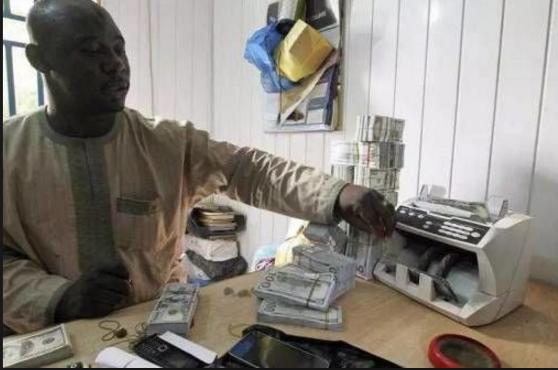
At the black market, the Nigerian currency improved its value yesterday by N20 to quote at N1,390/$1 compared with the previous day’s rate of N1,410/$1.
In the Nigerian Autonomous Foreign Exchange Market (NAFEX) window, the domestic currency gained N12.50 or 0.9 per cent against the greenback to trade at N1,359.32/$1, in contrast to midweek’s price of N1,371.82/$1.
In the same official market, the local currency gained N14.89 against the Euro to sell at N1,589.18/€1 versus N1,604.07/€1, and traded flat against the Pound Sterling at N1,844.83/£1.
Data from the Central Bank of Nigeria (CBN) showed that turnover increased to N71.156 million across 115 deals, suggesting that banks’ customers’ demand for foreign payments eased slightly on the day.
The local currency has been in strong demand from foreign portfolio investors seeking to purchase OMO bills and other fixed-income instruments.
External reserves, which provide the CBN with firepower to support the currency, declined for the 13th consecutive session, falling by about $840 million to $49.18 billion as of April 1 from $50.02 billion recorded on March 11, according to CBN data.
The persistent drawdown reflects mounting external pressures tied to heightened geopolitical tensions in the Middle East, which analysts say have dampened investor appetite for frontier markets and weakened capital inflows into Nigeria.
In the cryptocurrency market, prices tapped into optimism as geopolitical tensions over a fragile Iran ceasefire and a partial reopening of the Strait of Hormuz keep markets cautious and oil prices volatile.
Market analysts noted that if the ceasefire survives through the weekend and the Strait opens further, momentum will build for risk assets like crypto. However, if Iran’s grievances escalate or President Donald Trump’s rhetoric shifts, prices may crater.
Bitcoin (BTC) appreciated by 1.6 per cent to $71,989.47, Dogecoin (DOGE) expanded by 1.5 per cent to $0.0928, Solana (SOL) added 1.4 per cent to sell for $83.34, Ripple (XRP) jumped 1.1 per cent to $1.34, Cardano (ADA) went up by 0.8 per cent to $0.2518, TRON (TRX) grew by 0.7 per cent to $0.3195, Ethereum (ETH) increased by 0.6 per cent to $2,192.07, and Binance Coin (BNB) climbed 0.4 per cent to $601.29, while the US Dollar Tether (USDT) and the US Dollar Coin (USDC) remained unchanged at $1.00 each.


By Dipo Olowookere
The Nigerian Exchange (NGX) further gained 0.28 per cent on Thursday amid sustained bargain-hunting across the key sectors of the market.
According to data, the banking counter appreciated by 1.12 per cent, the insurance index went up by 0.67 per cent, the consumer goods sector improved by 0.44 per cent, the energy space grew by 0.43 per cent, and the industrial goods segment expanded by 0.18 per cent.
Consequently, the All-Share Index (ASI) increased by 87.03 points to 202,672.56 points from 202,585.53 points and the market capitalisation added N55 billion to settle at N130.459 trillion compared with Wednesday’s N130.404 trillion.
Business Post reports that the market breadth index was flat yesterday, with 31 price gainers and 31 price losers.
Trans Nationwide Express gained 9.94 per cent to close at N3.43, International Energy Insurance appreciated by 9.84 per cent to N3.46, UPDC REIT advanced by 9.63 per cent to N7.40, Guinea Insurance rose by 9.52 per cent to N1.15, and Regency Alliance went up by 9.52 per cent to N1.07.
On the flip side, Living Trust Mortgage Bank lost 10.00 per cent to trade at N4.32, RT Briscoe crashed by 9.94 per cent to N8.88, Tantalizers contracted by 9.55 per cent to N3.98, Livestock Feeds moderated by 9.40 per cent to N6.75, and VFD Group retreated by 8.85 per cent to N10.30.
The most active stock for the day was Access Holdings with 121.7 million units worth N3.2 billion, GTCO transacted 62.3 million units valued at N8.1 billion, Chams exchanged 60.7 million units for N187.4 million, Zenith Bank traded 43.7 million units worth N4.9 billion, and UBA sold 29.0 million units valued at N1.3 billion.
At the close of business, market participants bought and sold 652.9 million units for N39.8 billion in 51,101 deals compared with the 1.0 billion units worth N40.6 billion transacted in 52,723 deals at midweek, indicating a decline in the trading volume, value, and number of deals by 34.71 per cent, 1.97 per cent, and 3.08 per cent, respectively.
-
 Feature/OPED6 years ago
Davos was Different this year
-
Travel/Tourism10 years ago
Lagos Seals Western Lodge Hotel In Ikorodu
-

 Showbiz3 years ago
Estranged Lover Releases Videos of Empress Njamah Bathing
-
 Banking8 years ago
Sort Codes of GTBank Branches in Nigeria
-

 Economy3 years ago
Subsidy Removal: CNG at N130 Per Litre Cheaper Than Petrol—IPMAN
-

 Banking3 years ago
Sort Codes of UBA Branches in Nigeria
-

 Banking3 years ago
First Bank Announces Planned Downtime
-

 Sports3 years ago
Highest Paid Nigerian Footballer – How Much Do Nigerian Footballers Earn