Banking
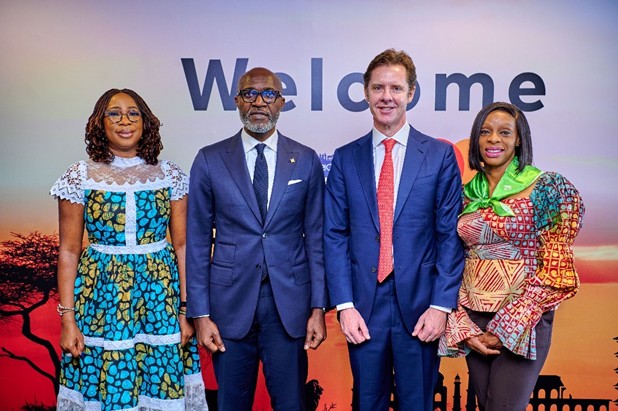
Access Bank and Mastercard: Enabling Seamless Africa-Global Payments
In today’s interconnected world, seamless cross-border payments are vital for economic growth, business expansion, and personal empowerment. For decades, millions of Africans faced steep barriers in sending or receiving money internationally: high fees, opaque exchange rates, and long delays that made transactions uncertain and costly. Whether theyare students paying tuition abroad or traders settling import bills and families depending on remittances, these challenges have touched every layer of society.
Africa’s fragmented payments landscape, marked by multiple currencies, varying regulations, and limited banking infrastructure, has long slowed financial inclusion. In this system, a trader in Lagos might wait weeks for funds from Nairobi, while a Ghanaian student in the United States could lose a significant portion of tuition to intermediary charges. For many, especially in rural or informal sectors, formal banking channels were out of reach, forcing reliance on informal and risky alternatives.
Recognising the need for change, Access Bank, one of Africa’s largest and most innovative financial institutions, has partnered MasterCard, a global payments leader, to reimagine how money moves across borders. The collaboration aims to make cross-border payments faster, cheaper, and more transparent, empowering individuals and businesses to participate more fully in the global economy.
“By combining our strengths, we can unlock new opportunities, bridge the financial divide, and create a more inclusive and prosperous future for all Africans,” says Robert Giles, Senior Advisory, Retail Banking at Access Bank.
The partnership leverages Access Bank’s extensive African footprint and its Access Africa platform alongside MasterCard’s global network, treasury infrastructure, and advanced technology, particularly through the Mastercard Move system. Together, they have built an ecosystem that finally delivers on the promise of speed, convenience, and reliability.
The solution is designed to be inclusive and versatile, allowing users to send and receive money via multiple channels: bank accounts, cards, mobile wallets, and even cash. Whether a student in Ghana paying tuition in Europe, a trader in Lagos importing goods from China, or a family in Kenya receiving remittances, cross-border transactions are now simpler and safer.
For MasterCard, the goal extends beyond expanding services; it is about deepening financial inclusion. “This partnership transforms payment experiences, extending MasterCard’s digital ecosystem to ensure millions from underserved communities can participate in the evolving digital economy,” says Mark Elliott, Mastercard’s Division President for Africa.
The alliance builds on mutual strengths, Access Bank’s deep local knowledge and MasterCard’s global reach, to create a seamless payments corridor connecting Africa to the world.
A critical element of this innovation is the technical integration led by Fable Fintech, a MasterCard Express Partner under the Move Programme. Integrating Access Bank’s operations across multiple African markets was a massive undertaking, given diverse currencies and regulatory frameworks. The result is a unified cross-border payment experience, reducing complexity and delays.
“We were fortunate to be the fulcrum of the seamless multi-country integration of one of Africa’s largest banks using MasterCard’s cross-border assets,” a Fable Fintech representative noted. The platform now supports real-time or near-real-time transactions, offering resilience, scalability, and strong fraud protection.
Apart from technology, this partnership signals a paradigm shift, from dependency to empowerment, from financial fragmentation to unity. By democratising access to affordable and transparent payments, Access Bank and MasterCard are enabling millions of Africans to engage in international trade, education, and family support. The impact is tangible: faster transactions, lower costs, and increased financial inclusion.
Already, the ripple effects are visible. Informal traders in Kigali now use formal financial channels instead of risky agents. SMEs in Nairobi can settle invoices with international clients more predictably. Families in Accra receive remittances with less worry about lost payments, while students overseas manage tuition with ease. Each transaction strengthens Africa’s participation in global commerce.
The partnership also prioritises financial literacy and empowerment. Recognising that technology alone isnot enough, Access Bank and MasterCard are educating users on digital payments, security, and the benefits of financial inclusion, particularly in underserved communities where awareness gaps remain.
The collaboration aligns with broader socio-economic goals such as job creation, poverty reduction, and gender inclusion. By expanding access to finance, it empowers women entrepreneurs, youth, and small businesses to thrive. A woman running a rural enterprise can now receive payments from clients abroad and reinvest in her community; a young professional can more easily fund studies or start a venture. The result is a more inclusive and resilient African economy.
This initiative also complements Access Bank’s wider sustainability agenda, seen in projects like the Access Clean Water Initiative, which integrates financial inclusion with social impact. The Bank’s approach underscores that responsible banking and profitability can go hand in hand.
Access Bank and MasterCard are looking at scaling their innovation, embrace emerging technologies, and deepen collaborations with governments and development partners to expand access even further. As Africa’s economies evolve, agile and secure payment systems will be essential to sustaining growth.
The partnership stands as example of what is possible when business, technology, and purpose converge. By harnessing shared vision and innovation, Access Bank and MasterCard are redefining Africa’s role in the global payments ecosystem, breaking down financial barriers and enabling millions to connect, trade, and thrive across borders.
Banking
How Access Bank is Supporting Women Driving Africa’s Growth Story
Across Africa, women are fast becoming the heartbeat of economic transformation. From bustling open-air markets to high-tech boardrooms, women-led enterprises are redefining what is possible for the continent’s future. Whether as market traders expanding their reach through digital platforms, tech founders scaling innovations across borders, or artisans turning local crafts into global brands, women’s contributions are now central to Africa’s economic resurgence.
Even as they break new ground, many still face formidable barriers. Access to finance, mentorship, business education, and supportive networks remains limited. Structural issues such as weak property rights, gender bias, and inadequate legal protections often hinder women from securing loans or expanding their businesses. Consequently, many women-owned ventures remain small, informal, and vulnerable to economic shocks.
Recognising both the promise and the obstacles, Access Bank has positioned itself at the forefront of empowering women across the continent. Recently named Africa’s Best Financier for Female Entrepreneurs by the EMEA Finance Awards, the Bank has earned global recognition for its commitment to inclusion, innovation, and sustainable impact.
At the centre of this effort is the W Initiative, one of Africa’s most comprehensive women-focused banking programmes. Unlike conventional banking, it combines finance with mentorship, training, and community support, acknowledging that true empowerment requires more than access to capital. The initiative meets women wherever they are on their entrepreneurial journey, from start-ups to growing enterprises and corporate leadership.
The W Power Loan offers affordable credit with flexible terms, enabling women to invest in expansion, inventory, or technology. The W Academy provides leadership and business training on financial literacy, marketing, and regulatory compliance, while the W Community connects women to peers, mentors, and role models across industries.
Importantly, these offerings extend beyond urban centres. From microloans sustaining traders in rural markets to leadership programmes developing female executives in multinational firms, Access Bank’s approach is deliberately inclusive. By partnering NGOs, business associations, and government agencies, it reaches women in underserved communities, ensuring participation in Africa’s economic rise.
The results are evident. Thousands of women have accessed credit, training, and networks through the Bank’s initiatives, enabling them to launch and scale businesses, create jobs, and uplift their communities. The ripple effects are far-reaching: increased household income, improved family wellbeing, and greater economic resilience. Women who once faced daunting barriers now serve as role models and change-makers, inspiring others to follow their path.
Studies show that when women thrive, societies prosper. The World Bank and African Development Bank note that empowering women fuels GDP growth, improves health outcomes, and enhances social stability. By directly addressing structural gaps in access to finance and information, Access Bank helps to unlock this transformative potential.
Apart from supporting entrepreneurs, Access Bank promotes gender inclusion within its own organisation. Its leadership pipeline identifies and advances talented women, while mentorship and wellness programmes help female professionals thrive. The Bank also uses public platforms, from conferences to policy dialogues, to share success stories and advocate for gender diversity across sectors.
The EMEA Finance recognition thus goes beyond trophies and titles; it affirms that profitability and purpose can coexist. For Access Bank, supporting women’s advancement is smart economics. By embedding inclusion into its DNA, the Bank is shaping a financial ecosystem that views women as equal partners in progress.
Access Bank’s influence also extends into advocacy. Through forums, roundtables, and research collaborations, the Bank engages policymakers, civil society, and business leaders to identify and dismantle barriers facing women entrepreneurs. Its campaigns amplify women’s voices, spotlighting their achievements and driving conversations around inclusive growth.
Banking
AICIF Honours The Alternative Bank for Innovation
By Aduragbemi Omiyale
The Alternative Bank (AltBank) has won the Innovative Bank of the Year award at the 7th African International Conference on Islamic Finance (AICIF) in Lagos.
The Executive Director for South at The Alternative Bank, Mrs Korede Demola-Adeniyi, said, “This award affirms what we’ve always believed, that innovation and integrity can coexist at the heart of banking.
“It reflects the trust our clients place in us and our shared vision of a more sustainable and inclusive future,” she added.
Chairman of the AICIF Award Panel, Professor AbdulRazzaq Alaro, praised the transparency of the process, commending the awardees for their significant contributions to advancing interest-free financing for Africans.
“The AICIF awards are a special way of recognising the exceptional innovation and dedication demonstrated by individuals and organisations in advancing Islamic finance across Africa,” he said.
AICIF has long been a cornerstone for intellectual discourse and professional excellence in finance across Africa. The awards recognise individuals and organisations that demonstrate exceptional dedication, innovation, and excellence in advancing the principles and practices of non-interest finance.
The lender stands out in Nigeria’s banking sector by combining non-interest principles with cutting-edge digital solutions. Launched as a non-interest window in 2014 and officially licensed as a bank in 2023, the bank has positioned itself as an industry leader.
Its offerings, such as the AltElite premium banking suite and an innovative gold-based rewards system, are redefining banking for a new generation of customers.
By combining non-interest finance principles with advanced digital tools, The Alternative Bank is redefining modern banking for a new generation.
Banking
Access Bank Unveils SME Academy for Entrepreneurs
By Modupe Gbadeyanka
A significant step towards reducing the high failure rate of small businesses in Nigeria has been taken by Access Bank Plc with the launch of an SME Academy.
The financial institution said entrepreneurs will receive adequate training tailored to help them scale up their ventures and remain afloat.
Access Bank said it was coming up with this initiative in Nigeria following its successful rollout in Ghana, which led to measurable improvements in SME performance in the West African neighbouring nation.
It said small business owners would be equipped with essential skills, knowledge, and resources for sustainable growth.
The SME Academy will run multiple times annually, eventually becoming a pipeline for continuous mentorship and engagement.
The maiden cohort focuses on businesses operating for three to four years and looking to scale. The curriculum covers strategic planning, digital marketing, financial management, access to finance, and operational efficiency areas identified as common challenges for Nigerian SMEs.
The Head of Retail Banking at Access Bank, Olumide Olatunji, said, “Given the opportunities within Nigeria’s population and the central role SMEs play in sustaining the economy, it became necessary to bring this initiative home.”
The Group Head of SME Banking at the lender, Ms Abiodun Olubitan, explained that the inaugural edition targets 80 established business owners and is structured as a three-day intensive training.
The programme focuses on strengthening business structures, improving financial readiness, and boosting survival rates in a sector where many firms fail within five years.
“SMEs contribute over 80 per cent to GDP globally, so supporting them is essential. Our research shows that inadequate capital and weak capacity are major reasons businesses collapse. The academy addresses these gaps by providing practical tools entrepreneurs can immediately apply,” she stated.
Although the programme does not include grant funding, Access Bank will offer financing opportunities to participants who demonstrate strong business capacity and bankability after the training.
“Funding is important, but we want to support entrepreneurs who have the capacity to manage it responsibly. The academy helps us build that confidence,” Ms Olubitan added.
Participants praised the initiative for delivering high-quality training at no cost, with the chief executive of TMA Global Consult, Ms Juliet Ike, describing it as a timely opportunity to strengthen her business structures, while Dr Onipidan Adebayo of ShawBC Ventures highlighted the value of receiving business school–level insights for free.
With over 39 million MSMEs contributing more than 80 percent of employment and nearly half of Nigeria’s GDP, Access Bank’s SME Academy arrives at a pivotal moment.
-
Feature/OPED6 years agoDavos was Different this year
-
Travel/Tourism9 years ago
Lagos Seals Western Lodge Hotel In Ikorodu
-
Showbiz3 years agoEstranged Lover Releases Videos of Empress Njamah Bathing
-
Banking7 years agoSort Codes of GTBank Branches in Nigeria
-
Economy2 years agoSubsidy Removal: CNG at N130 Per Litre Cheaper Than Petrol—IPMAN
-
Banking3 years agoFirst Bank Announces Planned Downtime
-
Sports3 years agoHighest Paid Nigerian Footballer – How Much Do Nigerian Footballers Earn
-
Banking3 years agoSort Codes of UBA Branches in Nigeria