Economy
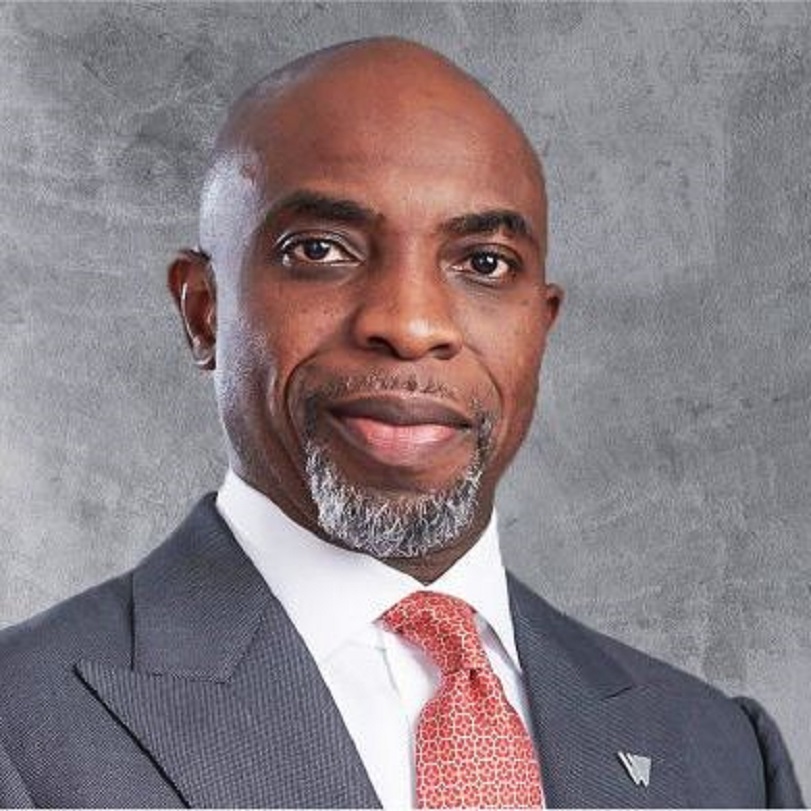
Wema Bank to Pay Biggest Dividend Payout as FY 2022 Earnings Jump 42%
By Aduragbemi Omiyale
The board of Wema Bank Plc has sustained the culture of dividend payout to shareholders since the resumption of cash rewards a few years ago.
Recall that for many years, the banking firm did not pay dividends to investors, but after the management team normalised things, and paid the first dividend in 14 years in 2019 for the 2018 financial year.
For the 2022 fiscal year, the company has proposed to pay a cash reward of 30 Kobo after it delivered a stellar performance as it continues its evolution into an unrivalled market leader and efficient bank.
Business Post reports that if approved by the shareholders at its forthcoming Annual General Meeting (AGM), it would be the biggest dividend payout the innovative bank is paying to date.
A look at the lender’s financial performance last year showed that gross earnings improved by 42.3 per cent to N131.08 billion from the N92.14 per cent posted in 2021.
The results, which showed positive fundamentals across the board, revealed a growth of 44.7 per cent year-on-year in interest income to N106.07 billion from N73.30 billion, as non-interest income shot up by 32.8 per cent to N25.01 billion from N18.83 billion.
Similarly, the bank’s profit before tax grew to an all-time high of N14.74 billion from N12.38 billion, while customer deposits went up by 26 per cent to N1.166 trillion from N927.47 billion in 2021, with the loans and advances growing by 24 per cent to N521.43 billion from N418.86 billion.
The impressive results showed that total assets hit N1.434 trillion as against N1.165 trillion, a growth of 23 per cent, as shareholders’ funds moved up by 17 per cent to N82.62 billion from N70.36 billion.
The Managing Director/Chief Executive Officer of Wema Bank, Mr Moruf Oseni, while commenting on the results, said, “Our 2022 results show the result of the careful execution of our medium-term strategy as we have deliberately focused on deepening on offerings to the corporate, commercial and retail segments of the market using our digital channels while ensuring best-in-class customer experience platforms to deliver improvements across all customer touch points. We expect the bottom line to improve even further in 2023.”
Also speaking, the Chief Finance Officer, Mr Tunde Mabawonku, explained that the bank’s continuous investment in the digital space had positioned it as one of the leaders in providing digital banking services to individuals and corporates across the country.
“It has been a good full-year performance for Wema Bank with gross earnings growing by 42.3 per cent year on year and earnings by share at 87 Kobo,” Mr Mabawonku said, adding that, “We have also succeeded in making Wema Bank an integral part of the fintech ecosystem in the country with our ubiquitous fintech infrastructure support play,”
Economy
Nigerian Stocks Attract N195.3bn Investments in One Week
By Dipo Olowookere
On the floor of the Nigerian Exchange (NGX) Limited last week, 3.588 billion shares valued at N195.313 billion exchanged hands in 254,553 deals, higher than the 3.361 billion shares worth N151.948 billion traded in 229,442 deals a week earlier.
Over a quarter of these transactions were centred around the trio of Sterling Holdco, Access Holdings, and Zenith Bank, which specifically accounted for 1.038 billion stocks worth N46.081 billion in 33,067 deals, contributing 28.92 per cent and 23.59 per cent to the total equity turnover volume and value, respectively.
They helped the financial equities to lead the activity chart with 2.498 billion units sold for N94.005 billion in 111,052 deals, contributing 69.62 per cent and 48.13 per cent to the total trading volume and value, respectively.
Services stocks traded 329.034 million units valued at N3.452 billion in 14,050 deals, and energy shares transacted 152.472million units worth N42.511 billion in 19,022 deals.
In the week, 61 equities appreciated versus 25 equities in the previous week, as 36 stocks depreciated compared with 54 stocks of the preceding week, while 49 shares remained unchanged, in contrast to 67 shares of the previous trading week.
Trans-Nationwide Express gained 60.48 per cent to sell for N6.05, Ecobank appreciated by 46.30 per cent to N67.30, Stanbic IBTC rose by 36.63 per cent to N188.55, Royal Exchange improved by 29.37 per cent to N1,85, and Aradel grew by 28.93 per cent to N1,649.00.
On the flip side, Coronation Insurance lost 14.38 per cent to close at N2.50, Ikeja Hotel declined by 14.36 per cent to N33.40, International Energy Insurance shrank by 13.80 per cent to N3.06, Academy Press slumped by 12.57 per cent to N7.65, and Honeywell Flour crumbled by 11.01 per cent to N19.00.
Business Post reports that the All-Share Index (ASI) went up by 6.57 per cent to 217,167.57 points, and the market capitalisation advanced by 6.60 per cent to N139.827 trillion, as the demand for Nigerian stocks soared.
Also, all other indices finished higher apart from the insurance and growth indices, which fell by 0.04 per cent and 0.99 per cent, respectively.
Economy
Naira Slips to N1,343/$ at NAFEX
By Adedapo Adesanya
The Naira sold at N1,343.64/$1 Nigerian Autonomous Foreign Exchange Market (NAFEX) on Friday, April 17, after shedding N1.34 or 0.10 per cent against the greenback from the previous day’s rate of N1,342.30/$1.
In the same vein, the Nigerian currency depreciated against the Pound Sterling in the same market window during the session by N5.03 to quote at N1,824.39/£1 versus the previous rate of N1,819.36/£1, and lost N10.05 against the Euro to sell at N1,591.14/€1 versus N1,581.09/€1.
At the GTBank FX desk, the exchange rate of the Naira to the Dollar remained unchanged at N1,355/$1, and it also maintained stability in the parallel market at N1,375/$1.
Interbank liquidity increased to N124.34 million from N74.255 million the previous day, data from the Central Bank of Nigeria (CBN) showed.
Meanwhile, external reserves remain at $48.70 billion, down from the 2009 peak of $50 billion amidst uncertainties in the global commodities market.
Global oil prices dropped sharply on Friday after Iran signalled that the Strait of Hormuz would remain open to commercial shipping during a temporary ceasefire in the Middle East.
Crypt assets also gained on the news from Iran’s foreign minister, who declared the Strait of Hormuz open, drawing a positive response from President Donald Trump. The development helped ease worry around risky assets like crypto.
Meanwhile, the cryptocurrency market was bullish, as traders weighed possible scenarios ahead of next week’s US-Iran cease-fire deadline.
Ethereum (ETH) appreciated by 3.2 per cent to $2,410.53, Bitcoin (BTC) jumped by 2.8 per cent to $77,124.22, Ripple (XRP) rose by 2.7 per cent to $1.47, Binance Coin (BNB) expanded by 2.5 per cent to $643.97, Dogecoin (DOGE) added 1.0 per cent to close at $0.0988, Cardano (ADA) improved by 0.9 per cent to $0.2578, Solana (SOL) soared by 0.4 per cent to $88.53, and TRON (TRX) gained 0.4 per cent to sell at $0.3275, while the US Dollar Tether (USDT) and the US Dollar Coin (USDC) traded flat at $1.00 apiece.
Economy
Brent, WTI Tumble Over 9% on Hormuz Reopening Signal
By Adedapo Adesanya
Oil prices plunged by 9 per cent on Friday after Iran said passage for all commercial vessels through the Strait of Hormuz was open for the remaining ceasefire period.
Brent crude futures lost $9.01 or 9.07 per cent to trade at $90.38 a barrel, while the US West Texas Intermediate (WTI) crude futures depreciated by $10.48 or 11.45 per cent to finish at $83.85 a barrel.
Iran said Friday that the Strait of Hormuz is “completely open” for the remainder of the Israel-Lebanon ceasefire, bolstering hopes of a breakthrough in the weeks-long crisis over the crucial oil route.
Iran had maintained its blockade of the strait despite a two-week ceasefire with the US, which expires on Tuesday, and previously said it would not open the key waterway while Israel continued to strike Lebanon.
Business Post had reported that oil prices weakened to around $88 per barrel after Iranian Foreign Minister Seyed Abbas Araghchi posted on X that “all commercial vessels” would be allowed to pass through the strait throughout the remainder of the ten-day ceasefire in Lebanon.
US President Donald Trump thanked Iran on Truth Social, but stressed that the US naval blockade of the regime’s ports would remain “in full force and effect” until a peace deal was completed. “This process should go very quickly in that most of the points are already negotiated,” he added.
A second round of truce talks between the US and Iran is expected to take place as oil tankers are beginning to test the waters at the Strait of Hormuz.
Despite the fact that all ships can sail through the Strait of Hormuz, this passage needs to be coordinated with Iran’s Islamic Revolutionary Guard Corps (IRGC).
Market analysts noted that if these initial tankers make it through, flows will begin to partially normalise. However, a handful of vessels does not equal restored capacity. The backlog alone will take significant time to clear, and producers across the region are still dealing with disrupted output and logistics.
Prices had already fallen earlier in the Friday session as possible further talks between the US and Iran over the weekend and a 10-day ceasefire between Lebanon and Israel raised investors’ hopes that the war in the Middle East could be nearing an end.
The American President also said on Friday that the US has banned Israel from further bombing in Lebanon, using a harsher tone than usual with the longtime US ally.
-
Feature/OPED6 years agoDavos was Different this year
-
Travel/Tourism10 years ago
Lagos Seals Western Lodge Hotel In Ikorodu
-
Showbiz3 years agoEstranged Lover Releases Videos of Empress Njamah Bathing
-
Banking8 years agoSort Codes of GTBank Branches in Nigeria
-
Economy3 years agoSubsidy Removal: CNG at N130 Per Litre Cheaper Than Petrol—IPMAN
-
Banking3 years agoSort Codes of UBA Branches in Nigeria
-
Banking3 years agoFirst Bank Announces Planned Downtime
-
Sports3 years agoHighest Paid Nigerian Footballer – How Much Do Nigerian Footballers Earn