
Economy
What is Behind South Africa’s and Namibia’s Capital Market Developments?


When diamonds and gold were found in South Africa in the late 1800s, the economy was transformed. Following that, a large amount of global money was invested.
The nation has grown a well-developed industrial base in the years after World War II, and it has undergone extremely volatile growth rates, including several years when it was among the highest in the world.
South Africa, on the other hand, has had persistent economic difficulties since the late 1970s, owing to its apartheid policies, which caused many countries to suspend foreign investment and enforce more harsh trade restrictions against it.
Namibia has been classified as a lower-middle-income country with a per capita gross domestic product (GDP) that is slightly higher than the average for Sub-Saharan African countries.
However, the summary is deceptive. Only one-quarter of all Namibians and one-sixth of black Namibians have decent incomes; up to two-thirds of the population lives in abject poverty with inadequate access to public services. Because of a declining productive industry, a shortage of capital stock and serious world market problems for base metals and uranium oxide, economic development remains a challenge.
Furthermore, unless foreign assistance investments quickly turn into significant real inflows and private external investment in mining, manufacturing, and fisheries occurs, the one segment of the GDP that expanded steadily in the 1980s would decrease.
South Africa
The South African Reserve Bank, which is the sole issuing authority for the rand, the national currency, has a well-developed financial structure. It is in charge of monetary policy formulation and implementation, as well as managing foreign exchange trades.
There are several licensed banking institutions, many of which focus on commercial banking, as well as merchant, deposit, and investment banking, to name a few.
The Development Bank of Southern Africa, for example, is a quasi-governmental organization that promotes development programs. The banking market is dominated by private pension and provident funds, as well as more than two dozen insurance providers. The Johannesburg Stock Exchange is the centre of an active capital market.
South Africa, Africa’s second-largest economy after Nigeria, has a GDP that is far greater than that of its sub-Saharan neighbours. The Johannesburg Stock Exchange (JSE), which is 132 years old and has a market capitalization of more than USD1 trillion, is the biggest stock exchange in Africa.
The JSE is a comprehensive and cutting-edge exchange that offers complete electronic trading, clearing, and settlement of stocks, shares, and interest-rate securities, as well as financial, asset, and currency trading in South Africa.
On the JSE, there are approximately 350 companies listed, with industrials being the largest grouping, led by energy companies such as mines and oil companies.
The JSE, on the other hand, is facing strong headwinds. After decades with little competition, the JSE is now being tested by smaller competitors such as ZAR X, a low-cost model launched in 2016 to offer stock access to lower-income individuals.
Since then, new entrants have entered the ring, including A2X, 4AX, and the Equity Express Securities Exchange, which focuses on black economic empowerment. The market is currently focused on the newly implemented ‘twin peaks’ regulatory model, which response to weak financial sector policies and insufficient regulatory supervision.
It is intended to promote consumer trust and stimulate capital formation, much as it was in Australia, where the concept first debuted.
Namibia Profile
The majority of banking activity is handled by two commercial banks, First National Bank of Southern Africa and Standard Bank Namibia (both branches of South African parent companies). Following independence, land, infrastructure, and development banks were reorganized. In the mid-1990s, the Central Bank of Namibia introduced the Namibian dollar as an independent currency to replace the South African rand.
The Namibian Stock Exchange (NSX) currently has 50 listed companies. Namibia has the second-lowest population density of any sovereign nation, with just 2.6 million people.
The NSX was established in 1904 to help finance the country’s diamond rush. The rush was over by 1910, and the exchange was suddenly closed. The NSX did not reopen until 1992, 82 years later, with start-up funding from 36 Namibian companies.
Despite the fact that agriculture and tourism are important parts of the economy, other industries dominate the stock exchange. In reality, three industries account for half of the NSX’s listings: banking (four companies), mining (seven companies), and finance (three companies).
It is only recently that debt has been issued and listed. Namibia had virtually no public debt until 2011. In reality, the nation had one of the lowest debt-to-GDP ratios in the world, at just 16 per cent of GDP. International rating agencies downgraded the country to a sub-investment rating in 2017 due to the dramatic increase in public debt.
Namibian state-owned corporations and private businesses have floated bonds worth more than NAD33 billion (approximately £1.73 billion) on the NSX. As traditional financing sources dry up, more Namibian firms are expected to issue bonds in the immediate future. Because of the economic crisis, banks’ balance sheets and loan-to-deposit ratios have been strained, and they are less likely to lend to corporations.
The withdrawal of traditional finance provides an incentive for small businesses to raise money from their balance sheets, collateralized or government-guaranteed debt securities, or stock offerings on the local exchange.
The Report
From a small lunch party in New York City in 1937 to a vast array of 170,000 members and 157 societies in 2019, the Investment Club has grown to become the world’s largest investment organization, dedicated to leading the investment profession internationally for the ultimate good of society.
Early colonial times saw the establishment of several African exchanges. After the diamond and gold rush, South Africa led the way, followed by Zimbabwe, Egypt, and Namibia (at the time, a German colony) – all before 1905. Some businesses did not survive the commodity boom, but most are flourishing despite being significantly diversified and modernized.
Nigeria in the 1960s; Botswana, Mauritius, and Ghana in 1989; Namibia after its independence from South Africa in the 1990s.
Others, especially the East African exchanges, are relatively recent and are rapidly growing in popularity. All of these examples show how regulation, trading technologies, and fintech are allowing more market players to participate in finance and investing in a fairer, quicker, and lower-cost manner.
The African Securities Exchanges Association collaborated on the CFA Institute Research Foundation brief (ASEA).



By Adedapo Adesanya
Three stocks further weakened the NASD Over-the-Counter (OTC) Securities Exchange by 1.12 per cent on Wednesday, April 8, with the Unlisted Security Index (NSI) down by 44.43 points to 3,930.91 points from the previous day’s 3,975.34 points, and the market capitalisation went down by N26.59 to N2.351 trillion from N2.378 trillion.
MRS Oil lost N11.00 during the session to close at N161.00 per share compared with Tuesday’s closing price of N172.00 per share, Central Securities Clearing System (CSCS) Plc dipped by N3.74 to N67.95 per unit from N71.69 per unit, and Afriland Properties Plc fell by N1.10 to sell at N15.95 per share versus N17.05 per share.
There were two gainers at the midweek trading session, led by IPWA Plc, which appreciated by 55 Kobo to N6.61 per unit from N6.06 per unit, and First Trust Mortgage Bank Plc improved its value by 4 Kobo to N2.32 per share from N2.28 per share.
Yesterday, the volume of securities rose by 620.4 per cent to 5.7 million units from 797,264 units, the value of securities increased by 25.1 per cent to N32.7 million from N26.1 million, and the number of deals climbed by 12.1 per cent to 37 deals from the preceding session’s 33 deals.
Great Nigeria Insurance (GNI) Plc ended the day as the most traded stock by value on a year-to-date basis with 3.4 billion units sold for N8.4 billion, trailed by CSCS Plc with 57.2 million units exchanged for N3.9 billion, and Okitipupa Plc with 27.5 million units traded for N1.8 billion.
GNI Plc also finished the session as the most traded stock by volume on a year-to-date basis with 3.4 billion units valued at N8.4 billion, followed by Resourcery Plc with 1.1 billion units worth N415.7 million, and Infrastructure Guarantee Credit Plc with 400 million units transacted for N1.2 billion.
By Adedapo Adesanya
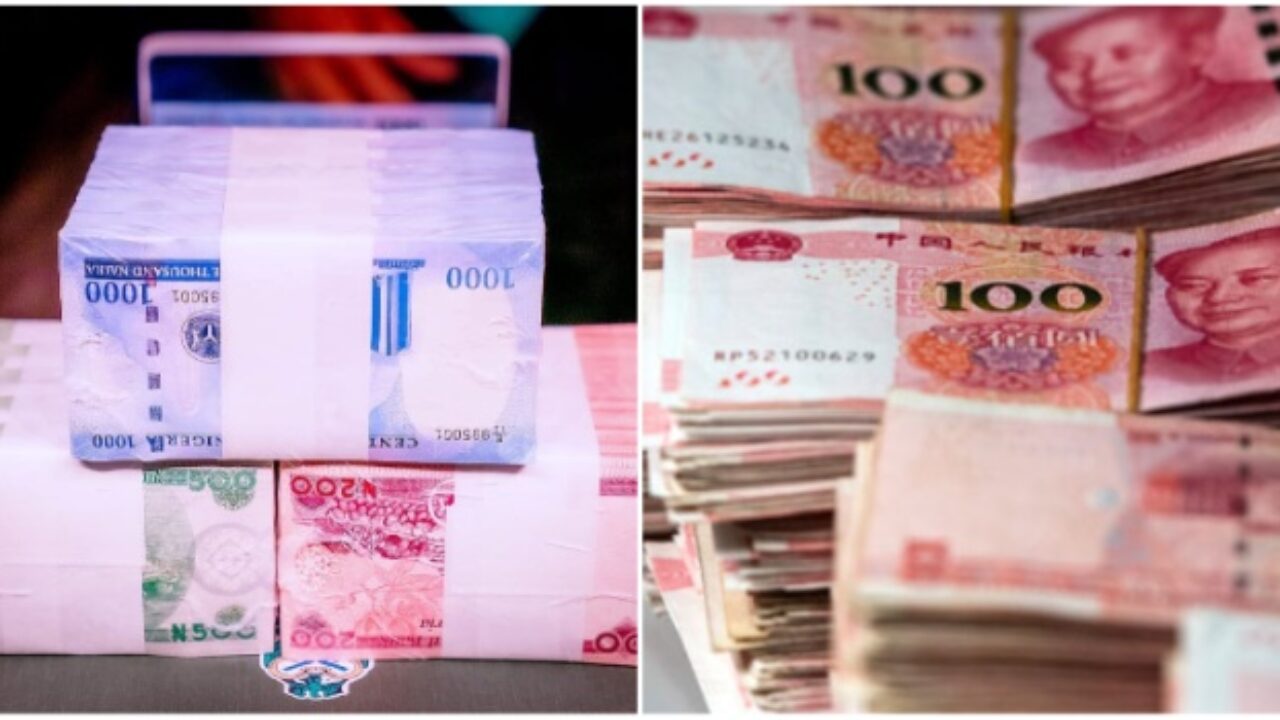
Foreign Exchange (FX) demand pressure eased on the Naira on Wednesday, April 8, in the Nigerian Autonomous Foreign Exchange Market (NAFEX) after gaining N14.84 or 1.07 per cent against the greenback to quote at N1,371.82/$1 compared with the previous day’s N1,386.66/$1.
Also, the local currency appreciated against the Euro in the same market window at midweek by N1.54 to close at N1,604.07/€1 versus Tuesday’s closing rate of N1,605.61/€1, but lost N6.26 against the Pound Sterling to trade at N1,844.83/£1 versus N1,838.57/£1.
In the parallel market, the exchange rate of the Naira to the US Dollar remained unchanged yesterday at N1,410/$1, according to data sourced by Business Post.
There were indicators that the official FX market experienced a liquidity surge, which eased worries around the dominant US Dollar on Wednesday, as the Central Bank of Nigeria (CBN) revealed interbank deals rose to 220 from 71 reported the previous day.
The domestic currency has been in strong demand from foreign portfolio investors seeking to purchase OMO bills and other fixed-income instruments.
Forecasts also show that the local currency will remain relatively stable during the second quarter of the year, trading within the N1,340 to N1,430 per Dollar band on improved FX liquidity, stronger oil earnings, and rising external reserves, which have climbed above 50 billion dollars.
As for the cryptocurrency market, it fell after an initial ceasefire-fueled rally, with markets retracing Wednesday’s “ceasefire euphoria” as cracks emerge in the US-Iran truce while the Strait of Hormuz remains effectively closed.
Global risk assets face renewed pressure as geopolitical uncertainty combines with what analysts call “uncoordinated tightening” by major central banks, reinforcing higher-for-longer interest-rate expectations.
The price of Cardano (ADA) fell by 4.7 per cent to $0.2500, Ripple (XRP) slumped 3.7 per cent to $1.33, Dogecoin (DOGE) shrank by 3.5 per cent to $0.0915, Binance Coin (BNB) slipped 2.6 per cent to $600.02, Ethereum (ETH) went down by 2.5 per cent to $2,183.82, Solana (SOL) dipped 2.5 per cent to $82.24, and Bitcoin (BTC) depreciated by 1.1 per cent to $70,995.20.
However, TRON (TRX) appreciated by 0.4 per cent to $0.3173, while the US Dollar Tether (USDT) and the US Dollar Coin (USDC) remained unchanged at $1.00 apiece.
By Dipo Olowookere
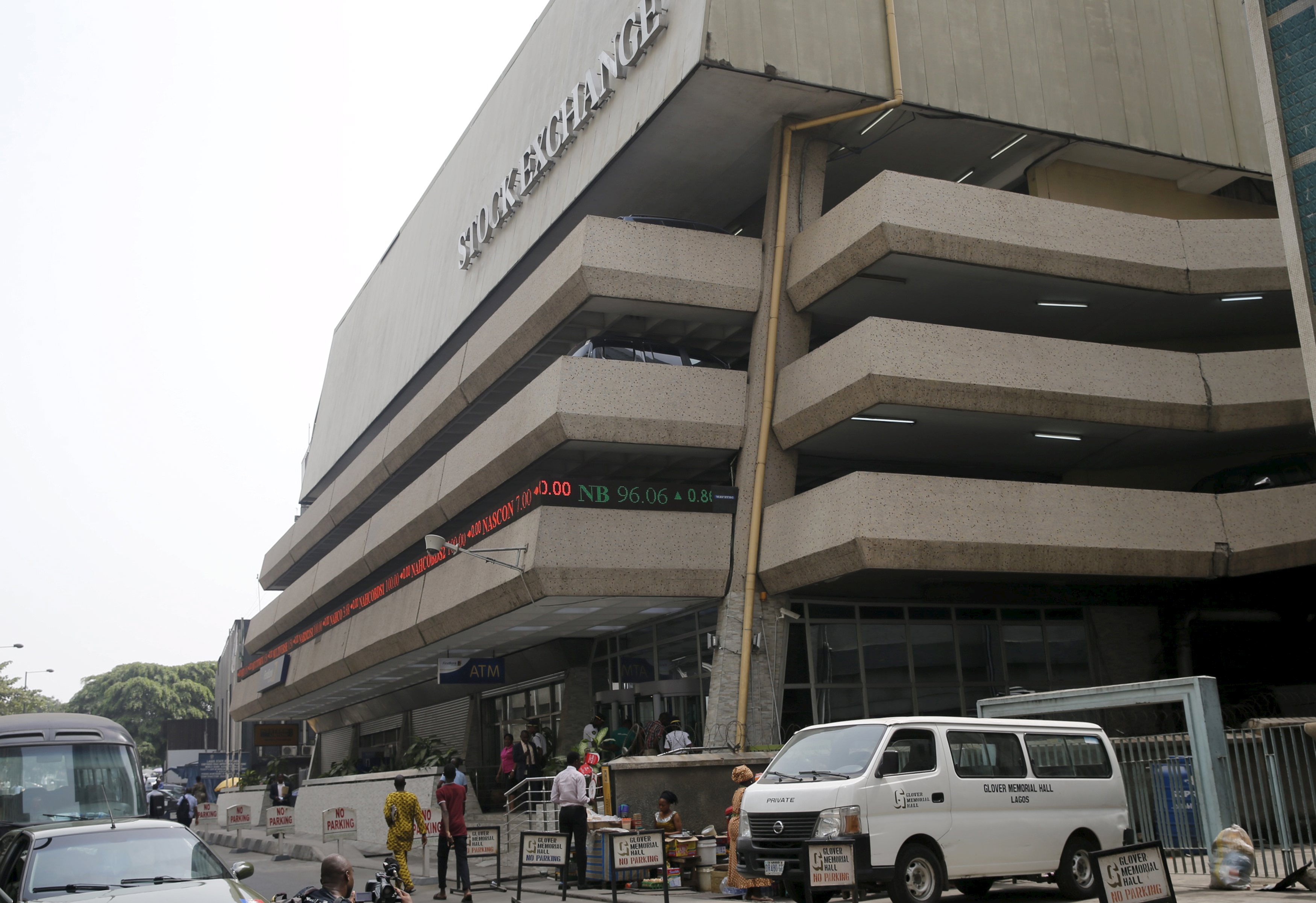
The Nigerian Exchange (NGX) Limited rallied by 0.28 per cent on Wednesday despite weak investor sentiment, as the bourse ended with 18 price gainers and 38 price losers, implying a negative market breadth index.
The growth recorded yesterday by Customs Street was influenced by the 2.11 per cent rise posted by the energy index, and the 1.79 per cent jump achieved by the banking sector.
The other sectors experienced profit-taking, with the consumer goods losing 1.07 per cent, the insurance counter down by 0.36 per cent, and the industrial goods space down by 0.19 per cent.
Universal Insurance chalked up 10.00 per cent to sell for N1.21, Omatek improved by 9.78 per cent to N2.47, VFD Group expanded by 9.71 per cent to N11.30, CWG appreciated by 9.64 per cent to N21.05, and Livestock Feeds gained 9.56 per cent to close at N7.45.
On the flip side, UPDC REIT lost 10.00 per cent to settle at N6.75, Fortis Global Insurance shed 9.92 per cent to quote at N1.18, Deap Capital depreciated by 9.85 per cent to N5.40, Chams went down by 9.47 per cent to N3.06, and Japaul declined by 8.82 per cent to N3.10.
Yesterday, the All-Share Index (ASI) went up by 562.43 points to 202,585.53 points from 202,023.10 points, and the market capitalisation advanced by N389 billion to N130.404 trillion from N130.015 trillion.
During the session, 1.0 billion stocks worth N40.6 billion exchanged hands in 52,723 deals compared with the 1.1 billion stocks valued at N40.3 billion executed in 78,006 deals a day earlier, indicating an uptick in the trading value by 0.74 per cent, and a shortfall in the trading volume and number of deals by 9.09 per cent and 32.41 per cent apiece.
The activity chart was led by Access Holdings, which sold 233.0 million units valued at N6.1 billion, Fidelity Bank exchanged 113.1 million units worth N2.2 billion, Wema Bank recorded a turnover of 103.3 million units valued at N2.7 billion, Zenith Bank transacted 60.6 million units for N6.5 billion, and Chams traded 47.5 million units worth N154.6 million.
-
 Feature/OPED6 years ago
Davos was Different this year
-
Travel/Tourism10 years ago
Lagos Seals Western Lodge Hotel In Ikorodu
-

 Showbiz3 years ago
Estranged Lover Releases Videos of Empress Njamah Bathing
-
 Banking8 years ago
Sort Codes of GTBank Branches in Nigeria
-

 Economy3 years ago
Subsidy Removal: CNG at N130 Per Litre Cheaper Than Petrol—IPMAN
-

 Banking3 years ago
Sort Codes of UBA Branches in Nigeria
-

 Banking3 years ago
First Bank Announces Planned Downtime
-

 Sports3 years ago
Highest Paid Nigerian Footballer – How Much Do Nigerian Footballers Earn