Economy
Windfall: Why Nigeria Isn’t Pocketing Full N5.13trn Oil Gains
By Adedapo Adesanya
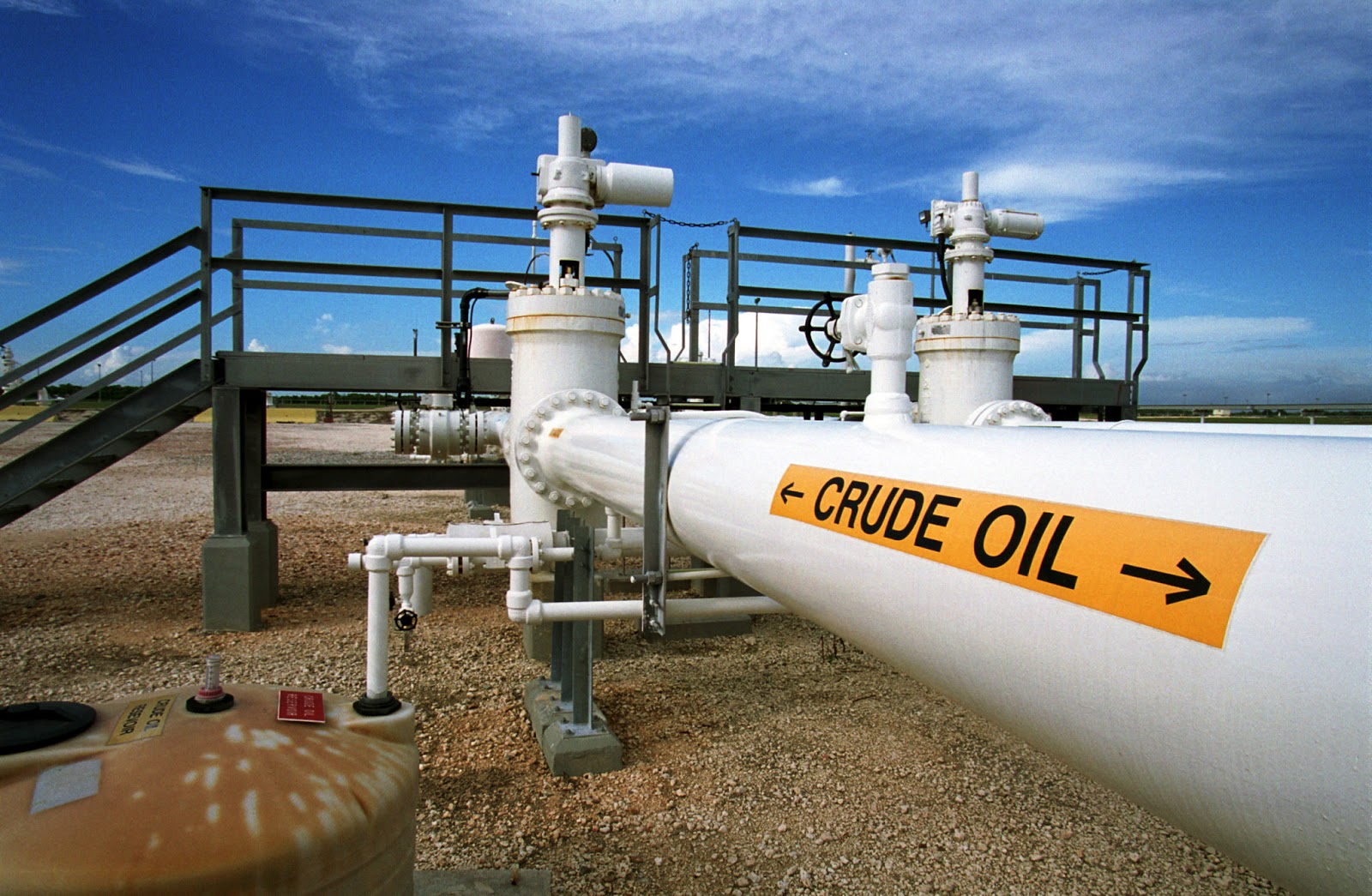
Nigeria’s oil revenue reportedly surged above its 2026 benchmark by an estimated N5.13 trillion in March and April as global crude prices spiked amid Middle East tensions, but only a fraction of the windfall is reaching government coffers.
Since the war started, oil prices have continued to soar, selling for above $120 at some point. The 2026 budget is anchored on daily oil production of 1.8 million barrels per day, a benchmark oil price of $64.85 per barrel and an exchange rate of N1,400 to the Dollar.
The revenue surge followed a sharp rally in the global oil market after tensions between the United States and Iran disrupted supply expectations and drove crude prices far above Nigeria’s budget benchmark of $64.85 per barrel.
The calculation puts Nigeria’s expected daily oil revenue at about N163.42 billion.
However, actual earnings in March and April came in far above that level as global prices climbed, offsetting weaker production and delivering a strong fiscal boost to the federal government.
This does not translate to the entirety entering the country’s purse, because a large share of Nigeria’s crude is produced under Production Sharing Contracts (PSCs) and Joint Ventures (JVs) with international oil companies. Cost recovery and profit-sharing formulas mean only a fraction of incremental price gains accrues to the state after operators deduct capital and operating expenditures.
Beyond these, structural inefficiencies further limit actual inflows. Oil theft, pipeline vandalism, and persistent underproduction reduce the volume of crude available for sale, weakening revenue performance despite favourable prices. Additionally, before funds are distributed, multiple deductions, including operational costs, debt servicing obligations tied to oil-backed loans, and other statutory charges, are applied, shrinking what eventually reaches the Federation Account.
Nigeria also has to contend with exchange rate dynamics as Dollar-denominated earnings are subject to conversion challenges, further diluting the real fiscal impact in Naira terms.
Data from the Nigerian Upstream Petroleum Regulatory Commission (NUPRC) showed that March crude production averaged 1.55 million barrels per day, below budget, but stronger oil prices lifted average daily revenue to about N201.8 billion, creating an estimated surplus of N1.19 trillion for the month.
In April, production improved to about 1.7 million barrels per day, while average crude prices climbed further, pushing daily revenue to about N294.84 billion and generating an additional N3.94 trillion above budget expectations.
Combined, both months delivered a revenue upside of N5.13 trillion, with the bulk of the gain driven by higher crude prices rather than stronger production performance.
The sharp rise in earnings has given the government short-term fiscal relief, but it has also exposed the economy’s continued dependence on external oil market shocks, where gains in public revenue often come with direct pressure on domestic energy costs.
That pressure is already showing in the downstream market, with refined fuel prices rising sharply as crude costs climbed. Gantry prices at Dangote Refinery rose to about N1,275 per litre, while petrol retail prices increased to between N1,310 and N1,400 per litre in several parts of the country.
The development has renewed concerns over inflation, transport costs and household spending, as higher crude prices continue to boost government earnings while increasing the cost of living for consumers.
Economy
11 Plc, FrieslandCampina, CSCS Lift NASD Exchange by 1.38%
By Adedapo Adesanya
Three securities lifted the NASD Over-the-Counter (OTC) Securities Exchange by 1.38 per cent on Friday, July 3, with the NASD Security Index (NSI) up by 58.80 points to 4,307.26 points from 4,248.46 points, and the market capitalisation closing higher by N35.30 billion to N2.585 trillion from N2.549 trillion.
The price gainers were led by 11 Plc, which expanded by N20.05 to close at N220.55 per share compared with the previous day’s N200.50 per share, FrieslandCampina Wamco Nigeria Plc increased by N5.36 to N151.82 per unit from N146.46 per unit, and Central Securities Clearing System (CSCS) Plc appreciated by N3.52 to N90.74 per share from N87.22 per share.
Yesterday, the value of transactions surged by 1,431.2 per cent to N160.1 million from the preceding session’s N10.5 million, and the volume of trades rose by 303.7 per cent to 1.8 million units from 440,653 units, while the number of deals decreased by 34.4 per cent to 21 deals from 32 deals.
Great Nigeria Insurance (GNI) Plc was the most traded stock by value on a year-to-date basis, with 3.4 billion units sold for N8.4 billion, followed by Infrastructure Credit Guarantee (Infracredit) Plc with 2.3 billion units worth N6.5 billion, and CSCS Plc with 70.7 million units transacted for N4.9 billion.
GNI Plc was also the most traded stock by volume on a year-to-date basis, with 3.4 billion units valued at N8.4 billion, followed by Infracredit Plc with 2.3 billion units exchanged for N6.5 billion, and Resourcery Plc with 1.1 billion units traded for N415.7 million.
Economy
Nigerian Stocks Rebound by 2.19% to Halt Losing Streak
By Dipo Olowookere
The losing streak on the Nigerian Exchange (NGX) Limited was halted on Friday after the bourse closed higher by 2.19 per cent at the close of trading activities.
The gains reported by Nigerian stocks were buoyed by renewed bargain-hunting by investors, which resulted in all the key sectors of Customs Street ended in the green territory.
The banking space rose by 2.78 per cent, the insurance counter appreciated by 1.26 per cent, the energy segment expanded by 0.36 per cent, the consumer goods index chalked up 0.06 per cent, and the industrial goods sector grew by 0.05 per cent.
Consequently, the All-Share Index (ASI) went up by 4,918.37 points to 229,240.34 points from 224,321.97 points, and the market capitalisation increased by N3.156 trillion to N147.103 trillion from N143.947 trillion.
Investor sentiment was bullish after 34 stocks ended on the price gainers’ chart and 18 stocks finished on the losers’ log, representing a positive market breadth index.
The quintet of The Initiates, Universal Insurance, DAAR Communications, Omatek, and Airtel Africa surged by 10.00 per cent to sell for N25.85, 88 Kobo, N1.65, N1.76, and N5,274.00, respectively.
On the flip side, International Energy Insurance lost 9.96 per cent to trade at N4.70, Meyer shed 9.95 per cent to close at N18.55, Veritas Kapital dropped 5.07 per cent to finish at N1.31, Fidelity Bank slipped by 2.17 per cent to N18.00, and Jaiz Bank crashed by 1.84 per cent to N28.12.
During the session, a total of 414.7 million equities worth N25.1 billion exchanged hands in 47,106 deals compared with the 855.4 million equities valued at N28.4 billion transacted in the preceding day in 51,609 deals, implying a contraction in the trading volume, value, and number of deals by 51.52 per cent, 11.62 per cent, and 8.73 per cent, respectively.
Economy
Naira Trades Flat at Official Market as CBN Makes Minimal FX Intervention
By Adedapo Adesanya
The Naira closed flat against the United States Dollar at N1,370.19/$1 in the Nigerian Autonomous Foreign Exchange Market (NAFEX) on Friday, July 3.
However, it appreciated against the Pound Sterling in the same market segment by N2.29 to settle at N1,829.88/£1 compared with the previous day’s N1,832.17/£1, and marginally depreciated against the Euro by 4 Kobo to close at N1,568.32/€1 versus Thursday’s closing price of N1,568.28/€1.
At the parallel market, the Naira also traded flat against the US Dollar at N1,390/$1, and at the GTBank forex desk, it also maintained stability at N1,832/$1.
Market conditions improved shortly after the following minimal intervention by the Central Bank of Nigeria (CBN) through modest Dollar sales, which boosted liquidity and supported stronger trading activity.
Easing pressure came after half-year profit-taking tapered down, while continued stronger policy signals from the central bank add to near-term support.
Deals executed at the official market on Friday came in at $70.430 million across 82 interbank deals, from $85.517 million the previous day.
Meanwhile, the cryptocurrency market continued its recovery after June non-farm payrolls printed at 57,000, less than half the 113,000 consensus, sending the implied probability of a September Federal Reserve rate hike from 64 per cent to 54 per cent and dragging AI stocks sharply lower.
Weak labour data reduces inflationary pressure and, by extension, the Federal Reserve’s justification for holding rates elevated. That transmission mechanism is direct: lower rate-hike odds compress the opportunity cost of holding non-yielding assets like crypto.
Bitcoin regained the $62,000 mark after it rose by 1.3 per cent to $62,475.29.
Cardano (ADA) gained 6.6 per cent to trade at $0.1759, Ripple (XRP) appreciated by 3.5 per cent to $1.14, Ethereum (ETH) expanded by 2.4 per cent to $1,756.82, Dogecoin (DOGE) improved by 2.1 per cent to $0.0768, Solana (SOL) chalked up 1.8 per cent to $82.65, TRON (TRX) increased by 1.5 per cent to $0.3235, and Binance Coin (BNB) soared by 1.4 per cent to $569.12, while the US Dollar Tether (USDT) and the US Dollar Coin (USDC) traded flat at $1.00 apiece.
-
Feature/OPED6 years agoDavos was Different this year
-
Travel/Tourism10 years ago
Lagos Seals Western Lodge Hotel In Ikorodu
-
Showbiz4 years agoEstranged Lover Releases Videos of Empress Njamah Bathing
-
Banking8 years agoSort Codes of GTBank Branches in Nigeria
-
Economy3 years agoSubsidy Removal: CNG at N130 Per Litre Cheaper Than Petrol—IPMAN
-
Banking3 years agoSort Codes of UBA Branches in Nigeria
-
Banking3 years agoFirst Bank Announces Planned Downtime
-
Sports3 years agoHighest Paid Nigerian Footballer – How Much Do Nigerian Footballers Earn