
Economy
World Bank Reaffirms Support for Nigeria’s Mining Sector

By Modupe Gbadeyanka
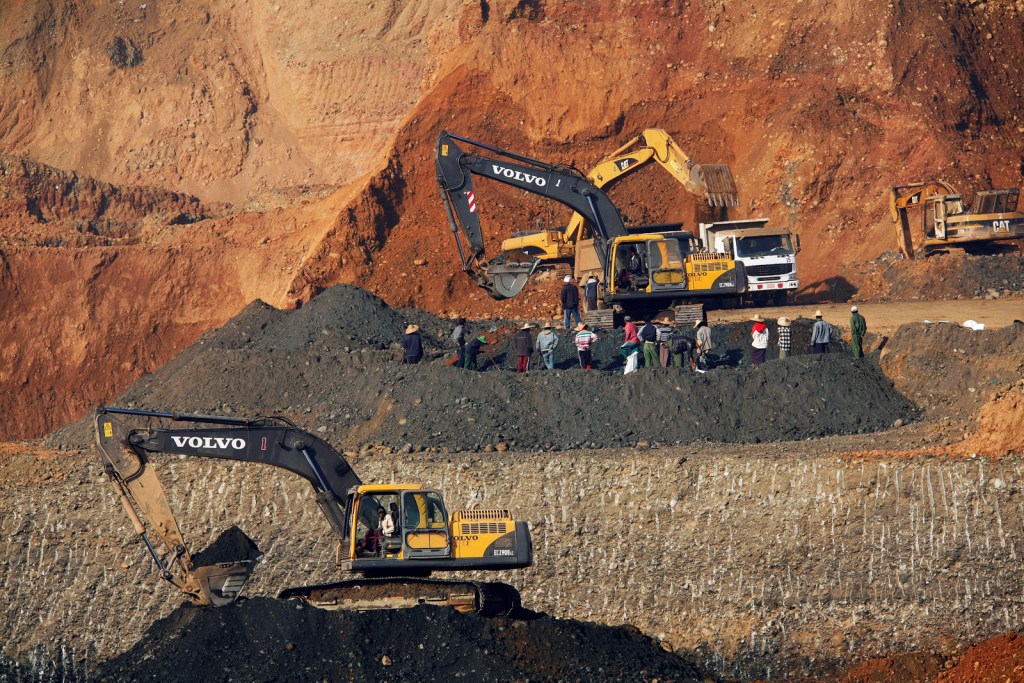
Senior Mining Specialist, Energy and Extractive Industries (GEEDR) at the World Bank, Francisco Igualada, has reaffirmed the global bank’s support for the mining industry in Nigeria.
“In Nigeria, we have managed to develop a real ‘partnership’ with the Federal Government of Nigeria and we are still working along with some of the States that have higher mining potentials,” Igualada declared.
As a featured speaker at the upcoming Nigeria Mining Week in October in Abuja, he will address the high-level industry gathering on ‘Establishing a strong foundation for mining sector development: Enhancing competitiveness and fostering domestic investment in Nigeria.’
In an exclusive interview with the organisers, Mr Igualada says, “The World Bank follows a kind of value chain that bring those countries we support from non-renewable resources to a stage in which sustainable development may take place. Each country has its own idiosyncrasy and characteristics.
“I am particularly excited about two projects; our critical involvement in DRC in support of the rationalization of the sector through nearly five years as well as my responsibility in managing our recently approved 150 million loan project (MinDiver) for developing the Nigerian mineral sector and diversifying it from its dependency on other sectors like oil & gas as President Buhari has clearly indicated in his inaugural speech; two sectors need continuous development in Nigeria, that are agriculture and mining.
“This is the reason why the Minister Dr Kayode Fayemi with his drive and strong determination has led the initiative to put Nigeria ‘on the African mining map again’ as, in my opinion, the country deserves.”
He adds, “from the Bank’s side, I am really looking forward to contribute to transforming their potential resources into some tangible exploration and exploitation mineral projects bringing economic prosperity and jobs. Nigeria is the first African economy and really needs the employment that mining and all types of value-chain including local content can bring.”
Mr Igualada says his message at Nigeria Mining Week in October in Abuja is “rather straightforward: ‘we need to get it right’ once for all and this means that a strong sector foundation is a must.
Afterwards facilitating downstream sector developments and the enhancement of competitiveness need to happen as a logical result. This cannot and should not be improvised and built on a piece-meal basis. Consequently, the only way to bring competitiveness… that obviously comes from competing with our external environment – is by building an integrated approach that would facilitate sharing information and resources with other development donors that are betting on Nigeria as well. Competing should be both internal and external even if nowadays such distinction is a bit blurred due to globalisation of economies.”
The upcoming Nigeria Mining Week, which is taking place again in Abuja from 16-19 October, is a successful partnership between PwC, the Miners Association of Nigeria (MAN) and event organisers Spintelligent.
This high-level, strategic mining investment platform will link investors, project developers, financiers, technology providers and government to share best practices and demonstrate the latest strategies to evolve the sector successfully.
The programme at Nigeria Mining Week 2017, including new features, includes B2B International Expo: Featuring leading technology and innovative services covering the value chain of the mining industry.
In addition, it features Strategic Conference: Providing strategic insights into hot legal and regulatory issues, investment, finance as well as market access and community involvement; free Technical Workshops: Enhancing practical expertise to grow artisanal and small-scale operations with an A to Z mining toolkit; CEO Roundtable: Deep diving into the key challenges facing the private stakeholders, driven by MAN and PwC – new; investor Breakfast: Delivering all the necessary information and contacts required to invest in mining in Nigeria – new; – Dragons’ Den: Enabling project financing by pitching mining business plans to a panel of selected financiers – new; and Site Visit: Discovering first-hand the reality and best practice of a world-class operation – new.
As with previous years, the Nigeria Mining Week is enjoying strong support from the industry with confirmed sponsorships from Palladium Mining Limited, SBOG, Aelex, AG Vision Mining, Congo Energy Solutions, Kian Smith Trade & Co, Mantrac, Minelab, SMT and Wilbahi.
The Nigeria Mining Week organiser Spintelligent is a well-known trade conference and expo organiser on the continent. The company has particular expertise and experience in mining and infrastructure development events; including the long running flagship shows such as DRC Mining Week in Lubumbashi, the Kenya Mining Forum in Nairobi and African Utility Week in Cape Town.









By Adedapo Adesanya
All insurance and reinsurance companies operating in Nigeria are required to remit 0.25 per cent of their annual net premium income to a new fund, according to new guidelines by the National Insurance Commission (NAICOM).
The insurance regulator has issued binding guidelines for a new industry-wide protection fund that will compel every licensed insurer and reinsurer in the country to make annual cash contributions, or risk losing their operating licence.
NAICOM published the framework for the Insurance Policyholders’ Protection Fund (IPPF) under the authority of the Nigerian Insurance Industry Reform Act (NIIRA) 2025, which was signed into law last August.
The guidelines, which take effect immediately, did not disclose an initial capitalisation target for the fund or a timeline for when it would be considered adequately funded for resolution purposes.
The IPPF is designed to function as a resolution backstop as a capital pool available to settle outstanding policyholder claims when a licensed insurer or reinsurer becomes insolvent or enters regulatory distress.
The mechanism addresses a longstanding vulnerability in the Nigerian market, where policyholders holding valid claims against failed insurers have historically had no guaranteed recourse.
The 0.25 per cent payments are due into designated deposit money bank accounts no later than June 30 each year.
NAICOM said it will supplement industry contributions by injecting 0.25 per cent of the balance held in the existing Security and Insurance Development Fund (SIDF) into the IPPF annually, creating a dual-stream capitalisation model.
The guidelines state explicitly that failure to remit the full assessed contribution within the stipulated timeframe shall constitute grounds for suspension or cancellation of an operator’s licence. The same penalty framework applies to defaults on any loans extended from the fund.
Day-to-day management of the IPPF will be delegated to an independent professional Fund Manager, subject to a minimum paid-up capital threshold of N5 billion.
Investment activity is restricted to low-risk, government-backed instruments. This is a deliberate constraint intended to preserve liquidity and protect the fund from market volatility.
Members are bound by a Code of Conduct that bars them from using their positions for personal advantage or to direct decisions in favour of any insurer, reinsurer, or connected party.
The guidelines introduce a mandatory early-warning mechanism: insurance operators who become aware of imprudent practices within their organisations or elsewhere in the industry are required to report such conduct to NAICOM within five working days.
The commission has provided explicit anti-retaliation protections, stating that no whistleblower shall be subjected to retaliation, intimidation, or any form of adverse action for making a disclosure.
By Modupe Gbadeyanka
President Bola Tinubu has been called on to use his influence to halt the passage of the proposed Customs, Excise and Tariff Amendment (CETA) Bill.
The proposed piece of legislation is currently before the National Assembly, and it seeks to introduce a percentage levy per litre of the retail price on non-alcoholic beverages.
In an outlined advertorial published in key newspapers, the Organised Private Sector of Nigeria urged the federal government to engage with the leadership of the parliament to stop the ongoing legislative process with a view to stepping down the CETA Bill, thus allowing the executive-led fiscal reforms to be fully integrated and aligned.
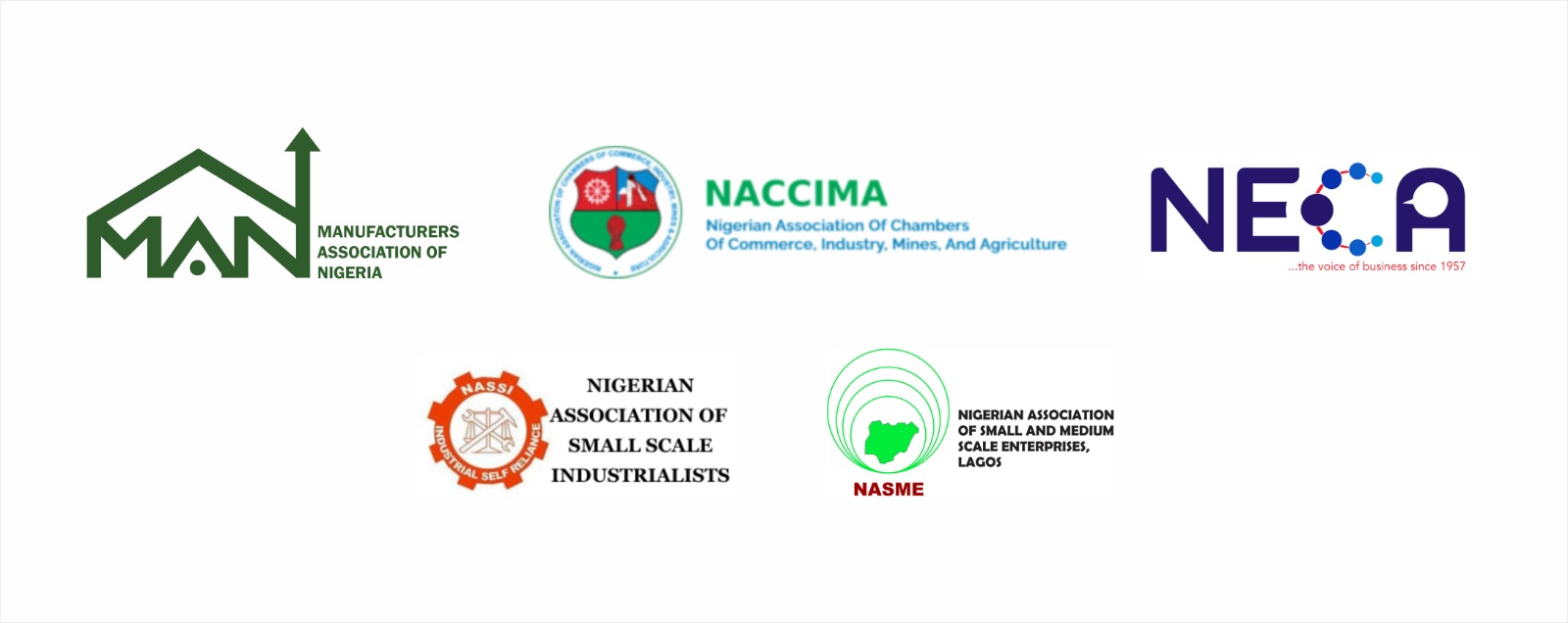
The OPS comprises the Manufacturers Association of Nigeria (MAN), Nigerian Association of Chambers of Commerce, Industry, Mines and Agriculture (NACCIMA), Nigeria Employers’ Consultative Association (NECA), Nigerian Association of Small Scale Industrialists (NASSI), and the Nigerian Association of Small and Medium Enterprises (NASME).
In the advertorial signed by the presidents of all members of the group, it was submitted that allowing for more talks would strengthen policy coherence, enhance predictability, and improve the effectiveness of the nation’s excise framework.
It was stressed that halting the bill would also encourage structured, evidence-based engagement with industry stakeholders, thereby ensuring that any future measures will effectively balance revenue generation, public health objectives, and economic sustainability.
“While we fully support well-designed fiscal reforms and evidence-based public health interventions, we are concerned that the Bill, in its current form, raises significant social, economic, administrative, and legal issues that could undermine Your Excellency’s broader fiscal reform objectives,” the body stated.
While calling on the government to restrain the Senate from proceeding with the process, the organisation noted that the proposed levy would therefore constitute a regressive measure, reducing consumer purchasing power without providing viable alternatives or meaningful public health support.
Commenting on the impact of such a levy on industry stability, investment, and employment, OPS stated that the sector was already under severe pressure from exchange rate adjustments, high energy costs, and rising prices of imported inputs, packaging materials, and machinery.
“An additional excise burden would further increase production costs, reduce capacity utilisation, delay or cancel planned investments, and threaten the livelihoods of thousands of small distributors, retailers, and informal traders who depend on high-volume, low-margin sales.
“These pressures would inevitably be passed on to consumers through higher prices, leading to reduced demand and potential further job losses across the value chain,” it stated.
While commending the president for the leadership and bold economic reforms undertaken since assuming office in 2023, it noted that the reforms have played an important role in restoring macroeconomic stability and rebuilding confidence within the business community.
By Adedapo Adesanya
Three stocks further weakened the NASD Over-the-Counter (OTC) Securities Exchange by 1.12 per cent on Wednesday, April 8, with the Unlisted Security Index (NSI) down by 44.43 points to 3,930.91 points from the previous day’s 3,975.34 points, and the market capitalisation went down by N26.59 to N2.351 trillion from N2.378 trillion.
MRS Oil lost N11.00 during the session to close at N161.00 per share compared with Tuesday’s closing price of N172.00 per share, Central Securities Clearing System (CSCS) Plc dipped by N3.74 to N67.95 per unit from N71.69 per unit, and Afriland Properties Plc fell by N1.10 to sell at N15.95 per share versus N17.05 per share.
There were two gainers at the midweek trading session, led by IPWA Plc, which appreciated by 55 Kobo to N6.61 per unit from N6.06 per unit, and First Trust Mortgage Bank Plc improved its value by 4 Kobo to N2.32 per share from N2.28 per share.
Yesterday, the volume of securities rose by 620.4 per cent to 5.7 million units from 797,264 units, the value of securities increased by 25.1 per cent to N32.7 million from N26.1 million, and the number of deals climbed by 12.1 per cent to 37 deals from the preceding session’s 33 deals.
Great Nigeria Insurance (GNI) Plc ended the day as the most traded stock by value on a year-to-date basis with 3.4 billion units sold for N8.4 billion, trailed by CSCS Plc with 57.2 million units exchanged for N3.9 billion, and Okitipupa Plc with 27.5 million units traded for N1.8 billion.
GNI Plc also finished the session as the most traded stock by volume on a year-to-date basis with 3.4 billion units valued at N8.4 billion, followed by Resourcery Plc with 1.1 billion units worth N415.7 million, and Infrastructure Guarantee Credit Plc with 400 million units transacted for N1.2 billion.
-
 Feature/OPED6 years ago
Davos was Different this year
-
Travel/Tourism10 years ago
Lagos Seals Western Lodge Hotel In Ikorodu
-

 Showbiz3 years ago
Estranged Lover Releases Videos of Empress Njamah Bathing
-
 Banking8 years ago
Sort Codes of GTBank Branches in Nigeria
-

 Economy3 years ago
Subsidy Removal: CNG at N130 Per Litre Cheaper Than Petrol—IPMAN
-

 Banking3 years ago
Sort Codes of UBA Branches in Nigeria
-

 Banking3 years ago
First Bank Announces Planned Downtime
-

 Sports3 years ago
Highest Paid Nigerian Footballer – How Much Do Nigerian Footballers Earn