Economy
AfDB Partners Brazil to Train African Youth on Cassava Processing
By Modupe Gbadeyanka
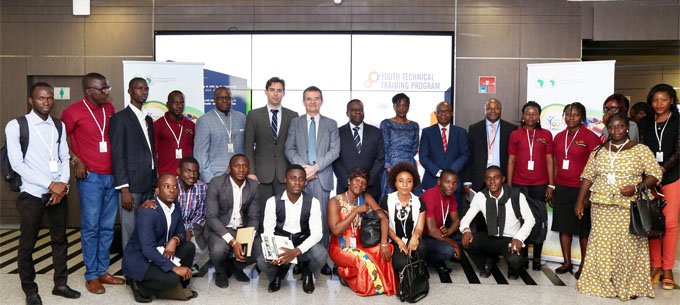
A youth training programme called Youth Technical Training Program (YTTP) has been launched by the African Development Bank (AfDB) and the Brazil-Africa Institute (BAI).
YTTP is an initiative that aims to train young African professionals in research and technology transfer, contributing to local capacity development.
It is sponsored under the South–South Cooperation Trust Fund (SSCTF) and will consist of an array of professional development schemes to meet diverse needs of African countries by utilizing Brazil’s technology, skills and knowledge.
Focus areas include agriculture and rural development, health, education, information and communication, infrastructure, and the creative industry.
As part of this initiative, both parties on Thursday, September 14, announced the commencement of training of African youth for rewarding careers in cassava processing.
The first batch of the YTTP training, which was flagged off at the AfDB headquarters in Abidjan, Côte d’Ivoire, targets 30 young African professionals (between the ages of 18 and 35) of the cassava value-chain selected from 14 countries. The trainees will receive a two-month training on the production chain of cassava at the Brazilian Agricultural Research Corporation (EMBRAPA) − a state-owned centre in Brazil.
The cassava training initiative was launched in close collaboration with the Brazil-Africa Institute, the Brazilian Agricultural Research Corporation (EMBRAPA) and the International Institute of Tropical Agriculture (IITA).
Cassava is considered crucial to the food security of millions of people in Sub-Saharan Africa.
Most technologies developed in Brazil, especially those which relate to agriculture, are relevant for Africa. In addition, there is an increasing demand for Brazilian technology applicable to the African context.
Speaking at the launch of the YTTP, the Bank’s Director of Agriculture and Agro-Industries, Chiji Ojukwu, explained that the first batch of cassava processing trainees would be for two months.
“The development of the cassava training programme is one of the many programmes of ENABLE (Empowering Novel Agri-Business-Led Employment) Youth Program of the AfDB. There will be more of such programmes to be developed with the Brazil Africa Institute,” he said.
President of the Brazil Africa Institute, João Bosco Monte, was optimistic that the trainees go back to their different counties with sound cassava production and processing training and skills at the end of the two months training.
Bosco Monte said the dream of his Institute was to work with AfDB to increase the number of participants for the cassava processing training to at least 300 in the coming years.
“This is just the beginning,” he assured.
Minister of Youth and Employment of Côte d’Ivoire, Sidi Touré, described the YTTP as important to Africa, stressing how the country would tap from the knowledge of Ivorian participants.
“I am optimistic that this programme will change the fortune of African youths,” he added.
Director General of the International Institute for Tropical Agriculture (IITA), Nteranya Sangina, urged the trainees to tap into the expertise available in Brazil and prepare to contribute to making cassava a crop for food security in Africa.
He recalled how, as Nigeria’s Minister, AfDB President, Mr Akinwumi Adesina moved aggressively on import substitution with the use of cassava flour for composite flours in bread-making and confectionery industries.
“Brazil has several products processed from cassava. When you get to there, study and acquire knowledge of modern technologies as much as you can,” he charged the 30 YTTP trainees.
“My dream is to have greater collaborations between young Brazilians and young African in the cassava processing sector.”
In their speeches, Bright Okogu, the AfDB Executive Director for Nigeria and São Tomé and Príncipe; and Hiromi Ozawa, Executive Director for Brazil, Argentina, Austria, Japan and Saudi Arabia, highlighted the potential impact of the project on the relationship between Africa and Brazil.
“We are eager to have you come back to practice and teach your generation what you have learnt. Financial and technical assistance will certainly come as some point. Things are not what they used to be,” Okogu told the participants.
“The YTTP feeds into the Bank’s ENABLE Youth Program, which directly relates to two of the Bank’s High 5 priority areas: Feed Africa and Improve the quality of life for the people of Africa,” Ozawa said.
Economy
Nigeria’s Inflation Outlook Improves as US-Iran Tensions Ease
By Adedapo Adesanya
Easing tensions between the US and Iran in the Middle East is expected to offer more respite to the Nigerian economy in the coming months.
Analysts at Comercio Partners noted in a report that there is an increased likelihood of a gradual moderation in inflation from July into the third quarter of 2026.
The analysts opined that the near-term outlook for inflation “has become less tilted to the upside” following the peace deal reached by the warring parties in the Middle East conflict and the sharp decline in global oil prices.
The report read in part: “May inflation data showed that price pressures remain sticky, but the near-term outlook has become less tilted to the upside following the peace deal and the sharp decline in global oil prices.
“Headline inflation rose to 15.93 per cent year-on-year from 15.69 per cent in April, while food inflation climbed to 16.96 per cent and core inflation increased to 16.82 per cent, suggesting that both food and underlying non-food price pressures remain elevated.
“However, the easing in crude oil prices below $85/bbl reduces the risk of a renewed energy-led inflation shock. This is important for Nigeria, where fuel, diesel, transport, logistics, and food distribution costs are key channels through which global energy prices feed into domestic inflation.
“If lower oil prices are sustained and domestic fuel prices remain stable or decline, pressure on transport and production costs should gradually ease.”
It noted that in June, inflation may remain sticky because the pass-through of lower oil prices to consumer prices is unlikely to be immediate.
It added that food prices remain elevated, and core inflation picked up month-on-month in May, indicating that underlying price pressures have not fully faded. According to the National Bureau of Statistics (NBS), the inflation rate on a month-on-month basis was 1.75 per cent, which was 0.39 per cent lower than the rate recorded in April 2026 (2.13 per cent).
“However, the balance of risks has shifted. The likelihood of another sharp energy-driven acceleration has reduced, while the probability of gradual moderation from July into Q3 has improved.”
The analysts said in the report that while the latest CPI data, “still supports a cautious tone across rates and fixed income, as annual headline, food, and core inflation all moved higher in May,” the decline in oil prices gives the Central Bank of Nigeria (CBN) “more room to maintain a wait-and-see stance rather than respond aggressively to external energy-price risks, provided domestic prices begin to reflect the easing in global crude markets.”
Economy
All On Invests $1m in Eja-Ice Nigeria Limited to Strengthen Cold-Chain Infrastructure in Off-Grid Markets
All On, an impact investing company focused on expanding access to renewable energy solutions in Nigeria, has announced a $1 million investment in Eja-Ice Nigeria Limited, a provider of solar-powered refrigeration and cold chain infrastructure.
The investment will support Eja-Ice’s manufacturing and operational scale-up as the company enters its next phase of growth. It is expected to enable the expansion of its cold-chain solutions and improve access to reliable cooling services for households, small businesses, and institutions operating in off-grid and weak-grid environments.
Access to dependable cold storage remains a significant constraint across Nigeria, particularly in coastal and rural communities where limited energy infrastructure contributes to post-harvest losses and income instability for small-scale agro-producers.
By delivering energy-efficient refrigeration systems, Eja-Ice is helping to address these challenges while supporting the preservation of perishable goods and strengthening local value chains.
“All On’s investment in Eja-Ice reflects our approach of supporting solutions that improve energy access while enhancing livelihoods, reducing costs, and enabling businesses to grow. Strengthening cold-chain infrastructure is an important step towards building more resilient local economies and expanding opportunities in underserved markets,” the chief executive of All On, Ms Caroline Eboumbou, commented on the investment.
Eja-Ice’s integrated cold-chain model allows for greater control over product design, operational efficiency, and service delivery, ensuring that its solutions are tailored to the needs of underserved markets. The company’s systems are already supporting micro enterprises, cooperatives, and community-level infrastructure, particularly in areas where reliable electricity remains limited.
Also commenting, the founder and chief executive of Eja-Ice Nigeria Limited, Mr Yusuf Bilesanmi, said, “This capital raise is a huge step forward in our vision to power homes and businesses with products designed, assembled, and optimised right here on the continent. It’s not just about access to electricity—it’s about dignity, productivity, and opportunity for the over 600 million people across sub-Saharan Africa who are still off-grid.”
Through this investment, All On continues to advance its mission of closing Nigeria’s energy access gap by supporting the renewable energy ecosystem and businesses that deliver sustainable, market-driven solutions.

Economy
First Holdco Lists N45bn Private Placement Shares on Stock Exchange
By Aduragbemi Omiyale
Shares of First Holdco Plc worth N45.0 billion issued through a private placement have been listed on the Nigerian Exchange (NGX) Limited.
A circular issued by the Head of Issuer Regulation Department of the NGX Regulation Limited, Mr Godstime Iwenekhai, disclosed that the equities were admitted for trading at the stock market on Monday.
According to the notice, the additional shares brought for listing to rank pari passu with existing shares of the organisation were 1,021,334,544 units.
These stocks were sold to one of the company’s major shareholders at a unit price of N44.06, amounting to N45.0 billion.
The total issued and fully paid-up shares of First Holdco, as a result of this listing, are now 45,475,027,677 ordinary shares of 50 Kobo each.
“Trading licence holders are hereby notified that an additional 1,021,334,544 ordinary shares of 50 Kobo each of First Holdco Plc were on Monday, June 22, 2026, listed on the daily official list of Nigerian Exchange Limited.
“The additional shares listed on NGX arose from the company’s private placement of 1,021,334,544 ordinary shares of 50 Kobo each at N44.06 per share.
“With the listing of the additional shares, the total issued and fully paid-up shares of First Holdco Plc have now increased to 45,475,027,677 ordinary shares of 50 Kobo each from 44,453,693,133 ordinary shares of 50 Kobo each,” the disclosure stated.
-
Feature/OPED6 years agoDavos was Different this year
-
Travel/Tourism10 years ago
Lagos Seals Western Lodge Hotel In Ikorodu
-
Showbiz3 years agoEstranged Lover Releases Videos of Empress Njamah Bathing
-
Banking8 years agoSort Codes of GTBank Branches in Nigeria
-
Economy3 years agoSubsidy Removal: CNG at N130 Per Litre Cheaper Than Petrol—IPMAN
-
Banking3 years agoSort Codes of UBA Branches in Nigeria
-
Banking3 years agoFirst Bank Announces Planned Downtime
-
Sports3 years agoHighest Paid Nigerian Footballer – How Much Do Nigerian Footballers Earn