Connect with us

Economy

FG Must Scrap Petroleum Equalisation Fund—Oyegbami

Published

on

By Modupe Gbadeyanka

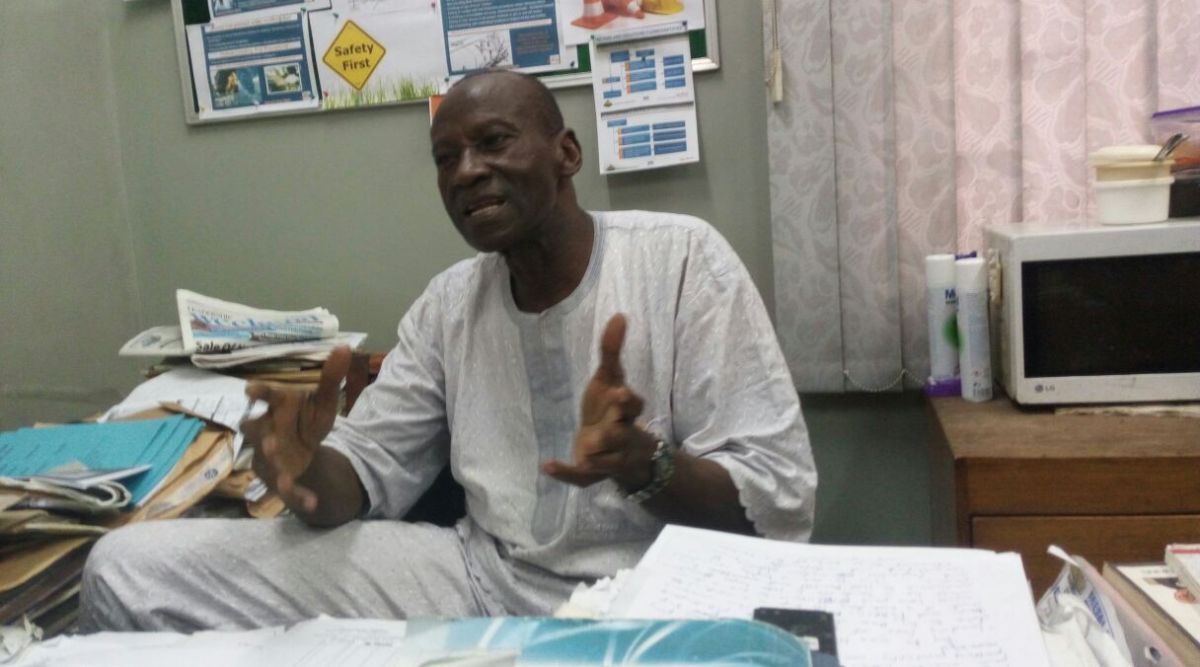
Author of ‘Reversing the Rot in Nigeria,’ Mr Olusegun Oyegbami, has condemned Federal Government for shielding the fraud behind the Petroleum Equalisation Fund (PEF), saying the PEF policy should be stopped.

Mr Oyegbami, who has spent more than four decades in the Nigeria petroleum downstream sector, described former President Olusegun Obasanjo and President Muhammadu Buhari as the co-founder of Nigeria’s woes.

“The Petroleum Equalisation Fund (PEF) was put in place in early 1976 when former President Olusegun Obasanjo was Head of State and current President Muhammadu Buhari was the Petroleum Minister, and the intention might have been honest to let everybody have equal access to the petroleum product but equal access should not have been the mantra we should follow but equitable access.

“That is to say if you are in a particular place where you are close to the petrol, then you can buy it slightly cheaper but it should be available to everybody in that location at same price,” the author said.

Mr Oyegbami expressed further that the whole idea in economics is that Nigeria government operates on a comparative advantage and localization of citizens’ advantage.

“When you are in a place like Warri or Port Harcourt and when we are talking about importation, Lagos where the petrol lands should necessarily be cheaper than other places where they come to pick that petrol but where government is now paying to transport petrol to far places that is where the fraud comes into it, which make us to be running a non-economic platform, it is very wrong. Until we change this, Nigeria can never make any progress.

“Because it is looking like government is favouring those people transporting the petrol to their places at government expense, this should not happen and this is what has been happening for more than 40 to 42 years and until we change that, we cannot get it right as a country. I am very convinced about this, you run an economy on an economic template and not as a social platform,” he said.

Discussing fuel subsidy, Mr Oyegbami said the government has never subsidized fuel for its citizens for one day.

“The price at which petrol has been coming in has always been the economic price and up until the PEF scam came in, the money being collected started to be more than what has been voted out of the purse of fixing the price.

“It is like when you increase the price from N1 to N1.50k maybe before they use to allocate 5k out of that N1 for transportation but when it is now N1.50k they will add another 5k to transportation cost so that they will now have more money to pay for transportation and 10k will now be used for transportation.

“So, they have not subsidized the price of petrol as at that time, all they have subsidized is transportation of the product to distant locations. So, it was when, often time when the price began to sky rocket to N100 they now decided that because we are bringing it in at N80 we are going to be giving you additional money, but all the extras are being added to cost of transportation.

“Constantly, the cost of transportation that is the bridging element in the price builds up, that is what always goes up steadily.

“I am telling you that out of N145 as the cost of petrol today, N6.20K is still allocated for transportation.

“Why? It means that anybody using fuel down south is still paying N6.20k more than he should have paid. This is now gathered together to transport petrol to other parts of the country, especially the North.

“It is really an economic matter that the south should not continuously right from over 42 years ago be paying for transporting fuel to the North, because come to think of it whatever is coming from the North always has its own element of transportation that the South pays for. We have never eaten beef, cow, yam at the same price as the north.

“It is purely an economic matter, it is when you are looking at it from political angle that you will say this man is trying to incite one tribe against the other, No, it is purely economics. These are elements of deception that we have been having in this country. Sometime in the second republic, some people were arrested for ‘smuggling’ beans from Bida to Oyo. That is funny.

“Nigeria government should let the Nigerians trade fairly among themselves, if we are going to trade in petrol take the petrol at the available price at the depots, add your own transport cost and sell it there, we will have normalcy in this economy within a year or two but now we still have deception and manipulation going on even right now because anybody who is buying petrol in Lagos is still paying N6.20k for carrying it to the north, it is wrong. That should stop.

“It is when this manipulation stops then we know this government of Buhari is ready to fight corruption, because the same Buhari started the PEF far back then and he’s still protecting it till today, until we stop that before we know he is actually dealing with corruption honestly and he’s treating all Nigerians fairly across board. But for now, No, that is not happening,”

When asked about the inspiration behind written the book, Mr Oyegbami said the death of his mother, more than anything else, epitomizes the transience of existence because it is the departure of spaceship into the horizon.

“You feel lost and marooned leading to a compulsion and resolve to improve things in your society because the inevitability of my own imminent departure is more palpable”.

He said the feeling gave him rise to the writing of ‘Reversing The Rot In Nigeria’ a critical exposé on the nation’s Cul-de-sac.


Modupe Gbadeyanka is a fast-rising journalist with Business Post Nigeria. Her passion for journalism is amazing. She is willing to learn more with a view to becoming one of the best pen-pushers in Nigeria. Her role models are the duo of CNN's Richard Quest and Christiane Amanpour.

1 Comment

1 Comment

Leave a Reply

Your email address will not be published. Required fields are marked *

Economy

Naira Slips to N1,343/$ at NAFEX

Published

on

Naira-Dollar exchange rate gap

By Adedapo Adesanya

The Naira sold at N1,343.64/$1 Nigerian Autonomous Foreign Exchange Market (NAFEX) on Friday, April 17, after shedding N1.34 or 0.10 per cent against the greenback from the previous day’s rate of N1,342.30/$1.

In the same vein, the Nigerian currency depreciated against the Pound Sterling in the same market window during the session by N5.03 to quote at N1,824.39/£1 versus the previous rate of N1,819.36/£1, and lost N10.05 against the Euro to sell at N1,591.14/€1 versus N1,581.09/€1.

At the GTBank FX desk, the exchange rate of the Naira to the Dollar remained unchanged at N1,355/$1, and it also maintained stability in the parallel market at N1,375/$1.

Interbank liquidity increased to N124.34 million from N74.255 million the previous day, data from the Central Bank of Nigeria (CBN) showed.

Meanwhile, external reserves remain at $48.70 billion, down from the 2009 peak of $50 billion amidst uncertainties in the global commodities market.

Global oil prices dropped sharply on Friday after Iran signalled that the Strait of Hormuz would remain open to commercial shipping during a temporary ceasefire in the Middle East.

Crypt assets also gained on the news from Iran’s foreign minister, who declared the Strait of Hormuz open, drawing a positive response from President Donald Trump. The development helped ease worry around risky assets like crypto.

Meanwhile, the cryptocurrency market was bullish, as traders weighed possible scenarios ahead of next week’s US-Iran cease-fire deadline.

Ethereum (ETH) appreciated by 3.2 per cent to $2,410.53, Bitcoin (BTC) jumped by 2.8 per cent to $77,124.22, Ripple (XRP) rose by 2.7 per cent to $1.47, Binance Coin (BNB) expanded by 2.5 per cent to $643.97, Dogecoin (DOGE) added 1.0 per cent to close at $0.0988, Cardano (ADA) improved by 0.9 per cent to $0.2578, Solana (SOL) soared by 0.4 per cent to $88.53, and TRON (TRX) gained 0.4 per cent to sell at $0.3275, while the US Dollar Tether (USDT) and the US Dollar Coin (USDC) traded flat at $1.00 apiece.

Continue Reading

Economy

Brent, WTI Tumble Over 9% on Hormuz Reopening Signal

Published

on

Brent crude futures

By Adedapo Adesanya

Oil prices plunged by 9 per cent on Friday after Iran said passage for all ​commercial vessels through the Strait of Hormuz was open for the remaining ceasefire period.

Brent crude futures lost $9.01 or 9.07 per cent to trade at $90.38 a barrel, while the US West Texas Intermediate (WTI) crude futures depreciated by $10.48 or 11.45 per cent to finish at $83.85 a barrel.

Iran said Friday that the Strait of Hormuz is “completely open” for the remainder of the Israel-Lebanon ceasefire, bolstering hopes of a breakthrough in the weeks-long crisis over the crucial oil route.

Iran had maintained its blockade of the strait despite a two-week ceasefire with the US, which expires on Tuesday, and previously said it would not open the key waterway while Israel continued to strike Lebanon.

Business Post had reported that oil prices weakened to around $88 per barrel after Iranian Foreign Minister Seyed Abbas Araghchi posted on X that “all commercial vessels” would be allowed to pass through the strait throughout the remainder of the ten-day ceasefire in Lebanon.

US President Donald Trump thanked Iran on Truth Social, but stressed that the US naval blockade of the regime’s ports would remain “in full force and effect” until a peace deal was completed. “This process should go very quickly in that most of the points are already negotiated,” he added.

A second round of truce talks between the US and Iran is expected to take place as oil tankers are beginning to test the waters at the Strait of Hormuz.

Despite the fact that all ships can sail through the Strait of Hormuz, this passage needs to be coordinated with Iran’s Islamic Revolutionary Guard Corps (IRGC).

Market analysts noted that if these initial tankers make it through, flows will begin to partially normalise. However, a handful of vessels does not equal restored capacity. The backlog alone will take significant time to clear, and producers across the region are still dealing with disrupted output and logistics.

Prices had already fallen earlier in the Friday session as possible ​further talks between the US and Iran over the weekend and a 10-day ceasefire between Lebanon and Israel raised investors’ hopes that the war in the Middle East could be ‌nearing an ⁠end.

The American President also said on Friday that the US has banned Israel from further bombing in Lebanon, using a harsher tone than usual with the ​longtime US ally.

Continue Reading

Economy

Nigerian Exchange Extends Stock Trading Hours to 4:00 pm

Published

on

exposure to Nigerian stocks

By Dipo Olowookere

The daily stock trading hours on the floor of the Nigerian Exchange (NGX) have been expanded by an hour to 4.00 pm after extensive stakeholder engagement, ensuring alignment and operational readiness ahead of the go-live date.

A statement from the bourse on Friday said the extension was approved by the Securities and Exchange Commission (SEC).

Before now, trading activity on Customs Street resumed from 9.30 am to 2:30 pm, but from Monday, April 27, 2026, the resumption time would be 9.00 am, and the closing gong would be struck by 4.00 pm from Monday to Friday.

It was explained that this action was taken “to deepen market liquidity, enhance price discovery, and broaden investor access.”

The NGX has witnessed renewed investor interest due to increased awareness of equities lately, especially as the nation and the global community await the much-anticipated listing of Dangote Refinery shares later in the year, all things being equal.

The statement also noted that this extended trading window would provide greater flexibility for investors, improve responsiveness to market-moving information, and support broader participation across the market.

The development builds on the momentum of Nigeria’s recent reclassification to Frontier Market status by FTSE Russell, reinforcing NGX’s global positioning and enhancing its attractiveness to a broader pool of domestic and international investors.

It further stated that this reform reflects strong regulatory collaboration and underscores the SEC’s continued commitment to advancing market development initiatives. Alongside Nigeria’s Frontier Market reclassification, it signals a deliberate shift towards a more accessible, liquid, and globally competitive market.

With this development, NGX reinforces its position as a leading multi-asset exchange, deepening liquidity, improving market access, and supporting efficient capital formation within Nigeria’s financial markets.

Continue Reading

Trending