Connect with us

Education

GOMYCODE Offers Master’s Degree in Software Engineering in Nigeria

Published

on

GOMYCODE Woolf University

By Aduragbemi Omiyale

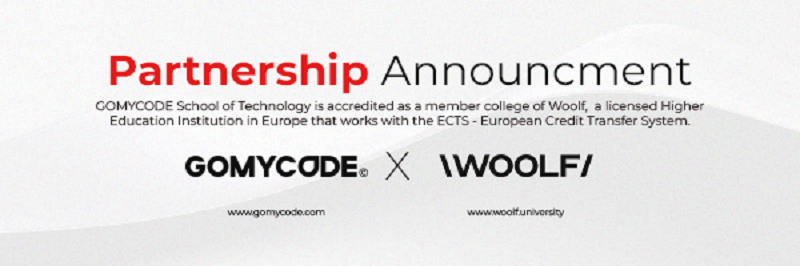
A leading technology education provider, GOMYCODE, has partnered with a global collegiate higher education institution, Woolf University, to offer a Master of Science in Computer Science with a Specialization in Software Engineering.

This provides an opportunity for aspiring and established tech professionals in Nigeria to hone their skills at GOMYCODE, with a globally recognised certificate to show for it.

The institution disclosed that the program’s online and flexible structure caters to the demands of working professionals, enabling them to balance their studies with existing commitments.

Students will benefit from Woolf University’s rigorous academic standards and GOMYCODE’s practical, industry-relevant approach to learning.

This is because the Master’s program is designed to empower busy professionals and ambitious individuals with advanced skills and qualifications, opening doors to global job opportunities and facilitating potential emigration for those seeking international careers.

This Master of Science in Computer Science with Specialization in Software Engineering program is ideal for tech professionals seeking to enhance their qualifications, individuals aiming for global job opportunities, those considering emigration and requiring advanced degrees, and ambitious individuals looking to accelerate their career growth.

“In today’s competitive tech landscape, advanced degrees are increasingly essential. This partnership allows us to provide a flexible, world-class education that empowers our students to achieve their career aspirations, whether they seek to excel locally or on a global stage,” the co-founder of GOMYCODE, Yahya Bouhlel, stated.

Also commenting, the Head of Strategy and Growth at Woolf University, Naveen Jangir, said, “Our mission is to democratize education, and this partnership aligns perfectly with our goal of providing accessible, accredited degrees to learners worldwide. We believe this program will equip Nigerian tech professionals with the skills and credentials they need to thrive in the global economy.”

On his part, the Country Head of GOMYCODE in Nigeria, Mr Babatunde Olaifa, said, “By offering a globally recognized Master’s degree, we are empowering our professionals to compete on a global scale, giving people an opportunity to level up their careers, and to open doors that they previously thought were closed. We are very excited to see the impact that this program will have on the lives of our students and the broader Nigerian tech community.”


Click to comment

Leave a Reply

Your email address will not be published. Required fields are marked *

Education

Tinubu Chooses Adelabu as NECO Board Chair, Salako to Chair NBTE Board

Published

on

Bola Tinubu 2027 presidential election

By Adedapo Adesanya

President Bola Tinubu has made new appointments in the country’s educational sector, covering the National Examination Council (NECO), the National Board of Technical Education (NBTE), the Federal Polytechnic in N’yak Shendam, Plateau State, and the National Library of Nigeria, all institutions under the Federal Ministry of Education.

According to a statement on Wednesday, President Tinubu appointed Professor Modupe Adeola Adelabu as Chairman of the Governing Board of NECO, and retained the current registrar, Professor Ibrahim Dantani Wushishi.

The President also appointed Dr Bongfa Binfa as Rector of the Federal Polytechnic, N’yak-Shendam, Plateau State, and renewed the tenure of Professor Chinwe Veronica Anunobi as chief executive of the National Library of Nigeria.

For the chairmanship of the National Board of Technical Education (NBTE), President Tinubu appointed Professor Babatunde Salako.

On April 10, President Tinubu reappointed the incumbent executive secretary, Professor Idris M Bugaje, for a second and final term of five years.

Professor Adelabu, who will chair NECO, is a retired Professor of educational administration who rose through the ranks to full professorship at the Obafemi Awolowo University (OAU) in Ile-Ife, Osun State.

She was a former Deputy Governor of Ekiti State (2013- 2014) and the Chairman of the National Board for Technical Education (NBTE) between 2018 and 2021.

Professor Babatunde Salako, the new chair of NBTE, is a globally respected researcher with decades of experience in higher education, institutional governance and national policy leadership.

He previously served as the Director General of the Nigerian Institute of Medical Research (NIMR) from 2016 to 2024, a period during which the institute experienced significant revitalisation, enhanced research governance, expanded international collaborations, and improved infrastructure and research outputs.

Dr Binfa, from Plateau State, succeeds Dr Mukaila Zakari Ya’u, the pioneer Rector of the Federal Polytechnic, N’yak-Shendam, whose tenure expired on March 16, 2026.

President Tinubu approved the appointment of Dr Binfa for a single term of five years, following the conclusion of the process for appointing a new Rector through a public advertisement in national dailies in September 2025.

Dr Binfa holds a Doctor of Philosophy (PhD) in Mechanical Engineering from Universiti Teknologi Malaysia. Before this appointment, Dr Binfa was Deputy Rector (Academic) at the Federal Polytechnic of Oil and Gas, Bonny. He was also a Lecturer in the Mechanical Engineering Department at the Federal Polytechnic, Idah.

President Tinubu approved the renewal of the tenure of Professor Chinwe Veronica Anunobi as CEO of the National Library of Nigeria for a final term of five years. She was first appointed on September, 2, 2021.

Since assuming office, she has led several institutional reforms aimed at repositioning the National Library as a modern technology-driven knowledge institution, including the development and operationalisation of the National Repository of Nigeria, the Newspaper and Magazine Locator, the Index and Abstract to Nigerian Newspapers, and the National Virtual Library of Nigeria.

She has also played a strategic role in advancing the long-awaited completion of the National Library Headquarters project and in initiating plans to migrate heritage collections from the 34 state branches to the new headquarters in Abuja.

According to the statement, the President expects that the renewal of her tenure would ensure continuity in the implementation of ongoing reforms, completion of the National Library Headquarters project, and execution of the 2025-2030 Strategic Plan of the institution.

Continue Reading

Education

Senior Varsity Workers Warn of Indefinite Strike After April 30 Deadline

Published

on

SSANU

By Adedapo Adesanya

The Senior Staff Association of Nigerian Universities (SSANU) has issued a final deadline of April 30 for the federal government to conclude the ongoing renegotiations with its members or face indefinite shutdown of universities nationwide.

The warning was contained in a communiqué at the end of a Special National Executive Council (NEC) meeting of SSANU over the weekend in Abuja.

The union, in the document signed by its National President, Mr Muhammed Ibrahim, clarified that negotiations with the government were still ongoing and have not been concluded, contrary to reports suggesting otherwise.

SSANU expressed concern over what it described as misleading information circulating in the public domain, particularly claims that a 30 per cent increase in allowances had already been approved. The union insisted that no such agreement has been finalised or signed by the parties involved.

Reaffirming its stance, SSANU stressed that it would not accept any outcome that falls short of the understanding reached during the renegotiation process. It emphasised the need for fairness, due process and respect for collective bargaining principles in arriving at a final agreement.

Part of the communique read: “NEC reaffirmed that the renegotiation process with the Federal Government is still ongoing and has not been concluded.

“NEC expressed serious concern over attempts in the public domain to portray the process as concluded, particularly through the circulation of a letter suggesting approval of a 30 per cent increase on allowances, when discussions are still in progress, and no final agreement has been signed by the parties.

“It maintained that SSANU will not accept any outcome that falls below the negotiated understanding reached in the course of the renegotiation process and insists that fairness, due process and collective bargaining principles must be respected.

“Consequently, NEC in session, reaffirms its position by the Joint Action Committee of NASU and SSANU on the final ultimatum given to the Federal Government from April 1 to 30 to conclude the renegotiation process and sign their respective agreements. Should the Federal Government fail to conclude the renegotiation process and sign the agreements within the stated period, SSANU will have no alternative but to commence an indefinite, comprehensive and total industrial action along with NASU.

“NEC calls on all members of the Union across the branches to remain calm, vigilant, united and prepared to fully comply with the decisions of the Union in defence of their welfare, dignity and collective interest.

“NEC in session passes a vote of confidence on the National Administrative Committee under the leadership of M. H. Ibrahim, and also reaffirms its full support for the union.

“NEC reiterates that SSANU remains committed to the defence of the rights and welfare of its members and will continue to pursue justice with firmness, unity and resolve.”

Continue Reading

Education

NELFUND Crosses N242bn Disbursement Milestone

Published

on

NELFUND

By Adedapo Adesanya

The Nigerian Education Loan Fund (NELFUND) says it has reached a major milestone in its student support intervention programme, with a total of 1,388,592 students benefiting from the federal government’s education loan scheme and the cumulative disbursement now reaching N242.4 billion since the initiative became fully operational with the launch of its application portal on May 34, 2024.

According to the Leadership Newspapers, these figures were contained in the latest Student Loan Disbursement Status Report, which it exclusively obtained, covering activities from the launch date to April 15, 2026.

The report showed that over 1.7 million applications have been recorded since inception. Of this number, 1,388,592 students have successfully benefited from the loan scheme.

The cumulative sum disbursed under the scheme now stands at N242,400,915,093.25 (N242.4 billion), comprising institutional fees and student upkeep allowances.

A breakdown of the figure shows that N157,455,283,093.25 (N157.4 billion) was paid directly to beneficiary institutions as tuition and institutional charges, while N84,945,632,000.00 (N84.9 billion) was disbursed as upkeep allowances to students to support their living expenses during the course of study.

The dual disbursement structure, covering both institutional fees and student upkeep, is designed to ensure that beneficiaries are not only enrolled in school but also able to sustain themselves throughout their academic programmes.

The report further shows that 288 tertiary institutions across Nigeria are currently benefiting from the scheme. These include federal and state universities, polytechnics, and colleges of education.

The report stated: “Applications received since inception stand at 1,771,797. A total of 1,388,592 students have so far benefited from the loan scheme since its inception.

“The scheme currently has 288 beneficiary institutions, indicating its reach across tertiary institutions nationwide…

“This report presents a summary of significant milestones achieved since the launch of the NELFUND Student Loan Portal. It details disbursements made to institutions for tuition fees and direct upkeep allowances to students, delivering on one of the key promises of the Renewed Hope Agenda of empowering every Nigerian student,” it added.

The student loan scheme is one of the flagship social investment programmes under the Federal Government’s Renewed Hope Agenda, aimed at expanding access to education and building a skilled workforce for national development.

It is anchored on the principle that no Nigerian student should be denied tertiary education due to financial constraints.

It was established following the signing of the Access to Higher Education Act, 2023, which provided the legal framework for the creation of a centralised student loan scheme in Nigeria.

The agency was set up to manage, disburse, and recover education loans in a transparent and accountable manner.

The fund was created in response to longstanding challenges in Nigeria’s tertiary education sector, including inadequate funding, rising tuition costs, and the growing number of out-of-school youths unable to access higher education.

Continue Reading

Trending