Education
How Nigeria Can Solve Educational Problem With Mobile Phones—Verraki
By Adedapo Adesanya
The gap that exists in acquiring knowledge and creating an affordable, accessible, and quality education environment can be bridged with the application of new technology, this is according to the vision of Verraki Partners, a business solutions company focused on accelerating the development and transformation of Africa.
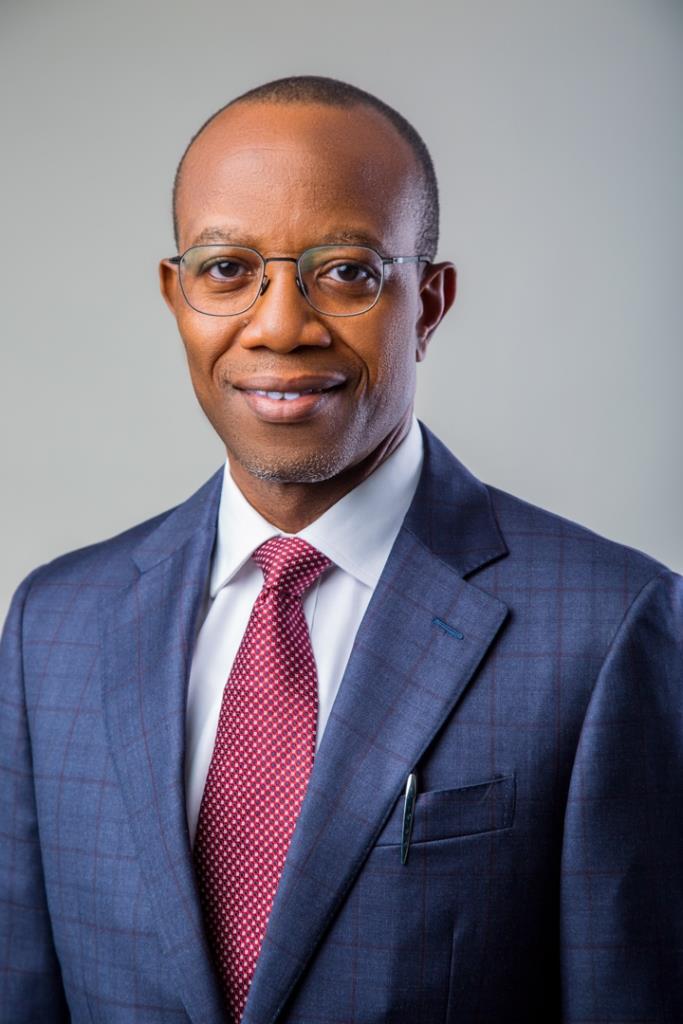
During an address at the grand finale of the national design competition, Professor Ayodele Awojobi Design Competition (PAADC), held at the University of Lagos recently, Senior Partner and Head of the Ventures Unit of Verraki, Mr Kelvin Balogun, asserted that the reason why Nigeria has seemingly intractable challenges is because the country has not sufficiently applied new technology in tackling some issues in the sector.
Mr Balogun noted that the Nigeria’s threadbare education system can prove to spur innovation in how to deliver ad-hoc education, especially to those he referred to as the country’s lost generation.
He expressed his concern that building brick and mortar schools may never catch up to Nigeria’s rapidly expanding student population and proposed a new way to tackle this aged problem.
“We can tackle our education problem by applying new thinking, leveraging technology such as the mobile phone and broadband internet. According to the Nigerian Communications Commission, internet subscribers in Nigeria are about 114 million as at February 2019, largely via mobile phones.
“The mobile phone has become the preferred device of choice for payments, ride-hailing and healthcare in Nigeria; it can be used for education and learning too.
“Education via mobile phones is a leveler and will guarantee access to quality education for everyone, irrespective of financial status or social class, language or tribe. It also ensures access to low-cost teaching resources, added value compared to traditional teaching and a complementary solution for teacher training”.
Proffering adequate solutions to the dearth, Balogun said “Across levels, we can develop applications that give certificated education, fit-for-purpose and pragmatic, while complementing current education realities. Students can access online lectures, compressed for mobile phones with exercises, theory, games, peer-to-peer support, ranking competitions, tests, self-assessment, online resources and incentives for those that complete their classes.
“Asides the 10.5 million primary school age children currently out of school in Nigeria, mobile learning brings education to our underserved people and communities; people who would otherwise not have had access. It is highly scalable, low-touch and addresses the bottom of pyramid with the basic core – English, Mathematics and Social Studies/African History. An example is Nokia’s MoMaths (Mobile Mathematics) programme, which gives South Africa children from low-income families access to high-quality education. MoMaths was launched by Nokia and the country’s Department of Science and Technology, aligned to its CAPS curriculum and provided a complimentary mobile learning platform to all South African high school Maths learners in Grade 10 -12.
“To leapfrog connectivity challenges, we can explore a similar model to Rwanda, which partnered with OneWeb to launch a satellite (named Icyerekezo) which will bring internet connectivity to students in rural Nkombo Island.”, he added.
Mr Balogun expressed confidence in Nigeria’s ability to apply new thinking to solve existing problems efficiently, in the absence of legacy systems and infrastructure, and empower its teeming population and opined that, just like Africa has done with mobile payments, the next solutions and breakthroughs will come from Africa, where the multiple challenges will foster newer, more nimble innovative solutions.
Led by foremost corporate professionals, Verraki is focused on implementing technology and business solutions designed inherently for Africa and specifically fit for purpose, while also curating business ventures to unlock new sources of growth across the continent.
Verraki is also set to apply its global expertise and local insights to partner with enterprises and governments to accelerate the development and transformation of Africa by providing business solutions uniquely tailored for Africa.
Education
NELFUND Crosses N242bn Disbursement Milestone
By Adedapo Adesanya
The Nigerian Education Loan Fund (NELFUND) says it has reached a major milestone in its student support intervention programme, with a total of 1,388,592 students benefiting from the federal government’s education loan scheme and the cumulative disbursement now reaching N242.4 billion since the initiative became fully operational with the launch of its application portal on May 34, 2024.
According to the Leadership Newspapers, these figures were contained in the latest Student Loan Disbursement Status Report, which it exclusively obtained, covering activities from the launch date to April 15, 2026.
The report showed that over 1.7 million applications have been recorded since inception. Of this number, 1,388,592 students have successfully benefited from the loan scheme.
The cumulative sum disbursed under the scheme now stands at N242,400,915,093.25 (N242.4 billion), comprising institutional fees and student upkeep allowances.
A breakdown of the figure shows that N157,455,283,093.25 (N157.4 billion) was paid directly to beneficiary institutions as tuition and institutional charges, while N84,945,632,000.00 (N84.9 billion) was disbursed as upkeep allowances to students to support their living expenses during the course of study.
The dual disbursement structure, covering both institutional fees and student upkeep, is designed to ensure that beneficiaries are not only enrolled in school but also able to sustain themselves throughout their academic programmes.
The report further shows that 288 tertiary institutions across Nigeria are currently benefiting from the scheme. These include federal and state universities, polytechnics, and colleges of education.
The report stated: “Applications received since inception stand at 1,771,797. A total of 1,388,592 students have so far benefited from the loan scheme since its inception.
“The scheme currently has 288 beneficiary institutions, indicating its reach across tertiary institutions nationwide…
“This report presents a summary of significant milestones achieved since the launch of the NELFUND Student Loan Portal. It details disbursements made to institutions for tuition fees and direct upkeep allowances to students, delivering on one of the key promises of the Renewed Hope Agenda of empowering every Nigerian student,” it added.
The student loan scheme is one of the flagship social investment programmes under the Federal Government’s Renewed Hope Agenda, aimed at expanding access to education and building a skilled workforce for national development.
It is anchored on the principle that no Nigerian student should be denied tertiary education due to financial constraints.
It was established following the signing of the Access to Higher Education Act, 2023, which provided the legal framework for the creation of a centralised student loan scheme in Nigeria.
The agency was set up to manage, disburse, and recover education loans in a transparent and accountable manner.
The fund was created in response to longstanding challenges in Nigeria’s tertiary education sector, including inadequate funding, rising tuition costs, and the growing number of out-of-school youths unable to access higher education.
Education
Okpebholo Raises Edo State University’s Monthly Subvention to N250m
By Modupe Gbadeyanka
The monthly subvention to the Edo State University, Iyahmo, has been increased to N250 million from N100 million by the state governor, Mr Monday Okpebholo.
A statement issued on Monday by the Chief Press Secretary (CPS) to the Governor, Mr Patrick Akhere Ebojele, said a grant of N2 billion has also been approved to improve infrastructure in the institution.
Speaking at the commissioning of an e-library and the flagging off of a fitness centre and a health facility in the school, Mr Okpebholo said the funding support is to strengthen the institution’s capacity and improve learning conditions.
“Today is a great day for Edo State University, Iyamho. Since assuming office, our administration has remained committed to repositioning the education sector in Edo State.
“The Ehi Aganmonmen Business Administration E-Library, the Peter Omoh Dunia Fitness Centre, and the Edo State University Health Centre are clear symbols of progress, partnership, and shared responsibility in advancing education and health in Edo State,” he said.
Governor Okpebholo further acknowledged the collective support from stakeholders, including a parent who volunteered to sponsor the architectural designs and the Vice-Chancellor, Professor Adetimirin, who donated one month of his salary.
“If you, the vice chancellor, can donate your salary, why will the Edo state government not donate towards the university projects they are carrying out? On this note, the Edo State government will give you (the school) N2 billion,” he declared.
“I also understand that a parent has offered to sponsor the designs, and our amiable Vice-Chancellor, Prof. Adetimirin, has donated his one-month salary to support the projects. These are not small things — these are sacrifices that speak louder than words,” he added.
On healthcare infrastructure, the Governor expressed support for the university’s plan to upgrade its medical facility.
“I commend the university for the new Health Centre to replace the existing sick bay. This is an important step toward providing better healthcare services to our university community. I assure you of our continued support as we work together to bring this vision to reality,” the Governor said.
He charged students of the institution to use the facilities well, and tasked the university management to “ensure proper maintenance and sustainability of these facilities.”
Education
45 Student-Led Startups Win N2.2bn from FG Ventures Initiative
By Adedapo Adesanya
Forty-five student-led ventures emerged as beneficiaries of a total pool of N2.2 billion in grants at the 2026 Student Venture Capital Grant (S-VCG) Finalist Bootcamp.
The programme of the federal government marks a significant boost to youth innovation under its entrepreneurship drive, announced earlier this year.
At the bootcamp’s closing ceremony and awards presentation held at the United Nations Development Programme (UNDP) office in Ikoyi, Lagos, the winners emerged after a rigorous selection process involving 65 finalists and assessment by a 12-member expert panel.
Speaking at the event, the Minister of Education, Mr Tunji Alausa, said the initiative underscores the government’s commitment to transforming tertiary institutions into centres of innovation, entrepreneurship and practical problem-solving.
He described the S-VCG programme as a key pillar of President Bola Tinubu’s Renewed Hope Agenda, aimed at enabling students to convert ideas into viable businesses.
Mr Alausa noted that each beneficiary can access up to N50 million in equity-free funding, alongside mentorship, incubation support and digital tools.
He added that the programme attracted more than 30,000 applications from 404 tertiary institutions nationwide, reflecting the growing culture of innovation among Nigerian youth.
Also speaking, the Minister of Communications and Digital Economy, Mr Bosun Tijani, commended participants for leveraging technology to develop solutions to real-world challenges.
He urged them to build scalable, tech-driven ventures capable of contributing to national development.
Also speaking, Minister of State for Education, Mrs Suwaiba Sa’id Ahmad, praised the finalists’ resilience and creativity, noting that initiatives like S-VCG are critical to nurturing problem-solving skills and fostering an entrepreneurial mindset among students.
Chairman of the Senate Committee on Tertiary Education and TETFund, Mr Muntari Dandutse, called for sustained investment in youth innovation to strengthen Nigeria’s knowledge-based economy.
On his part, the National Project Coordinator of the Special Programmes Operations and Implementation Unit, Mr Adebayo Onigbanjo, outlined the structure and long-term objectives of the programme, stating that it is designed to equip students with the resources and confidence needed to build sustainable ventures.
-
Feature/OPED6 years agoDavos was Different this year
-
Travel/Tourism10 years ago
Lagos Seals Western Lodge Hotel In Ikorodu
-
Showbiz3 years agoEstranged Lover Releases Videos of Empress Njamah Bathing
-
Banking8 years agoSort Codes of GTBank Branches in Nigeria
-
Economy3 years agoSubsidy Removal: CNG at N130 Per Litre Cheaper Than Petrol—IPMAN
-
Banking3 years agoSort Codes of UBA Branches in Nigeria
-
Banking3 years agoFirst Bank Announces Planned Downtime
-
Sports3 years agoHighest Paid Nigerian Footballer – How Much Do Nigerian Footballers Earn